
Understanding Federal Criminal Investigations
A practical, plain‑language guide to how federal criminal investigations begin, unfold, and what rights you have at every step.
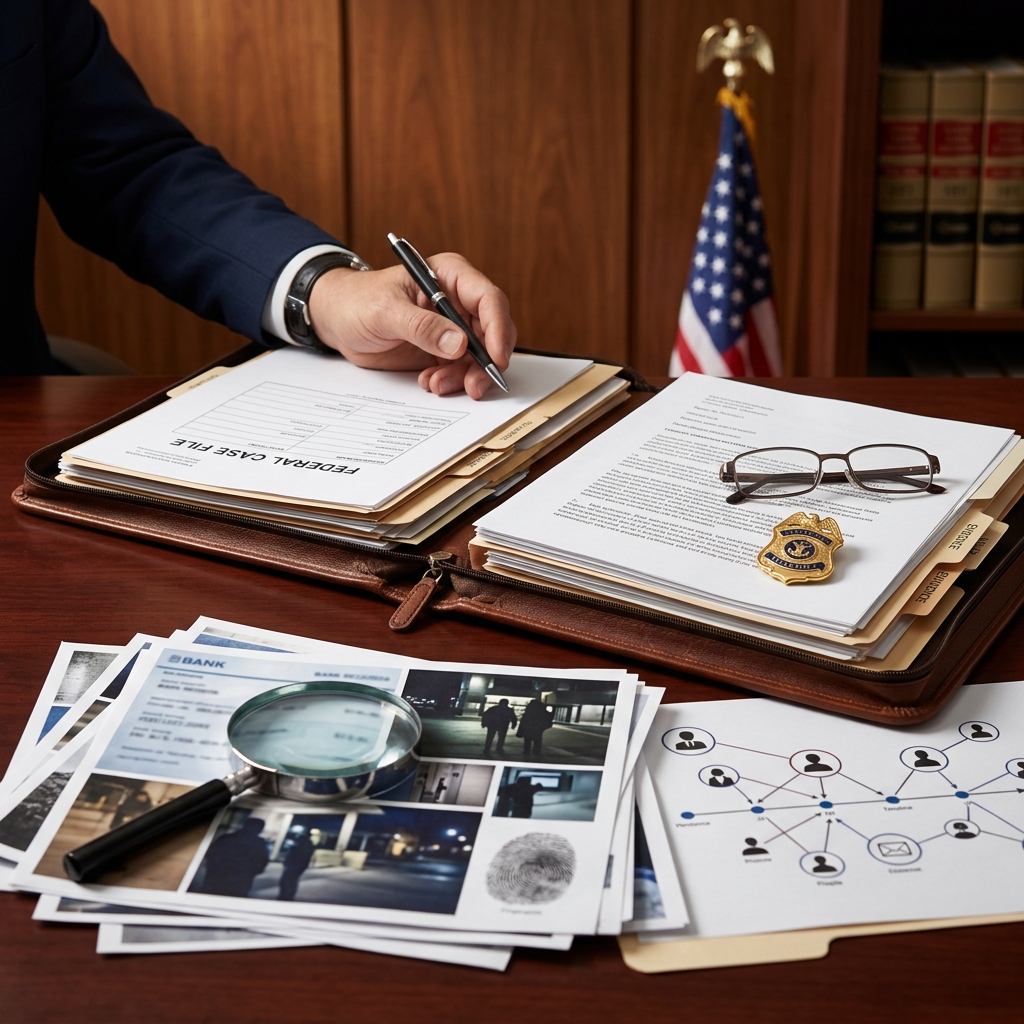
Federal criminal investigations are often lengthy, complex, and intimidating for anyone who may be involved. Unlike ordinary local police investigations, federal inquiries are led by powerful agencies with broad authority and resources, and they follow a structured process governed by federal law and the United States Department of Justice policies. Knowing how these investigations work can help you make informed decisions and protect your rights if federal agents or prosecutors turn their attention toward you.
1. What Makes an Investigation “Federal”?
A criminal investigation is considered federal when it focuses on suspected violations of federal statutes, is handled by federal law enforcement agencies, and prosecuted by the U.S. Department of Justice through U.S. Attorney’s Offices. Common agencies include:
- Federal Bureau of Investigation (FBI) — general federal crimes such as public corruption, fraud, and organized crime.
- Drug Enforcement Administration (DEA) — drug trafficking and related offenses.
- Internal Revenue Service – Criminal Investigation (IRS-CI) — tax crimes, money laundering, and certain financial offenses.
- Homeland Security Investigations (HSI) — immigration, customs, and cross-border offenses.
Federal jurisdiction exists when Congress has made conduct a federal crime, such as offenses involving federal programs, interstate commerce, federal tax obligations, or federal property. Many matters can be investigated both federally and at the state level, and agencies sometimes coordinate their efforts.
2. How Do Federal Criminal Investigations Begin?
Federal investigations usually start when an agency receives credible information suggesting a federal crime may have occurred. Common triggers include:
- Tips or complaints from members of the public.
- Referrals from other government agencies, such as regulatory bodies or state law enforcement.
- Internal reviews uncovering possible misconduct (for example, an IRS audit revealing signs of tax fraud).
- Ongoing surveillance or intelligence operations that produce new leads.
- Media reports, whistleblower disclosures, or civil lawsuits exposing potential criminal conduct.
Once they receive information, federal agents evaluate whether it plausibly involves a federal offense. If so, they open an investigation and begin gathering evidence to determine three core questions:
- Has a federal crime likely been committed?
- Who is responsible?
- Is there enough admissible evidence to support federal charges?
3. Who Is Involved: Key Players in the Federal Process
| Actor | Role in the Investigation |
|---|---|
| Federal Agents | Conduct field work, interviews, searches, surveillance, and evidence collection. |
| Assistant U.S. Attorneys (AUSAs) | Lead prosecutions, advise agents, present cases to the grand jury, and make charging decisions. |
| Grand Jury | Group of citizens that reviews evidence in secret to decide whether to issue an indictment. |
| Judges | Issue search and arrest warrants, preside over hearings, and ensure constitutional protections. |
| Defense Counsel | Protect the rights of targets, suspects, and sometimes witnesses; negotiate, litigate, and advise. |
4. Investigative Tools and Methods
Federal agencies use a combination of traditional law enforcement techniques and specialized tools, subject to constitutional and statutory limits.
4.1 Document and Data Collection
- Voluntary requests for records from businesses or individuals.
- Subpoenas issued through the grand jury to compel production of documents or testimony.
- Search warrants authorized by a federal judge when there is probable cause to believe evidence is located at a specific place.
In many cases, agencies also obtain financial records, emails, and other digital data through legal process tailored to electronic communications.
4.2 Physical and Forensic Evidence
Where physical evidence is involved, investigators follow structured procedures to protect integrity and admissibility of evidence.
- Securing locations and preventing contamination.
- Photographing, sketching, and documenting scenes.
- Sending materials to laboratories for tests such as DNA, toxicology, ballistics, or digital forensics.
4.3 Interviews, Surveillance, and Intelligence
- Witness interviews and statements, formal or informal.
- Target and suspect questioning, often after agents have gathered substantial background information.
- Surveillance and monitoring of communications subject to legal requirements, sometimes including court-authorized wiretaps.
- Database checks such as the National Crime Information Center (NCIC) and other federal systems.
5. How You Might Learn You Are Under Federal Investigation
Federal investigations are frequently conducted in secret. The subject may not realize they are being investigated until the government takes a visible step involving them directly. Common ways people discover they are under scrutiny include:
- Receiving a target letter from a U.S. Attorney’s Office, formally informing them that they are a target of a federal grand jury investigation.
- Federal agents calling to request an interview or “informal” meeting.
- Agents arriving unannounced at a home or workplace to ask questions or execute a search warrant.
- Service of a grand jury subpoena requiring testimony or documents.
- Colleagues or associates reporting that they have been interviewed, searched, or subpoenaed about matters involving you.
Each of these events is a strong signal that the government is actively building a case. Any direct contact from federal agents or prosecutors should be treated seriously, even if they say you are only a “witness” at the moment.
6. The Grand Jury and Charging Decisions
For most serious federal felonies, prosecutors must seek an indictment from a grand jury before going to trial. A grand jury is a panel of citizens that meets in closed sessions to review evidence and decide whether there is probable cause to believe a crime was committed and that a particular person committed it.
Key points about grand jury practice include:
- Proceedings are secret; witnesses testify under oath, and records are sealed except in limited circumstances.
- The grand jury can issue subpoenas for documents and witness testimony.
- If the grand jury finds probable cause, it votes to issue an indictment, which is the formal charging document.
Once an indictment is returned, a judge may issue a summons for the defendant to appear in court or an arrest warrant. The indictment lists the specific charges and serves as the roadmap for the case.
7. Steps in the Federal Criminal Process After Charges
The Department of Justice describes a series of common steps in federal criminal cases, though details can vary.
7.1 Initial Appearance and Arraignment
- After arrest or summons, the defendant appears before a federal judge.
- The judge informs the defendant of the charges and their rights, including the right to counsel.
- The court addresses detention or release conditions.
- At a later arraignment, the defendant enters a plea, typically “not guilty” at first.
7.2 Discovery, Motions, and Plea Negotiations
- Discovery: Both sides exchange evidence as required by law, allowing the defense to examine the government’s case.
- Pretrial motions: Defense counsel may challenge the admissibility of evidence, seek dismissal of counts, or raise constitutional issues.
- Plea bargaining: Many cases resolve by negotiated plea agreements if the defendant chooses to accept responsibility under agreed terms.
If the case does not resolve through motions or a plea, it proceeds to trial, where the government must prove each charge beyond a reasonable doubt.
8. Your Rights During a Federal Investigation
Several constitutional and statutory protections apply even before charges are filed. Understanding these rights is essential to avoid unintentionally harming your position.
8.1 Right to Remain Silent
The Fifth Amendment protects individuals from being compelled to incriminate themselves. You generally have the right to decline to answer questions from agents and prosecutors, including during voluntary interviews, and to assert the privilege in appropriate circumstances.
8.2 Right to Counsel
You have the right to consult an attorney and to have counsel present during questioning. Courts recognize that legal representation is often crucial when navigating interactions with federal agents and prosecutors, especially if you are a target or suspect.
8.3 Protection Against Unreasonable Searches and Seizures
The Fourth Amendment requires that most searches be authorized by a warrant based on probable cause, issued by a neutral judge. Federal investigators must follow these standards, along with statutory rules governing electronic surveillance and access to communications.
8.4 Due Process and Fair Proceedings
Once charges are filed, you are entitled to fair procedures, including notice of charges, opportunities to challenge evidence, and a trial before an impartial judge and jury if you choose not to plead guilty.
9. Practical Steps if You Are Contacted by Federal Agents
If you learn that you are under federal investigation or receive a subpoena, target letter, or search warrant, immediate and thoughtful action can significantly affect the outcome.
9.1 Actions That Typically Help
- Contact a qualified criminal defense attorney promptly — early advice can prevent mistakes and protect your rights.
- Keep detailed notes of all contacts with agents, including dates, times, and what was said.
- Preserve records and devices; do not destroy, alter, or hide potential evidence.
- Comply with lawful court orders, such as subpoenas and warrant instructions, while coordinating through counsel.
9.2 Actions That Often Cause Serious Problems
- Making unrepresented, off‑the‑cuff statements to agents that may be used against you later.
- Trying to “fix” the situation by editing or deleting emails, files, or financial records.
- Coaching witnesses or pressuring others about what they should say.
- Ignoring subpoenas or court orders, which can lead to contempt proceedings or additional charges.
Each case is unique, and only a licensed attorney can give advice tailored to specific facts. However, in almost all circumstances, pausing and seeking legal counsel before acting is a safer path than responding impulsively.
10. Federal vs. State Investigations: Key Differences
While both federal and state systems investigate and prosecute crimes, there are notable distinctions:
- Scope and resources: Federal agencies typically have broader geographic reach and more specialized resources, enabling complex, long‑term investigations across multiple states.
- Type of offenses: Federal cases often focus on offenses affecting interstate commerce, national security, federal programs, or tax obligations, whereas state cases more often involve local matters such as street crimes or neighborhood incidents.
- Procedural rules: Federal procedure follows the Federal Rules of Criminal Procedure and federal evidence rules, which may differ from state standards.
In some situations, both federal and state authorities may have jurisdiction. Decisions about which system will take the lead generally depend on policy priorities, resources, and the nature of the alleged conduct.
11. Frequently Asked Questions About Federal Criminal Investigations
11.1 How long do federal investigations usually take?
There is no fixed timeline. Some investigations last a few months, while others continue for years, especially in complex fraud, corruption, or organized crime cases. The government often continues gathering evidence until prosecutors believe they can meet the burden of proof at trial.
11.2 Can I be investigated without knowing it?
Yes. Many federal investigations are conducted without informing the subject until agents decide that contact is necessary, such as serving a subpoena or executing a search warrant. Secrecy is particularly common when a grand jury is involved.
11.3 Does receiving a subpoena mean I am being charged?
Not necessarily. A subpoena means the government wants documents or testimony; it does not by itself signal that you will be indicted. However, responding to a subpoena can carry risks, and the role of a witness can change over time, so legal advice is strongly recommended.
11.4 What is a target letter?
A target letter is a written notice from a prosecutor stating that you are a “target” of a federal grand jury investigation, meaning the government believes it has substantial evidence linking you to a crime and is considering charges. Such a letter is a serious development and usually warrants immediate consultation with counsel.
11.5 If I cooperate, will charges be dropped?
Cooperation can influence how a case is handled, but there is no guarantee that charges will be avoided or reduced. Any decision to cooperate should be made only after speaking with an attorney who can negotiate on your behalf and assess the risks and potential benefits.
References
- Steps in the Federal Criminal Process — U.S. Department of Justice. 2020-01-01. https://www.justice.gov/usao/justice-101/steps-federal-criminal-process
- Federal Investigations: What Everyone Should Know — Burnham & Gorokhov PLLC. 2018-05-10. https://www.burnhamgorokhov.com/criminal-defense-resources/federal-criminal-process/federal-investigations-what-everyone-should-know/
- How Criminal Investigations Are Initiated — Internal Revenue Service, Criminal Investigation. 2023-06-15. https://www.irs.gov/compliance/criminal-investigation/how-criminal-investigations-are-initiated
- The Criminal Investigation Process: An In-Depth Overview — American Military University. 2021-09-01. https://www.amu.apus.edu/area-of-study/criminal-justice/resources/the-criminal-investigation-process/
- Understanding the Federal Criminal Investigation Process in Ohio — Youngstown Criminal Law Group. 2022-04-12. https://www.youngstowncriminallawyer.com/practice-areas/criminal-defense/youngstown-criminal-lawyer/criminal/understanding-the-federal-criminal-investigation-process-in-ohio/
- How Do Federal Investigations Work, and What Are Your Legal Rights? — James Hopkins Law Firm. 2023-02-20. https://www.jameshopkinslawfirm.com/blog/how-do-federal-investigations-work-and-what-are-your-legal-rights/
Similar Articles








Read full bio of Sneha Tete




