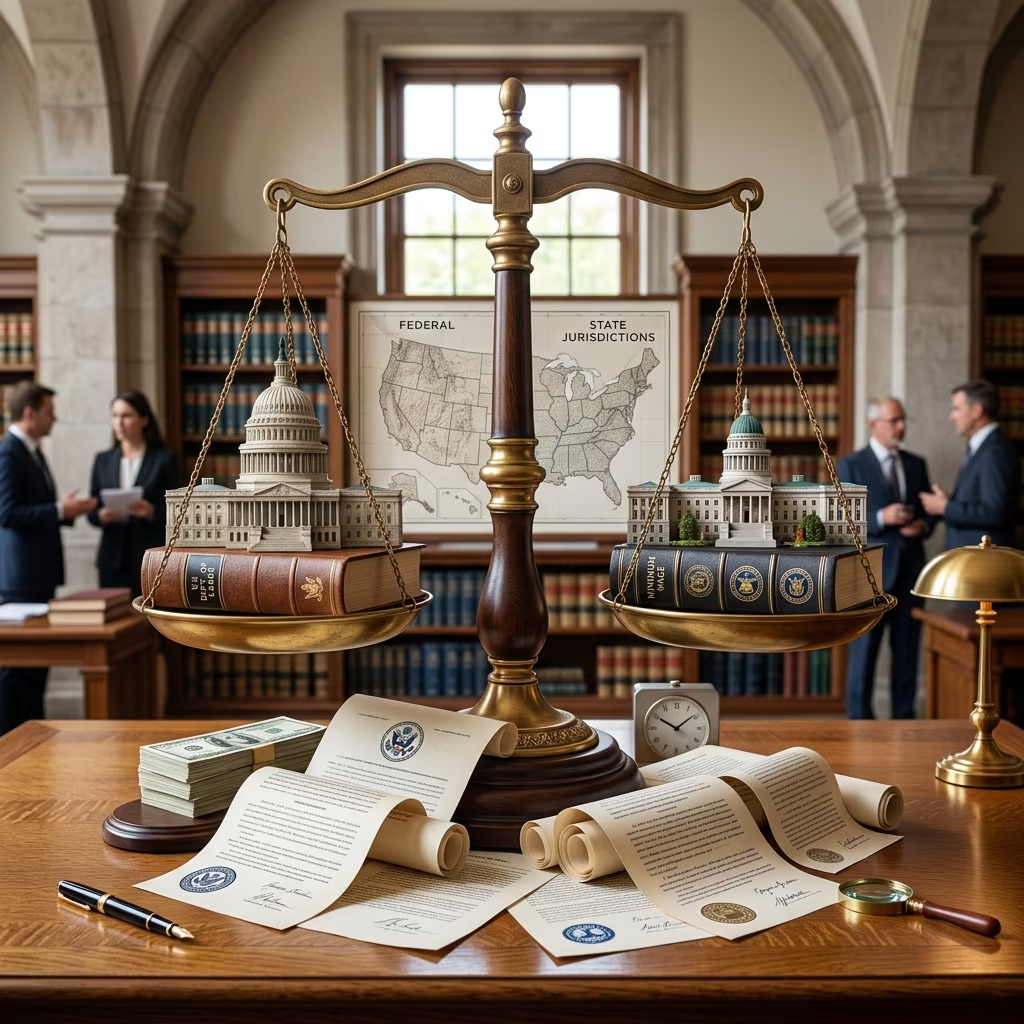
Minimum wage rules in the United States can feel confusing because employees are often covered by federal, state, and sometimes local wage laws at the same time. This guide explains how those layers of law interact, what they mean for your paycheck, and how to respond if you are not receiving the pay you are legally owed.
Why Minimum Wage Laws Exist
Minimum wage laws are designed to set a legal baseline for hourly pay so that workers receive at least a certain minimum amount for their labor. At the federal level, this baseline is established in the Fair Labor Standards Act (FLSA), which sets standards for minimum wage, overtime pay, and child labor in most workplaces.
Many states and some cities or counties have decided that the federal minimum is too low for their local cost of living, so they have enacted higher minimum wage rules. These laws aim to:
- Protect workers from extremely low pay
- Reduce poverty and wage inequality
- Promote fair competition among employers
- Reflect local economic and cost-of-living conditions
The Federal Minimum Wage: Your National Baseline
The federal minimum wage is the nationwide floor for covered workers. Under the FLSA, the current federal minimum wage is $7.25 per hour, a rate that has been in effect since July 24, 2009. Even though this rate has not changed for many years, it still matters: where state or local law does not require a higher wage, employees covered by the FLSA are generally entitled to at least $7.25 per hour.
The federal minimum wage applies to most private and public sector employers, especially those engaged in interstate commerce or with annual sales above certain thresholds. In practice, many businesses are covered, although some specific categories of workers may have special rules.
Key Features of the Federal Minimum Wage
- Applies nationwide to covered employers under the FLSA
- Sets a floor that states and localities can exceed but not undercut for covered workers
- Works alongside rules on overtime, child labor, and recordkeeping
How State Minimum Wage Laws Fit In
States are free to adopt their own minimum wage rules as long as they do not authorize pay below what federal law requires for covered workers. According to the U.S. Department of Labor and the National Conference of State Legislatures, many states have minimum wages higher than $7.25 per hour, while a few either match or do not set a separate state minimum.
States take different approaches to minimum wage regulation, including:
- Setting a single statewide minimum wage rate
- Having different rates for adults, youth workers, or trainees
- Establishing separate rules for tipped employees
- Indexing wages to inflation so the rate increases automatically over time
Examples of State Minimum Wage Rules
To illustrate how state rates can differ from the federal baseline, here are some examples drawn from official and reputable sources. These figures change periodically, so you should always confirm current numbers with a state or federal agency, but they show the range of approaches used across the country.
| Jurisdiction | Basic Minimum Wage (per hour) | Notes |
|---|---|---|
| Federal (FLSA) | $7.25 | Applies nationwide to covered employers as a minimum floor. |
| Illinois | $15.00 | State law guarantees at least $15 per hour for workers 18 and older; lower rates may apply to tipped workers and certain youth workers. |
| Arizona | Above federal (example figures show mid-$14s or higher) | State minimum wage is adjusted annually based on inflation indices. |
| States with no separate minimum | Relies on federal $7.25 | Some states, such as Louisiana, have no independent state minimum wage law; federal rules apply to covered employers. |
| States below federal | Less than $7.25 | In states where the statutory minimum is below $7.25, such as those historically setting rates around $5.15, covered employers must still pay at least the federal $7.25 per hour. |
Because state rules vary widely, checking the current rate for your specific state, and sometimes your city or county, is crucial to understanding the minimum pay you should receive.
Local Minimum Wage Ordinances
On top of federal and state minimum wage laws, some cities and counties adopt their own local minimum wage ordinances. These local rules are often higher than both federal and state rates, especially in areas with high living costs.
When a local minimum wage applies, it usually covers employees working within that city or county and may apply even if the employer’s headquarters is located elsewhere. Employers operating across multiple jurisdictions need to carefully track these differences to avoid underpaying workers.
Which Minimum Wage Applies? The “Highest Rate Wins” Rule
When several wage laws apply at the same time, the basic principle is that employees are entitled to the highest applicable minimum wage. This means you should be paid the greatest rate required by federal, state, or local law in the location where you work.
General Priority Rule
- If federal law is higher than state law, covered employees must receive at least the federal rate.
- If state law is higher than the federal rate, employers must pay at least the higher state rate.
- If a city or county sets a minimum wage above both federal and state rates, employers in that locality must meet the local rate.
In other words, federal minimum wage law creates a floor rather than a ceiling. States and localities can provide more protective rules, but they cannot reduce lawful pay for covered employees below the federal minimum.
Special Categories of Workers
Minimum wage rules can differ for certain types of workers. While the details vary by jurisdiction, here are some of the categories commonly subject to special rules under federal or state law.
Tipped Employees
Workers who receive significant income from tips—such as servers, bartenders, and some hospitality staff—may be paid a lower direct cash wage, as long as their tips bring their total hourly earnings up to at least the required minimum wage.
- Employers must still ensure total pay (cash wage plus tips) meets or exceeds the applicable minimum wage.
- States often set their own minimum cash wage for tipped workers, which can be higher than federal requirements.
- If tips do not bring pay to the legal minimum, the employer usually has a duty to make up the difference.
Youth and Training Wages
Some laws allow special, lower wage rates for younger workers or individuals in training programs, subject to strict conditions.
- Youth minimum wages may apply only up to a certain number of hours or during a limited period of employment.
- Employers sometimes must apply for licenses or permits to pay sub-minimum wages to certain workers, such as learners or individuals with specific disabilities.
- Even when lower special rates are allowed, other protections—such as overtime rules—still apply.
How to Check Whether You Are Being Paid Lawfully
Understanding your rights begins with comparing your actual pay to the minimum wage that applies where you work. You can take the following steps to check your situation:
- Identify your location: Note the state and, if relevant, the city or county where you regularly perform work.
- Look up the current federal minimum wage: The U.S. Department of Labor provides official information on the federal rate.
- Check your state’s minimum wage: Many state labor departments publish up-to-date minimum wage charts or guidance.
- Check local ordinances: If you are in a major metropolitan area, confirm whether the city or county has adopted a higher minimum wage.
- Review your pay stubs: Divide your total wages for a pay period by the number of hours worked to estimate your effective hourly rate.
- Compare the numbers: Your hourly pay should be at least the highest applicable rate among federal, state, and local law.
What To Do If You Think You Are Underpaid
If your hourly pay is below the legal minimum, you may be entitled to back wages and other remedies. Here are practical steps you can consider:
- Document everything: Keep copies of pay stubs, timesheets, schedules, and any written communications about your pay.
- Ask questions internally: Sometimes pay issues result from clerical errors; raising the concern with payroll or human resources may resolve the problem.
- Consult official guidance: Federal and state labor departments publish employee-oriented information on how to file complaints or request investigations.
- File a wage complaint: If necessary, you can file a complaint with the U.S. Department of Labor’s Wage and Hour Division or your state labor agency.
- Seek legal advice: For complex situations—such as large amounts of unpaid wages or retaliation concerns—speaking with an employment attorney may be helpful.
Many laws prohibit employers from retaliating against workers who assert their lawful wage rights. If you are worried about retaliation, look for information on anti-retaliation protections in federal and state guidance or seek legal counsel.
Common Myths About Minimum Wage Laws
Confusion about minimum wage laws often stems from misunderstandings. Debunking a few common myths can help you better recognize your rights.
- Myth: If the state minimum wage is lower than the federal rate, the state amount always controls.
Reality: For covered employees, the federal minimum wage functions as a floor. If state law sets a lower rate, employers must still pay at least the federal minimum. - Myth: Employers can choose the lowest wage law that benefits them.
Reality: The highest applicable minimum wage—federal, state, or local—governs what covered workers must be paid. - Myth: Tips always replace the need for minimum wage.
Reality: In tipped work, your combined cash wage and tips must still reach at least the legal minimum wage, and employers may have to make up shortfalls. - Myth: Minimum wage laws do not apply if you are paid a salary.
Reality: Being salaried does not automatically exempt you from minimum wage and overtime requirements. What matters is whether your job meets specific exemption tests under federal and state law.
Minimum Wage and Overtime: Related But Distinct
While this guide focuses on minimum wage, many workers are also entitled to overtime pay when they work more than a certain number of hours per week under federal or state law. Federal rules generally require time-and-a-half for hours worked beyond 40 in a workweek for most non-exempt employees, and many states mirror or supplement this standard.
If your overtime hours are not being paid correctly, you may be facing both minimum wage and overtime violations, which can increase the amount of back pay owed. Checking your total weekly hours alongside your hourly rate is an important part of understanding your full wage rights.
Frequently Asked Questions (FAQs)
1. Does the federal minimum wage override state minimum wage?
No. The federal minimum wage under the FLSA sets a minimum floor, not a maximum. When a state or local law requires a higher wage, employers must pay the higher rate to covered workers.
2. What happens if my state minimum wage is below the federal rate?
If you are covered by the FLSA, your employer must pay at least the federal minimum wage of $7.25 per hour, even if state law sets a lower amount.
3. Can cities and counties require higher minimum wages than the state?
Yes. Many local governments adopt minimum wage ordinances that exceed both state and federal rates. Employers in those jurisdictions must comply with the local rules, as long as they are valid under state law.
4. How do I find the minimum wage for my state?
You can check your state’s labor department or an official state government website for current minimum wage information. The U.S. Department of Labor also provides a summary of minimum wage laws by state.
5. What if I work remotely for an employer in another state?
Generally, the minimum wage rules of the location where you actually perform work—your physical worksite—determine the minimum wage that applies, though remote work can raise complex questions. Employers managing multi-state workers must pay the highest applicable rate in each location.
6. Who enforces minimum wage laws?
The U.S. Department of Labor’s Wage and Hour Division enforces federal minimum wage rules, while state labor agencies enforce state wage laws. Some local governments also have enforcement offices for local ordinances.
Practical Tips for Employees
To protect your rights and avoid wage issues, consider these practical steps:
- Regularly review your pay stubs and track your hours worked each week.
- Stay informed about changes to federal, state, or local minimum wage rates in your area.
- Ask your employer how your pay rate was determined and whether it is affected by tip credits or special youth or training wage rules.
- Use official government resources when researching minimum wage laws to ensure you have accurate information.
- Seek guidance from a legal professional or labor rights organization if you suspect you are being underpaid.
References
- Minimum Wage — U.S. Department of Labor, Wage and Hour Division. 2023-08-01. https://www.dol.gov/agencies/whd/minimum-wage
- State Minimum Wage Laws — U.S. Department of Labor, Wage and Hour Division. 2024-01-01. https://www.dol.gov/agencies/whd/minimum-wage/state
- State Minimum Wages — National Conference of State Legislatures. 2024-01-22. https://www.ncsl.org/labor-and-employment/state-minimum-wages
- Minimum Wage Law — Illinois Department of Labor. 2024-01-01. https://labor.illinois.gov/laws-rules/fls/minimum-wage-law.html
- Minimum Wage Basics — Illinois Legal Aid Online. 2023-05-10. https://www.illinoislegalaid.org/legal-information/minimum-wage-basics
- Federal vs. State Minimum Wage: 2026 Guide — APS Payroll. 2024-06-15. https://apspayroll.com/blog/federal-state-min-wage/