
Understanding Farm Workers and H‑2B Workers’ Rights
A practical legal guide to wage, housing, safety, and contract protections for farm workers and H‑2B visa workers in the United States.
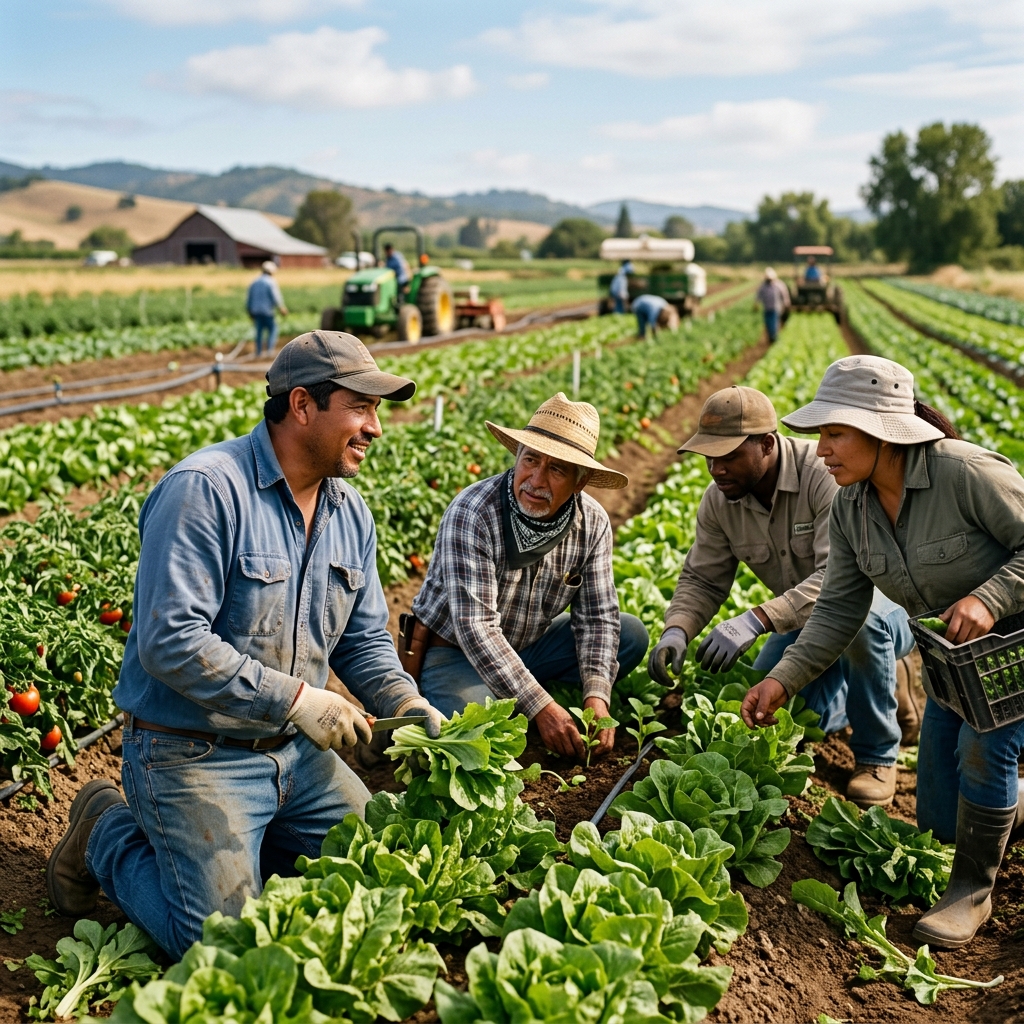
Farm workers and temporary foreign workers on H‑2B visas play a critical role in the U.S. economy, yet they often face complex legal rules and heightened vulnerability in the workplace. This guide explains the major rights and protections that apply to these workers, with a focus on wages, housing, safety, contracts, and how to seek help when those rights are violated.
Although farm labor and H‑2B employment are governed by a patchwork of federal and state laws, there are core protections that every worker should understand. Knowing these rules is essential not only for workers themselves, but also for employers who must comply with legal standards to avoid liability.
1. Who Are Farm Workers and H‑2B Workers?
U.S. law recognizes several categories of agricultural and temporary workers, each with slightly different rights and obligations. Understanding the basic distinctions helps clarify which rules apply in a particular job.
1.1 Farm Workers in General
Farm workers include U.S. citizens, lawful permanent residents, and foreign nationals who perform seasonal or year-round work such as planting, harvesting, packing, or processing agricultural products.
- Many farm workers are migrant or seasonal workers who travel to follow crop cycles or short-term contracts.
- They are covered by several federal statutes, including wage, safety, and housing laws specifically tailored to agricultural work.
- At the same time, farm workers are excluded from some protections that apply in other industries, such as coverage under the National Labor Relations Act in many situations.
1.2 H‑2A vs. H‑2B Temporary Visa Programs
U.S. employers can bring foreign workers to the country on temporary visas when they cannot find enough domestic labor. Two programs are especially relevant to agricultural and related work:
- H‑2A: For temporary agricultural work, such as crop production and livestock operations.
- H‑2B: For temporary non‑agricultural work, including jobs in landscaping, hospitality, seafood processing, construction, and other seasonal industries.
Both categories come with rights and obligations, but the level of protection differs. H‑2A workers generally receive more extensive guarantees, including housing and a minimum amount of work hours, while H‑2B workers’ protections are narrower and depend heavily on general labor laws and the specific contract.
| Feature | H‑2A Workers | H‑2B Workers |
|---|---|---|
| Type of work | Temporary agricultural labor | Temporary non‑agricultural labor |
| Housing requirement | Employer must provide free, safe housing | No general federal requirement; depends on contract and state law |
| Transportation to worksite | Free and safe transportation must be provided | Often governed by contract; fewer specific guarantees |
| Minimum work guarantee | At least three‑quarters of contract workdays or pay in lieu | No comparable federal three‑quarters guarantee |
| Workers’ compensation | Often explicitly required by program rules | Coverage varies by state; not guaranteed in all cases |
2. Core Labor Laws Protecting Farm Workers
Farm workers—whether U.S.‑based or in visa programs—are covered by several key federal statutes. These laws form the backbone of workplace protections in agriculture.
2.1 Wage and Hour Protections
The Fair Labor Standards Act (FLSA) sets federal minimum wage and overtime standards for most U.S. workers. Agricultural workers are partially covered:
- Many farm workers must be paid at least the federal minimum wage, or higher state minimums where applicable.
- Some small farms and immediate family members of farm owners may be exempt from overtime or minimum wage rules, but larger agricultural operations are generally covered.
For H‑2A workers, wages must be at or above specific program levels such as the Adverse Effect Wage Rate (AEWR) or prevailing wage, whichever is highest. These rules are designed to ensure that foreign workers are paid fairly and that their employment does not depress local wage standards.
2.2 Migrant and Seasonal Agricultural Worker Protections
The Migrant and Seasonal Agricultural Worker Protection Act (MSPA) is the principal federal law tailored specifically to migrant and seasonal farmworkers. Among other protections, MSPA requires:
- Employers and farm labor contractors to disclose key terms of employment—such as pay rates, work period, and conditions—at the time of recruitment.
- Farm labor contractors to be properly licensed.
- Any employer‑provided housing to meet federal and local health and safety standards.
- Transport vehicles to comply with safety rules and be adequately insured.
These rules apply broadly to agricultural work and can overlap with H‑2A or H‑2B program requirements, giving workers multiple legal avenues when violations occur.
2.3 Health and Safety Laws
Farm workers are also protected by general workplace safety laws, including:
- The Occupational Safety and Health Act (OSHA), which requires employers to provide a workplace free from serious recognized hazards.
- The Federal Insecticide, Fungicide, and Rodenticide Act (FIFRA), which governs pesticide use and includes protections for workers exposed to agricultural chemicals.
Safety rules encompass access to clean drinking water, sanitary facilities, safe equipment, and proper training regarding hazards such as heavy machinery or pesticide exposure.
3. Special Rights for H‑2A and H‑2B Workers
Temporary foreign workers in H‑2A and H‑2B programs must be treated in accordance with both general labor laws and specific visa program requirements. While each job contract contains unique terms, there are common elements that workers can expect.
3.1 Fair Pay and Contract Terms
Under U.S. regulations and State Department guidance, H‑2A and H‑2B workers have the right to:
- Be paid fairly, at or above the applicable minimum wage or required program wage.
- Receive a written work contract (or job order) in a language they understand, detailing pay rates, work period, hours, benefits, and deductions.
- Be free from unlawful deductions, including improper charges for recruitment or Social Security contributions that should not apply to H‑2A work.
H‑2A workers specifically benefit from wage protections such as the AEWR, prevailing wage, or collectively bargained rate, whichever is highest. These wage floors are meant to cover basic living expenses and protect worker welfare.
3.2 Housing, Transportation, and Meals
H‑2A workers are entitled to a broad package of support services that many non‑visa workers do not receive as a matter of law:
- Free, safe, and clean housing for the duration of the contract.
- Free transportation between employer‑provided housing and the worksite, using insured vehicles and trained drivers.
- Three meals per day or free, accessible cooking facilities.
- Reimbursement for inbound travel costs after completing a portion of the contract, and outbound travel at the end of the contract or when law requires.
By contrast, H‑2B workers generally do not receive guaranteed housing, meals, or workers’ compensation under program rules, unless those benefits are written into the contract or mandated by state law. This makes it especially important for H‑2B workers to review their job orders carefully.
3.3 Work Hours and Job Security
H‑2A rules include a three‑quarters guarantee, meaning employers must offer work for at least 75% of the workdays in the contract or pay the worker for the hours that were not offered. This helps protect farmworkers from being brought to the U.S. and then left with little or no work.
While H‑2B workers do not have a comparable federal guarantee, they are entitled to wages for hours actually worked and any additional rights specified in the contract or under state law. All temporary workers are protected from retaliation for asserting their rights or contacting government agencies.
4. Workplace Safety, Health, and Workers’ Compensation
Given the high‑risk nature of agricultural and seasonal work, safety and injury protections are essential. Workers in these sectors have enforceable rights to safe working conditions and benefits when injuries occur.
4.1 Right to a Safe and Healthy Workplace
While on the job, farm workers and H‑2A/H‑2B workers have the right to:
- Work in conditions that do not pose recognized serious hazards.
- Access potable drinking water and sanitary bathroom facilities at the worksite.
- Receive proper training about risks such as machinery, transportation, and chemical exposure.
- Request information or an inspection from OSHA if they believe conditions are unsafe.
Workers may refuse dangerous work in certain situations and can seek help from unions, legal aid programs, or government agencies without lawful retaliation.
4.2 Workers’ Compensation for Injuries
In many states, agricultural employers must provide workers’ compensation insurance, which covers medical expenses and wage replacement for job‑related injuries.
- When a worker is injured, the employer should provide information about available doctors, allowing the worker to choose from approved providers.
- In states like Virginia, injured farm workers may remain in the state for treatment and, if they miss more than a week of work, may qualify for partial wage replacement.
- Claims often need to be filed within a specific time frame, such as two years from the date of the accident.
Although H‑2A workers typically have explicit workers’ compensation coverage through program requirements or state law, H‑2B workers’ coverage depends on the specific state and employer. Workers should ask about workers’ compensation at the start of employment and request written confirmation.
5. Freedom from Exploitation, Fees, and Trafficking
Temporary workers are particularly vulnerable to exploitation, including illegal recruitment fees, debt bondage, and trafficking. U.S. law provides protections against these abuses.
5.1 Prohibition on Recruitment Fees and Debt Bondage
According to the U.S. government’s guidance for temporary workers:
- Workers should never pay fees to get a job, either in the United States or abroad.
- Employers and recruiters cannot lawfully require workers to incur debts that must be repaid through work or wage deductions.
- Any contract terms that effectively force a worker to stay in a job to pay off recruitment or transportation debts may violate federal anti‑trafficking laws.
Workers who experience these forms of coercion may have rights under general labor laws and under federal anti‑trafficking statutes such as the Trafficking Victims Protection Act.
5.2 Protection from Discrimination and Retaliation
All workers in the United States, regardless of immigration status, are protected from discrimination on the basis of race, color, national origin, sex, religion, and other protected categories under federal and many state laws.
- Employers may not retaliate against workers for asking about their rights, filing complaints, or contacting government agencies.
- Workers have the right to speak with legal aid attorneys, labor rights organizations, and government inspectors without interference.
6. Enforcing Your Rights and Seeking Help
Knowing that rights exist is only part of the picture; workers also need practical steps for enforcing those rights. Multiple agencies and organizations can assist farm workers and H‑2B workers.
6.1 Government Agencies
The U.S. Department of Labor (DOL) is primarily responsible for enforcing wage, hour, and many program‑specific rules:
- The Wage and Hour Division (WHD) investigates complaints related to pay, hours, housing, and transportation for H‑2A workers and other farm workers.
- Workers can call national hotlines such as 1‑866‑487‑9243 or visit local WHD offices to report violations or ask questions.
- OSHA handles complaints about unsafe working conditions and serious hazards.
In addition, state labor departments and workers’ compensation commissions (for example, the Virginia Workers’ Compensation Commission) manage local wage and injury claims.
6.2 Legal Aid and Worker Advocacy Groups
Many non‑profit organizations provide free or low‑cost legal assistance to farm workers and temporary visa workers, including help with:
- Unpaid wage claims and contract disputes.
- Health and safety violations.
- Immigration consequences of leaving a job or reporting abuse.
Federally funded legal services programs often offer brief advice to H‑2A and H‑2B workers, and some provide full representation in serious cases such as trafficking or systemic labor violations.
6.3 Practical Steps for Workers
Workers who suspect their rights are being violated can take several practical actions:
- Keep records of hours worked, pay received, and any deductions.
- Maintain copies or photos of contracts, job orders, and pay stubs.
- Document housing conditions and transport arrangements with dates and photos where possible.
- Contact a legal aid organization or government agency as soon as possible; many claims have deadlines.
- Avoid signing new documents they do not understand without consulting a trusted advisor.
7. Common Issues and How to Address Them
Farm workers and H‑2B workers frequently encounter a few recurring problems. Understanding typical scenarios can help workers recognize when to seek help.
- Underpayment or unpaid wages: When workers are paid less than promised, below minimum wage, or not paid for all hours worked, they may file claims under FLSA, MSPA, or H‑2A/H‑2B program rules.
- Dangerous housing or no housing: For H‑2A workers, unsafe or missing housing can be a program violation; for other farm workers, MSPA and state codes often require basic standards.
- Lack of protective equipment: Missing safety gear, training, or sanitation may violate OSHA and pesticide safety rules.
- Retaliation for complaints: Threats, termination, or blacklisting in response to rights‑based complaints may trigger additional legal protections and penalties for employers.
- Recruitment fraud: Misleading job offers, unexpected fees, or changed terms after arrival can implicate contract law, MSPA, and anti‑trafficking statutes.
8. Frequently Asked Questions (FAQ)
8.1 Do farm workers have a right to minimum wage?
Most farm workers are entitled to at least the federal minimum wage under the Fair Labor Standards Act, though some small farms and family‑only operations are exempt. In states with higher minimum wages, those rates usually apply.
8.2 Are H‑2B workers guaranteed housing and meals?
Unlike H‑2A workers, H‑2B workers do not automatically receive free housing and meals under federal program rules. Any such benefits must be specified in the individual contract or required by state law.
8.3 Can workers be charged fees by recruiters?
No. Government guidance for H‑2A and H‑2B workers clearly states that workers should never pay fees to get a job, and employers cannot lawfully force workers into debt or charge recruitment fees.
8.4 What happens if a worker is injured on the job?
In states where workers’ compensation applies to farm labor, injured workers can receive medical treatment and partial wage replacement. H‑2A workers often have explicit coverage, while H‑2B workers’ coverage depends on state law and employer compliance.
8.5 Where can workers go for help?
Workers can contact the U.S. Department of Labor’s Wage and Hour Division or OSHA, as well as state labor agencies and local legal aid organizations. Hotlines such as 1‑866‑487‑9243 provide information in multiple languages and can direct workers to local offices.
References
- H-2A: Temporary Agricultural Employment of Foreign Workers — U.S. Department of Labor, Wage and Hour Division. 2025-06-20. https://www.dol.gov/agencies/whd/agriculture/h2a
- Rights and Protections for Temporary Workers (Wilberforce Pamphlet) — U.S. Department of State. 2024-04-01. https://travel.state.gov/content/travel/en/us-visas/visa-information-resources/wilberforce-english.html
- Food, Farming & Sustainability Research Guide: Farmworker Rights — University of Oregon Libraries. 2023-09-15. https://researchguides.uoregon.edu/foodsustainabilitylaw/workerrights
- U.S. Labor Law for Farm Workers — National Farm Worker Ministry. 2022-05-10. https://nfwm.org/farm-workers/farm-worker-issues/labor-laws/
- Virginia Farmworkers Program — Central Virginia Legal Aid Society. 2022-03-01. https://cvlas.org/our-services/virginia-farmworkers-program/
- Protecting H-2A Workers’ Rights and Welfare — Agricultural & Applied Economics Association Publications Update. 2023-07-01. https://www.aaea.org/publications/publications-update/protecting-h-2a-workers-rights-and-welfare
- Invisible Hands: Forced Labor in the United States and the H-2 Visa Program — California Law Review. 2021-12-01. https://www.californialawreview.org/print/invisible-hands
Similar Articles








Read full bio of medha deb




