Fair Use: 4 Key Factors To Evaluate Copyright Claims
Master the essentials of fair use doctrine: Unlock legal ways to use copyrighted works without permission through the four-factor test.
Understanding Fair Use in Copyright Law
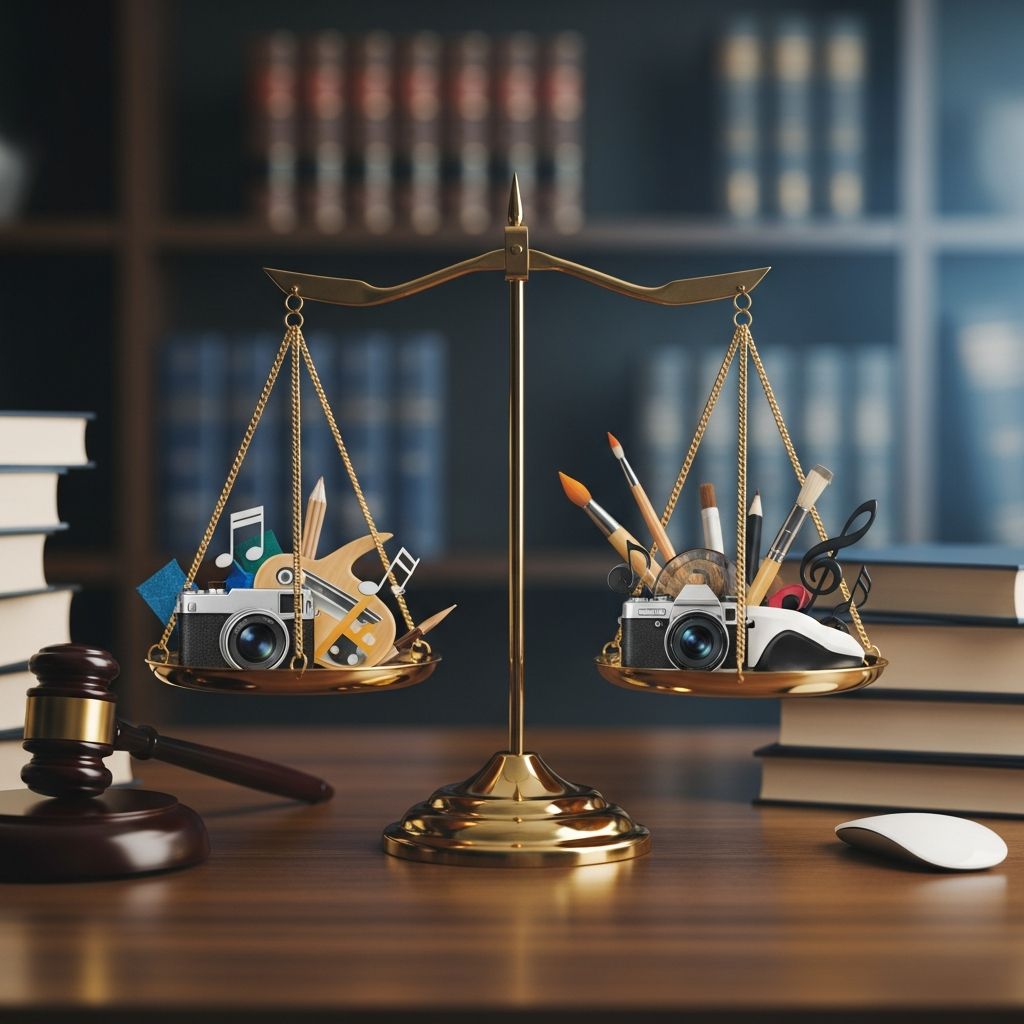
Fair use is a vital legal principle in United States copyright law that enables individuals to utilize portions of copyrighted materials without obtaining permission from the rights holder, fostering creativity, education, and free expression. This doctrine strikes a balance between protecting creators’ rights and promoting public access to knowledge, as codified in Section 107 of the Copyright Act.
The Origins and Purpose of Fair Use
The fair use doctrine emerged from English common law and evolved in the U.S. to address rigid copyright enforcement that could hinder innovation. It recognizes that not every unauthorized use constitutes infringement, particularly when it serves transformative purposes like critique or scholarship. By allowing limited exceptions, fair use prevents copyright from becoming a tool to suppress discourse or education, aligning with First Amendment principles.
Historically, courts have applied fair use flexibly across media types, from books to digital content. Unlike narrower ‘fair dealing’ provisions in other countries, U.S. fair use applies broadly to any copyrighted work and purpose, evaluated case-by-case.
Core Principles: Fair Use as a Defense
Fair use functions primarily as an affirmative defense in infringement lawsuits, meaning the accused party must prove their use qualifies after a prima facie case of copying is established. However, landmark rulings like Lenz v. Universal Music Corp. (2015) elevated it to an authorized right, requiring copyright holders to consider fair use before issuing DMCA takedown notices.
This shift underscores that fair use is not merely an excuse but a statutory permission for non-infringing activities, such as parody or research, promoting broader dissemination of ideas.
Decoding the Four-Factor Test
Courts weigh four statutory factors to determine fair use, with no single factor decisive. All must be balanced holistically.
Factor 1: Purpose and Character of the Use
This factor examines if the use is transformative—adding new expression, meaning, or message—and whether it’s commercial or nonprofit. Transformative uses, like parody or criticism, strongly favor fair use. For instance, nonprofit educational copying weighs positively, while direct commercial substitution does not.
- Transformative examples: Reviews quoting book excerpts, memes altering images.
- Commercial tilt: Uses profiting without significant alteration may fail.
Factor 2: Nature of the Copyrighted Work
Factual works (news, biographies) are more amenable to fair use than highly creative ones (fiction, art, music). Published works receive less protection than unpublished ones, as the latter involve the author’s right of first publication.
Courts consider creativity level: A scientific report might allow broader quoting than a poem.
Factor 3: Amount and Substantiality of the Portion Used
Less is generally better, but even small portions can infringe if they capture the ‘heart’ of the work. Relevance to the purpose matters; quoting an entire image for critique might be fair if indispensable.
| Amount Used | Fair Use Likelihood | Example |
|---|---|---|
| Minimal (e.g., 10-second clip) | High | News review of film trailer |
| Substantial (e.g., full chapter) | Low | Reprinting without transformation |
| Whole work (e.g., short poem) | Variable | Parody requiring full text |
Factor 4: Effect on the Market
The most critical factor assesses if the use harms the original’s market value or potential licensing revenue. Uses substituting the original (e.g., free full-text PDFs) weigh against fair use, while those boosting sales (e.g., positive reviews) favor it.
Courts look beyond current markets to foreseeable ones, like future derivative works.
Common Applications Across Contexts
In Education and Scholarship
Teachers often rely on fair use for classroom materials, such as excerpting articles for discussion. Multiple copies for class are permissible if brief, noninstructive, and not for profit. Research quoting sources for analysis typically qualifies.
- Projector slides with images for lectures.
- Student papers citing and quoting texts.
- Library reserves with limited scans.
News, Commentary, and Criticism
Journalists quote sources, reviewers excerpt media, and bloggers critique—all prime fair use territory. Parodies, like 2 Live Crew’s rap version of ‘Oh, Pretty Woman,’ succeeded under this.
Digital and Online Scenarios
YouTube thumbnails, social media shares, and AI training data invoke fair use debates. DMCA safe harbors protect platforms if users claim fair use.
Landmark Court Decisions Shaping Fair Use
Campbell v. Acuff-Rose Music, Inc. (1994): Supreme Court ruled commercial parody can be fair if transformative, emphasizing market substitution avoidance.
Lenz v. Universal: Mandated fair use consideration pre-takedown, protecting viral videos.
Other cases: Google Books’ snippet views favored as research tools without market harm.
Practical Tips for Assessing Your Use
Before using material:
- Document your four-factor analysis.
- Seek permissions if uncertain—fair use isn’t a blanket right.
- Use only what’s necessary.
- Attribute sources to show good faith.
Tools like checklists from Harvard or Stanford aid evaluation.
Frequently Asked Questions
What counts as transformative use?
A use adds new purpose or character, like turning a photo into a collage commentary, rather than mere copying.
Is fair use international?
No, U.S.-specific; other nations use ‘fair dealing’ with fixed categories.
Can businesses claim fair use?
Yes, but commercial intent weighs against; transformation is key.
What if I get a takedown notice?
File a counter-notice asserting fair use; platforms must reinstate if no lawsuit follows.
Does fair use cover thumbnails or embeds?
Often yes, if transformative and low-resolution, per court precedents.
Limitations and Myths Debunked
Myths: ‘10% rule’ exists (false—courts reject arbitrary limits); short clips always fair (depends on factors). Fair use doesn’t cover plagiarism or public domain confusion.
International users: U.S. fair use applies to U.S.-based activities; check local laws.
References
- Fair use – Wikipedia — Wikipedia. 2026. https://en.wikipedia.org/wiki/Fair_use
- Copyright and Fair Use | Office of the General Counsel — Harvard University Office of the General Counsel. 2023-10-01. https://ogc.harvard.edu/pages/copyright-and-fair-use
- Fair Use – Copyright Information — Penn State University. 2024. https://copyright.psu.edu/copyright-basics/fair-use/
- U.S. Copyright Office Fair Use Index — U.S. Copyright Office. 2025-06-15. https://www.copyright.gov/fair-use/
- What Is Fair Use – Copyright Alliance — Copyright Alliance. 2024-11-20. https://copyrightalliance.org/faqs/what-is-fair-use/
- What Is Fair Use? – Copyright Overview by Rich Stim — Stanford University Libraries. 2023. https://fairuse.stanford.edu/overview/fair-use/what-is-fair-use/
Similar Articles






Read full bio of Sneha Tete