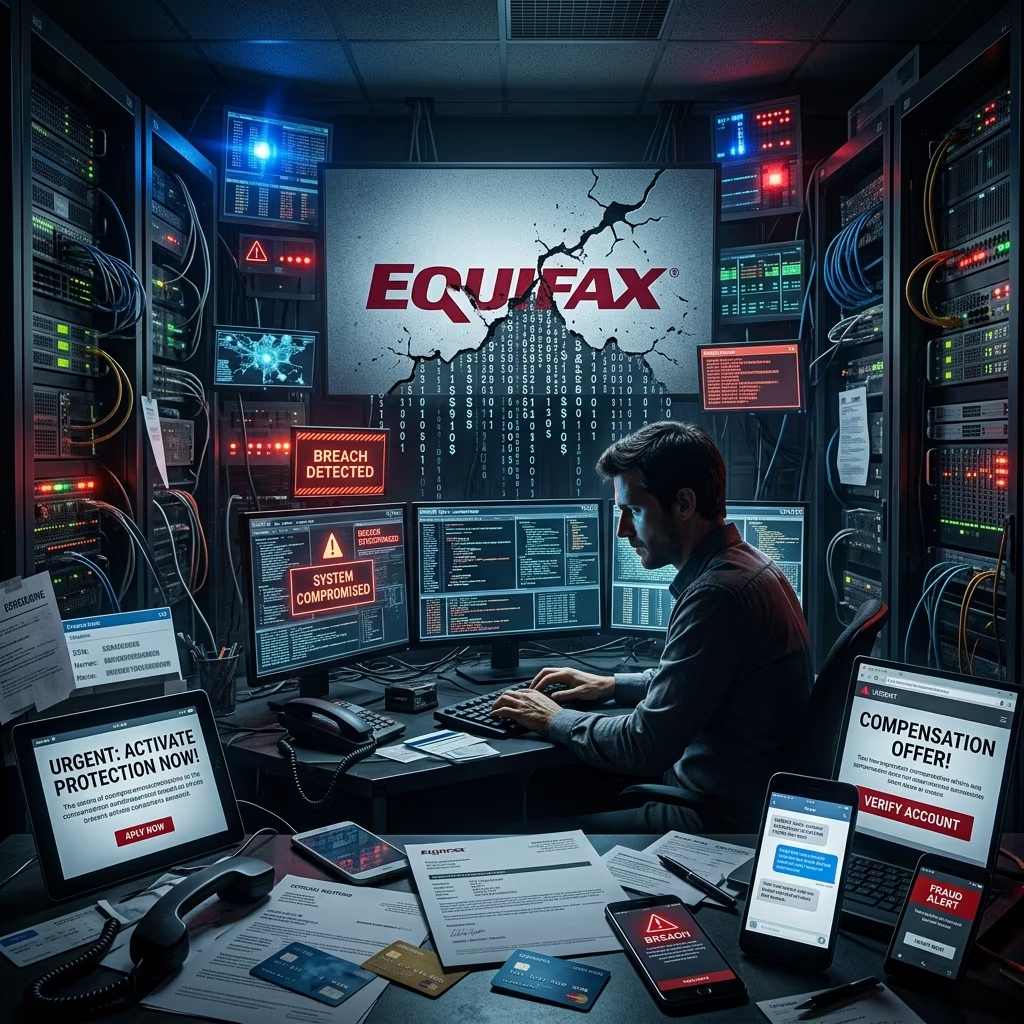
The massive Equifax data breach exposed the sensitive information of nearly half the U.S. population and millions more in the United Kingdom and Canada, making it one of the most significant cybersecurity failures in history. Beyond the immediate privacy harm, it created a long-lasting opportunity for scammers to target worried consumers with convincing—but fraudulent—offers of help and compensation. This article explains what happened, why it matters for years to come, and how to recognize and avoid scams connected to high-profile breaches like Equifax.
What Happened in the Equifax Breach?
Equifax is one of the three major credit reporting agencies in the United States. It collects and stores vast amounts of personal and financial data, including Social Security numbers, dates of birth, addresses, and credit histories for hundreds of millions of people. In 2017, attackers accessed this data and exfiltrated it over several months.
Timeline of the Incident
Multiple government and independent investigations have reconstructed the key moments of the breach:
- March 7, 2017: A critical remote code execution vulnerability in the Apache Struts web application framework (CVE-2017-5638) is publicly disclosed, and a security patch is released.
- Mid-May to July 2017: Attackers exploit the unpatched Struts vulnerability in an Equifax web application and begin extracting personal data over an extended period.
- July 29, 2017: Equifax detects suspicious activity after renewing an expired SSL certificate that had disabled effective network monitoring.
- September 7, 2017: Equifax publicly announces a “cybersecurity incident” impacting roughly 143 million U.S. consumers.
- 2018: Further analysis increases the estimate of affected individuals to about 147.9 million Americans, plus millions of UK and Canadian residents.
Investigations by the U.S. House Committee on Oversight and Government Reform later described the breach as the result of a “culture of cybersecurity complacency” within Equifax and highlighted repeated internal failures to patch known vulnerabilities and maintain critical monitoring systems.
Scope of the Data Exposed
The Equifax breach was unprecedented in scope because of both the number of records exposed and the sensitivity of the information involved. According to official and technical reports, attackers accessed:
- Full names
- Social Security numbers
- Dates of birth
- Addresses
- In some cases, driver’s license numbers
- Approximately 209,000 credit card numbers for U.S. consumers
- Certain dispute documents containing additional personally identifiable information
Because this type of data cannot easily be changed—unlike passwords or credit card numbers—the breach created a long-term risk of identity theft and fraud. Even years later, stolen data can be used to open fraudulent accounts or craft highly targeted phishing messages.
From Breach to Settlement: Official Responses
The Equifax breach triggered regulatory investigations, congressional oversight, and civil lawsuits. Ultimately, Equifax agreed to a large settlement with federal and state authorities in the United States.
The Equifax Data Breach Settlement
The U.S. Federal Trade Commission (FTC), the Consumer Financial Protection Bureau (CFPB), and multiple states negotiated a settlement requiring Equifax to provide monetary compensation and credit monitoring to affected consumers.
Key elements of the settlement include:
- Potential cash compensation (subject to claim rules and caps) for time and money spent dealing with the breach and identity theft.
- Free credit monitoring and identity protection services for qualified claimants.
- Identity restoration services available until January 2029 for affected individuals who experience misuse of their data, even if they did not file a claim.
- Enhanced cybersecurity and compliance commitments by Equifax.
In addition, the settlement increased consumer access to credit information. All U.S. consumers can obtain seven free Equifax credit reports per year through 2026 via the official Annual Credit Report service. This is a significant tool for monitoring suspicious activity.
How Scammers Exploit the Settlement
Whenever a large settlement is announced, scammers seize the opportunity to impersonate official entities, promising cash payments or special benefits. The Equifax settlement is no exception. Fraudsters may send emails, text messages, or make phone calls claiming to represent Equifax, the settlement administrator, or government agencies, and then attempt to collect personal data or payments.
Common tactics include:
- Fake emails that misuse settlement language and logos and ask you to “confirm your identity” by entering sensitive data.
- Robocalls or live calls claiming that you must pay a fee or provide bank information to receive your settlement funds.
- Phishing websites that closely resemble legit settlement or credit monitoring sites, but are designed to harvest your personal information.
The FTC has warned consumers specifically about scams related to the Equifax settlement and stresses that legitimate emails about the settlement will come from specific addresses and will not ask for payment to receive benefits.
Understanding the Equifax Scam Ecosystem
Scams connected to the Equifax breach generally fall into several broad categories. Understanding these can help you recognize patterns and respond safely.
Identity Theft and Account Fraud
The most direct risk from the breach is traditional identity theft. With detailed personal data in hand, criminals can:
- Apply for credit cards or loans in your name.
- Open utility or cellphone accounts using your identity.
- Attempt to access existing financial accounts by passing knowledge-based authentication checks.
Because the stolen data includes core identity attributes like Social Security numbers and dates of birth, fraud can be sophisticated and difficult to detect immediately, especially if criminals target accounts slowly over time.
Phishing and Social Engineering
Equifax-related scams often rely on social engineering: the art of manipulating people into sharing information or taking actions that benefit the attacker.
Typical approaches include:
- “Security alert” emails claiming that unusual activity has been detected on your Equifax or credit file, urging you to click a link.
- Fake support calls offering to freeze your credit or enroll you in monitoring services if you provide your Social Security number “for verification.”
- Impersonation of government agencies, such as claiming to be the FTC, IRS, or Social Security Administration, referencing the Equifax breach as a justification for urgent action.
These scams are convincing because they reference a well-publicized event, making it more plausible that you might be contacted about it.
Settlement Imposter Scams
Another common pattern is the settlement imposter scam. Here, fraudsters pretend to manage compensation related to the breach. Warning signs include:
- Requests for upfront fees to “unlock” your settlement payment.
- Demands for banking or debit card information to “deposit” funds.
- Promises of unusually high compensation or instant payouts.
Legitimate settlement communications will never require payment to receive benefits and will direct you to official websites or verified phone numbers.
Legitimate Help vs. Fraud: A Quick Comparison
| Aspect | Legitimate Equifax Settlement / Services | Typical Scam Behavior |
|---|---|---|
| Origin of contact | Official domains, verified email addresses, or contact you initiate yourself. | Unsolicited emails, calls, texts from unknown senders or generic addresses. |
| Payment requests | No upfront fees required to receive settlement benefits or credit reports. | Requests for fees, gift cards, or bank transfers to “release” funds. |
| Type of information requested | Limited identity verification; never asks for full passwords or complete banking login credentials. | Demands for Social Security number, full account numbers, PINs, passwords. |
| Communication tone | Clear instructions, references to official resources, and realistic timelines. | High-pressure, urgent threats or promises of instant large payments. |
| Website behavior | Secure (HTTPS), simple forms, consistent with official guidance from FTC and settlement administrator. | Poor design, strange URLs, frequent pop-ups, or requests to download files. |
Practical Steps to Protect Yourself After the Equifax Breach
Consumers cannot erase the fact that their data was exposed, but they can take meaningful steps to reduce risk and catch fraud early.
Monitor Your Credit Regularly
Ongoing monitoring is one of the most powerful defenses against identity theft. Because the settlement expanded access to free reports, consumers should take advantage of it.
- Obtain free credit reports from Equifax, Experian, and TransUnion through the official Annual Credit Report system.
- Use the additional seven free Equifax reports per year available through 2026.
- Review each report carefully for unfamiliar accounts, addresses, or inquiries.
Consider a Credit Freeze or Fraud Alert
Placing a credit freeze generally prevents new creditors from accessing your file, which can significantly reduce the risk that someone will open accounts in your name. Fraud alerts make creditors take extra steps to verify identity.
Key points:
- You can request a credit freeze directly from each credit bureau.
- Fraud alerts can be placed with one bureau, which then notifies the others.
- Both tools are governed by consumer protection laws, and information is available from the FTC and official credit reporting agencies.
Use Strong, Unique Credentials
While the Equifax breach involved backend systems rather than consumer passwords, it serves as a reminder to improve personal cybersecurity hygiene:
- Use a password manager to create and store strong, unique passwords.
- Enable multi-factor authentication (MFA) on financial, email, and cloud accounts.
- Avoid reusing passwords across important services.
Verify Communications Before Responding
When you receive a message referencing the Equifax breach or settlement, follow these steps before providing any information:
- Do not click links in unsolicited emails or texts; instead, navigate to official addresses you know are correct.
- Call verified phone numbers from official FTC or settlement websites, not numbers provided by the message itself.
- Check the sender address and domain for suspicious anomalies.
If something feels urgent or threatening, that alone is a warning sign; legitimate entities generally do not pressure you to act immediately or share sensitive information.
Frequently Asked Questions (FAQs)
1. How do I know if I was affected by the Equifax breach?
Official tools provided through the Equifax settlement allow you to look up whether your data was impacted. Visit the settlement administrator’s website or the FTC’s Equifax settlement page using a trusted URL and follow their instructions. You may need to provide limited identifying information to confirm your status.
2. Is it too late to file a claim for compensation?
The primary deadline to file claims for many settlement benefits has passed, but some services remain available. For example, identity restoration assistance is available until January 2029 for affected consumers who experience misuse of their personal information, even if they did not file an initial claim. Check current guidance from the FTC and settlement administrator for the most up-to-date information.
3. What should I do if I suspect an Equifax-related scam?
If you receive a suspicious message about the Equifax breach or settlement:
- Do not respond or click links.
- Report the communication to the FTC using their official reporting channels.
- Contact your bank or credit card issuer if you shared any financial information.
- Consider placing a fraud alert and monitoring your credit more frequently.
4. Did Equifax ever face criminal consequences for the breach?
Investigations and enforcement primarily focused on civil remedies and regulatory penalties for Equifax as a company. Separately, individuals associated with Equifax have faced legal consequences for related conduct, such as insider trading tied to nonpublic information about the breach. However, the main consumer-facing outcomes are the settlement, improved cybersecurity requirements, and ongoing monitoring services.
5. Why is the Equifax breach still relevant today?
Unlike passwords or payment card numbers, core identity information like Social Security numbers and dates of birth remain valid for life. Criminals can store stolen data and use it years later to attempt account openings, craft convincing phishing campaigns, or combine it with information from other breaches. The Equifax incident is therefore a long-term risk, not a one-time event.
Key Takeaways for Consumers
- The Equifax breach exposed highly sensitive personal data for around 147.9 million Americans and millions of UK and Canadian residents.
- The incident stemmed from unpatched software vulnerabilities and weak internal cybersecurity practices.
- Official settlements provide some compensation, monitoring, and identity restoration services, but do not eliminate risk entirely.
- Scammers actively exploit public awareness of the breach and settlement to launch phishing and imposter scams.
- Consumers should regularly monitor their credit, consider freezes or fraud alerts, and carefully verify any communication referencing Equifax or data breach settlements.
By understanding how the breach occurred, recognizing Equifax-related scams, and using the tools now available, consumers can better protect themselves against ongoing identity threats in the digital age.
References
- Report of the U.S. House Committee on Oversight and Government Reform: The Equifax Data Breach — U.S. House of Representatives. 2018-12-10. https://oversight.house.gov/wp-content/uploads/2018/12/Equifax-Report.pdf
- Equifax Data Breach Settlement — Federal Trade Commission. 2024-01-22 (updated). https://www.ftc.gov/enforcement/refunds/equifax-data-breach-settlement
- Equifax Data Breach Settlement: Home — Equifax Breach Settlement Administrator. 2022-01-11 (effective date). https://www.equifaxbreachsettlement.com
- Equifax Data Breach — Electronic Privacy Information Center (EPIC). 2018-03-01 (updated). https://archive.epic.org/privacy/data-breach/equifax/
- Equifax Data Breach Case Study: Causes and Aftermath — BreachSense Blog. 2022-05-10 (approx.). https://www.breachsense.com/blog/equifax-data-breach/
- The Equifax Hack: A Cybersecurity Catastrophe — Framework Security. 2024-10-04. https://frameworksecurity.com/post/the-equifax-hack-a-cybersecurity-catastrophe
- The Equifax Data Breach and the Resulting Legal Recourse — Brooklyn Journal of Corporate, Financial & Commercial Law, Brooklyn Law School. 2018-03-01. https://brooklynworks.brooklaw.edu/bjcfcl/vol13/iss1/10/