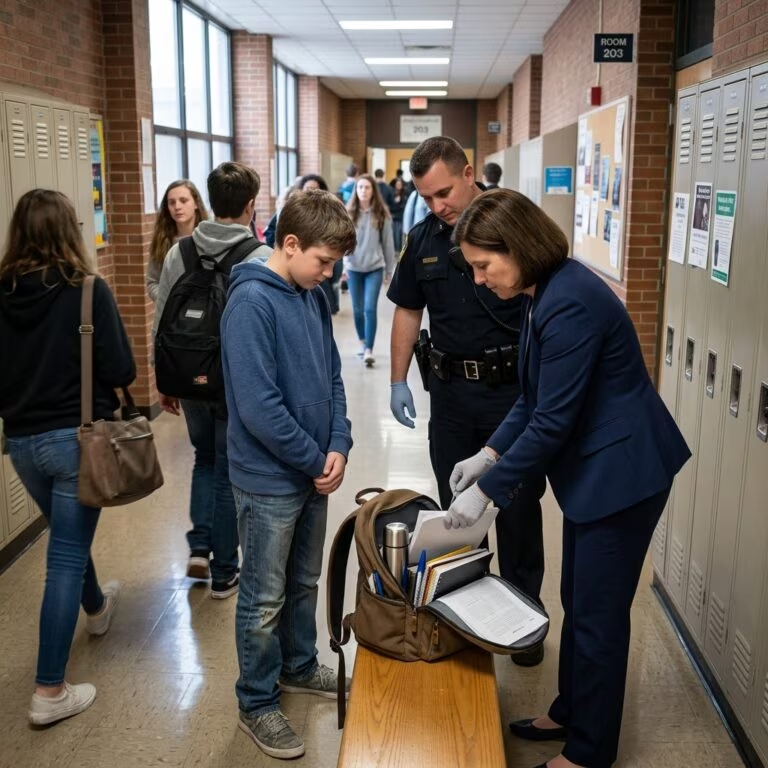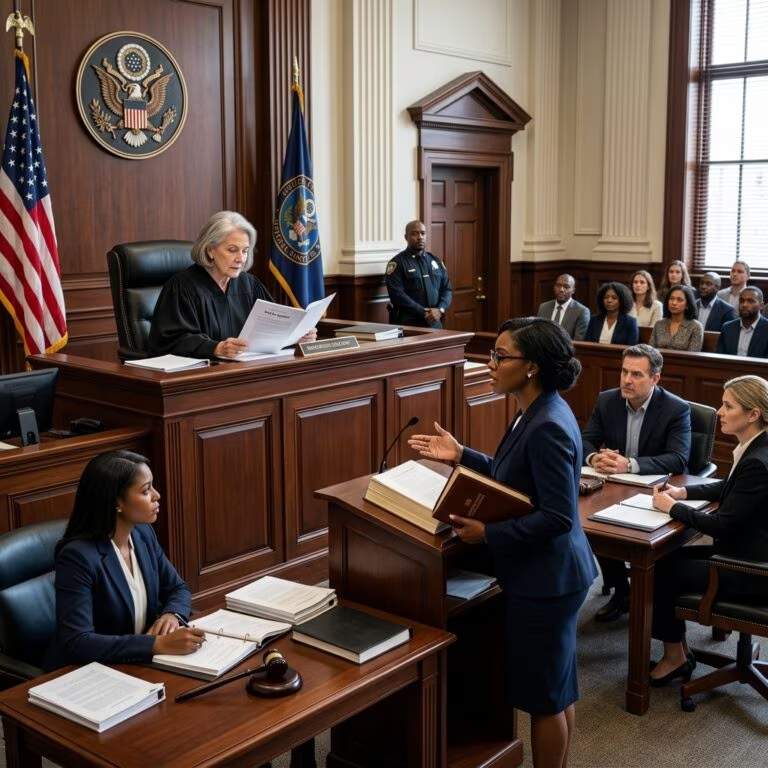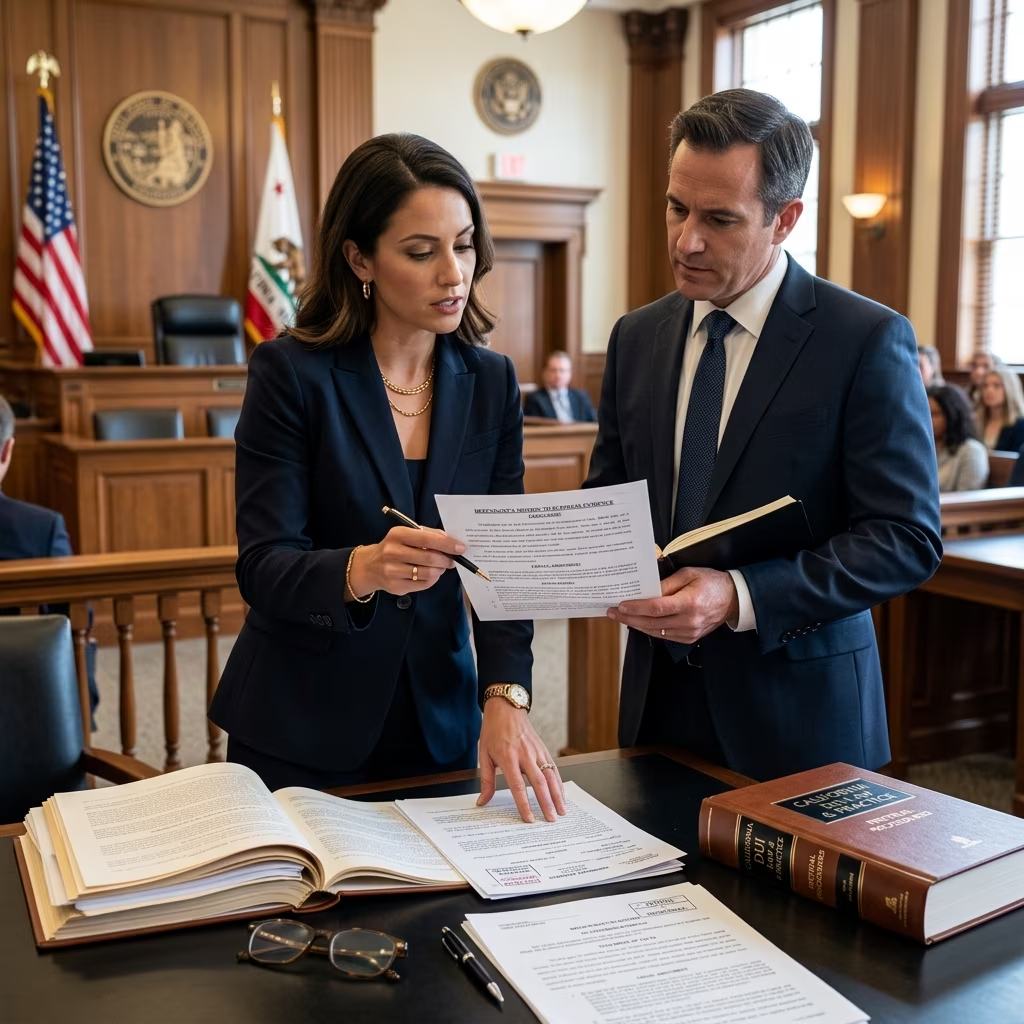
DUI pretrial motions are formal requests made to the judge before trial begins, asking the court to decide important legal issues about evidence, witnesses, and even whether the case should proceed at all. Used strategically, these motions can reshape a drunk driving case by excluding unreliable evidence, enforcing constitutional rights, and sometimes leading to dismissal.
This guide explains what DUI pretrial motions are, why they matter, the most common motion types, and how they fit into the broader criminal process. While the focus is on DUI, the concepts apply to many criminal cases involving traffic stops, searches, and chemical testing.
What Are DUI Pretrial Motions?
In a DUI prosecution, a pretrial motion is a written request asking the judge to issue a ruling before the trial begins. These motions are usually filed after arraignment and often after a preliminary hearing, but before the jury is sworn in.
Pretrial motions in DUI cases typically address:
- What evidence the jury or judge is allowed to hear, such as breath test results or officer observations
- Which witnesses may testify and what they can speak about
- What legal arguments each side can present at trial
- Whether the defendant must stand trial at all (for example, on a motion to dismiss)
Both the prosecutor and defense can file pretrial motions, but in DUI cases they are most often used by the defense to challenge the government’s evidence and police conduct.
Why Pretrial Motions Matter in DUI Cases
DUI charges commonly rely on a small number of critical pieces of evidence: the traffic stop, field sobriety tests, chemical test results (breath, blood, or urine), and the driver’s statements. Pretrial motions allow the defense to test each of these components under constitutional and evidentiary rules before trial.
Key benefits of well-crafted DUI pretrial motions include:
- Excluding unlawfully obtained evidence: If police violated the Fourth Amendment by conducting an unreasonable stop or search, evidence can be suppressed.
- Protecting Miranda rights: Statements taken during custodial interrogation without proper warnings may be kept out of trial.
- Challenging unreliable testing: Flawed breathalyzer maintenance, incorrect blood draw procedures, or mishandled samples can all be grounds to limit or exclude chemical test evidence.
- Narrowing issues for trial: Pretrial rulings clarify what the jury will hear, allowing both sides to focus on the remaining contested points.
- Supporting dismissal: If crucial evidence is suppressed, the prosecution may be unable to prove the charge beyond a reasonable doubt and the case can be dismissed.
Because DUI statutes often require proof of specific elements (such as driving, intoxication, and blood alcohol concentration), eliminating one core piece of evidence through pretrial motions may dramatically weaken the prosecution’s case.
Where Pretrial Motions Fit in the DUI Process
DUI prosecutions follow a fairly standard sequence in many jurisdictions. Pretrial motions occupy a critical middle stage, after the case is formally filed but before trial begins.
| Stage | What Happens | Role of Pretrial Motions |
|---|---|---|
| Investigation & Arrest | Traffic stop, field sobriety tests, chemical testing, arrest, and booking. | No motions yet, but facts from this stage form the basis for later challenges. |
| Arraignment | Defendant is formally informed of charges and enters a plea. | Court sets deadlines that often govern when pretrial motions must be filed. |
| Preliminary Hearing (in some cases) | Judge decides if there is enough evidence to proceed with the case. | Defense learns more about the prosecution’s evidence and refines planned motions. |
| Pretrial Motions & Discovery | Parties exchange evidence and file motions. | Defense challenges the legality and reliability of the evidence and may seek dismissal. |
| Pretrial Motion Hearing | Judge hears arguments and evidence about the motions. | Court issues rulings that define what evidence and arguments will be allowed at trial. |
| Trial or Plea Negotiations | Case is either tried or resolved by plea agreement. | Motion rulings often directly influence plea offers and trial strategy. |
Common Types of DUI Pretrial Motions
Although terminology and procedure vary by jurisdiction, several categories of pretrial motions frequently arise in DUI cases.
Motion to Suppress Evidence
A motion to suppress evidence asks the court to exclude specific evidence because it was obtained in violation of constitutional or statutory rights. This is often the most critical motion in a DUI case.
Grounds for suppression can include:
- Unlawful traffic stop: No reasonable suspicion or probable cause for the initial stop.
- Illegal search or seizure: Blood or breath samples obtained without consent, a valid warrant, or applicable exception.
- Involuntary statements: Confessions made under coercion or without Miranda warnings in a custodial setting.
- Violation of right to counsel: Denial of access to an attorney during critical stages.
If the judge agrees that rights were violated, the suppressed evidence cannot be used at trial. In many DUI cases, losing breath or blood test results significantly limits the prosecution’s ability to prove impairment or per se blood alcohol levels.
Motion in Limine (Request to Limit Evidence or Arguments)
A motion in limine is filed to prevent the other side from introducing certain evidence or making particular arguments during trial. Unlike a motion to suppress, it typically focuses on relevance, prejudice, or evidentiary rules rather than constitutional violations.
Examples of motion in limine issues in DUI cases include:
- Excluding highly inflammatory photographs or descriptions that add little probative value
- Preventing references to prior arrests that are not legally admissible
- Limiting expert testimony to subjects supported by reliable methods and data
- Restricting speculative arguments about the defendant’s future conduct
These motions help ensure the jury hears only reliable, legally appropriate evidence, minimizing the risk of decisions based on emotion rather than law.
Discovery Motions
Discovery motions ask the court to enforce rules requiring the prosecution to share evidence with the defense. In DUI cases, discovery is crucial because many details about the chemical testing process, police training, and equipment maintenance are controlled by the government.
Common discovery requests in DUI cases include:
- Records of breathalyzer calibration, maintenance, and repair for the device used
- Training and certification records for the officer who conducted field sobriety or chemical tests
- Laboratory documentation for blood and urine analysis, including chain of custody and testing protocols
- Any exculpatory evidence that tends to show the defendant might not be guilty, as required by constitutional due process rules
In some jurisdictions, defense counsel may also move for independent testing of blood or urine samples by requesting a split sample, allowing a separate laboratory to verify or challenge the government’s results.
Motion to Dismiss DUI Charges
A motion to dismiss asks the court to terminate the prosecution before trial. In DUI cases, dismissal is often sought after successful suppression of key evidence or when discovery reveals fundamental problems with the government’s case.
Grounds for dismissal can include:
- Lack of sufficient evidence to prove elements of the offense
- Violation of the defendant’s right to a speedy trial
- Serious defects in the charging documents
- Systemic evidentiary problems uncovered during discovery (e.g., unreliable laboratory practices)
While dismissal is not guaranteed, judges may agree that a case cannot fairly proceed if central evidence has been excluded or procedural rights have been significantly violated.
Other Specialized DUI Motions
Depending on the jurisdiction, defense attorneys may use additional specialized motions in DUI cases:
- Motion to strike prior convictions: Seeks to prevent older DUI convictions from enhancing current charges or penalties, potentially reducing a case to a first offense.
- Requests for officer personnel records: In some states, motions exist to obtain records of police misconduct when relevant to credibility in a DUI case.
- Motions to continue trial: Ask to delay the trial date to allow time for expert evaluation, additional discovery, or new evidence.
These motions are tailored to specific legal frameworks but share the same goal: ensuring fairness and enforcing procedural protections in DUI prosecutions.
How DUI Pretrial Motions Are Prepared and Decided
Pretrial motions are formal legal documents, not casual requests. Rules of criminal procedure generally require that they be written, signed by counsel, and filed within certain deadlines.
Drafting and Filing the Motion
When preparing a DUI pretrial motion, defense attorneys typically:
- Identify the specific evidence, witness, or legal issue to be challenged
- Review discovery, police reports, and testing records for factual support
- Research legal standards, including constitutional provisions and relevant case law
- Draft a written motion explaining the facts, applicable law, and requested ruling
The motion is then filed with the court and served on the prosecutor, who may submit a written response.
The Motion Hearing
After briefing is complete, the court schedules a pretrial motion hearing where both sides present arguments. At the hearing, the judge may:
- Listen to legal arguments from counsel on each side
- Take testimony from officers, experts, or other witnesses relevant to the motion
- Consider exhibits such as calibration records, video footage, and lab reports
- Issue oral or written rulings granting or denying the motions
These rulings are binding at trial, although in some circumstances they may be revisited or reviewed on appeal.
Strategic Impact of Pretrial Motions on DUI Outcomes
Pretrial motions rarely decide guilt or innocence directly, but they significantly influence how a DUI case unfolds. Their strategic impact can include:
- Excluding crucial evidence: Suppression of breath test results, blood evidence, or admissions often forces the prosecution to reevaluate the case.
- Improving plea negotiations: Strong defense motions and favorable rulings may lead to reduced charges or more lenient plea offers.
- Clarifying trial theory: Pretrial decisions shape trial strategy by defining which facts are contested and what expert testimony is necessary.
- Preserving issues for appeal: Even when motions are denied, the record created can form the basis for appellate review.
Because DUI penalties can be significant, including license suspension, fines, and possible jail, the careful use of pretrial motions can have substantial long-term consequences for defendants.
Key Considerations for Defendants Facing DUI Charges
Anyone charged with DUI should understand that pretrial motions are not automatic. Courts expect motions to be supported by facts and law, and many procedural rules impose strict deadlines.
Important considerations include:
- Timing: Missing motion deadlines can waive the right to raise certain challenges later.
- Documentation: Police reports, video, calibration logs, and lab records are critical for building suppression or discovery motions.
- Jurisdictional rules: Procedures and available motions vary across states and local courts; attorneys must follow local practice.
- Legal representation: Because pretrial motions are technical and often determinative, many defendants seek counsel experienced in DUI litigation.
Although outcomes can never be guaranteed, a careful pretrial motion strategy can help ensure that DUI cases are decided on legally admissible, reliable evidence and that constitutional rights are respected.
Frequently Asked Questions About DUI Pretrial Motions
Do all DUI cases involve pretrial motions?
No. While pretrial motions are common in DUI cases, not every prosecution involves them. Simple cases with straightforward evidence and no apparent rights violations may proceed to trial or plea without extensive motions.
Can a pretrial motion completely dismiss my DUI case?
It is possible but not guaranteed. If a motion to suppress removes key evidence—such as chemical test results or proof of impairment—the prosecution may not be able to meet its burden of proof, leading the court or prosecutor to dismiss the charges.
Who decides DUI pretrial motions?
The trial judge decides pretrial motions, often after a hearing where both sides present arguments and evidence. The judge’s rulings control what the jury will later hear at trial.
Are pretrial motion rulings final?
They are generally binding at trial in the same court, but some rulings may be appealed after conviction or, in limited circumstances, by the prosecution. Appellate courts review whether the trial judge correctly applied the law to the facts.
Do I need a lawyer to file DUI pretrial motions?
Criminal procedure rules typically allow defendants to represent themselves, but drafting and litigating pretrial motions requires detailed legal knowledge. Many defendants choose experienced counsel because errors in motion practice can have lasting consequences.
References
- DUI Pre-Trial Motions — FindLaw. 2023-06-01. https://www.findlaw.com/dui/cases/dui-pre-trial-motions.html
- Importance of Pre-Trial Motions in DUI Cases in Virginia — The Wilson Law Firm. 2022-04-15. https://www.tkevinwilsonlawyer.com/library/importance-of-pre-trial-motions-in-dui-cases-in-virginia.cfm
- DUI Pretrial Motions: Strategic Defense For Your Case — The Meehan Law Firm. 2021-09-10. https://www.themeehanlawfirm.com/dui/pretrial-motions
- Pre-Trial Motions and DUI Cases — Cowan Kirk. 2018-03-01. https://www.cowanlawfirm.com/articles/pretrial-motions-and-dui-cases
- Types of Pretrial Motions and How They Help Criminal Cases — Lopes Law. 2020-11-20. https://lopeslawoffices.com/types-of-pretrial-motions-and-how-they-can-help-you-in-a-criminal-case/
- Pre-Trial Motions in DUI Cases — The Law Offices of James E. Novak. 2019-08-05. https://www.azduilaws.com/dui/pre-trial-motions-in-dui-cases/
- Pre-Trial Motions Used to Get a Florida DUI Case Dismissed — Robert Malove, P.A. 2021-02-12. https://www.robertmalovelaw.com/blog/pre-trial-motions-used-to-get-a-florida-dui-case-dismissed/