
Illinois DUI Laws: Key Penalties, BAC Limits, Plus 2025 Guide
A practical, plain‑language guide to Illinois DUI rules, penalties and the consequences of an arrest on your driving privileges.
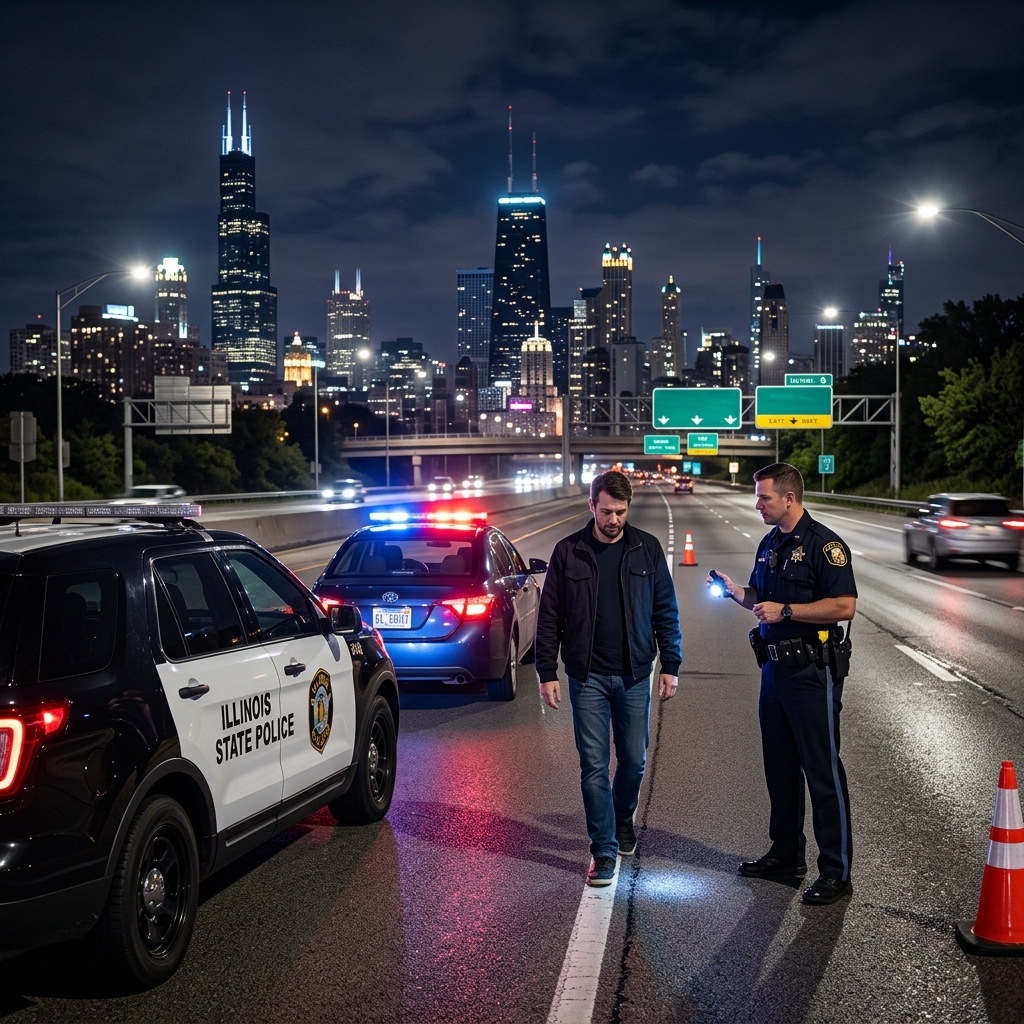
Illinois has some of the strictest driving under the influence (DUI) rules in the country, and the consequences of an arrest can affect your freedom, your finances, and your ability to drive long after the case ends. This guide explains how Illinois defines DUI, the legal limits for alcohol and drugs, the difference between criminal penalties and license suspensions, and when a charge becomes an aggravated DUI.
How Illinois Legally Defines DUI
Under Illinois law, DUI is more than just drunk driving. A person can be charged if they are driving or in actual physical control of a vehicle while impaired by alcohol, drugs, or a combination of substances. You do not have to be moving; simply sitting behind the wheel with the ability to operate the vehicle can be enough.
Illinois uses both an impairment standard and a per se blood alcohol concentration (BAC) standard for alcohol-related offenses.
- Impairment standard: DUI occurs when alcohol or drugs render the person incapable of driving safely, even if the BAC is below 0.08.
- Per se standard: If a chemical test shows a BAC at or above the legal limit, impairment does not have to be separately proved.
Alcohol BAC Limits in Illinois
Illinois recognizes different BAC limits depending on the type of driver and vehicle.
- Standard drivers (21 and older): Per se limit of 0.08% BAC.
- Commercial drivers: Limit of 0.04% BAC when operating a commercial vehicle such as a truck or school bus.
- Under 21 (zero tolerance): Any trace amount of alcohol above 0.00% can lead to enforcement action and potential suspension under the state’s zero-tolerance rules.
Importantly, Illinois allows arrest even when BAC is between 0.05% and 0.07% if other evidence shows the person is too impaired to drive. That means a driver can face DUI charges below the traditional 0.08 threshold when officers can document unsafe driving or other signs of impairment.
Drug and Cannabis Impairment
DUI in Illinois also covers impairment by illegal drugs, prescription medications that make driving unsafe, and cannabis. For THC, the psychoactive component of marijuana, Illinois law provides a specific concentration threshold: a driver may be arrested if testing shows five nanograms per milliliter (5 ng/ml) of THC in whole blood while operating a vehicle. As with alcohol, impairment can also be proved by behavior and driving pattern, not just test results.
Criminal Penalties for DUI: First and Subsequent Offenses
DUI penalties in Illinois escalate based on prior convictions, BAC level, and aggravating circumstances such as transporting young children or causing injury. Most first offenses begin as a Class A misdemeanor, but repeated or aggravated cases can become felonies.
First DUI Offense
A standard first DUI in Illinois is typically charged as a Class A misdemeanor. Possible criminal penalties include:
- Up to one year (or 364 days) in county jail.
- Fines up to $2,500, plus court costs and assessments.
- Revocation of driving privileges for at least one year upon conviction.
- Mandatory alcohol or drug evaluation and completion of recommended treatment.
In practice, judges often reserve jail for first offenses that involve aggravating factors, such as extremely high BAC, accident with injuries, or transporting a minor. Many first-time offenders may instead receive probation or court supervision, though supervision is a discretionary outcome and still carries significant conditions.
Impact of High BAC on Penalties
Illinois imposes extra penalties when a driver’s BAC is 0.16% or higher, which the law treats as an aggravating circumstance.
- First offense with BAC ≥ 0.16: Minimum 100 hours of community service and an additional fine of at least $500, on top of other penalties.
- Second offense with BAC ≥ 0.16: Mandatory minimum of two days in jail and an additional fine of at least $1,250.
These enhanced penalties reflect the increased risk associated with very high levels of intoxication.
DUI Involving Children Under 16
Transporting a child under the age of 16 while committing DUI is treated especially seriously.
- First offense with a child passenger: Possible additional jail time (up to six months), a mandatory minimum fine of $1,000, and at least 25 days of community service in a program benefiting children.
- Second offense with a child passenger: The case may qualify as a felony, raising the stakes considerably.
Second and Third DUI Convictions
Repeat offenses increase the likelihood of jail time and long-term loss of driving privileges.
| Offense Number | Typical Classification | Key Penalties |
|---|---|---|
| Second DUI | Usually Class A misdemeanor; can be felony if child under 16 transported. | – Mandatory minimum of 5 days in jail or 240 hours of community service. – Fine up to $2,500. – License revocation for at least 5 years if second conviction occurs within 20 years. |
| Third DUI | Generally treated as an Aggravated DUI, often a Class 4 felony. | – Felony sentencing ranges (often 1–3 years or more). – Potential fines up to $25,000 depending on felony level. – Long-term license revocation (commonly at least 5 years). |
Aggravated DUI: When a Misdemeanor Becomes a Felony
In Illinois, any DUI that results in a felony charge is classified as an Aggravated DUI. The exact felony class and sentencing range depend on the circumstances, but penalties are significantly more severe than for a standard misdemeanor DUI.
Common situations that may lead to an aggravated DUI include:
- Third or subsequent DUI offenses.
- DUI while transporting a child under 16, especially on a second or later offense.
- DUI while driving a school bus or similar vehicle with passengers.
- DUI causing great bodily harm, permanent disability, or disfigurement.
- DUI resulting in the death of another person.
For aggravated DUI involving serious injury or death, Illinois law provides long prison ranges. For example, involvement in a crash causing death can trigger minimum prison terms starting at three years and increasing if multiple deaths occur. These cases also typically involve extended license revocations and intense scrutiny from prosecutors and courts.
Criminal Case vs. License Suspension: Two Separate Tracks
One of the most confusing parts of Illinois DUI law is that a single arrest triggers two different processes:
- A criminal case in court, where guilt or innocence on the DUI charge is decided and criminal penalties may be imposed.
- An administrative license suspension, handled by the Illinois Secretary of State, which can restrict driving privileges even if the criminal case is later reduced or dismissed.
Statutory Summary Suspension
After a DUI arrest, Illinois does not wait for a conviction before acting on your license. The state uses a process called statutory summary suspension, where driving privileges are automatically suspended based on the test result or refusal, not on the court’s verdict.
Typical patterns include:
- Drivers who take a chemical test and register over the legal limit (0.08% BAC for standard drivers) often face a 6‑month suspension.
- Drivers who refuse testing usually face a 12‑month suspension.
These suspensions begin automatically after a temporary permit expires and can remain in effect even if the DUI charge is later reduced or dropped. The suspension is issued by the Secretary of State and is separate from any court-ordered revocation that might result from a conviction.
Timing and Challenging the Suspension
Illinois law sets a start date for the statutory summary suspension, often on the 46th day following notice. A driver has a limited window to challenge the suspension through a hearing, which focuses on issues such as whether the officer had reasonable grounds for the arrest and whether procedures were followed.
If the suspension is not successfully challenged, it will run for the full statutory period, independent of what happens in the criminal case. This is why many attorneys advise defendants to address both court deadlines and Secretary of State procedures as soon as possible.
Special Rules for Young and Commercial Drivers
Two groups face stricter standards under Illinois DUI law: drivers under 21 and commercial drivers.
Zero-Tolerance for Drivers Under 21
Illinois has a zero‑tolerance policy for alcohol use by drivers younger than 21. If a person under 21 is found operating a vehicle with any measurable BAC above 0.00%, law enforcement can take action, and administrative penalties such as license suspension are likely.
These sanctions can arise even if the BAC is below 0.08%, reflecting the state’s goal of deterring underage drinking and driving.
Commercial Drivers
Commercial drivers face a lower per se limit of 0.04% BAC while driving a commercial vehicle like a truck or bus. Because these drivers often transport goods or passengers, violations can lead not only to criminal penalties but also to substantial professional consequences, including disqualification from operating commercial vehicles under federal and state rules.
Court Supervision and Non‑Conviction Outcomes
Unlike many states, Illinois allows certain first‑time DUI offenders to avoid a formal conviction through a disposition known as court supervision. Under supervision, the court withholds entering a conviction while the defendant meets conditions such as treatment, possible community service, and remaining arrest‑free for a set period.
If supervision is successfully completed, the case is dismissed rather than resulting in a guilty finding. This can help avoid some long‑term consequences, particularly certain forms of license revocation and insurance impacts. However:
- Supervision is available only at the judge’s discretion and typically only for first offenses.
- Even with supervision, the statutory summary suspension process can still restrict driving privileges following the arrest.
- Future DUI charges will still see the supervised case in the person’s history and may be treated as a prior offense for enhancement purposes.
Practical Consequences Beyond Courtroom Penalties
The legal penalties are only part of the impact of a DUI in Illinois. A conviction or even an arrest can carry wider consequences, including:
- Financial strain: Fines, court costs, treatment fees, and increased insurance premiums.
- Employment issues: Problems for those who drive for work or hold professional licenses.
- Mandatory ignition interlock devices: Many first‑time offenders must install a Breath Alcohol Ignition Interlock Device (BAIID) to drive legally on certain permits.
- Long‑term record: DUI records affect future sentencing and may limit travel or immigration options.
Frequently Asked Questions About Illinois DUI Law
Can I be charged with DUI if my BAC is under 0.08?
Yes. Illinois allows DUI charges when alcohol or drugs render a person incapable of driving safely, even if the BAC is below 0.08. Officers may rely on driving behavior, field sobriety tests, and other observations to support the charge, and arrests are permitted for BAC between 0.05 and 0.07 if there is additional evidence of impairment.
Will I automatically lose my license after a first DUI?
Loss of driving privileges can occur through the statutory summary suspension process after an arrest, separate from any conviction. For many first‑time offenders, a failed chemical test can result in a six‑month suspension, and refusal usually leads to a twelve‑month suspension, starting after a temporary permit expires. A conviction can add a one‑year revocation on top of the administrative suspension.
Is jail time common for a first DUI in Illinois?
Although first DUI offenses carry up to one year of potential jail time as a Class A misdemeanor, actual incarceration is less common when there are no aggravating factors. Judges frequently use probation or supervision for first‑time offenders, but high BAC, accidents, injuries, or child passengers greatly increase the chances of jail.
What makes a DUI an aggravated DUI?
DUI becomes aggravated when it is charged as a felony, which can happen for reasons such as multiple prior offenses, transporting a child, causing great bodily harm, or causing a fatal crash. Aggravated DUI carries much harsher prison ranges and higher fines compared to a misdemeanor.
Does refusing a breath test help my case?
Refusal may prevent the State from using a BAC reading, but it triggers longer license suspensions under Illinois law. A typical first‑time refusal leads to a twelve‑month statutory summary suspension instead of six months for failing the test. Whether refusal is beneficial depends on the specific facts, so many drivers consult counsel before deciding how to respond to testing requests.
References
- Illinois DUI Laws — National College for DUI Defense. 2023-05-01. https://www.ncdd.com/illinois-dui-laws
- DUI Laws in Illinois: From Arrest to Court — Lafata Law LLC. 2024-04-10. https://lafatalaw.com/blog/dui-laws-in-illinois-from-arrest-to-court/
- Illinois DUI Laws — FindLaw. 2023-09-15. https://www.findlaw.com/state/illinois-law/illinois-dui-laws.html
- Alcohol-Impaired Driving in Illinois — Illinois Criminal Justice Information Authority. 2022-12-01. https://icjia.illinois.gov/researchhub/articles/alcohol-impaired-driving-in-illinois
- Illinois DUI Factbook 2025 — Illinois Secretary of State. 2025-01-01. https://www.ilsos.gov/content/dam/publications/pdf_publications/dsd_a118.pdf
- Illinois DUI Laws and Penalties Chart — The Davis Law Group, P.C. 2023-02-20. https://www.illinoisdriverslicensereinstatementlawyer.com/practice-areas/dui-defense/dui-sentencing-penalties/
- Will I Lose My License After a First DUI in Illinois? — Eric J. Blatti, Attorney at Law. 2026-01-10. https://www.blattilaw.com/blog/will-i-lose-my-license-after-a-first-dui-in-illinois
Similar Articles








Read full bio of Sneha Tete




