
Understanding Drug Possession Laws in the United States
A clear, practical guide to U.S. drug possession laws, penalties, and defenses for anyone facing charges or seeking to stay informed.
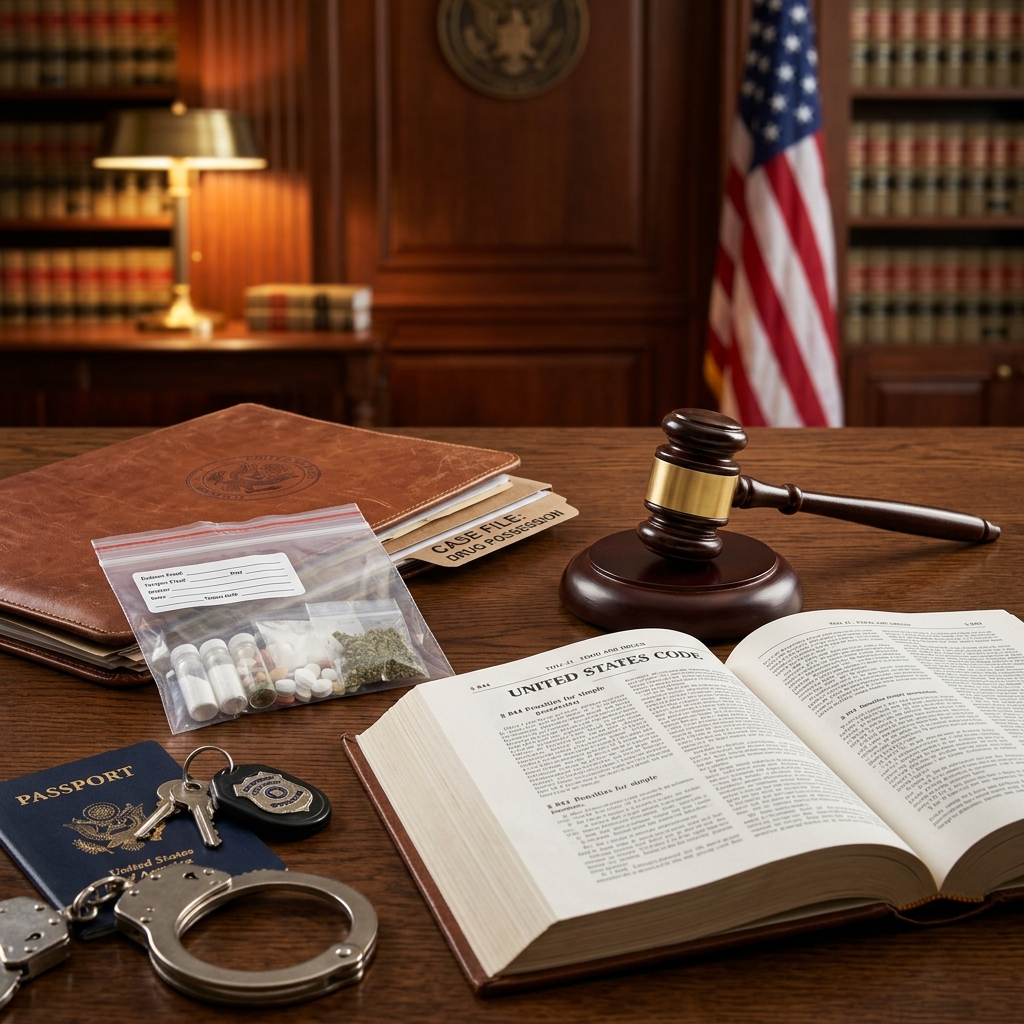
Drug possession laws in the United States are complex, and the consequences of a conviction can be severe. While every state has its own criminal code, federal law also plays a major role in regulating controlled substances. Together, these rules determine when possession is a crime, how serious the offense is, and what penalties you may face.
This article explains how drug possession laws work, the difference between simple possession and more serious offenses, typical penalties, aggravating factors, and common defenses. It is for information only and is not a substitute for legal advice from a qualified attorney.
What Counts as “Drug Possession”?
In most jurisdictions, possession means having control over a substance that the law classifies as illegal or tightly regulated. Under federal law, it is unlawful to knowingly or intentionally possess a controlled substance unless it was obtained with a valid prescription or other legal authorization.
Key Elements of a Possession Charge
To secure a conviction, prosecutors generally must prove several elements beyond a reasonable doubt:
- Controlled substance: The material must be one of the drugs listed in a statute or in a controlled substances schedule.
- Possession: The defendant had actual control (for example, in a pocket) or constructive control (for example, hidden in a car they control).
- Knowledge: The defendant knew the substance was present and understood it was a controlled drug or illegal.
- Lack of legal authority: The drug was not possessed under a valid prescription or other lawful exception.
These requirements matter. If a person truly did not know a substance was a drug, or if they had a legitimate prescription, the charge may not be sustainable.
Actual vs. Constructive Possession
Courts recognize different types of possession, which can affect how a case is argued:
- Actual possession: The drug is directly on the person, such as in clothing, a bag being carried, or held in a hand.
- Constructive possession: The drug is not on the person but is in a place they control or have dominion over, such as a glove compartment or a bedroom, and they know it is there.
Constructive possession can be controversial, especially when multiple people have access to the same location. Defense lawyers often challenge whether the accused really had control or knowledge.
How Drugs Are Classified: The Role of Schedules
Both federal and state laws organize drugs into categories based on medical use and potential for misuse. At the federal level, the Controlled Substances Act (CSA) places regulated substances into five schedules.
| Schedule | Typical Characteristics | Examples |
|---|---|---|
| Schedule I | High potential for misuse, no accepted medical use under federal law | Heroin, LSD; cannabis remains Schedule I federally |
| Schedule II | High misuse potential, but some medical use | Morphine, cocaine in certain medical forms, some stimulants |
| Schedules III–V | Decreasing misuse potential, wider medical use | Many prescription painkillers, anti-anxiety drugs, and some stimulants |
Schedule I drugs usually carry harsher penalties for possession than lower-schedule substances, though the exact punishment still depends on the amount and the jurisdiction.
Simple Possession vs. More Serious Drug Crimes
Not all drug crimes are treated equally. The law distinguishes between possessing a small amount for personal use and conduct that suggests distribution or large-scale trafficking.
Simple Possession
Simple possession generally refers to having a relatively small quantity of drugs for personal use, with no clear evidence of sales or distribution. Federal law treats simple possession of most controlled substances as a misdemeanor.
- Under federal law, simple possession can carry up to one year in jail and a minimum fine of $1,000 for a first offense.
- Penalties increase if the person has prior drug convictions, including mandatory minimum jail terms and higher fines.
States vary widely. Some treat first-time simple possession of certain drugs as a low-level misdemeanor or even a civil offense, while others impose jail time or make it a felony.
Possession With Intent to Distribute
If prosecutors believe the drugs were meant for sale rather than personal use, the charge may be upgraded to possession with intent to distribute. This is usually a felony and carries much more serious penalties.
Evidence that can support an intent-to-distribute charge includes:
- Large quantities of drugs beyond typical personal use amounts
- Packaging materials, scales, customer lists, or large amounts of cash
- Text messages, social media, or other communications suggesting sales
The quantity thresholds that trigger intent-to-distribute charges vary by state. In some jurisdictions, statutes explicitly state that possession of more than a certain amount automatically creates a presumption of intent to distribute.
Trafficking and High-Quantity Offenses
At an even higher level, drug trafficking involves manufacturing, transporting, or distributing large quantities of controlled substances. Trafficking often carries mandatory minimum prison terms, meaning judges have limited ability to impose lighter sentences.
- Federal law sets severe penalties for trafficking, including multi-year mandatory minimums and, in some cases, potential life sentences.
- Many states define trafficking based largely on quantity and specify mandatory minimum prison terms once certain thresholds are exceeded.
A person charged only with possession can find their case reclassified as trafficking if the amount of drugs surpasses specific statutory limits. This escalation dramatically increases the stakes.
Factors That Affect Penalties
Sentences for drug possession are rarely one-size-fits-all. Courts and statutes consider multiple factors when determining how serious an offense is and what punishment should apply.
Type and Schedule of the Drug
Possession of a Schedule I drug usually leads to more severe penalties than possession of a lower-schedule substance. For example:
- Heroin, LSD, and other Schedule I drugs often carry greater sentencing ranges.
- Cannabis may be treated more leniently in many states, though it remains illegal under federal law.
Quantity and Thresholds
The amount possessed is one of the most important factors. Many state laws specify gram or pill thresholds that can transform a simple possession case into an intent-to-distribute or trafficking offense.
For example, some statutes state that possessing more than certain quantities of cocaine, opioids, or amphetamines will automatically be treated as distribution or trafficking, which carries much harsher penalties and mandatory minimum sentences.
Criminal History
Prior drug convictions often increase penalties:
- Federal law imposes escalating mandatory minimum jail terms and higher fines for repeated simple possession offenses.
- States may enhance charges or move an offense from misdemeanor to felony based on repeat offending.
Location and Protected Areas
Drug offenses committed in certain locations can trigger additional penalties. Federal statutes and many state laws impose enhanced sentences for possession with intent to distribute near schools, playgrounds, or similar protected areas.
Collateral Consequences
Beyond jail and fines, a drug conviction can have lasting effects:
- Loss of eligibility for some federal benefits, such as certain student loans and grants
- Potential forfeiture of property used in drug crimes, including vehicles or cash
- Difficulty obtaining professional licenses or certain jobs due to a criminal record
Federal vs. State Drug Possession Laws
Drug laws in the United States operate on two levels: federal and state. Understanding the difference is crucial, particularly in areas where state law has decriminalized or legalized certain substances.
Federal Drug Possession Law
Federal law, mainly the Controlled Substances Act, applies in every state and is enforced by agencies such as the Drug Enforcement Administration (DEA).
- Simple possession of a controlled substance is a federal offense with up to one year in prison and a minimum $1,000 fine for a first conviction.
- Repeated offenses and possession with intent to distribute carry far higher penalties, including multi-year prison sentences and large fines.
- Regardless of state laws, possession of cannabis remains illegal under federal law, though enforcement priorities vary.
State Drug Possession Laws
States have their own criminal codes and controlled substances acts. While they often mirror federal scheduling, they differ in how they punish possession and in whether some substances are decriminalized or legalized.
Key variations among states include:
- Different thresholds for when possession becomes trafficking or intent to distribute
- Availability of diversion, treatment, or deferred adjudication programs
- How cannabis possession is treated, including decriminalization or legalization in some states
Because of these differences, two people possessing similar amounts of the same drug may face very different consequences depending on where they are arrested.
Defenses and Legal Options in Possession Cases
Being accused of drug possession does not automatically mean a conviction will follow. There are several common defenses and legal strategies that can be relevant, depending on the facts.
Challenging the Stop, Search, or Seizure
Drug cases often arise from traffic stops, searches of homes, or searches of personal belongings. If law enforcement violated constitutional protections against unreasonable searches and seizures, evidence may be excluded, weakening or ending the case.
Common issues include:
- Lack of reasonable suspicion or probable cause for a stop
- Invalid search warrants or improper execution of a warrant
- Searches conducted without consent or an applicable exception to the warrant requirement
Disputes Over Possession and Knowledge
As noted earlier, prosecutors must prove that the defendant knowingly possessed the controlled substance. Defense arguments can focus on:
- Whether the accused knew the drug was present
- Whether they understood it was illegal or a controlled substance
- Whether they had control over the place where the drugs were found, particularly in shared spaces
Questioning the Substance or Quantity
Laboratory analysis is typically required to confirm that a seized substance is a controlled drug and to determine its weight. Errors in testing, mishandling of evidence, or incomplete documentation can be challenged.
Diversion and Treatment Programs
Many jurisdictions recognize that substance use disorders are medical and social problems as well as legal ones. They may offer diversion programs, drug courts, or treatment-focused options, particularly for first-time or low-level offenders.
These programs can include:
- Supervised treatment plans and counseling
- Regular court reviews and compliance monitoring
- Potential dismissal or reduction of charges upon successful completion
Eligibility varies widely by state and by the nature of the charges.
Frequently Asked Questions About Drug Possession
Is simple possession always a misdemeanor?
No. Under federal law, simple possession is generally a misdemeanor with up to one year in jail and a minimum $1,000 fine for a first offense. However, states can classify possession of certain drugs or larger amounts as felonies, even when there is no evidence of intent to distribute.
Can I be charged if the drugs weren’t on my person?
Yes. Constructive possession allows charges when drugs are found in a place you control and you are aware of them, even if they are not physically on your body. However, the prosecution must prove both control and knowledge, which can be contested.
What if I have a valid prescription?
Possessing a controlled substance under a legitimate prescription from a licensed medical practitioner is generally lawful. Problems arise when the drugs are obtained fraudulently, shared, sold, or possessed in violation of prescription rules.
How do state cannabis laws relate to federal law?
Some states have legalized or decriminalized cannabis for medical or recreational use, but at the federal level cannabis remains a Schedule I drug. Federal authorities retain the power to enforce federal law, although enforcement priorities can differ over time.
Do drug possession convictions affect future opportunities?
Yes. In addition to jail and fines, drug convictions can lead to loss of certain federal benefits, potential property forfeiture, and long-term impacts on employment and licensing. This is why many defendants seek legal advice early and explore options that minimize the long-term consequences.
When to Seek Legal Help
Because drug possession laws are a mix of federal and state rules, and because penalties depend on many factors—type and amount of drug, prior record, location, and more—anyone facing charges should speak with a qualified criminal defense attorney as soon as possible.
An attorney can:
- Evaluate whether police followed proper procedures
- Explain the exact charges and potential penalties in your jurisdiction
- Identify defenses or negotiate plea options
- Explore diversion or treatment-based alternatives where available
Early legal guidance often makes a significant difference in both the outcome of a case and the long-term impact on a person’s life.
References
- 21 U.S. Code § 844 – Penalties for simple possession — U.S. Congress / Legal Information Institute. 2023-12-22. https://www.law.cornell.edu/uscode/text/21/844
- Drug Policy — U.S. Drug Enforcement Administration. 2024-01-10. https://www.dea.gov/drug-information/drug-policy
- Federal Alcohol and Drug Penalties — Standard College of Nursing. 2023-08-01. https://www.standardcollege.edu/campus-safety/federal-alcohol-drug-penalties/
- Frequently Used Federal Drug Statutes — U.S. Department of Justice, District of New Hampshire. 2022-05-15. https://www.justice.gov/usao-nh/frequently-used-federal-drug-statutes
- Drug Possession Laws: 50-State Survey — Justia Criminal Law Center. 2024-04-05. https://www.justia.com/criminal/offenses/drug-crimes/drug-possession-laws-50-state-survey/
- Federal and State Drug Laws: Possession, Trafficking, and Testing — Recovery.com. 2023-11-12. https://recovery.com/addiction/us-drug-laws/
- Federal Drug Policy of the United States — Overview based on U.S. federal sources. 2022-09-01. https://en.wikipedia.org/wiki/Federal_drug_policy_of_the_United_States
Similar Articles








Read full bio of Sneha Tete


