
Understanding Drug Paraphernalia Charges in the U.S.
Learn how drug paraphernalia is defined, charged, and punished under U.S. federal and state criminal laws, plus defenses and practical tips.
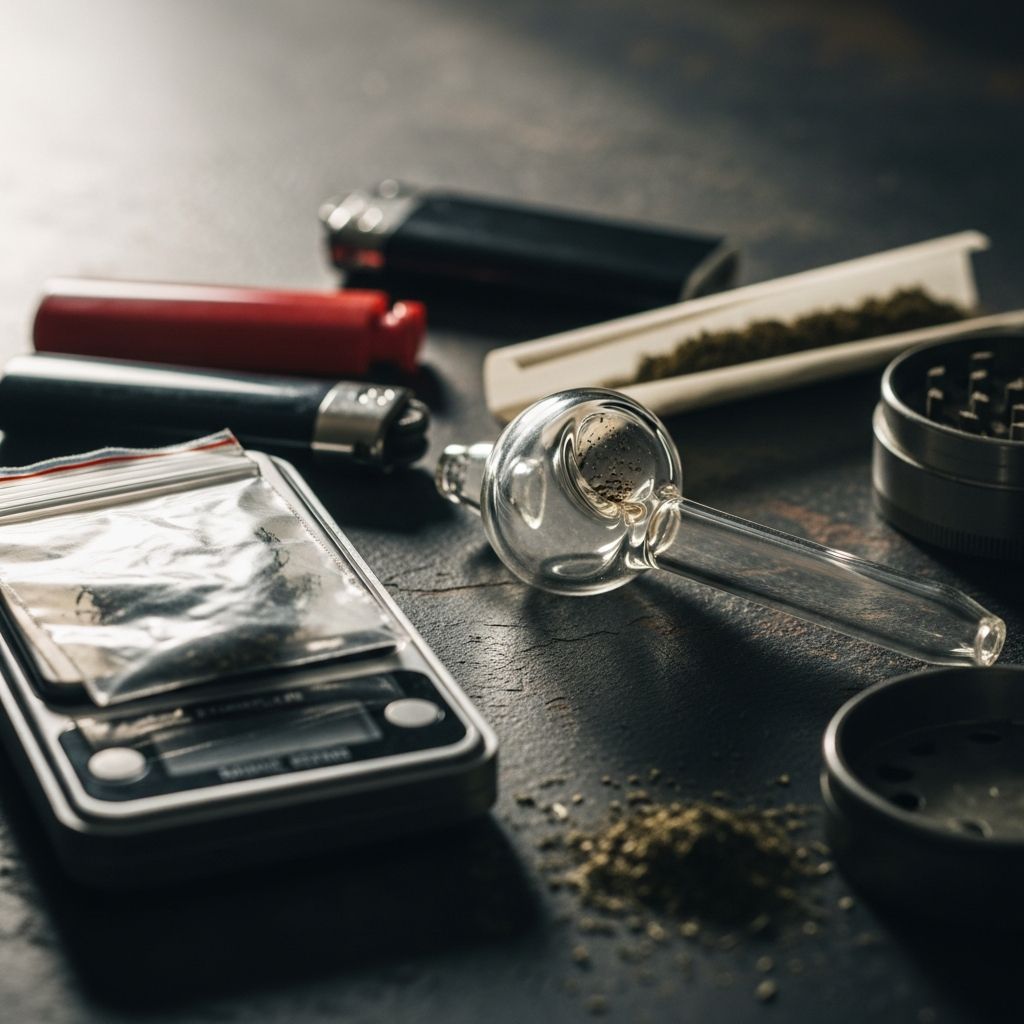
Drug paraphernalia charges are among the most common drug-related offenses in the United States, and they often arise even when no illegal drugs are found. Understanding what counts as drug paraphernalia, how these cases are prosecuted, and what penalties and defenses exist can make a major difference in the outcome of a case.
What Counts as Drug Paraphernalia?
U.S. federal law defines drug paraphernalia broadly as virtually any equipment, product, or material that is primarily intended or designed for manufacturing, processing, testing, packaging, storing, or consuming controlled substances. State statutes adopt similar language, although the precise wording and scope vary by jurisdiction.
Common Categories of Paraphernalia
- Consumption devices – items used to smoke, ingest, inject, or inhale drugs
- Preparation tools – items used to cut, dilute, mix, or otherwise prepare drugs for use
- Manufacturing equipment – materials used for growing, producing, or synthesizing controlled substances
- Packaging and distribution items – containers and tools used to weigh, package, or conceal drugs
Illustrative Examples
The same physical object can be either lawful or unlawful depending on context and intent. Below are common examples that may be treated as paraphernalia when tied to illegal drug activity.
| Type of item | Typical examples | Possible lawful uses | When it may be paraphernalia |
|---|---|---|---|
| Smoking & inhalation | Pipes, bongs, vape pens, bowls | Tobacco or legal herbal products | Traces of illegal drugs, admissions of drug use, or other drug evidence |
| Injection & ingestion | Hypodermic needles, syringes, spoons, tourniquets | Medical treatment, diabetes care, veterinary use | Associated with non-prescribed injectable drugs or residue of controlled substances |
| Packaging & weighing | Small baggies, vials, scales, scoops | Food storage, jewelry, hobby supplies | Drug residue present, large numbers of baggies, or presence of drugs and cash |
| Growing & manufacturing | Grow lights, hydroponic systems, chemical glassware | Gardening, lab research, classroom demonstrations | Used or intended to grow or produce controlled substances |
Because so many items have everyday uses, prosecutors and courts typically look at the surrounding circumstances, including how the item is displayed, marketed, or found, and whether illegal drugs or residues are present.
Federal vs. State Drug Paraphernalia Laws
Drug paraphernalia is regulated at both the federal and state levels. Each level of government focuses on different conduct and imposes different penalties.
Federal Law: Focus on Commerce, Not Mere Possession
Under 21 U.S.C. § 863, it is unlawful at the federal level to:
- Sell or offer for sale drug paraphernalia
- Use the mail or other interstate facilities to transport paraphernalia
- Import or export paraphernalia
Federal law does not create a general crime of simple possession of paraphernalia without a commercial or interstate component. A federal conviction for unlawful sale or transport of paraphernalia can carry up to three years in prison, plus fines, and the paraphernalia itself is subject to seizure and forfeiture.
State Laws: Simple Possession and Related Offenses
In contrast, most states directly criminalize the possession, use, or delivery of drug paraphernalia, even when there is no sale or interstate activity. A 2022 analysis of state statutes notes that almost all states define drug paraphernalia comprehensively and impose penalties for use, possession with intent to use, and distribution.
Key ways state laws often differ include:
- Whether possession is a standalone offense or only criminal if tied to other drug crimes
- Whether needles and syringes are included in the definition (some states explicitly exclude them, especially where syringe service programs are authorized)
- Penalty level (from low-level misdemeanors to felonies, particularly for delivery to minors or for manufacturing activity)
Elements the Prosecution Must Prove
Although every jurisdiction has its own statute, several core elements frequently appear in state paraphernalia laws.
Typical Elements of a Possession Charge
- Possession or control – The accused exercised actual or constructive control over the item, such as carrying it, having it in a vehicle they control, or storing it at home.
- Knowledge of presence – The accused knew the item was present; for example, it was in their personal bag or clearly visible in their room.
- Knowledge of character and intended use – The accused knew the item was used, or intended to be used, for consuming, manufacturing, or distributing illegal drugs.
Prosecutors may use circumstantial evidence such as admissions, text messages, drug residue, or the presence of controlled substances nearby to show knowledge and intent.
Factors Courts Commonly Consider
Some laws list specific factors that courts or juries may consider when deciding whether an item is paraphernalia, including:
- Statements by the owner or user about what the item is for
- Drug residue on or near the item
- Proximity of the item to controlled substances
- Instructions or advertising materials describing drug-related use
- Expert testimony on typical drug-using practices
Penalties and Collateral Consequences
The severity of a drug paraphernalia conviction depends heavily on state law, the facts of the case, and any prior record. Many states treat simple possession as a misdemeanor, but enhance penalties for repeat offenses, sales, or involvement of minors.
Possible Criminal Penalties
- Jail or prison – State misdemeanor convictions commonly carry up to one year in jail; some first offenses carry less or result in suspended sentences, while felony paraphernalia offenses can carry multi-year prison terms.
- Fines – Statutes frequently authorize fines, sometimes in the thousands of dollars, especially for commercial distribution.
- Probation – Courts often impose supervised or unsupervised probation, with conditions such as drug testing, treatment, and searches.
- Community service – Many sentences include community service requirements, especially for first-time offenders.
Collateral Consequences
Even when jail time is limited, a paraphernalia conviction can carry long-lasting non-criminal effects:
- Employment and licensing – Drug-related convictions can affect eligibility for certain professional licenses and can appear on background checks conducted by employers.
- Education and financial aid – Some schools consider drug-related discipline in admissions or housing decisions, and certain offenses may affect eligibility for institutional aid or scholarships.
- Immigration consequences – Non-citizens may face immigration scrutiny or removal proceedings based on drug-related convictions, including paraphernalia, depending on federal immigration interpretations.
- Forfeiture of property – Paraphernalia and associated items (such as cash or equipment) can be seized and forfeited in both federal and state proceedings.
Defenses to Drug Paraphernalia Charges
Available defenses depend on the statute and facts, but several strategies frequently arise in paraphernalia cases.
Lack of Possession or Control
If several people have access to a location (such as roommates or passengers in a vehicle), it may be difficult for the prosecution to prove who actually possessed or controlled the item. Demonstrating that the accused did not exercise control or did not know about the item can undermine a key element of the charge.
No Knowledge of Illegal Use
Because many items have legitimate purposes, a common defense is that the accused did not know the item was used for, or intended for, illegal drugs. For example, a scale used for a hobby business or baggies used for crafts may not qualify as paraphernalia absent evidence of drug intent.
Legal or Authorized Use
Federal law exempts items lawfully authorized for medical, research, or official law enforcement purposes. State laws may similarly exclude paraphernalia used in connection with:
- Authorized medical treatment
- Harm reduction programs (such as syringe service programs authorized under state or local law)
- Licensed laboratory or industrial work
Constitutional Challenges
Defendants may challenge paraphernalia charges based on:
- Unlawful searches or seizures – If police violated the Fourth Amendment (for example, by searching without a warrant or valid exception), evidence may be suppressed.
- Defective warrants or affidavits – Inaccurate or misleading warrant applications can lead to suppression of seized paraphernalia.
Diversion and Treatment Options
Some jurisdictions allow eligible defendants, particularly first-time or low-level offenders, to enter drug treatment or diversion programs instead of receiving a traditional conviction. Successful completion may result in reduced charges, dismissal, or expungement, though availability and eligibility rules vary widely by state.
How Drug Paraphernalia Laws Interact With Broader Drug Policy
Drug paraphernalia laws do not exist in isolation; they operate alongside broader trends in drug policy, including decriminalization, harm reduction, and public health initiatives.
Impact of Marijuana Legalization
In states that have legalized or decriminalized marijuana, lawmakers often revisit paraphernalia statutes to address items used solely with lawful cannabis products. Some states treat marijuana paraphernalia differently from paraphernalia associated with other controlled substances, sometimes assigning lower penalties.
Harm Reduction and Syringe Access
The U.S. Centers for Disease Control and Prevention and other public health authorities recognize syringe service programs and related harm reduction strategies as effective ways to reduce HIV and hepatitis transmission among people who inject drugs. In response, some states have:
- Excluded sterile syringes from the legal definition of paraphernalia, or
- Created explicit statutory protections for participants in authorized syringe access programs.
However, these reforms are uneven, and many jurisdictions still criminalize possession of syringes outside narrow exceptions.
Practical Steps If You Face a Paraphernalia Charge
While only a licensed attorney can provide legal advice, several practical considerations are important for anyone confronted with a drug paraphernalia investigation or charge:
- Do not discuss details with police without counsel – Statements about what an item is for can be powerful evidence of intent.
- Document lawful uses – Receipts, business records, or medical documentation may help show that items were used for legitimate purposes.
- Ask about diversion or treatment programs – In some areas, early engagement with treatment or diversion can significantly improve outcomes.
- Address underlying substance use issues – Courts often look favorably on voluntary steps such as counseling or rehabilitation.
Frequently Asked Questions (FAQs)
Q: Can I be charged with drug paraphernalia if no drugs are found?
Yes. Many states allow charges based solely based on the item and surrounding circumstances, even if no controlled substances are recovered, as long as prosecutors can show intent that the item be used with illegal drugs.
Q: Are paraphernalia charges usually misdemeanors or felonies?
Simple possession is commonly treated as a misdemeanor, often with potential jail terms of up to one year, while selling, delivering to minors, or using paraphernalia for manufacturing drugs can be charged as felonies with more severe penalties.
Q: Can everyday items like baggies or scales really count as paraphernalia?
Yes, depending on context. Items such as small baggies, digital scales, or spoons can be treated as paraphernalia when combined with evidence of drug activity, such as residue, text messages, or large quantities of controlled substances.
Q: Are syringes always considered drug paraphernalia?
No. Some states exclude syringes and needles from their paraphernalia definitions, especially where syringe service programs are authorized, while others criminalize possession outside narrow medical or program-based exceptions.
Q: Does federal law punish simple possession of paraphernalia?
Federal law focuses on selling, importing, exporting, or using interstate commerce to transport paraphernalia; it does not create a general federal crime for mere possession without a commercial or interstate component.
References
- 21 U.S. Code § 863 – Drug paraphernalia — U.S. Government Publishing Office. 2018-02-08. https://www.law.cornell.edu/uscode/text/21/863
- What Is Possession of Drug Paraphernalia? — LawInfo / Thomson Reuters. 2023-06-01. https://www.lawinfo.com/resources/drug-crime/possession-of-paraphernalia.html
- Drug Paraphernalia Fast Facts — U.S. Department of Justice, National Drug Intelligence Center. 2003-08-01. https://www.justice.gov/archive/ndic/pubs6/6445/6445p.pdf
- Drug Paraphernalia: Summary of State Laws — Legislative Analysis and Public Policy Association. 2022-06-01. https://legislativeanalysis.org/wp-content/uploads/2022/09/Drug-Paraphernalia-Summary-of-State-Laws-FINAL.pdf
- Possession of Drug Paraphernalia Laws: California HS 11364 — Wallin & Klarich. 2022-05-10. https://www.wklaw.com/possession-drug-paraphernalia-overview.html
- § 11364 HS – Possession of Drug Paraphernalia — Shouse Law Group. 2023-09-15. https://www.shouselaw.com/ca/defense/health-and-safety-code/11364/
- What Is the Difference Between Drug Paraphernalia and Marijuana Paraphernalia? — Randall & Stump, PLLC. 2021-11-12. https://www.federaldefensenc.com/what-is-the-difference-between-drug-paraphernalia-and-marijuana-paraphernalia/
Similar Articles








Read full bio of Sneha Tete




