
Understanding Dram Shop Liability for Teen DUI Cases
How alcohol-serving businesses and social hosts face legal exposure when minors or intoxicated patrons cause DUI injuries and deaths.
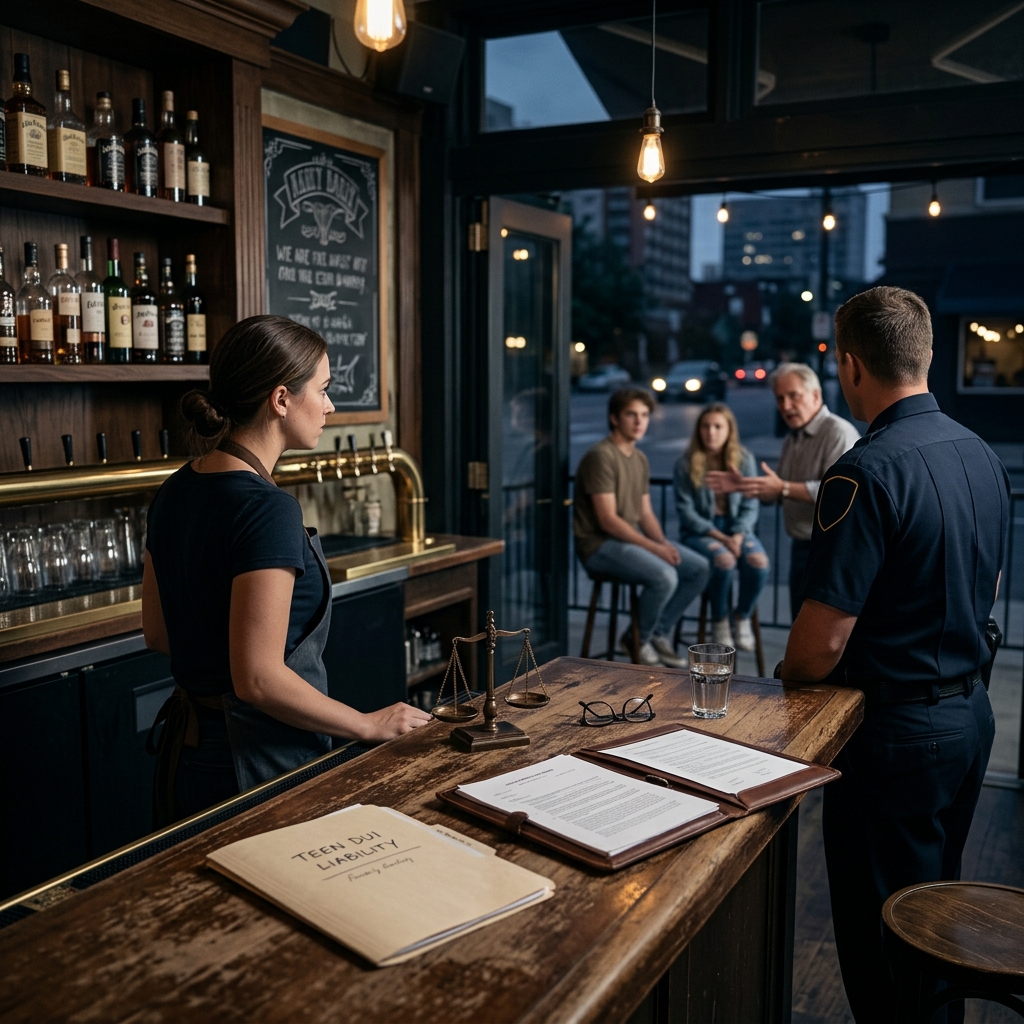
Businesses that serve or sell alcohol face significant legal exposure when minors or visibly intoxicated patrons leave their premises and cause drunk driving crashes. Dram shop and social host liability laws are designed to shift part of the responsibility for drunk driving away from the individual driver and onto the people and businesses that supplied the alcohol in dangerous circumstances.
For small business owners—especially bars, restaurants, liquor stores, and event venues—understanding these laws is critical. A single incident involving a teen driver can lead to catastrophic injuries, wrongful death, and multi-million-dollar settlements or verdicts, even where the business did not directly cause the accident itself.
What Is Dram Shop Liability?
Dram shop liability refers to the civil responsibility that commercial alcohol vendors may have for injuries and property damage caused by patrons who were illegally or negligently served alcohol. The term comes from historical references to taverns and bars that sold alcohol by the “dram,” a small measure of liquid.
Modern dram shop laws vary by state, but they generally create a cause of action against businesses that:
- Serve or sell alcohol to a visibly intoxicated person, and that person later causes injury or damage.
- Serve or sell alcohol to a minor below the legal drinking age who later injures themselves or others while intoxicated.
- In some jurisdictions, knowingly serve alcohol to individuals known to be habitual drunkards or alcohol-addicted.
Typically, these laws allow injured third parties—such as other drivers, passengers, or pedestrians—to sue both the intoxicated individual and the business that unlawfully provided alcohol.
Core Principles Behind Dram Shop Laws
Dram shop statutes are rooted in the idea that alcohol vendors are not passive participants in the chain of events leading to a crash. When a bartender or clerk continues to serve someone who is clearly drunk, or sells alcohol to a teenager, the law treats this as a contributing cause of the eventual harm.
Common principles include:
- Duty of care: Licensed establishments have a legal duty not to serve alcohol in certain circumstances—particularly to minors or visibly intoxicated people.
- Proximate cause: The injured party must show that the unlawful service of alcohol was closely linked to the resulting accident or harm.
- Foreseeability: Drunk driving is a foreseeable consequence of serving alcohol to someone who is already impaired, especially when they are likely to drive.
- Shared responsibility: The intoxicated driver remains liable, but the vendor may share civil responsibility for damages.
Teen DUI and Dram Shop Exposure
Teen drunk driving raises the stakes for alcohol vendors. Because minors are categorically prohibited from drinking, the law is often more protective of injured victims and far less forgiving toward businesses that serve underage patrons.
Why Teen DUI Cases Are Legally Different
When the driver is under the legal drinking age, several features heighten dram shop exposure:
- Absolute prohibition: In many states, selling or furnishing alcohol to minors is illegal under any circumstances, regardless of whether the minor appears intoxicated.
- Lower evidentiary burden: Plaintiffs may only need to show that the establishment served a minor and that the minor later caused injury while intoxicated, without proving visible intoxication at the time of service.
- Sympathetic plaintiffs: Juries often view cases involving teen victims or teen drivers as particularly serious, which can influence settlement and verdict amounts.
- Harsh criminal penalties: Teen drivers face license suspension, fines, and possible detention or incarceration under zero-tolerance DUI laws, underscoring the gravity of the situation.
Common Scenarios Involving Teen Drivers
Some recurring patterns in teen DUI dram shop claims include:
- Underage patrons using fake IDs to purchase alcohol at a bar or liquor store before a crash.
- Teens being served alcohol at a private party where adults failed to monitor or intervene.
- A minor being over-served at an establishment, then driving friends home and causing a multi-vehicle collision.
- A retail store selling large quantities of alcohol to minors before a planned high school party.
How Different States Handle Dram Shop Liability
Dram shop liability is controlled primarily by state statute, and the level of responsibility imposed on businesses varies widely across the United States.
| State Example | Key Dram Shop Features | Teen/Minor-Specific Rules |
|---|---|---|
| New York | Statutory cause of action under Alcoholic Beverage Control Law (e.g., §65), focusing on unlawful service to visibly intoxicated persons, minors, or habitual drunkards. Victims may recover actual and exemplary damages. | Service to anyone under 21 is unlawful and can create civil liability when the minor’s intoxication causes injury to third parties. |
| Texas | Texas Dram Shop Act allows lawsuits against establishments that serve obviously intoxicated patrons who later cause damages. Three conditions often must be met: obvious intoxication, causation, and resulting damages. | Any establishment that serves or sells alcohol to a person under 18 can be held liable for resulting damages, even if the minor was not visibly intoxicated at the time of sale. |
| South Carolina | Dram shop laws allow recovery from bars, liquor stores, and other retailers when they serve a visibly intoxicated person who later causes an accident. Evidence of visible intoxication is key. | Serving alcohol to minors can expose businesses to liability and significant settlements, including multi-million-dollar resolutions for overserving underage drivers. |
| Florida | General immunity for alcohol sellers, with narrow exceptions. Civil liability arises mainly when serving underage patrons or those known to be addicted to alcohol. | Both commercial sellers and social hosts can be liable when they knowingly serve underage individuals who then cause accidents while intoxicated. |
Social Host Liability: When Adults Serve Teens
In addition to dram shop laws aimed at businesses, many states recognize social host liability—civil responsibility for private individuals who serve alcohol in their homes or at private events.
Under social host rules, adults may be liable if they:
- Serve or knowingly allow alcohol consumption by minors on property they own or control.
- Provide alcohol to guests who are obviously intoxicated, knowing that they will be driving.
- Fail to take reasonable steps to stop underage drinking at a party or gathering.
Some states impose liability only when minors are involved, while others extend social host responsibility to situations involving clearly intoxicated adults. The legal consequences can include civil damages and, in certain circumstances, criminal charges.
Signs of Visible Intoxication
Because many dram shop statutes focus on whether a person was visibly intoxicated at the time of service, it is important for servers and clerks to recognize common signs.
- Slurred or slow speech
- Staggering, stumbling, or difficulty standing or walking
- Bloodshot or glassy eyes
- Strong odor of alcohol on breath or clothing
- Loss of coordination (dropping items, knocking over drinks)
- Inappropriate or aggressive behavior, loudness, or inability to follow simple directions
Evidence of visible intoxication may come from witness testimony, surveillance footage, receipts showing rapid ordering of drinks, or toxicology reports showing a very high blood alcohol concentration (BAC).
Potential Damages in Teen DUI Dram Shop Cases
Dram shop cases involving teen drivers and serious crashes can lead to substantial financial liability for businesses and social hosts. Damages often include both economic and non-economic losses.
Types of Damages Commonly Claimed
- Medical expenses: Past and future costs for emergency care, surgeries, rehabilitation, and long-term treatment.
- Lost wages: Income lost due to inability to work after the crash.
- Loss of earning capacity: Reduced ability to earn a living because of permanent disability or impairment.
- Property damage: Vehicle repair or replacement and other property losses.
- Pain and suffering: Physical pain, emotional distress, and loss of enjoyment of life.
- Wrongful death damages: Funeral costs, loss of companionship, and other statutory remedies when victims are killed.
Case results reported by plaintiff firms show that settlements in serious dram shop cases can reach several million dollars, particularly where underage drivers were overserved and catastrophic injuries occurred.
Risk Management for Small Businesses
Small businesses that serve or sell alcohol can reduce dram shop exposure through proactive policies, training, and compliance measures. The goal is not just to avoid lawsuits, but to prevent injuries and deaths in the first place.
Practical Steps for Bars, Restaurants, and Retailers
- Strict ID verification: Require valid government-issued identification for all customers who appear under 30; train staff to recognize fake IDs and empower them to refuse service.
- Server training programs: Use recognized responsible beverage service courses to teach employees how to detect intoxication, cut off service, and handle difficult patrons.
- Clear written policies: Adopt and enforce written policies on refusing service to minors and intoxicated customers, documenting incidents when service is denied.
- Monitoring patron behavior: Encourage staff to monitor how many drinks each patron consumes and to communicate concerns to managers.
- Transportation options: Provide information about ride-share services, taxis, and designated driver programs to discourage drunk driving.
- Incident reporting: Maintain written records of any events involving intoxicated patrons, fights, or refusals of service for future legal defense.
Policy Considerations for Social Hosts
- Prohibit alcohol at events where minors are present unless stringent controls are in place.
- Never knowingly provide alcohol to guests under the legal drinking age.
- Collect car keys or arrange transportation for guests who appear intoxicated.
- End parties promptly if underage drinking is suspected or observed.
Legal Elements of a Typical Dram Shop Claim
While the exact legal test differs among states, plaintiffs generally must prove several core elements to succeed in a dram shop lawsuit.
- Unlawful or negligent service: The establishment served alcohol to a minor, a visibly intoxicated person, or someone it knew was a habitual drunkard.
- Resulting intoxication: The service caused or contributed to the person’s intoxication at the time of the incident.
- Proximate cause: The intoxication was a substantial factor in causing the accident or injury.
- Damages: The plaintiff suffered actual harm—such as injury, death, or property loss—that can be quantified.
Evidence may include receipts, witness statements, surveillance video, police reports, and expert testimony regarding alcohol’s effects on driving behavior and reaction times.
Frequently Asked Questions (FAQs)
1. Can a business be liable if a teen used a fake ID to buy alcohol?
In many states, a business can still face liability if it failed to reasonably verify the authenticity of the ID or ignored obvious red flags. Courts may examine whether the staff member took reasonable steps to confirm age, such as checking holograms, comparing the photo to the customer, and confirming date of birth.
2. Do dram shop laws apply even if the intoxicated person did not drive?
Yes. Dram shop statutes often apply to any injuries caused by intoxicated patrons, including assaults, falls, or other reckless behavior—not just drunk driving. However, each state’s law must be reviewed to determine which types of incidents qualify.
3. Is a parent always liable if their child drinks and drives?
Parental liability varies by state. Some laws focus on any adult who furnishes alcohol to minors, while others provide exemptions when the parent is the provider in limited circumstances. Even when civil dram shop liability does not apply, parents may face other forms of civil or criminal exposure depending on the facts.
4. Can victims sue both the teen driver and the bar that served them?
Yes. Dram shop frameworks commonly allow plaintiffs to bring claims against the intoxicated driver and the establishment that unlawfully served alcohol, seeking damages from both parties. Some statutes explicitly recognize joint liability in these situations.
5. Are dram shop claims subject to time limits?
Dram shop actions are generally subject to state statutes of limitations, often ranging from one to several years after the date of the accident. If the claim is not filed within the applicable period, the right to bring suit may be lost entirely.
Key Takeaways for Businesses and Hosts
- Dram shop and social host liability laws make businesses and adults partly responsible for injuries caused by minors and intoxicated patrons they serve.
- Teen DUI cases often carry heightened risk because serving minors is broadly prohibited and evidence of visible intoxication may not be required.
- States differ significantly in the scope of dram shop liability, so local law and recent case outcomes must be reviewed carefully.
- Robust compliance policies, staff training, and strict ID procedures are essential risk management tools for any establishment serving alcohol.
References
- Dram Shop Liability — Harbin Law Firm. 2024-03-01. https://harbinlaw.com/dram-shop-liability/
- Dram Shop Liability Law in New York — Weitz & Luxenberg. 2023-08-15. https://www.weitzlux.com/personal-injury/negligence/dram-shop-liability-law/
- How Do Dram Shop Laws Apply to Teen Drunk Driving? — The Carlson Law Firm. 2022-11-10. https://www.carlsonattorneys.com/how-do-dram-shop-laws-apply-to-teen-drunk-driving/
- Dram Shop Accident Settlements in New York — JTNY. 2026-04-05. https://jtnylaw.com/2026/04/dram-shop-accident-settlement-new-york/
- STFBC Obtains Confidential Settlement in Dram Shop Liability Case — Stewart Tilghman Fox Bianchi & Cain. 2024-09-12. https://www.stfblaw.com/news/2024/september/stfbc-obtains-confidential-settlement-in-dram-sh/
- $11M Dram Shop Settlement Holding Bars Accountable — Bringardner Injury Law Firm. 2023-05-30. https://bringardner.com/11-million-dram-shop-settlement-that-holds-bars-accountable/
- $5.9 Million Resolution in Dram Shop Liability Case Involving Overserved Underage Driver — The Haggard Law Firm. 2022-07-21. https://haggardlawfirm.com/5-9-million-resolution-in-dram-shop-liability-case-involving-overserved-underage-driver/
Similar Articles








Read full bio of medha deb


