
Understanding Domestic Workers’ Bills of Rights
A practical guide to modern protections, obligations, and key legal rights for domestic workers and their employers.
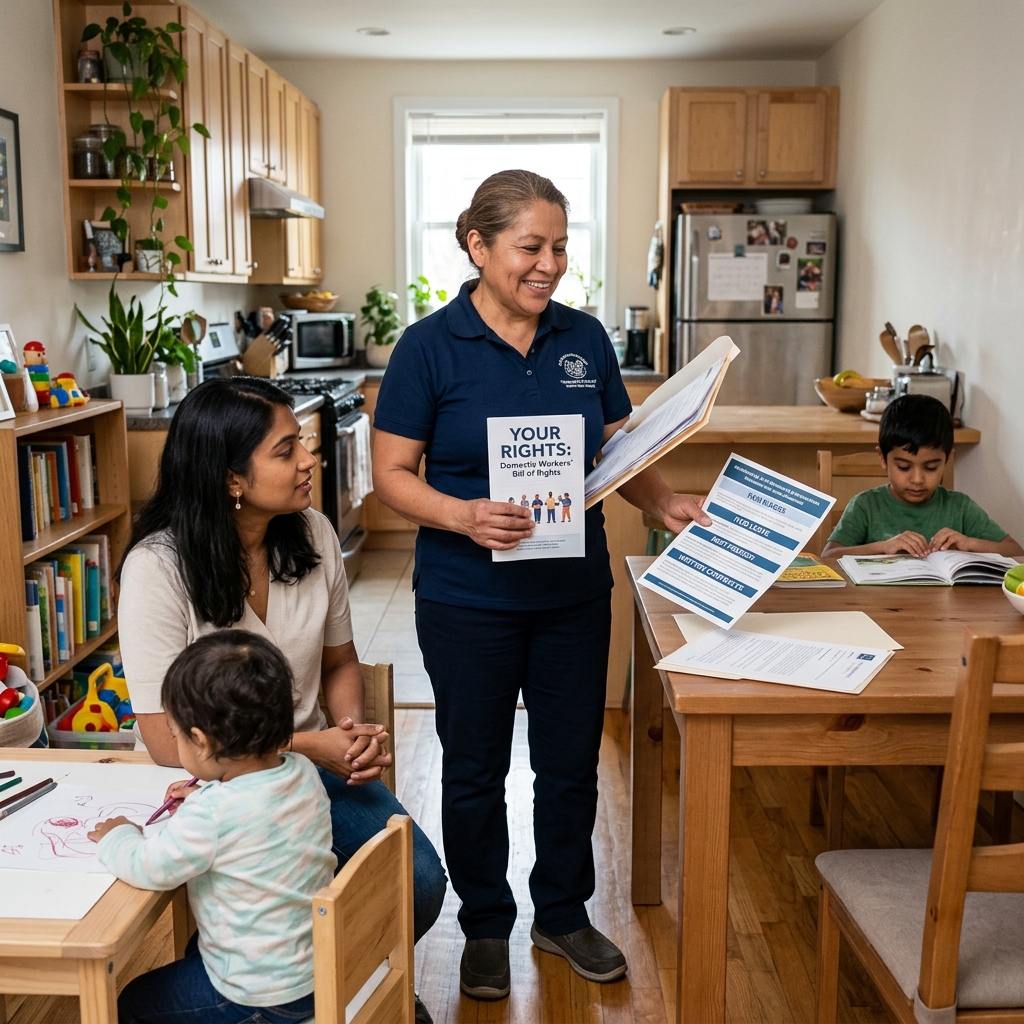
Domestic work has long been essential to family life and the broader economy, yet millions of workers performing care, cleaning, and household support have historically been excluded from basic labor protections. Recent laws in multiple states and proposals at the federal level are changing this landscape by establishing Domestic Workers’ Bills of Rights, which define minimum rights, benefits, and employer responsibilities for people working in private homes.
This article explains what these bills of rights do, who they cover, and how they affect both domestic workers and household employers. It is a general informational guide, not legal advice, and specific rules vary by jurisdiction.
Domestic Work in Context
Domestic workers include the people who care for children, older adults, and people with disabilities, as well as those who maintain and clean private households. Many of these workers are women, immigrants, and people of color, and they often work in isolated environments without coworkers, union representation, or human resources departments.
For decades, domestic workers were either fully excluded or only partially covered by standard labor laws such as minimum wage, overtime, and anti-discrimination protections. Many also relied on informal agreements and cash payments, with little documentation or enforcement mechanisms. Recognizing these gaps, worker organizations and lawmakers have advanced domestic worker–specific legislation to make rights clearer and more enforceable.
What Is a Domestic Workers’ Bill of Rights?
A Domestic Workers’ Bill of Rights is a law or set of laws that explicitly protects people employed in private homes and brings them under the umbrella of core labor and civil rights protections. These laws exist in multiple U.S. states and cities, and federal legislation has been proposed to extend similar protections nationwide.
- Purpose: To ensure that domestic workers receive fair pay, rest periods, safe working conditions, and freedom from discrimination and harassment.
- Level of coverage: Domestic workers’ bills of rights can be enacted at the state, local, or federal level, with each jurisdiction setting its own specific rules.
- Relationship to existing laws: These bills typically amend or supplement existing labor and civil rights statutes so that domestic workers are explicitly included.
Who Is Considered a Domestic Worker?
Definitions vary by law, but domestic workers are generally individuals providing services in a private household, rather than in a commercial facility.
Common examples include:
- Nannies and child-care providers
- Home care aides for older adults or people with disabilities
- Housecleaners and housekeepers
- Personal attendants providing support with daily living activities, such as bathing or dressing
- Cooks, gardeners, and other in-home service providers, where covered
Many bills distinguish between live-in workers, who reside in the employer’s home, and live-out workers, who commute. Coverage can depend on hours worked per month or whether the work is casual or regular.
Core Rights and Protections for Domestic Workers
While details vary by jurisdiction, domestic workers’ bills of rights share several recurring protections. The table below summarizes some common features found in state and federal measures.
| Protection Area | Typical Requirements |
|---|---|
| Minimum Wage | Domestic workers must receive at least the applicable state or local minimum wage, sometimes higher if agreed in writing. |
| Overtime Pay | Time-and-a-half pay for hours over a weekly or daily threshold (often 40 hours per week, with special rules for live-in workers or personal attendants). |
| Rest Days | Guaranteed days of rest each week, plus additional days off annually; if the worker chooses to work on a rest day, overtime pay may apply. |
| Paid Time Off | Access to a minimum number of paid sick days or other paid leave, often after a period of employment with the same household. |
| Written Agreements | Mandatory written contracts or agreements specifying pay, schedule, duties, and termination procedures, often in a language the worker understands. |
| Privacy and Housing | Restrictions on monitoring private spaces and protections against confiscation of documents or belongings; rules for housing and notice when employment ends. |
| Anti-Discrimination & Harassment | Explicit coverage under human rights or civil rights laws, including protections against discrimination and sexual or racial harassment. |
| Protection from Retaliation | Employers may not retaliate against workers for asserting their rights or filing complaints. |
Minimum Wage and Overtime Rules
Most domestic worker laws ensure that workers are no longer treated as an exception to basic wage and hour protections.
Minimum Wage Guarantees
- Domestic workers must be paid at least the applicable state or local minimum wage, and sometimes more if a higher rate is agreed in a contract.
- Employers paying a flat weekly or monthly amount need to confirm that the total pay divided by hours worked does not fall below minimum wage.
Overtime Pay Requirements
Overtime rules differ but commonly include:
- Weekly thresholds: Time-and-a-half pay for hours over 40 in a week.
- Live-in modifications: Higher weekly thresholds or different formulas for workers who reside in the employer’s home, such as overtime after 44 hours.
- Daily thresholds: In some states, personal attendants must be paid overtime after a set number of hours per day, for example after nine hours.
Employers are generally required to keep accurate records of hours, pay rates, and overtime calculations to demonstrate compliance if there is a dispute or government audit.
Rest Breaks, Days Off, and Paid Leave
Domestic workers’ bills of rights acknowledge that care and household work can be physically and emotionally demanding. Laws therefore introduce structured rest periods and time off.
Daily and Weekly Rest
- Meal and rest breaks: Many laws require employers to provide uninterrupted meal and rest breaks once a worker has been on duty for a certain number of hours.
- Weekly day of rest: Workers employed full time must receive at least one full 24-hour period off each week; if they choose to work on that day, overtime may be owed.
Paid Time Off
Some bills of rights guarantee limited paid days off each year or paid sick days:
- Paid days of rest after a year with the same employer.
- Paid sick leave to care for one’s own health or family members, particularly in proposed federal legislation.
- Additional paid leave may be provided voluntarily and should be documented in the written agreement.
Written Agreements and Documentation
One of the most significant changes for household employment is the move away from informal arrangements toward clear, written agreements.
Domestic worker laws commonly require:
- Written contracts: For workers who regularly work more than a set number of hours per month, employers must provide a written contract or agreement detailing pay, schedule, duties, benefits, and how employment may be terminated.
- Language accessibility: Agreements must be provided in a language the worker understands.
- Pay and recordkeeping: Employers are expected to pay on a regular schedule and maintain records showing hours worked, rates of pay, and deductions when applicable.
These requirements protect both workers and employers by reducing misunderstandings and helping to demonstrate compliance with legal obligations if questions arise.
Privacy, Housing, and Dignity at Work
Because domestic workers may live and work in the same place, privacy and safety protections are a central part of many bills of rights.
Privacy Protections
- Restrictions on monitoring private living or sleeping spaces, bathrooms, or areas where workers dress or undress.
- Limits on recording or interfering with workers’ personal communications.
- Prohibitions on confiscating passports, identification, or personal documents.
Housing and End of Employment
For live-in domestic workers, some states require employers to provide notice and either continued housing for a limited period or severance pay when employment ends, except in specified cases of termination for cause.
Regardless of the reason for separation, employers must pay all wages owed—including accrued, unused paid vacation where applicable—promptly, often on the last day of work.
Protection from Discrimination, Harassment, and Retaliation
Domestic workers’ bills of rights typically extend the reach of human rights and civil rights laws into private households that employ workers.
Anti-Discrimination and Harassment
- Domestic workers are covered by state or federal laws that prohibit discrimination in hiring, pay, and working conditions based on protected characteristics such as race, sex, age, disability, religion, or national origin.
- Special provisions may address sexual harassment and racial harassment in domestic settings, recognizing the power imbalance and isolation many workers experience.
Protection from Retaliation
- Employers may not retaliate against workers for asserting their rights, filing complaints, or participating in investigations.
- Retaliation can include firing, reducing hours, threatening immigration consequences, or otherwise punishing a worker for seeking enforcement.
These protections often apply regardless of a worker’s immigration status, underscoring that fundamental labor rights do not depend on citizenship.
Federal Developments: The National Domestic Workers Bill of Rights
In addition to state-level measures, federal legislation has been introduced to establish a National Domestic Workers Bill of Rights. This proposal aims to extend common workplace protections to domestic workers across the United States and to fill remaining gaps in federal law.
If enacted, national legislation would:
- Explicitly include domestic workers under the Fair Labor Standards Act and relevant civil rights statutes.
- Guarantee overtime pay, paid sick days, and meal and rest breaks.
- Require written agreements for domestic work arrangements.
- Provide protections for worker privacy and safety, and strengthen enforcement infrastructure, such as hotlines and interagency task forces.
Until any national law passes, however, domestic workers and employers must look to their own state or local rules to determine current obligations.
What Household Employers Need to Know
Individuals and families who hire domestic workers are often unfamiliar with their legal role as employers. Domestic workers’ bills of rights clarify responsibilities and introduce specific obligations.
Key Employer Duties
- Provide a written contract when required, in a language the worker understands.
- Pay at least minimum wage and comply with overtime rules.
- Offer rest breaks, days of rest, and any mandated paid time off.
- Register as an employer, file payroll contributions, and carry workers’ compensation coverage when thresholds are met.
- Respect privacy protections, anti-discrimination rules, and prohibitions on retaliation.
Failure to comply can lead to financial penalties, civil liability, and reputational harm. Many states provide detailed guidance for household employers, including checklists and examples of compliant contracts.
Practical Tips for Domestic Workers
Domestic workers can take several steps to understand and exercise their rights under these laws.
- Learn local rules: Check state or local labor department resources for specific rights and complaint procedures.
- Request written terms: Ask for a written agreement that clearly outlines duties, hours, and pay.
- Keep records: Document hours worked, payments received, and any changes in schedule or duties.
- Seek assistance: Contact worker centers, legal aid organizations, or official hotlines where available if you believe your rights are being violated.
Frequently Asked Questions (FAQs)
Are all domestic workers covered by a bill of rights?
No. Coverage depends on where the work takes place and the specifics of that jurisdiction’s law. Some states and cities have comprehensive domestic worker protections, while others rely mainly on general labor statutes.
Does immigration status affect domestic worker rights?
In many jurisdictions, domestic workers are protected regardless of immigration status. Laws often specify that rights apply to all workers who meet the definition of domestic worker.
Do occasional babysitters count as domestic workers?
Many laws exclude casual work or very short-term arrangements. Workers who babysit only occasionally may not be covered, whereas regular, ongoing child-care providers generally are.
Can a domestic worker be paid in cash?
Payment in cash is not illegal by itself, but employers must still comply with minimum wage, overtime, tax, and documentation requirements. Written records and pay documentation are strongly recommended.
What can a worker do if their rights are violated?
Workers can usually file complaints with state labor departments or human rights agencies, seek help from worker organizations or legal services, and in some cases pursue civil lawsuits.
References
- Domestic Workers Bill of Rights — National Domestic Workers Alliance. 2023-06-01. https://www.domesticworkers.org/programs-and-campaigns/developing-policy-solutions/domestic-workers-bill-of-rights/
- Domestic Workers’ Bill of Rights — New York State Department of Labor. 2023-01-15. https://dol.ny.gov/domestic-workers-bill-rights
- Domestic workers — Commonwealth of Massachusetts, Mass.gov. 2022-11-30. https://www.mass.gov/info-details/domestic-workers
- Domestic Workers’ Bill of Rights: What employers need to know — New Jersey Department of Labor and Workforce Development. 2024-07-01. https://www.nj.gov/labor/myworkrights/worker-protections/domestic_workers/domesticworkerrights_employers.shtml
- The Domestic Worker Bill of Rights (AB 241) — California Department of Industrial Relations. 2013-09-26. http://www.dir.ca.gov/DLSE/DomesticWorkerBillOfRights.html
- Gillibrand, Colleagues Reintroduce Legislation To Expand Workplace Rights For Domestic Workers — Office of U.S. Senator Kirsten Gillibrand. 2024-06-13. https://www.gillibrand.senate.gov/news/press/release/gillibrand-colleagues-reintroduce-legislation-to-expand-workplace-rights-for-domestic-workers/
- Jayapal, Gillibrand, Luján Introduce Legislation to Protect Domestic Workers — Office of Rep. Pramila Jayapal. 2024-06-13. https://jayapal.house.gov/2024/06/13/jayapal-gillibrand-lujan-introduce-legislation-to-protect-domestic-workers/
Similar Articles








Read full bio of Sneha Tete




