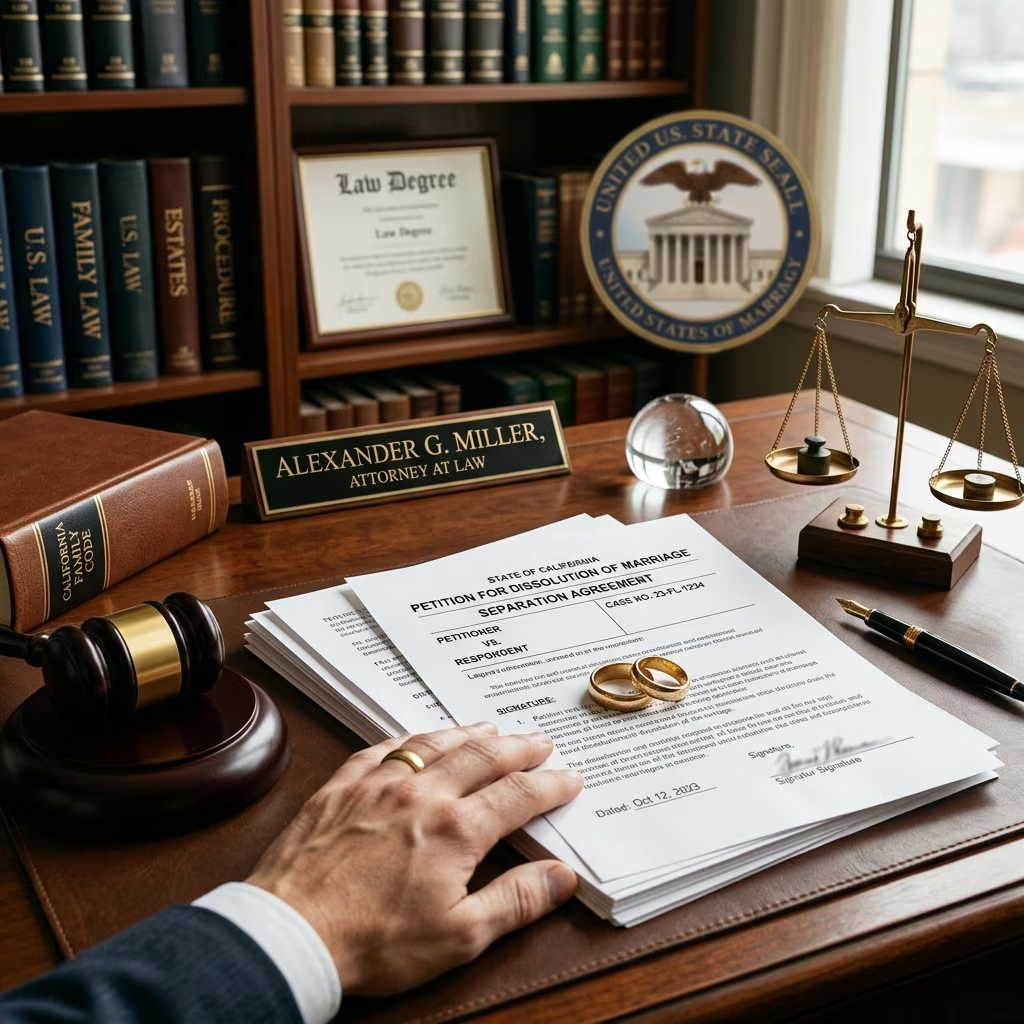
Dissolution of marriage is a formal legal process that ends a marital relationship and addresses related issues like property division, child custody, and financial support. It is often used interchangeably with the term divorce, but in many jurisdictions the word “dissolution” carries specific legal meaning tied to no-fault principles or streamlined procedures.
This article explains what dissolution of marriage is, how it compares to divorce, what you can expect during the process, and practical points to consider if you are thinking about ending your marriage. It focuses on general U.S. legal concepts; details differ from state to state, so local legal advice is always important.
1. What Does “Dissolution of Marriage” Mean?
In broad terms, dissolution of marriage is the court procedure that legally terminates a marriage and separates the spouses’ rights and responsibilities. When a dissolution is granted, the court issues a final judgment that:
- Ends the legal status of being married
- Divides marital property and debts
- May order spousal support (alimony)
- Establishes child custody, parenting time, and child support when children are involved
From the court’s perspective, dissolution is not simply about ending the relationship. It is about creating a legally enforceable framework for how two people will live separate lives after having shared finances, responsibilities, and—often—children.
1.1 The legal nature of the process
Dissolution is handled by a civil court, usually a family or domestic relations court. It starts with written documents filed with the court, continues through disclosures and negotiations, and ends with a judicial order. In most states, the governing rules are set out in statutes and court rules dealing with family law.
The process typically requires:
- Jurisdiction (the court must have authority over the marriage and the spouses, often based on residency)
- Grounds or a legal basis for ending the marriage (in no-fault systems, usually irretrievable breakdown or irreconcilable differences)
- Procedural steps such as filing, service of papers, financial disclosures, and, if needed, hearings or trial
1.2 Dissolution vs. the everyday concept of divorce
In everyday language, most people simply say “divorce” to describe the end of a marriage. In legal language, some states use the term “dissolution” instead of “divorce” in their statutes and official forms, particularly in the context of no-fault divorce law.
Where the term is used, dissolution usually emphasizes:
- The focus on ending the marriage without assigning blame
- A structured, court-supervised resolution of financial and parenting issues
- A shift away from older, fault-based concepts like adultery or cruelty as the main reason for ending a marriage
2. How Dissolution of Marriage Differs from Divorce
Dissolution and divorce are closely related, and in some states they are essentially the same thing under different names. In others, they refer to distinct procedures, especially in connection with whether the spouses agree about key issues.
2.1 Terminology differences across states
| State Example | Primary Term Used | Key Feature |
|---|---|---|
| California | “Dissolution” for divorce | No-fault system; dissolution ends marriage or domestic partnership. |
| Florida | “Dissolution of marriage” | No-fault statute; court also decides property, support, and parenting. |
| Ohio | Divorce vs. dissolution | Dissolution for agreement-based cases; divorce for contested matters. |
| Alaska | Divorce vs. dissolution | Dissolution when spouses agree on all issues; divorce when they do not. |
These examples show that the meaning of “dissolution” is state-specific: in some places it is simply the modern word for divorce, while in others it denotes a particular type of case—often one based on mutual agreement.
2.2 Agreement-based dissolution vs. contested divorce
Several states distinguish between dissolution and divorce based on whether the spouses agree on how to end their marriage. In these systems:
- Dissolution is typically used when both spouses agree on all major issues, including division of property and debts, spousal and child support, and custody and visitation arrangements.
- Divorce is filed when the spouses disagree about one or more of those issues, or dispute the basis (grounds) for ending the marriage.
When a dissolution is filed in an agreement-based system:
- The spouses usually submit a joint petition or set of forms
- They propose a complete settlement for the court to review
- The court confirms that the agreement is voluntary and meets legal standards, then issues a final order ending the marriage and incorporating the agreed terms.
By contrast, in a contested divorce:
- One spouse files a complaint; the other responds and may counterclaim
- Each spouse can present evidence, including financial and parenting information
- The court may hold a trial and then decide unresolved issues through a judgment.
2.3 No-fault principles and dissolution
In many U.S. jurisdictions, dissolution is closely tied to the idea of no-fault divorce. Under no-fault rules, a spouse does not need to prove wrongdoing such as adultery or cruelty. Instead, it is enough to state that the marriage has broken down beyond repair.
Common no-fault language includes:
- “Irreconcilable differences”
- “Irretrievable breakdown of the marriage”
- “Incompatibility of temperament”
These formulations move the focus away from blame and toward whether the relationship can reasonably continue. In states that emphasize dissolution as a term, the law often reflects this no-fault approach.
3. Key Legal Components of a Dissolution Case
Regardless of terminology, most dissolution cases must resolve the same core subjects. Understanding these areas can help spouses anticipate what the court will expect.
3.1 Property and debt division
One central task in dissolution is determining how to divide assets and liabilities acquired during the marriage. The court must identify which property is marital (belonging to both spouses) and which is separate, then decide an allocation that fits the state’s law, such as equitable distribution or community property principles.
Typical items addressed include:
- Real estate, such as the marital home
- Bank accounts and investments
- Retirement and pension plans
- Business interests
- Credit card balances, loans, and other debts
3.2 Spousal support (alimony)
In many cases, dissolution may involve decisions about spousal support, sometimes called alimony. Courts consider factors like the length of the marriage, each spouse’s income and earning capacity, health, and contributions to the household when deciding whether support should be ordered and in what amount.
Some dissolutions result in temporary support during the proceedings; others involve longer-term orders intended to assist a lower-earning spouse in transitioning to financial independence.
3.3 Child custody, parenting time, and support
When children are involved, dissolution orders must address parenting arrangements and financial support. Courts generally base custody and visitation decisions on the best interests of the child, considering factors such as stability, safety, and the ability of each parent to meet the child’s needs.
Child support is typically calculated under state guidelines that weigh parental incomes, the number of children, and parenting time schedules. Even in agreement-based dissolutions, courts review proposed parenting plans and support terms to ensure they are appropriate and enforceable.
4. Typical Steps in a Dissolution of Marriage
While every state has its own procedural rules, most dissolution processes follow a recognizable sequence. The complexity can vary greatly depending on whether the case is contested and how much property or parenting issues are involved.
4.1 Starting the case
To begin, at least one spouse must satisfy residency requirements in the state and, often, the specific county. The spouse who initiates the case (petitioner or plaintiff) files a petition or complaint in court stating the grounds for dissolution and the relief requested.
Key early steps often include:
- Filing the initial paperwork and paying a filing fee
- Serving (formally delivering) the papers to the other spouse, unless it is a joint filing
- Receiving an answer or response from the other spouse, or proceeding by default if no response is submitted.
4.2 Financial disclosure and information exchange
Because dissolution requires informed decisions about money and property, most courts mandate disclosure of assets, debts, income, and expenses. The spouses may exchange financial statements, supporting documents, and other information.
In contested cases, this process can expand into formal discovery, including interrogatories (written questions), document requests, and depositions.
4.3 Negotiation, mediation, and settlement
Many dissolution cases end through agreement rather than trial. The spouses, often guided by lawyers or mediators, negotiate terms covering property, support, and parenting arrangements.
Common settlement tools include:
- Direct negotiation between the spouses and their attorneys
- Mediation with a neutral professional who helps them explore options and reach agreement
- Collaborative law models, where the parties commit to settlement-oriented processes
Once an agreement is reached, it is typically written into a settlement document or parenting plan that is submitted to the court for approval.
4.4 Hearings, trial, and final judgment
If disagreements remain, courts may hold temporary hearings and, ultimately, a trial. After reviewing evidence and arguments, the judge issues decisions on the contested matters and incorporates them into a final judgment of dissolution or divorce.
The judgment:
- Formally ends the marriage
- Sets binding terms for property division, support, and parenting
- Can be enforced or modified under specific legal rules if circumstances change in the future
5. Dissolution of Marriage vs. Other Ways to End or Change a Marital Relationship
Dissolution is only one pathway for addressing a troubled marriage. Depending on the situation, spouses may pursue other legal options.
5.1 Legal separation
Legal separation allows spouses to live apart with court-ordered arrangements for property and parenting, but the marriage itself is not formally ended. This can be appropriate for couples who are uncertain about divorce, have religious or personal reasons for staying married, or want to maintain benefits tied to marital status while still clarifying rights and obligations.
5.2 Annulment and declarations of nullity
An annulment is different from dissolution because it treats the marriage as void or voidable—essentially as if it never legally existed. Annulments typically require specific legal grounds, such as fraud, incapacity, or a prohibited relationship.
Where annulment is granted, courts still issue orders to divide property and address child-related issues, but the legal framework is based on undoing a defective marriage rather than ending a valid one.
6. Practical Considerations If You Are Considering Dissolution
Facing the end of a marriage involves emotional, financial, and legal challenges. While every situation is unique, some general considerations can help spouses approach dissolution with greater clarity.
6.1 Clarify your goals and priorities
Before starting the process, it can be helpful to identify your main priorities. These might include:
- Stability and security for children
- Preserving important assets or minimizing debt risk
- Maintaining housing or health insurance
- Limiting conflict and financial costs
Knowing what matters most to you can guide decisions about settlement, negotiation styles, and whether to pursue mediation.
6.2 Understand your state’s rules
The meaning of “dissolution” and the available procedures vary widely among states. Some treat dissolution as the general term for divorce, some reserve it for agreement-based cases, and others use additional categories like summary dissolution for relatively simple situations.
Checking official court self-help resources, state bar association guides, or statutory language can help you understand:
- Residency requirements
- Available grounds for ending the marriage
- Whether agreement-based dissolution is an option
- How property and support are typically handled
6.3 Consider professional advice
Although some dissolutions, particularly uncontested ones, can be handled without full legal representation, consulting a family law attorney or qualified legal aid organization can clarify rights and prevent costly mistakes. Complex property, business ownership, or interstate parenting issues often benefit from professional guidance.
7. Frequently Asked Questions (FAQs)
7.1 Is dissolution of marriage always no-fault?
Not necessarily. In many jurisdictions, dissolution is closely linked to no-fault concepts and relies on reasons like irreconcilable differences rather than specific misconduct. However, some states still allow or require traditional grounds in certain divorce actions, and the label “dissolution” alone does not guarantee that fault is irrelevant.
7.2 Does dissolution require both spouses to agree?
It depends on the state. In some places, dissolution is simply the legal term for ending a marriage, and one spouse may file even if the other does not agree. In other states, “dissolution” describes a procedure where both spouses must agree on all issues; if they do not, a contested divorce process is used instead.
7.3 Can the court decide property and support even if we already have a private agreement?
Court approval is usually required for agreements related to dissolution. Judges review property settlements and parenting plans to ensure they meet legal standards and are not clearly unfair or contrary to the best interests of children. A private agreement may form the basis of the court’s order, but it does not replace judicial oversight.
7.4 Does dissolution of marriage affect my parental rights?
Dissolution does not end your status as a parent, but it does define legal responsibilities and decision-making authority. Orders will typically address custody (legal and physical), parenting time, and child support. These terms can be modified later under specific circumstances if a significant change justifies adjustment.
7.5 Is a dissolution decree final?
The decree or judgment that grants dissolution is final in the sense that it ends the marriage and sets binding terms. Certain aspects, such as child support, custody, and sometimes spousal support, may be modifiable under state law if circumstances change. Property division is usually more difficult to reopen once it has been finalized.
References
- Dissolution of Marriage | Legal Glossary — Barnes Walker Law Firm. 2023-01-01. https://barneswalker.com/legal-glossary/d/dissolution-of-marriage/
- Dissolution of marriage | Wex — Legal Information Institute, Cornell Law School. 2022-09-01. https://www.law.cornell.edu/wex/dissolution_of_marriage
- What is the difference between dissolution and divorce? — WomensLaw.org. 2023-03-01. https://www.womenslaw.org/laws/ak/divorce/what-difference-between-dissolution-and-divorce-which-one-do-i-file
- Divorce in California | Self Help Guide — California Courts. 2024-02-01. https://selfhelp.courts.ca.gov/divorce-california
- Law Facts: Divorce, Dissolution & Separation — Ohio State Bar Association. 2022-05-01. https://www.ohiobar.org/public-resources/commonly-asked-law-questions-results/law-facts/law-facts-divorce-dissolution–separation/
- How to End a Marriage in New York — New York City Bar Association. 2021-11-01. https://www.nycbar.org/get-legal-help/article/family-law/ending-your-marriage/
- Divorce (Dissolution of Marriage) Upon Default — Connecticut Judicial Branch. 2020-08-01. https://www.jud.ct.gov/forms/grouped/family/DissolutionOfMarriageUponDefault.htm