
DC Wage And Hour Laws: Essential Guide For Employers, Workers
A practical guide to minimum wage, overtime, pay frequency, and worker protections in the District of Columbia.
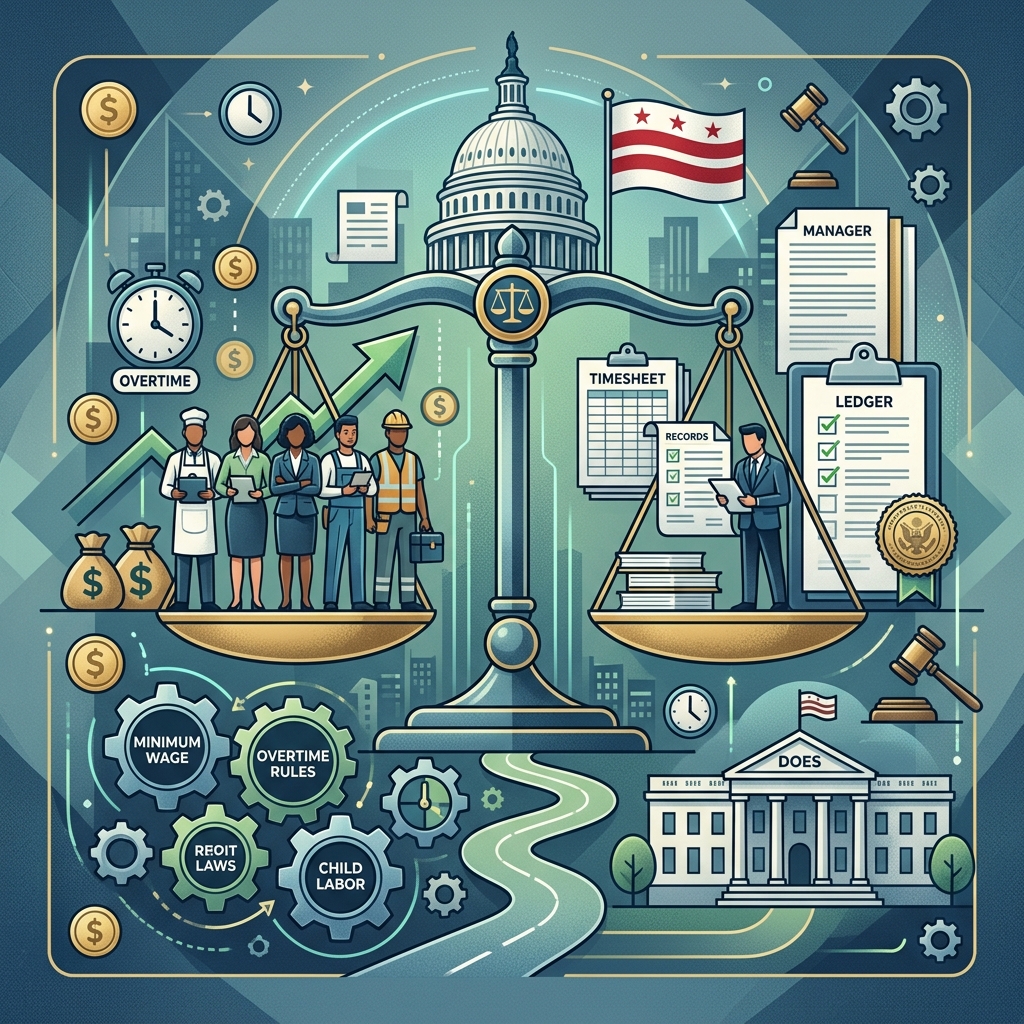
The District of Columbia has some of the strongest wage and hour protections in the United States. These rules govern how much workers must be paid, when wages are due, how overtime is calculated, and what happens when employers violate the law. This guide explains the core requirements that apply to most employees working in Washington, DC, based on current legal standards and official government sources.
While this article provides a detailed overview, it is not legal advice. Workers and employers should consult an attorney or relevant DC agencies for guidance on specific situations.
Overview: Who DC Wage and Hour Laws Cover
Most employees who perform work within the District are covered by DC wage and hour laws, regardless of where the employer is headquartered.
- Private-sector employees including full-time, part-time, and temporary workers.
- Many service and hospitality workers, including restaurant, retail, and hotel staff.
- Most tipped employees, such as servers and bartenders.
- Workers in public contracts subject to DC living wage rules.
Certain workers, such as some independent contractors, highly paid executives, and specific categories governed by federal law, may be treated differently. Whether a worker is truly an independent contractor or misclassified can have major wage implications.
Minimum Wage in the District of Columbia
The District of Columbia sets a citywide minimum wage that is higher than the federal minimum wage and is adjusted annually based on inflation.
According to the DC Department of Employment Services (DOES), the minimum wage and living wage are scheduled to increase to $18.40 per hour beginning July 1, 2026 for all workers, regardless of employer size. DC law also provides a separate base rate for tipped employees, which will rise to $10.30 per hour as of July 1, 2026.
| Type of Worker | Rate (as of July 1, 2026) | Adjustment Mechanism |
|---|---|---|
| Most non-tipped employees | $18.40 per hour | Adjusted annually on July 1 based on inflation |
| Tipped employees (base cash wage) | $10.30 per hour | Combined with tips must reach full minimum wage |
Key Minimum Wage Rules
- Employers must pay at least the DC minimum wage for all hours worked in DC, even if the employer is located elsewhere.
- The minimum wage rate is reviewed and typically adjusted each July 1 to track inflation.
- DC’s minimum wage applies in addition to federal law; when both apply, the higher rate controls.
Tipped Employees and Tip Credits
Many workers in restaurants, bars, and other service industries receive tips from customers. DC law allows employers to pay tipped workers a lower base hourly wage if their tips bring total compensation up to at least the regular minimum wage.
Core Requirements for Tipped Workers
- Employers must pay at least the DC tipped minimum wage as a cash wage.
- When hourly cash pay plus tips are added together, the worker’s total hourly compensation must equal or exceed the non-tipped minimum wage.
- Employers must keep accurate records of tips and hours worked and ensure that tip pooling or sharing arrangements comply with applicable laws.
If an employee’s tips do not bring their total pay to at least the standard minimum wage, the employer must make up the difference.
Overtime Pay in Washington, DC
DC follows a familiar overtime standard: eligible employees must be paid a premium rate for working beyond 40 hours in a single workweek.
Overtime Rate and Threshold
- Non-exempt employees are entitled to at least 1.5 times their regular rate of pay for each hour worked over 40 in a workweek.
- Only hours over 40 in a seven-day workweek trigger overtime; longer daily shifts do not automatically require overtime unless total weekly hours exceed 40.
- Certain premium pay (like weekend or holiday differentials) may be counted toward overtime compensation under DC law.
Whether an employee is exempt from overtime depends on job duties, salary level, and other criteria that often mirror or incorporate federal standards.
Frequency and Timing of Wage Payments
DC’s wage payment rules specify how often workers must be paid and when wages become due after a pay period or separation.
Regular Paydays
- Most covered workers must be paid at least twice each month on regular paydays designated in advance by the employer.
- Exempt employees may be paid less frequently (at least monthly), but must still receive wages on a predictable schedule.
- Wages must generally be paid within 10 working days after the end of the pay period, unless a collective bargaining agreement sets a different timeline.
Final Paychecks After Resignation or Termination
When employment ends, DC law requires prompt payment of any wages owed.
- Employees who are discharged or who resign are generally entitled to receive all earned wages by the next working day, subject to certain exceptions.
- Accrued vacation pay may be due when employment ends, unless there is a clear agreement stating otherwise.
Failure to pay wages on time can lead to significant penalties under the DC Wage Payment and Collection Law.
Wage Theft Prevention and Employer Notice Duties
The District has enacted strong rules to prevent wage theft—situations where employees are denied wages they legally earned. The Wage Theft Prevention Amendment Act requires employers to provide detailed written information about pay at the time of hire.
Information Employers Must Provide
- The employee’s regular rate of pay and the basis for that rate (hourly, salary, shift, day, week, piece, commission, etc.).
- The overtime rate of pay and whether the employee is classified as exempt or non-exempt from overtime.
- The timing and frequency of paydays.
- Any allowances claimed (such as a tip credit).
Employers must also provide updated written notices when pay-related information changes and must post summaries of the law at the workplace.
Recordkeeping and Posting Requirements
DC law requires employers to maintain detailed records so wage compliance can be verified when questions arise.
Key Recordkeeping Duties
- Keep accurate time records showing hours worked and wages paid for at least three years, or longer if federal standards require it.
- Maintain documentation related to tips, overtime, and any deductions from wages.
- Post official wage and hour notices in a conspicuous place so employees can see information about their rights.
Special Rules for Minors and Young Workers
While the focus of this article is on wages, it is important to note that DC imposes stricter limits on the hours and occupations available to workers under 18. These limits aim to protect minors from hazardous work and excessive hours.
- Minors generally face limits on daily and weekly hours worked.
- Certain hazardous or high-risk occupations are off-limits to workers under specified ages.
Employers hiring minors must be aware of both wage standards and youth employment restrictions.
Penalties, Remedies, and Enforcement
DC provides strong remedies when employers fail to pay wages or overtime as required. Workers may be entitled to significant additional amounts beyond the wages originally owed.
Monetary Remedies
- Employees may recover unpaid wages and, in many cases, liquidated damages that can be up to three times the amount of unpaid wages under certain statutes.
- In other situations, employees may receive a penalty calculated as 10% of unpaid wages per working day, up to a cap.
- Prevailing employees may be awarded attorneys’ fees and costs, making it easier to pursue claims even for smaller amounts.
Retaliation Protections
Workers are protected from retaliation when they assert wage rights. DC law prohibits adverse actions against employees who complain about wage violations, provide information to government agencies, or participate in investigations or lawsuits.
- Employees are protected whether they complain to DC agencies or federal authorities.
- DC law may presume retaliation if negative action is taken within a short period (for example, 90 days) after protected activity, shifting the burden to the employer.
Enforcement Options
Workers have several options for enforcing wage and hour rights:
- Administrative complaints to the DC Office of Wage-Hour Compliance (part of DOES), which investigates potential violations and can seek remedies.
- Private civil lawsuits in court, including potential class actions under DC wage-and-hour laws.
- Coordination with federal agencies when federal wage laws are also involved.
How to File a Wage or Hour Complaint in DC
Employees who believe they have not been paid properly can contact the DC Office of Wage-Hour for guidance and to file a claim.
Contacting the Office of Wage-Hour
- By phone: the Office of Wage-Hour can be reached at the publicly listed number for questions and claim forms.
- By mail or email: employees may submit completed wage claims and supporting documents as directed by DOES.
- In person: workers can visit the Office of Wage-Hour to obtain posters, forms, and information.
Workers should gather as much documentation as possible before filing a claim, including pay stubs, schedules, records of hours worked, and any written communications with the employer.
Practical Tips for Employees and Employers
For Employees
- Keep your own records of hours worked, especially if you suspect timekeeping is inaccurate.
- Save all pay stubs, tip reports, and wage notices provided at hire or when pay changes.
- Ask questions promptly if your pay seems inconsistent with DC minimum wage or overtime standards.
- Contact the Office of Wage-Hour or a qualified attorney if you believe you are experiencing wage theft.
For Employers
- Review DC wage and hour laws annually, particularly around July 1 when minimum wage rates may change.
- Update payroll systems to ensure new wage rates and overtime calculations are applied correctly.
- Provide clear written pay notices and maintain all required records for at least three years.
- Train managers on scheduling, overtime approval, and tip-handling policies to avoid violations.
Frequently Asked Questions (FAQs)
1. Does DC’s minimum wage apply if my employer is based in another state?
Yes. If you work in DC, the District’s minimum wage and overtime rules generally apply to your work, regardless of where your employer’s headquarters are located.
2. What happens if my tips don’t bring my pay up to the minimum wage?
If you are a tipped employee and your combined cash wage plus tips does not reach the standard DC minimum wage, your employer must make up the difference. Employers cannot use tips to pay less than the law requires.
3. How is overtime calculated in DC?
For non-exempt employees, overtime is calculated on a weekly basis. Any hours worked over 40 in a workweek must be paid at least 1.5 times the employee’s regular hourly rate.
4. When should I receive my final paycheck after leaving a job?
Under DC law, employees who are discharged or who resign are normally entitled to receive earned wages by the next working day, subject to limited exceptions. Employers must also comply with any applicable rules on paying out vacation if not otherwise agreed.
5. What can I do if my employer refuses to pay overtime or minimum wage?
You can file a complaint with the DC Office of Wage-Hour or consult an employment attorney. Remedies may include recovery of unpaid wages, additional damages (sometimes up to three times the unpaid amount), and attorneys’ fees.
6. Are there time limits for bringing a wage claim?
DC law typically imposes a statute of limitations of several years for wage claims, such as three years for certain minimum wage and overtime actions. Because deadlines vary by claim type, workers should seek advice promptly.
References
- Office of Wage-Hour Compliance — DC Department of Employment Services. 2026-05-23. https://does.dc.gov/service/office-wage-hour-compliance-0
- Office of Wage-Hour for Employees — DC Department of Employment Services. 2024-08-15. https://does.dc.gov/page/office-wage-hour-employees
- Washington, DC Employment Law Overview — Brightmine. 2024-07-01. https://www.brightmine.com/us/resources/hr-compliance/washington-d-c-employment-law/
- District of Columbia & Federal Printable Labor Laws Poster — DC Department of Employment Services. 2024-07-01. https://www.liberty.edu/human-resources/wp-content/uploads/sites/112/Employment-Poster-District-of-Columbia.pdf
- Other DC Wage and Hour Laws: DC Wage Payment and Collection Law — The Erlich Law Office. 2023-11-10. https://www.erlichlawoffice.com/practice-areas/employment-law/wage-and-hour-disputes/dc-wage-payment-and-collection-law/
- Employment Laws in the District of Columbia — Cashdan & Kane PLLC. 2023-06-01. https://www.cashdankane.com/practice-areas/employment-laws-in-the-district-of-columbia/
- Wage and Hour Laws — Office of the Attorney General for the District of Columbia. 2024-02-20. https://oag.dc.gov/worker-rights/wage-and-hour-laws
Similar Articles








Read full bio of Sneha Tete




