
Understanding Curfew Laws for Adults in the United States
Curfew rules for adults can arise from emergencies, probation, and local ordinances—know when they apply and how they affect your rights.
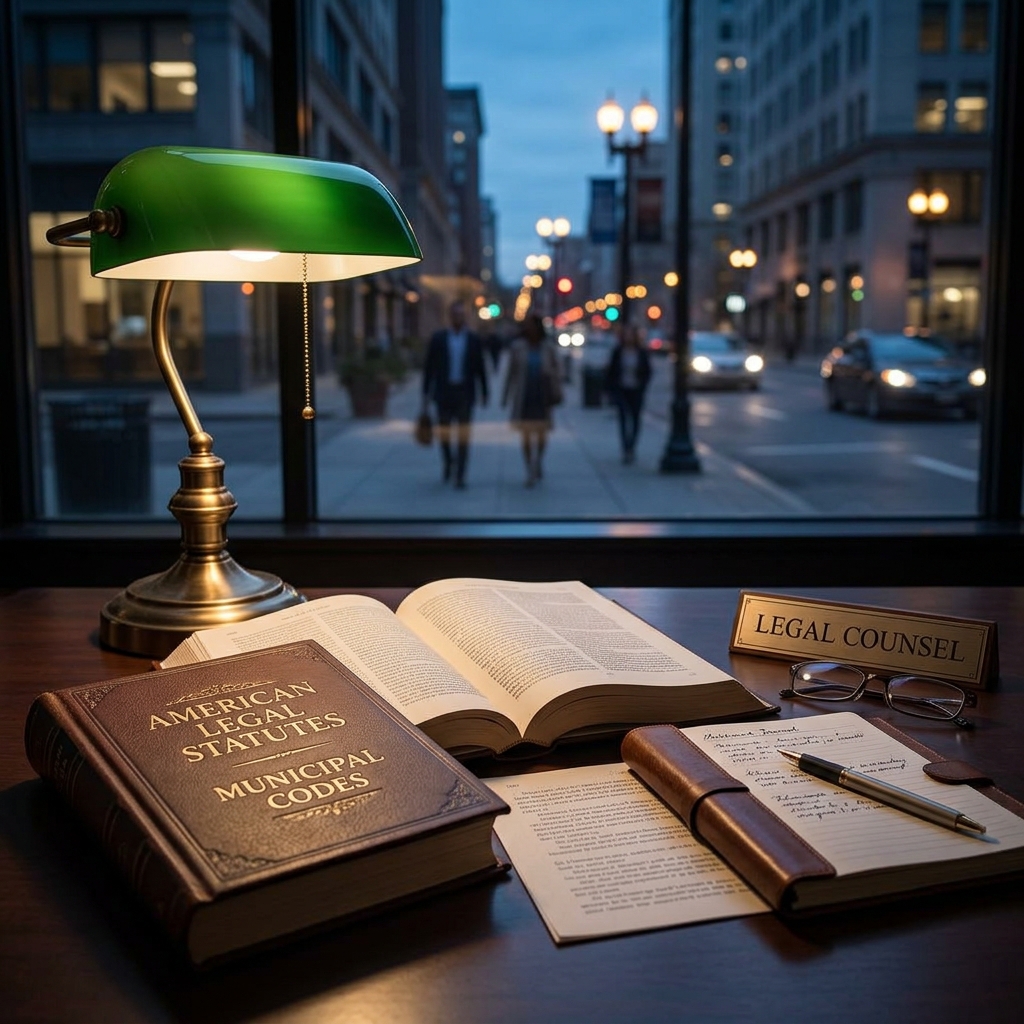
Curfew laws are often associated with teenagers and juvenile crime prevention, but adults can also be subject to legally enforceable curfews in specific situations. While most adults in the United States are free to be in public places at any hour, state and local governments, courts, and correctional systems can impose curfews in limited circumstances, particularly during emergencies or as part of criminal justice supervision. This guide explains when curfews for adults exist, how they are enforced, and what they mean for your rights.
What Is a Curfew and How Can It Apply to Adults?
A curfew is a rule or legal order requiring people to stay off the streets or out of public places during specified hours, usually overnight. Although many curfew ordinances focus on minors, adults may face curfews in several contexts:
- Emergency curfews imposed by governments during crises.
- Business or commercial curfews restricting when businesses may operate.
- Court-ordered curfews as conditions of bail, probation, or parole.
- Curfews during civil unrest or declared states of emergency.
Curfew rules can apply to all persons in an affected area or to specific groups, such as individuals under criminal supervision. Violations can lead to fines, arrest, or other sanctions depending on the legal basis for the curfew.
Common Types of Curfew Laws Affecting Adults
Curfew rules for adults are not one-size-fits-all. The legal authority, scope, and penalties vary based on the type of curfew being used.
1. Emergency Public Safety Curfews
Emergency curfews are among the most visible forms of adult curfews. Government officials may temporarily restrict movement in public areas to protect safety and property during serious events such as riots, natural disasters, or public health emergencies.
- Authority: Typically imposed by governors, mayors, or other executive officials under emergency powers legislation.
- Coverage: Can apply to all individuals in a geographic area, regardless of age.
- Typical hours: Often overnight (e.g., 9:00 p.m. to 6:00 a.m.), but may vary based on risk.
- Duration: Limited to the emergency period and lifted once conditions stabilize.
In the United States, courts generally permit governments to impose curfews during times of dire emergency, recognizing the need to maintain public order. However, such curfews may still be challenged if they are unnecessarily broad or applied in a discriminatory manner.
2. Business and Commercial Operation Curfews
Some jurisdictions regulate the hours during which businesses may operate. Although these rules technically apply to businesses rather than individuals, they affect adult behavior by limiting where adults can legally gather late at night.
- Bars and nightclubs may be required to close by a certain hour.
- Convenience stores or gas stations may face overnight shutdown requirements in certain neighborhoods.
- Entertainment districts may have rules limiting late-night operations to control noise and crime.
These rules are usually adopted as local ordinances and may be justified on grounds of public safety, health, or quality of life. While not curfews in the traditional sense, they function similarly by constraining late-night activity.
3. Court-Ordered Curfews for Defendants and Offenders
Adults involved in the criminal justice system frequently encounter individual curfews imposed by courts, probation officers, or parole boards as part of supervision conditions.
- Pretrial release: Judges may require defendants to remain at home during certain hours to reduce risk of reoffending or flight.
- Probation: Curfews can be conditions of probation for certain offenses, especially those committed at night.
- Parole: Parole boards may set curfew requirements to structure a person’s routine and facilitate monitoring.
These curfews typically apply only to the supervised individual, not the general public. Violating a court-ordered curfew can lead to sanctions such as:
- Revocation of probation or parole.
- Modification of release conditions (e.g., stricter monitoring).
- Arrest and potential incarceration.
4. Juvenile Curfews That Affect Adult Guardians
Most curfew laws are designed for minors; however, they can indirectly affect adults by imposing responsibilities and potential penalties on parents or guardians. For example, the District of Columbia’s youth curfew law imposes fines or community service on adults who knowingly allow minors to violate curfew.
| Person | Potential Consequence | Legal Basis |
|---|---|---|
| Minor under 18 | Up to 25 hours of community service for each violation | DC curfew ordinance |
| Adult (parent/guardian) | Up to $500 fine or community service per day of violation | DC curfew ordinance |
These laws do not impose a direct curfew on adults generally, but adults can face legal consequences for failing to supervise minors during curfew hours.
How Adult Curfews Interact With Constitutional Rights
Curfews, even temporary or targeted ones, limit basic freedoms. Courts evaluating curfew laws consider how they burden constitutional rights and whether the government’s goals justify those burdens.
Key Rights Potentially Affected
- Freedom of speech and assembly: Curfews restrict the ability to attend public demonstrations, political meetings, or religious services during covered hours, raising First Amendment concerns.
- Freedom of movement and travel: Curfews limit both intrastate and interstate travel by requiring people to remain indoors or avoid public spaces.
- Due process: Curfews must be sufficiently clear and not arbitrarily enforced, or they may violate due process protections.
For minors, federal appellate courts have emphasized that curfew laws must include exceptions for First Amendment–protected activities, such as attending political events or religious services, to survive constitutional scrutiny. Similar considerations apply when adults are subject to broad area-wide curfews.
Judicial Scrutiny of Curfew Regulations
When courts analyze curfew laws, they often employ different levels of scrutiny based on the rights at stake. For general curfews affecting travel, some judicial opinions suggest that strict scrutiny may be appropriate, requiring a compelling governmental interest and narrowly tailored measures. This is particularly relevant when curfews significantly limit the ability to move freely within a state or across state lines.
Courts commonly uphold curfew ordinances that:
- Are tied to genuine emergency conditions.
- Include explicit defenses or exceptions for First Amendment activities.
- Define clear limits on duration and geographic scope.
At the same time, judges may strike down curfews that are overly broad, lack adequate exceptions, or appear to target particular populations without strong justification.
Variation Among States and Localities
Curfew rules in the United States differ widely across jurisdictions. There is no single nationwide standard, and local governments often decide whether to adopt curfew ordinances and how to structure them.
Local Curfew Ordinances
Many cities and counties have chosen to implement youth curfews, and some also experiment with curfews in specific neighborhoods. A national survey by the U.S. Office of Juvenile Justice and Delinquency Prevention found that curfew laws vary in locale affected, timeframe, and sanctions, with most restricting minors between 11:00 p.m. and 6:00 a.m.
In addition, some municipalities have debated or implemented curfews that affect adults during periods of heightened crime or unrest, though these are typically time-limited and subject to legal challenges.
States Prohibiting Certain Curfews
Individual states can restrict the ability of local governments to adopt curfews. For example, Texas enacted a law in 2023 (House Bill 1819) that prohibits cities and counties from imposing juvenile curfews regulating the movement of people under 18, except during officially declared emergencies. This means local governments in Texas cannot enforce routine juvenile curfews; emergency curfews remain permissible.
Although this law focuses on juvenile curfews rather than adult curfews, it illustrates how state-level legislation shapes local authority over curfew policies.
Penalties and Enforcement of Adult Curfew Violations
Consequences for violating adult curfew rules depend on the underlying legal authority.
Emergency Curfew Violations
Under emergency curfew orders, adults who remain in public places during restricted hours may face:
- Citation or fines under local ordinances or emergency declarations.
- Arrest for failure to disperse or other related offenses.
- Additional charges if other illegal conduct accompanies the curfew violation.
Enforcement generally prioritizes public safety, and authorities may exercise discretion, focusing on serious violations or areas of active unrest.
Court-Ordered Curfew Violations
When curfews are imposed as conditions of bail, probation, or parole, enforcement is handled by courts and supervision agencies. Violations can result in:
- Hearings to determine whether conditions should be tightened or revoked.
- Imposition of more intensive supervision, such as electronic monitoring.
- Possible incarceration for serious or repeated violations.
Adult Liability under Juvenile Curfew Laws
Adults responsible for minors can be penalized if they allow juveniles to violate curfew. Returning to the District of Columbia example, parents or guardians may face substantial fines or community service obligations for each day a minor disregards the youth curfew. Understanding these laws is important for adults who care for teenagers, even if the adults themselves are not otherwise subject to curfew.
Exceptions and Defenses to Curfew Rules
Curfew regulations often include exceptions to avoid interfering with essential activities or protected rights.
Common Exceptions
- Work and commuting: Individuals traveling to and from lawful employment are often exempt from curfew restrictions.
- Emergencies: Persons responding to or involved in emergencies may be allowed to travel despite curfews.
- First Amendment activities: Some ordinances recognize exceptions for religious services, political events, and other expressive activities.
- Travel through the area: People passing through a jurisdiction on interstate travel may be exempt, especially under youth-specific ordinances.
Broad emergency curfews may also exempt essential workers, such as medical personnel, public safety officers, and critical infrastructure employees.
Legal Defenses
Potential defenses to alleged curfew violations include:
- Showing that an applicable exception applied (e.g., work commute, emergency, protected speech).
- Arguing that the curfew order was unconstitutionally vague or overbroad.
- Challenging discriminatory enforcement if certain groups were targeted without justification.
Individuals facing charges related to curfew violations should seek legal advice, as the specific defenses available depend on the jurisdiction and facts of the case.
Practical Guidance for Adults Navigating Curfew Issues
While most adults rarely encounter curfews, it is useful to know how to respond when they are imposed.
Steps to Take When a Curfew Is Announced
- Confirm the source: Check official government announcements rather than relying on social media.
- Learn the details: Note the start and end times, geographic boundaries, and listed exceptions.
- Plan work and travel: Adjust your schedule to avoid being in public during restricted hours unless you fall within an exception.
- Carry proof of status: If you are exempt due to work or emergency duties, carry identification or documentation.
Considerations for Adults Under Supervision
If you are subject to a court-ordered curfew, consider the following:
- Clarify the specific hours and permitted activities with your attorney or supervising officer.
- Maintain documentation of work schedules or required travel to support any necessary exceptions.
- Keep accurate records of compliance, especially if electronic monitoring is not used.
Parents and Guardians of Teenagers
Adults caring for minors should be aware of local youth curfew laws, which can vary from city to city. Practical steps include:
- Reviewing local ordinances to understand curfew hours and penalties.
- Discussing curfew rules with teenagers in advance.
- Planning activities and transportation to avoid violations.
Frequently Asked Questions About Adult Curfew Laws
Is there a general curfew for adults in the United States?
No. Under normal conditions, adults are generally free to be in public places at any hour. Curfews for adults arise mainly in emergency situations, specific local ordinances, or as court-ordered conditions.
Can my city impose a curfew on everyone, including adults?
Yes, but typically only under emergency powers and for limited periods. Courts have recognized that governments may impose area-wide curfews during riots or other serious threats to public safety, provided the measures are reasonably tailored.
What happens if I violate an emergency curfew?
You may receive a citation, be subject to fines, or be arrested, depending on local law and the seriousness of the violation. Enforcement practices vary among jurisdictions and may focus on areas of greatest risk.
How do curfews affect my constitutional rights?
Curfews restrict freedom of movement and can limit speech and assembly, especially at night. Courts reviewing curfews consider whether the restrictions serve compelling interests and whether they include appropriate exceptions, particularly for First Amendment activities.
Are there states that limit local curfew powers?
Yes. For example, Texas has prohibited local governments from adopting routine juvenile curfews, allowing only emergency-related restrictions. Other states may have their own laws shaping when localities can impose curfews.
Do parents face penalties if their children break curfew?
In some places, yes. Under Washington, D.C.’s youth curfew, for instance, adults can be fined or required to perform community service if minors in their care violate the curfew.
References
- DC Curfew Law — Metropolitan Police Department, District of Columbia. 2022-08-24. https://mpdc.dc.gov/page/dc-curfew-law
- Curfew — Office of Juvenile Justice and Delinquency Prevention, U.S. Department of Justice. 2000-02-01. https://ojjdp.ojp.gov/sites/g/files/xyckuh176/files/pubs/reform2/ch2_c.html
- Curfew Laws by State — National Youth Rights Association. 2023-08-15. https://www.youthrights.org/issues/movement/curfew-laws/
- Curfews — The First Amendment Encyclopedia, Free Speech Center at Middle Tennessee State University. 2017-01-01. https://firstamendment.mtsu.edu/article/curfews/
- Curfew and Its Constitutional Limits: Analyzing the Judicial Standard of Review for Curfews — University of Chicago Legal Forum. 2019-01-01. https://legal-forum.uchicago.edu/print-archive/curfew-and-its-constitutional-limits-analyzing-judicial-standard-review-curfews-times
Similar Articles








Read full bio of medha deb


