False statements are more than simple lies: in many situations, they can be prosecuted as serious criminal offenses under U.S. law, especially when directed to government agencies, courts, or financial institutions. This article explains what counts as a criminal false statement, how federal statutes apply, the potential penalties, and what defenses may be available if you are accused.
What Is a False Statement in Law?
In everyday language, a false statement is any assertion of fact that is not true. In a legal context, the concept is narrower and more structured: a false statement is a representation of fact that deviates from the truth and is made in circumstances where the law imposes a duty of honesty. The consequences depend heavily on where and why the statement is made.
Key aspects of a legally relevant false statement include:
- Assertion of fact – The statement must claim something factual rather than merely express an opinion or prediction.
- Untruth or misleading nature – The statement is factually incorrect or presented in a way that materially misleads the decision maker.
- Context with legal duties – The statement is made in a setting where the law requires accuracy, such as government forms, regulatory filings, court testimony, or official certifications.
False Statements vs. Perjury: How Are They Different?
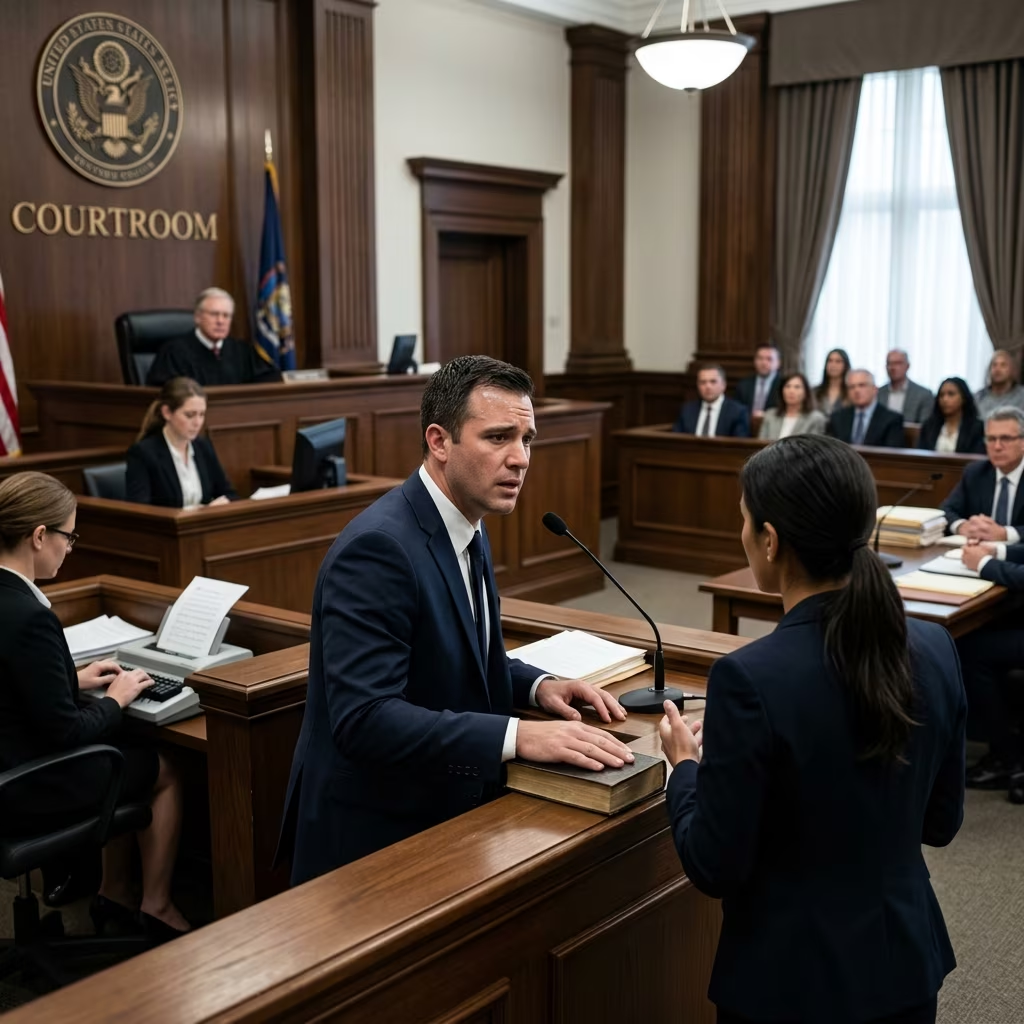
False statements and perjury are related but distinct crimes. Both involve dishonesty, but they apply in different contexts and have different requirements.
| Feature | Perjury | False Statements |
|---|---|---|
| Primary context | Statements under oath in court, grand jury, or sworn documents. | Statements to government agencies or officials, including unsworn forms and interviews. |
| Oath requirement | Yes. Must be made under oath or penalty of perjury. | Not required. Many statutes apply regardless of oath. |
| Core federal statutes | 18 U.S.C. § 1621, 18 U.S.C. § 1623. | General false statement statute 18 U.S.C. § 1001, plus specialized provisions (e.g., banking, healthcare, tax). |
| Typical penalty range | Up to 5 years imprisonment under federal law. | Often up to 5 years; enhanced penalties (e.g., 8 years) for terrorism-related cases. |
| Materiality requirement | Statement must concern a material matter that could affect the proceeding. | Statement must be material to the agency’s decision or action. |
Put simply, perjury focuses on lies told under oath, while false statement offenses cover a wider range of dishonest communications with the federal government and certain regulated entities.
Common Federal False Statement Statutes
Federal criminal law contains several statutes that penalize false information provided to the government. One of the most important is the general false statement statute.
18 U.S.C. § 1001 – General False Statements to the Federal Government
Under 18 U.S.C. § 1001, it is a federal crime to knowingly and willfully make materially false, fictitious, or fraudulent statements or representations in matters within the jurisdiction of the executive, legislative, or judicial branch of the U.S. government. This statute is broad and covers a wide array of conduct.
Examples of contexts where 18 U.S.C. § 1001 may apply include:
- False statements to federal law enforcement during investigations.
- Misrepresentations in federal benefit applications or regulatory filings.
- Inaccurate disclosures to federal agencies such as customs, immigration, or environmental regulators.
Other statutes address specific sectors, such as false statements to banks, healthcare programs, or the Internal Revenue Service. While their wording and elements vary, they usually require proof of a knowing false statement intended to influence the institution’s decision.
Key Legal Elements of a False Statement Offense
Although statutory language differs, most criminal false statement laws share several core elements. Understanding these elements is crucial for analyzing potential liability and defenses.
1. A Statement or Representation
There must be a statement or representation made by the defendant. This can be oral or written, formal or informal, and may appear in forms, letters, interviews, or electronic submissions.
Important points:
- Express statements – Direct assertions of fact, such as reporting income or describing an event.
- Certifications and affirmations – Signing a document that certifies information as true can itself be a separate statement.
- Omissions – Omitting a required material fact while certifying completeness may be treated as a false statement if a duty to disclose exists.
2. Falsity or Fraudulent Character
The statement must be false, fictitious, or fraudulent. A statement is false if it was untrue at the time it was made. It can also be deemed fraudulent if it intentionally omits critical information that the speaker is required to disclose while claiming accuracy of the submission.
Some statutes also cover willful overvaluation, such as inflating property or collateral values to influence a bank or government lender.
3. Materiality
Materiality is a central requirement in most false statement prosecutions. A statement is “material” if it has a natural tendency to influence, or is capable of influencing, the decision of the agency or decision maker to which it is addressed.
Important features of materiality:
- The statement does not need to actually change the decision; capability to influence is sufficient.
- Minor inaccuracies that have no realistic effect on the outcome are generally considered immaterial.
- Statements relating to key eligibility criteria, risk assessments, or regulatory compliance are often inherently material.
4. Knowing and Willful Conduct
The government must show the defendant acted with the required mental state, usually described as “knowingly” and “willfully.”
- Knowing – The defendant knew the statement was false or acted with reckless disregard for the truth, consciously avoiding learning the facts.
- Willful – The defendant intentionally made the statement, rather than accidentally or by mistake, with an awareness that the conduct was wrongful.
In pattern jury instructions for false statement charges, courts instruct jurors that “knowingly” includes both actual knowledge and reckless disregard coupled with a deliberate effort to avoid the truth.
5. Jurisdiction or Institutional Context
Many false statement statutes apply only when the statement relates to a matter within the jurisdiction of a particular agency or institution. For example, 18 U.S.C. § 1001 covers matters within the jurisdiction of federal branches and agencies. Bank-related provisions apply to federally insured or regulated financial institutions.
Jurisdiction is interpreted broadly. Courts have held that it exists whenever the federal government has authority to act or regulate in the area addressed by the statement.
Penalties and Consequences
Criminal false statement convictions can lead to significant sanctions. Under 18 U.S.C. § 1001, penalties commonly include fines and imprisonment of up to five years, with enhanced terms of up to eight years for offenses connected to terrorism.
Consequences may include:
- Imprisonment – Up to several years, depending on the statute and whether aggravating factors are present.
- Fines – Monetary penalties, often determined by federal sentencing guidelines and the nature of the offense.
- Collateral effects – Loss of professional licenses, reputational damage, immigration consequences, and difficulties obtaining future government benefits or contracts.
Importantly, many statutes do not require the government or institution to suffer actual financial loss or to have relied on the false statement. For example, in prosecutions under 18 U.S.C. § 1014 (false statements to banks), courts have held that actual damage or reliance is not an essential element; the offense focuses on the attempt to influence the institution.
How False Statements Arise in Practice
False statement charges can arise in both obvious and subtle ways. Some are associated with overt fraud schemes, whereas others stem from inaccurate paperwork or misleading answers during an inquiry.
Common scenarios include:
- Government forms – Misrepresenting income, citizenship, or other eligibility factors on benefit applications or licensing forms.
- Investigative interviews – Providing inaccurate information to federal agents during criminal or regulatory investigations.
- Compliance certifications – Signing a certification that a business complies with regulatory requirements while knowingly omitting violations.
- Financial disclosures – Overstating assets or misrepresenting liabilities in applications to federally regulated banks or lenders.
Defenses and Legal Strategies
Several defenses can be raised in response to a false statement charge. The appropriate strategy depends on the specific statute, facts, and evidence in the case.
Challenging Falsity
A central defense is to argue that the statement was not actually false. If the statement is literally true, even if potentially misleading or incomplete, it may not qualify as perjury or a false statement under certain statutes.
Defense approaches include:
- Showing the statement accurately reflected the speaker’s understanding at the time.
- Demonstrating that subjective terms or estimates were used in good faith.
- Highlighting ambiguity in questions or forms that could reasonably lead to different answers.
Lack of Knowledge or Intent
Because most statutes require knowing and willful conduct, proving that errors were accidental or due to misunderstanding can be critical.
- Mistake of fact – The defendant believed the statement was true.
- Clerical or drafting errors – The false information resulted from mis-typing or miscommunication rather than intent to deceive.
- Reliance on advice – The defendant reasonably relied on accountants, lawyers, or other professionals when completing forms.
Materiality Challenges
Defendants may argue that inaccuracies were not material and could not reasonably have affected the agency’s decision. This is fact-intensive and often involves demonstrating that the statement related only to minor details or that the agency would have acted the same way regardless.
Jurisdiction and Scope Arguments
Some defenses focus on whether the statement truly falls within the jurisdiction of the statute invoked. For example, a statement may concern purely private matters outside federal regulatory authority, or the agency addressed may lack jurisdiction over the subject at issue.
Practical Tips to Avoid False Statement Liability
The best way to avoid criminal exposure is to treat all communications with government agencies and regulated institutions as formal and potentially legally significant.
- Read questions carefully – Ensure you understand what information is being requested before answering.
- Verify facts – Check records, financial statements, and supporting documents rather than relying on memory.
- Seek professional advice – Consult lawyers or other qualified professionals when completing complex or high-stakes forms.
- Correct errors promptly – If you discover a mistake in a prior submission, notify the responsible agency or institution as soon as possible.
- Avoid speculation – If you do not know the answer, say so instead of guessing.
Frequently Asked Questions (FAQs)
Do I have to be under oath for a false statement to be a crime?
No. Perjury requires an oath, but many false statement statutes such as 18 U.S.C. § 1001 apply to unsworn statements made to federal agencies and officials.
Is lying to a local police officer a federal false statement offense?
Not typically. Federal false statement statutes focus on matters within federal jurisdiction. False reports to local law enforcement are usually governed by state or local laws, which may also impose criminal penalties.
Can I be prosecuted even if the government was not harmed?
Yes. Many statutes do not require proof of actual loss or reliance. For example, under federal provisions targeting false statements to banks, the government need not show that the bank was defrauded or suffered damages.
Are omissions treated the same as direct lies?
They can be. Where there is a legal duty to disclose material facts, failing to include them while certifying that a statement is complete and accurate may be treated as a false, fictitious, or fraudulent statement.
What should I do if I think I may have made a false statement?
Because false statement allegations can lead to serious criminal consequences, it is important to seek advice from a qualified criminal defense attorney. Legal counsel can advise on whether a correction should be submitted, how to interact with investigators, and what defenses may apply.
References
- Making a False Statement to a Federal Agency: Pattern Jury Instructions — United States District Court for the District of Massachusetts. 2003-01-01. https://www.mad.uscourts.gov/resources/pattern2003/html/patt6oxl.htm
- 45 CFR § 1149.7 – What is a false statement? — National Endowment for the Arts via Legal Information Institute. 2016-01-01. https://www.law.cornell.edu/cfr/text/45/1149.7
- 815. Elements of Offense of False Statements — United States Department of Justice, Criminal Resource Manual. 2018-01-01. https://www.justice.gov/archives/jm/criminal-resource-manual-815-elements-offense-false-statements
- False Statements and Perjury: An Overview of Federal Criminal Law — Congressional Research Service. 2014-08-12. https://www.congress.gov/crs-product/98-808
- Perjury and False Statements — Nate Crowley Law Office, PC. 2022-01-01. https://www.natecrowleylaw.com/practice-areas/federal-criminal-defense/common-federal-crimes/perjury-and-false-statements/
- False Statements Defense Lawyer — Schiffer Law Firm. 2021-01-01. https://www.schifferlawfirm.com/practice-areas/false-statements-defense/