
Understanding the Credible Fear Interview in U.S. Asylum Law
A practical, plain-language guide to what happens in a credible fear interview and how asylum seekers can prepare.
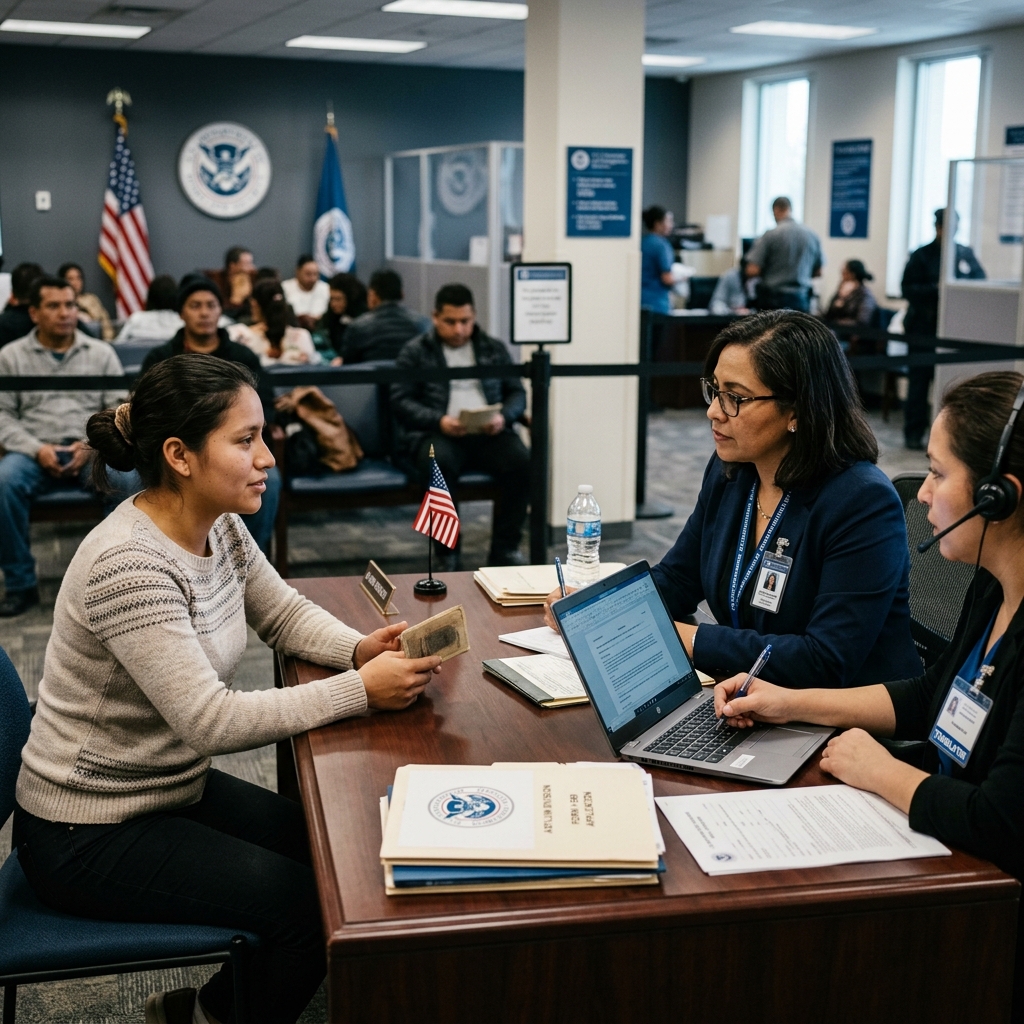
The credible fear interview is often the first major step for many people seeking asylum or protection in the United States. It takes place after a person has been stopped at or near the border and tells immigration officials that they are afraid to return to their country. Although it is a preliminary screening, its outcome can decide whether someone gets a chance to present a full asylum case before a judge or faces rapid removal from the U.S.
This article explains the purpose of the credible fear interview, the legal standards that apply, typical questions asked, and practical strategies for preparing and presenting your story. It is written for non-lawyers in clear language, but it follows official guidance and high-quality legal resources.
1. What Is a Credible Fear Interview?
In U.S. immigration law, a credible fear interview is a formal conversation between an asylum officer and a noncitizen who may be subject to expedited removal, meaning they can be quickly deported without a full hearing. If the person expresses a fear of persecution or torture, or an intention to seek asylum, they must be referred to an asylum office for a credible fear interview.
The officer’s task is not to decide the entire asylum case. Instead, the officer must determine whether there is a significant possibility that the person could qualify for asylum, withholding of removal, or protection under the Convention Against Torture (CAT) if their case were heard by an immigration judge. A positive finding allows the person to move forward; a negative finding can lead to removal unless successfully challenged.
1.1 Who Goes Through a Credible Fear Interview?
According to official guidance, the credible fear process applies mainly to people who:
- Recently arrived in the United States without valid entry documents or with false documents, and
- Are subject to expedited removal procedures, and
- Tell an immigration officer that they are afraid to return to their country or want to apply for asylum.
This includes people detained at ports of entry (such as airports or land borders) and those apprehended soon after crossing without permission.
1.2 Credible Fear vs. Reasonable Fear
The credible fear process is distinct from the reasonable fear process, which mainly applies to people who have previously been deported or have certain criminal convictions. In a reasonable fear interview, the officer looks for a “reasonable possibility” of persecution or torture, a similar but slightly different standard. Both procedures aim to ensure that people with legitimate protection claims are not returned to countries where they face serious harm.
2. Legal Standard: What Does “Credible Fear” Mean?
Under U.S. law and policy, a credible fear involves a realistic possibility that the applicant would be persecuted or tortured if returned to their home country, and that they could qualify for protection under the asylum laws. It is deliberately set lower than the standard needed to win an asylum case in court, because it is only a screening stage.
2.1 Persecution and Torture: Key Concepts
U.S. law defines persecution as serious harm inflicted on a person because of their:
- Race
- Religion
- Nationality
- Political opinion
- Membership in a particular social group (for example, LGBT persons or survivors of gender-based violence in some circumstances).
Torture is generally understood as severe pain or suffering intentionally inflicted by, or with the consent or acquiescence of, a public official or someone acting in an official capacity. Protection under the Convention Against Torture does not require the harm to be based on one of the five protected grounds listed above, but the risk must be serious and linked to official actors or those the government cannot or will not control.
2.2 Subjective and Objective Elements of Fear
A credible fear determination usually has both:
- Subjective element: The applicant’s personal, genuine fear of returning home, which they must describe clearly and consistently.
- Objective element: Evidence or information showing that the danger is real and not merely imagined, such as country reports, human rights documentation, or prior incidents of harm.
Officers may consider both the applicant’s testimony and any available supporting documents, as well as public information about the situation in the applicant’s country.
2.3 Internal Relocation
U.S. asylum law also examines whether the applicant could reasonably move to another part of their country to avoid harm. Applicants may be asked whether they tried to relocate, why relocation would not be safe or reasonable, or whether threats exist nationwide. If a person could safely and reasonably live elsewhere in their country, it may weaken their claim.
3. How the Credible Fear Process Works
The credible fear process follows a series of steps from initial encounter to possible review by an immigration judge. While details can differ depending on location and detention facilities, official manuals and guides describe a general flow.
3.1 Initial Encounter and Referral
When a person is stopped by Customs and Border Protection (CBP) or Immigration and Customs Enforcement (ICE) and indicates an intention to apply for asylum or states a fear of persecution or torture, the inspector should not try to judge the merits of the claim. Instead, the case is referred to an asylum office for a credible fear interview if the person is in expedited removal proceedings or otherwise eligible.
3.2 Notice, Detention, and Waiting Period
Most applicants in the credible fear process are detained. They should receive written information explaining the process (such as Form M-444) and their right to consult with someone before the interview. Official policy generally provides at least 24 hours between receipt of this information and the interview, though applicants can waive that waiting period if they wish.
In practice, interviews may occur within roughly 10 days after fear is expressed, although delays can happen based on location and caseload.
3.3 The Interview Itself
During the credible fear interview, the asylum officer will usually:
- Verify basic personal information (name, age, nationality, family details).
- Confirm how and when the applicant arrived in the United States.
- Ask detailed questions about past harm, threats, or arrests and why the applicant is afraid to return.
- Explore who is responsible for the harm (government officials, police, gangs, family members, etc.).
- Discuss whether protection was sought from authorities and what happened.
- Ask about the possibility of living safely elsewhere in the home country.
- Address any apparent inconsistencies or missing details in the applicant’s story.
An interpreter should be provided if needed, and applicants are encouraged to immediately speak up if they do not understand the interpreter or feel that translation errors are occurring, as miscommunication can seriously affect the case.
| Participant | Main Role | Key Responsibilities |
|---|---|---|
| Asylum Officer | Conducts interview and makes credible fear determination | Ask questions, ensure fair process, apply legal standards, prepare summary, issue decision. |
| Applicant | Explains fear and experiences | Answer honestly, provide details, mention supporting evidence, correct errors in summary. |
| Interpreter | Facilitates communication | Accurate translation; applicant must alert officer if interpreter is unclear or incorrect. |
| Immigration Judge (if review requested) | Reviews negative credible fear decision | Holds hearing, questions applicant, decides whether officer’s denial was correct. |
3.4 After the Interview: Decision and Summary
After the interview, the asylum officer prepares a written summary of what the applicant said and issues a decision on whether credible fear was established. The summary and decision are usually provided to the applicant, who should read them carefully. If the summary contains mistakes or omits important facts, correcting it quickly is extremely important.
3.5 If Credible Fear Is Found
If the officer decides that the applicant has shown credible fear, the case typically moves out of expedited removal and into regular removal proceedings. The applicant can then file a formal asylum application and present their case before an immigration judge. At this stage, the burden of proof is higher, and more detailed evidence is usually needed, but the applicant has more procedural rights and time to prepare.
3.6 If Credible Fear Is Denied
If the officer finds that the applicant does not have a credible fear of persecution or torture, the person can generally ask for review by an immigration judge. There are strict timelines: credible fear review hearings are often required within a short period after the officer’s decision. At the review hearing, the judge will ask questions and decide whether the officer’s denial was correct.
If both the asylum officer and the immigration judge conclude that there is no credible fear, removal may proceed. In some situations, it is still possible to ask the asylum office to reconsider or to request another interview, but such requests must be clearly justified and show that the first interview was incomplete or unfair.
4. Presenting Your Story: Credibility and Evidence
A credible fear interview relies heavily on the applicant’s testimony. However, both the content of the story and how it is told can influence the outcome. Official manuals and practice guides emphasize the importance of credibility and supporting information.
4.1 Building a Clear Narrative
Applicants should be prepared to describe their experiences and fears in a chronological, detailed way. Helpful strategies include:
- Explaining past harm: Describe what happened, who was involved, where and when events occurred, and how often the harm occurred.
- Linking harm to protected grounds: Clarify why you believe the harm occurred because of your race, religion, nationality, political opinion, or membership in a social group (such as LGBT status).
- Describing future risk: Explain why you believe persecution or torture will happen again if you return, including ongoing threats or general conditions in your country.
- Discussing attempts to seek help: Mention whether you reported incidents to police or officials, and what response you received.
4.2 Handling Inconsistencies
Asylum officers and judges often look for consistency between statements made at different times, including border interviews, credible fear interviews, and later hearings. Minor differences are normal, especially when someone is traumatized or afraid. However, serious contradictions can lead to doubts about truthfulness.
If inconsistencies exist, it is important to:
- Explain why the earlier statement was incomplete or mistaken (for example, due to fear, misunderstanding, or lack of interpretation).
- Clarify the correct information and keep your story consistent going forward.
- Mention any difficulties you had in prior interviews, such as poor translation or pressure.
4.3 Supporting Evidence
Although physical documents are not always required at the credible fear stage, officers may consider any evidence that is available or can later be provided. Examples include:
- Police reports, court documents, or official complaints about threats or attacks.
- Medical records or photographs showing injuries.
- Letters or sworn statements from witnesses, family members, or colleagues who know about the harm.
- Country reports and human rights documentation showing systemic persecution of people like you (for example, LGBT persons, political activists, or religious minorities).
Even if you cannot obtain these documents while detained, explaining what evidence exists and how it supports your story can help demonstrate that your fear is based on real threats.
5. Practical Tips for Credible Fear Interviews
Official guides and experienced advocates highlight several practical tips to help applicants navigate credible fear interviews.
5.1 Communication and Interpretation
- Ask for an interpreter if you are not comfortable speaking in English. Clearly state your language and dialect.
- Speak up about problems: If you do not understand the interpreter or the officer, say so immediately. Misinterpretation can seriously harm your case.
- Answer honestly: Do not guess if you are unsure; simply say you do not know or do not remember. Lying can lead to a finding that your entire story is not trustworthy.
5.2 Emotional and Psychological Preparation
Talking about traumatic experiences can be painful. Still, being able to share key facts is essential. Before the interview, it may help to:
- Mentally review significant events: dates, places, names, and types of harm.
- Prepare yourself to talk about sensitive topics such as sexual violence, domestic abuse, or persecution related to sexual orientation or gender identity.
- Remind yourself that the officer’s role is to listen and apply the law, not to judge your worth as a person.
5.3 Legal Assistance and Advocacy
Many detained individuals have limited access to lawyers. Where possible, getting legal advice before or after the interview can help you:
- Understand the legal elements of persecution and torture.
- Identify which parts of your story are most relevant to the law.
- Prepare for common questions and clarify past statements.
- Request review or reconsideration if your credible fear claim is denied.
6. Frequently Asked Questions (FAQs)
6.1 Do I need documents to pass a credible fear interview?
No. The credible fear interview is primarily based on your testimony. Documents can help, but they are usually not required at this early stage. However, you should mention any evidence you have or could obtain later.
6.2 What happens if I am too afraid or ashamed to discuss certain events?
Officers understand that people may feel shame or fear. Still, your protection claim often depends on explaining what happened and why you are afraid. You can say that a topic is difficult, but try to share at least the essential facts. If you later reveal new serious harm that you did not mention before, it may raise questions about credibility unless you explain why you were silent initially.
6.3 Can I choose the language of my interview?
You should be allowed to use a language in which you are comfortable through an interpreter. Tell the officer your preferred language and dialect, and highlight any problems with interpretation immediately.
6.4 How quickly will I know the result?
According to official guides, decisions are usually made within days after the interview. You will receive a written decision and summary. If the result is negative, you can typically request review by an immigration judge within a short time frame.
6.5 If the judge also denies my credible fear, is that the end?
Often, a negative decision by both the asylum officer and the immigration judge leads to removal. In some circumstances, it is possible to ask the asylum office to reconsider or to request another interview, but those options are limited and require strong reasons, such as serious mistakes or missing information in the first interview.
7. Final Thoughts
The credible fear interview is a critical gateway for many people seeking safety in the United States. While the legal standard is lower than that required to win an asylum case, the process can still be complex and emotionally demanding. Understanding the legal framework, the types of questions officers ask, and the importance of clear, honest testimony can help applicants navigate this stage more effectively.
Reliable information—from official manuals, human rights reports, and experienced advocates—can also support a well-founded fear claim by showing that an applicant’s experiences are part of a broader pattern of persecution or torture in their home country. Combined with careful preparation, such knowledge can make a significant difference in the outcome of a credible fear determination.
References
- CREDIBLE FEAR PROCEDURES MANUAL — U.S. Citizenship and Immigration Services (USCIS). 2024-04-05. https://immigrationlitigation.org/wp-content/uploads/2024/04/CF-Manual-prod-4.5.24.pdf
- A Guide to Credible and Reasonable Fear Proceedings — U.S. Immigration and Customs Enforcement (ICE). 2021-06-01. https://portal.ice.gov/pdf/LOPPdf/CredibleFearReasonableFear/CredibleFear&ReasonableFearENG508.pdf
- Proving Credible Fear for Asylum — Buitrago Law Firm. 2023-09-01. https://www.buitragolawfirm.com/blog/how-asylum-applicants-can-prove-credible-fear-in-immigration-hearings/
- My CFI or RFI Was Denied! — Florence Immigrant & Refugee Rights Project. 2020-01-01. https://firrp.org/media/CFI-RFI-denied.pdf
- Credible Fear Interview – Know Your Rights (LGBT) — National Immigrant Justice Center. 2009-08-28. https://immigrantjustice.org/sites/default/files/English%20-%20LGBT%20Know%20Your%20Rights%20FINAL%202009%2008%2028%20No%20Track%20Changes.pdf
- Credible and Reasonable Fear Interviews — National Immigrant Justice Center (Training Materials). 2022-05-01. https://immigrationjustice.us/get-trained/credible-and-reasonable-fear/
Similar Articles








Read full bio of medha deb


