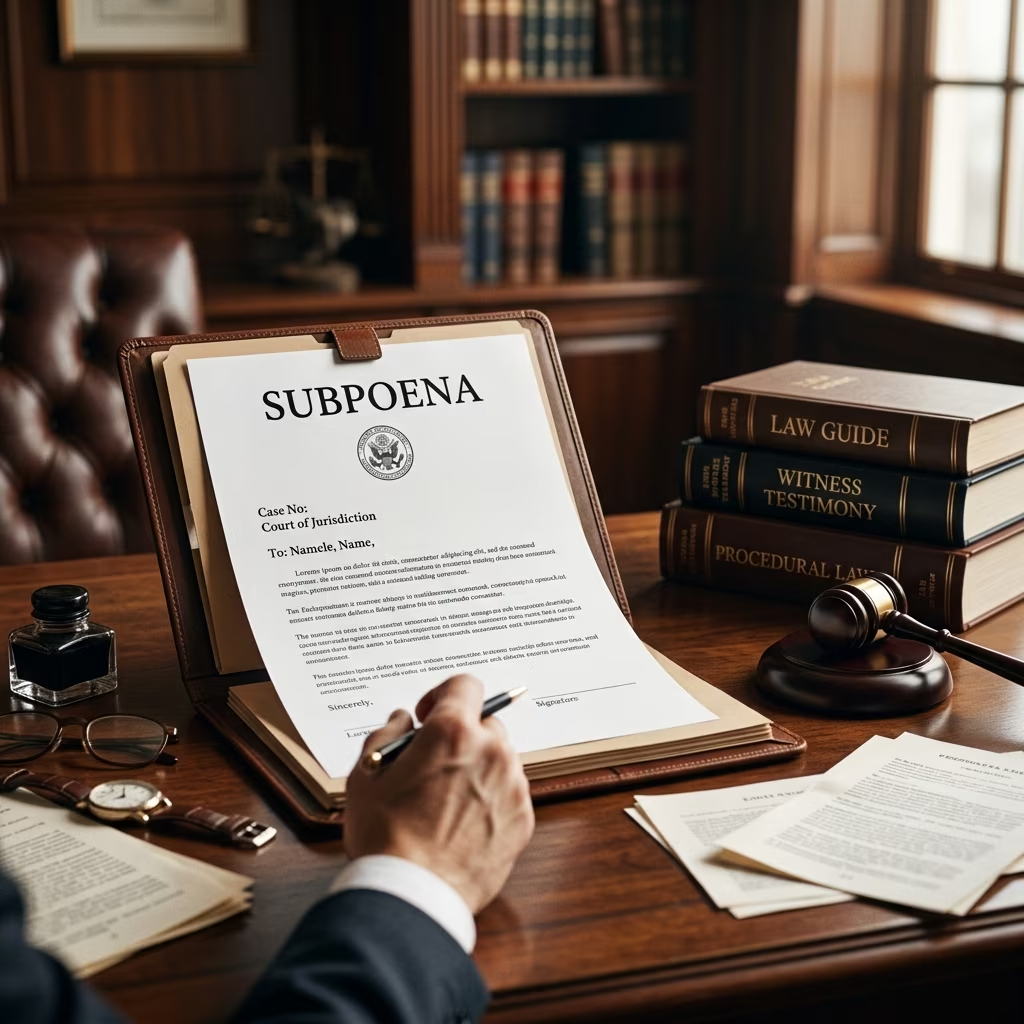
Being ordered to appear in court or provide documents can feel intimidating, especially if you are not directly involved in the case. This guide explains, in plain language, what a subpoena is, what it requires you to do, and the practical steps you can take to respond lawfully while protecting your rights. It is information only and not a substitute for advice from a licensed attorney in your area.
What Is a Subpoena?
A subpoena is a formal written order connected to a court case that directs a person or organization to provide testimony, documents, or other evidence at a specific time and place. Subpoenas are commonly used in both criminal and civil proceedings to obtain information from people who may have relevant knowledge or records, even if they are not parties in the lawsuit.
Key Features of a Subpoena
- It is a legally enforceable command issued in connection with a court proceeding.
- It specifies what you must do: attend court, appear for a deposition, or produce documents/evidence.
- It usually lists the case name, case number, court, date, and place where you must respond.
- It identifies who requested your testimony or records, often an attorney.
- Failure to comply can lead to court enforcement, including contempt proceedings.
Judges, court clerks, and in many jurisdictions licensed attorneys may issue or sign subpoenas according to local law and court rules.
Common Types of Subpoenas You May Encounter
While exact terminology differs across states, subpoenas generally fall into a few main categories, based on what they require from you.
| Type of subpoena | What it requires | Typical use |
|---|---|---|
| Witness subpoena (subpoena ad testificandum) | Orders you to appear and give sworn testimony in court. | Trial testimony from eyewitnesses, professionals, or record custodians. |
| Deposition subpoena | Requires you to appear outside the courtroom to answer questions under oath. | Pre‑trial evidence gathering, especially in civil cases. |
| Subpoena for documents (subpoena duces tecum) | Directs you to produce specified documents, records, or other tangible evidence. | Obtaining business records, medical charts, emails, or other written evidence. |
In some situations, a single subpoena may combine requirements, such as ordering you both to appear and to bring certain records with you.
Who Can Be Subpoenaed?
Almost any person or entity with information relevant to a case may receive a subpoena, whether or not they are directly involved in the dispute.
- Individuals who witnessed an event, possess knowledge about the facts, or have relevant personal records.
- Businesses that maintain employment files, transaction records, surveillance footage, or digital logs.
- Health care providers and insurers, when medical information is at issue, subject to privacy protections such as HIPAA.
- Government agencies with official reports, incident records, or regulatory documents.
- Schools and nonprofits that hold educational or social service records.
If you are unsure why you were subpoenaed, carefully review the document and contact the lawyer listed on it or consult your own attorney to better understand how your information relates to the case.
What Information Does a Subpoena Usually Contain?
Although formatting and language differ by jurisdiction, most subpoenas include core details that tell you exactly what is required.
- The name of the court and the case title (for example, Plaintiff v. Defendant).
- The case number or cause number.
- The date, time, and location for your appearance or the deadline for producing documents.
- A description of whether it is for testimony, documents, or both.
- The name, address, and phone number of the attorney or party who requested it.
- Information about how and where documents must be delivered, if records are requested.
- Language warning that failure to comply may result in penalties, such as contempt of court.
Reading the subpoena carefully, line by line, is essential. Do not rely solely on what someone else tells you it means; contact the issuing attorney or seek legal advice if anything is unclear.
Immediate Steps to Take When You Receive a Subpoena
How you respond in the first few days after being served can significantly affect your legal position. The most important point is that a subpoena is not something you can safely ignore.
Step‑by‑Step Checklist
- Do not discard or ignore the document. Failing to respond can lead to contempt of court, fines, or even jail.
- Note key deadlines. Mark the appearance date or production deadline on your calendar and allow time to prepare.
- Read what is being requested. Identify whether you must appear, produce documents, or both.
- Preserve relevant information. Do not destroy, alter, or hide documents or data listed in the subpoena.
- Consider contacting an attorney. Legal counsel can help you understand your obligations, privileges, and any grounds to challenge the subpoena.
- Communicate with the issuing lawyer if needed. If you genuinely cannot attend at the specified time or are unsure what is requested, you may call the attorney listed for clarification.
If you are an employee and the subpoena conflicts with work, many employers will adjust schedules once they understand that your attendance is legally required. In some cases, employers ask for a copy of the subpoena for their records.
Your Options: Complying, Negotiating, or Challenging
After reviewing the subpoena, you generally face three paths: comply as requested, negotiate changes, or formally object through the courts. The appropriate approach depends on the burden involved, privacy concerns, and whether the subpoena is legally valid.
Complying with the Subpoena
Compliance means doing what the subpoena requires, by the stated deadline. If you choose this route:
- For testimony: Arrive at the court or deposition location on time, with any materials you were told to bring. Be prepared to answer questions under oath.
- For documents: Gather only the records specified, organize them logically, and deliver them in the manner requested (mail, secure electronic transfer, or in‑person production).
- Retain a copy of what you provided, if possible, for your own records.
Negotiating Practical Changes
If the date or logistics create genuine hardship, you can often seek reasonable adjustments:
- Contact the issuing attorney to explain scheduling conflicts, health issues, or other barriers.
- Ask if the appearance date or production deadline can be moved or if remote testimony is possible.
- Clarify vague requests for documents so you understand exactly what you must produce.
Negotiated changes are not guaranteed, and only written agreements or court orders provide reliable protection. Do not assume that a verbal understanding alone is sufficient unless it is clearly confirmed.
Challenging a Subpoena
In some situations, you may have valid grounds to object. A common tool is a motion to quash or a motion to modify the subpoena, filed with the court.
- Grounds to challenge can include excessive burden, requests for privileged or confidential information, lack of proper service, or lack of relevance to the case.
- You generally must file a written motion that explains why the subpoena should be cancelled or narrowed, and serve copies on the parties involved.
- A judge decides whether you must comply, whether the requests should be limited, or whether protective measures (such as redaction or limited disclosure) are appropriate.
Healthcare providers and insurers, for example, often rely on specific privacy rules and may require evidence of notice to the patient or a protective order before disclosing medical information in response to a subpoena.
Confidentiality, Privacy, and Sensitive Records
Many subpoenas involve sensitive information, including medical records, counseling files, employment histories, and financial data. Laws and court rules recognize that privacy interests must be balanced against the need for evidence.
Medical and Health Information
Under federal health‑privacy rules, a court order allows a covered health provider or plan to release only the protected health information specifically described in that order. When responding to a subpoena issued by someone other than a judge, such as an attorney or clerk, the provider or plan typically must see proof that:
- The patient was notified about the request and given a chance to object, or
- A qualified protective order has been sought or obtained from the court.
These safeguards are designed to ensure that medical information is not broadly exposed without appropriate oversight.
Other Confidential or Privileged Information
Beyond health records, other categories—such as attorney‑client communications, certain counseling notes, and some government records—may be legally protected. If you believe the subpoena reaches information that is confidential or privileged:
- Consult an attorney to evaluate whether those protections apply.
- Avoid voluntarily turning over sensitive documents until you understand your obligations.
- Consider asking the court for guidance or for a protective order limiting who may see the information and how it can be used.
Potential Consequences of Ignoring a Subpoena
Courts treat subpoenas seriously because they are central tools for gathering evidence. Failing to comply can lead to sanctions.
- Contempt of court: A judge may find you in contempt for disobeying a lawful subpoena, which can result in fines or, in more serious cases, jail time.
- Orders to compel compliance: The court may issue additional orders requiring you to appear or produce documents, sometimes with stronger language and shorter deadlines.
- Costs and fees: In some situations, you may be ordered to pay the reasonable expenses caused by non‑compliance, such as the other side’s motion costs.
These consequences are avoidable in many cases by addressing the subpoena promptly, asking questions early, and seeking legal advice if you think you have grounds to object.
Preparing to Testify as a Witness
If your subpoena requires you to testify, preparation can help you feel more confident and ensure your testimony is accurate.
- Review any records or notes you are permitted to see that relate to the events you will discuss.
- Plan your travel and arrival so you reach the courthouse or deposition location on time.
- Dress neatly and respectfully, in a manner appropriate for a formal setting.
- Remember that your role is to tell the truth based on your own knowledge, not to advocate for either side.
- If you are nervous, speak with an attorney about what to expect, including who will be present and how questioning works.
During testimony, you will usually be asked to swear or affirm that your answers will be truthful. Take your time, listen carefully to each question, and ask for clarification if you do not understand what is being asked.
Producing Documents or Electronic Data
Subpoenas for documents can reach far beyond paper records. They often cover electronic files, emails, photographs, audio or video recordings, and other forms of data.
- Identify where requested information is stored—paper files, computer systems, phones, cloud services, or external drives.
- Follow any specific instructions in the subpoena about format or delivery (for example, certified copies, electronic formats, or inspection on site).
- Avoid altering metadata or deleting related files once you know the information is being sought.
- If retrieving data is technically difficult or very burdensome, explain this to the issuing attorney and, if necessary, to the court.
Parties requesting documents are generally expected to make requests that are reasonably specific and not unduly burdensome. Courts may limit or modify broad or intrusive demands when presented with appropriate motions and evidence.
Frequently Asked Questions (FAQs)
Do I have to go to court if I was subpoenaed but I am not part of the case?
Yes. A subpoena can require the appearance or document production of people and entities who are not parties to the case. As long as the subpoena is valid and properly served, you are generally obligated to comply unless the court modifies or quashes it.
Can I ignore a subpoena if I am too busy or the date is inconvenient?
No. Ignoring a subpoena can lead to contempt of court, fines, or even jail. If the date creates serious hardship, contact the issuing attorney as soon as possible to request a change, or consult a lawyer about filing a motion with the court.
What if the subpoena asks for documents I do not have?
You cannot produce documents that are genuinely not in your possession or control. Inform the issuing attorney, in writing if possible, that you do not have the requested items, and be prepared to explain how you searched for them. Do not destroy anything that might be responsive.
Will I be paid for appearing as a witness?
Many jurisdictions provide modest witness fees or travel reimbursements, particularly in criminal cases or when you are subpoenaed by the government. The rules vary by state and court, so check with the clerk’s office or the attorney listed on the subpoena.
How do privacy laws affect subpoenas for medical records?
Federal privacy rules allow disclosure of protected health information when a court order specifically authorizes it. For subpoenas issued by attorneys or clerks, the provider or plan typically must see evidence of patient notice or a protective order before responding. This framework is designed to balance patient privacy with the court’s need for evidence.
Should I talk to my own lawyer if I receive a subpoena?
Speaking with a qualified attorney is often wise, especially if the subpoena involves sensitive information, complex legal questions, or significant burden. A lawyer can help you understand your rights, evaluate whether you should challenge the subpoena, and guide you through the process of appearing or producing documents.
Practical Tips to Protect Yourself and Respect the Court
- Keep a complete copy of the subpoena and any correspondence about it.
- Respond promptly; waiting until the deadline is near reduces your options.
- Be honest with both the requesting attorney and the court about what you know and what records you have.
- Ask for clarification whenever instructions are unclear.
- Remember that your primary obligation is to tell the truth and follow lawful court orders.
While receiving a subpoena can be stressful, understanding the basic rules and procedures can help you navigate the process with confidence and protect your legal interests.
References
- Subpoena — Legal Information Institute, Cornell Law School. 2023-01-01. https://www.law.cornell.edu/wex/subpoena
- I received a subpoena and don’t know what to do — Illinois Legal Aid Online. 2023-05-01. https://www.illinoislegalaid.org/legal-information/i-received-subpoena-and-dont-know-what-do
- Subpoena someone or something — California Courts Self-Help Guide. 2024-01-01. https://selfhelp.courts.ca.gov/subpoena
- Court Orders and Subpoenas — U.S. Department of Health and Human Services (HHS). 2022-10-15. https://www.hhs.gov/hipaa/for-individuals/court-orders-subpoenas/index.html
- What Is a Subpoena, and Why Have I Been Served? — Super Lawyers. 2023-03-01. https://www.superlawyers.com/resources/criminal-defense/whats-a-subpoena-and-why-have-i-been-served/
- Can I get documents from someone other than the defendant? — WomensLaw. 2023-04-01. https://www.womenslaw.org/laws/preparing-court-yourself/trial/document-requests/can-i-get-documents-someone-other-defendant