
Understanding Court-Ordered Community Service
A practical legal guide to what counts as community service, how it works, and how to complete your hours correctly.
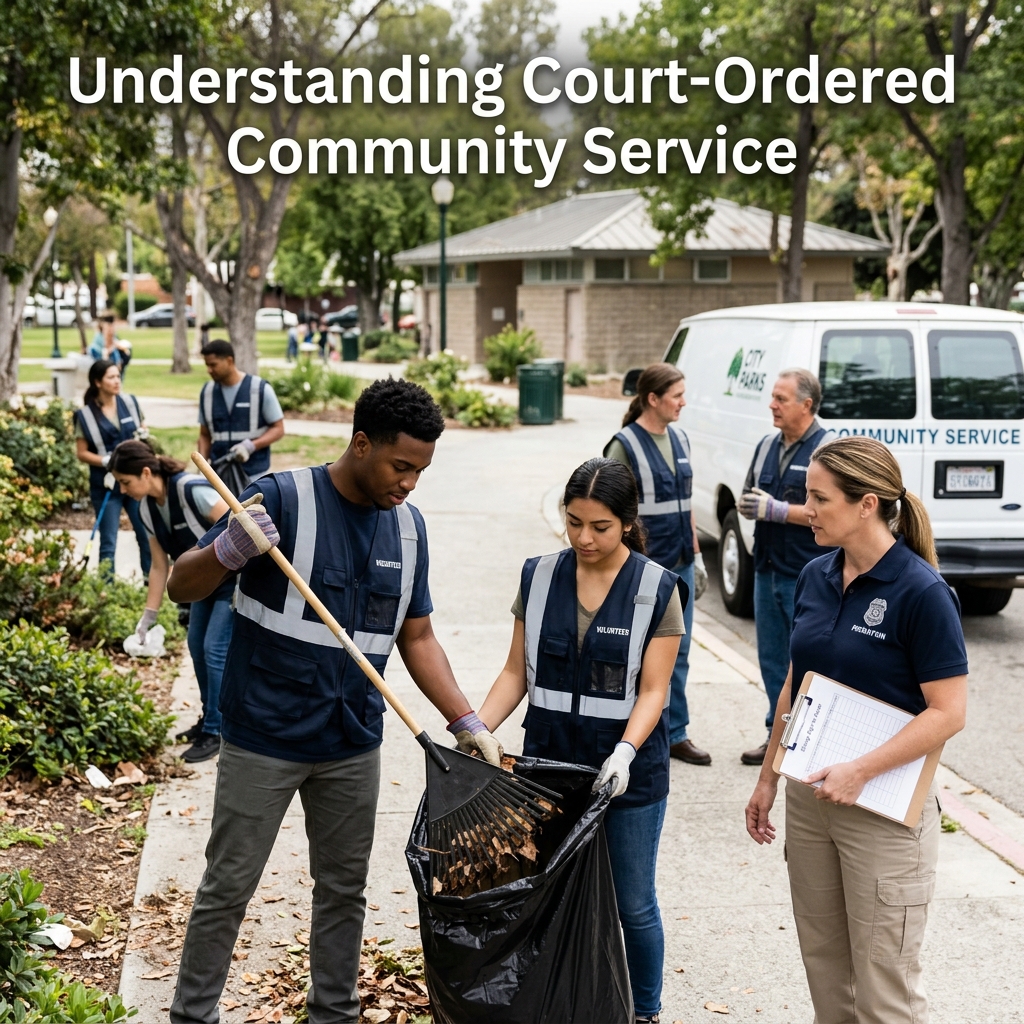
Court-ordered community service is one of the most common alternatives to jail time for minor offenses. It may sound simple—work a certain number of hours without pay—but the legal rules about what counts, how it must be documented, and where it can be performed are more complex than many people realize. Completing your hours correctly is essential to avoiding further penalties or a violation of probation.
This guide explains how court-ordered community service works, the types of activities that usually qualify, how to select an appropriate organization, and the documentation courts typically require. It is designed for people who have been ordered to perform community service, their families, and anyone who wants a clear, practical overview of this sentencing tool.
What Is Court-Ordered Community Service?
In criminal cases, community service is unpaid work that benefits the community, performed under a court order as part of a sentence or probation condition. Instead of—or in addition to—jail, fines, or other penalties, a judge may require a defendant to complete a specific number of service hours with an eligible organization.
| Feature | Community Service |
|---|---|
| Nature of work | Unpaid, benefits the public or a nonprofit organization |
| Legal basis | Ordered by a judge as part of sentencing or probation |
| Primary goals | Rehabilitation, accountability, and community benefit |
| Common use | Minor crimes, misdemeanors, non-violent offenses |
Legal authorities sometimes use other terms for similar requirements, such as community restitution or community work service, but the core idea is the same: the defendant “pays back” the community by performing meaningful, unpaid work for a set amount of time.
How Judges Use Community Service in Sentencing
Judges have wide discretion to tailor sentences to both the offense and the individual defendant. Community service is one tool they can use when full incarceration is not necessary or might be counterproductive.
Common ways community service appears in a criminal case include:
- Condition of probation – The most frequent use. The defendant must complete a set number of hours by a deadline to successfully finish probation.
- Alternative to jail – A judge may reduce or replace short jail terms with community service hours, especially in minor cases.
- Part of a diversion program – For eligible defendants, community service can be one requirement in a program that allows charges to be reduced or dismissed upon completion.
- Substitute for fines – In some courts, low-income defendants can perform community service instead of paying certain fines or fees.
Courts typically reserve community service for less serious cases, such as misdemeanors and non-violent offenses. People convicted of violent crimes are usually not candidates because they may pose a risk to the public, and other sanctions are considered more appropriate.
Who Is Usually Ordered to Perform Community Service?
While eligibility depends on local law and individual circumstances, certain patterns are common across jurisdictions.
- Non-violent offenders – Defendants whose crimes do not involve physical harm or serious threats are most likely to receive community service instead of custody.
- People with limited criminal history – First-time or low-level repeat offenders often receive community service as part of a rehabilitative sentence.
- Traffic and minor drug offenses – Community service is frequently ordered in DUI, traffic, minor possession, and petty theft cases.
- Defendants suitable for supervision – Individuals who can reliably report to organizations and comply with instructions tend to be better candidates.
The number of hours ordered varies widely. Research and practice guides suggest that minor misdemeanors often carry requirements in the range of 20 to 100 hours, though each court sets its own norms and limits. Many courts also cap the number of hours a person can perform in one day—for example, no more than eight hours—to prevent excessive or unsafe workloads.
What Types of Work Typically Qualify?
Not all unpaid work counts as court-ordered community service. Courts rely on eligible organizations and defined activities to ensure that the work genuinely benefits the community and can be properly verified.
Organizations That Commonly Qualify
Most courts require that community service be performed with a recognized nonprofit or government agency. Commonly accepted organizations include:
- Registered charitable nonprofits (often 501(c)(3) organizations)
- Local government departments, such as parks or public works
- Libraries, community centers, and shelters
- Food banks and soup kitchens
- Approved social service organizations and certain religious charities
Some jurisdictions also recognize educational programs—such as evidence-based substance abuse classes or cognitive behavioral therapy courses—as community service if they are provided by qualified organizations and meet specific criteria.
Typical Community Service Activities
A national study of courts found that manual and public-service work is the most common type of community service ordered. Examples include:
- Public space cleanup (parks, roadsides, community facilities)
- Janitorial or maintenance work for nonprofits or government buildings
- Assisting at food banks and meal programs
- Supporting staff at shelters, animal rescues, or community centers
- Helping with administrative tasks or event preparation for charities
In many cases, judges simply order a number of hours and allow the defendant to choose the type of work and organization, subject to approval. In other cases, the judge might craft a specific assignment that relates to the offense—for example, litter cleanup for someone convicted of illegal dumping.
What Usually Does NOT Count as Community Service?
Courts are strict about what they will accept as community service. Defendants often run into trouble when they assume that any unpaid work qualifies. Commonly disallowed activities include:
- Helping family members or friends – Work for private individuals almost never qualifies, even if unpaid.
- Work for a for-profit business – Unpaid labor at a company or store is generally not accepted because it benefits a private enterprise, not the community.
- Donating money instead of hours – Courts typically require actual work, not financial contributions, unless the order specifically allows substitution.
- Activities done primarily for personal benefit – Tasks like working off personal debts or improving your own property are not considered community service.
- Unapproved school or church activities – Some courts do not accept hours performed at a school or church unless the organization and program have been expressly approved.
Because rules vary, it is essential to confirm that any organization and activity meets your court’s specific requirements before you begin.
Choosing a Community Service Placement
In many jurisdictions, defendants can select their own community service placement as long as it meets court standards. Making a thoughtful choice can make the experience more manageable and may even provide useful skills or connections.
Steps to Select an Appropriate Organization
- Review your court order – Identify any restrictions on location, type of organization, or type of work. Some courts require service within the same county where the offense occurred.
- Obtain a list of approved providers – Probation officers or court staff often maintain lists of organizations familiar with community service requirements.
- Contact the organization first – Do not simply show up. Call or email to confirm they accept court-ordered volunteers and have appropriate tasks available.
- Disclose your situation – Be prepared to explain that you are completing court-ordered community service and, if requested, the general nature of your offense.
- Verify documentation procedures – Ask how the organization records hours and whether they will provide a completion letter on official letterhead.
Courts often prefer placements within the defendant’s local community to reinforce accountability and reduce logistical challenges. If you wish to serve elsewhere, seek approval from your supervising officer or the court before starting.
Documentation: The Key to Getting Your Hours Accepted
Proper documentation is usually the single most important factor in having community service hours accepted by the court. Incomplete or incorrect paperwork is a leading reason why defendants are told their hours “do not count.”
Basic Documentation Requirements
Different courts use different forms, but common requirements include:
- Letter or certificate on the organization’s official letterhead
- Your full legal name and, often, case or docket number
- Name, address, and telephone number of the organization
- Dates you performed service and the total number of completed hours
- Brief description of the type of work you performed
- Statement confirming you were not paid for the work
- Signature and contact information for your supervisor or manager
To avoid disputes, many organizations require volunteers to sign in and out for each shift. Defendants should keep their own personal log as a backup, noting dates, times, and tasks performed.
Common Documentation Mistakes to Avoid
- Turning in letters without official letterhead or missing supervisor signatures
- Failing to include total hours or specific dates
- Submitting documentation from an organization that was not approved
- Missing court deadlines for completion or submission of paperwork
To protect yourself, compare your documentation against the court’s written requirements before submitting it. If anything is missing, ask the organization to correct it promptly.
Online and Education-Based Community Service Programs
In recent years, some jurisdictions have begun to accept online, education-based programs as a form of community service, particularly when in-person work is impractical. These programs might include structured classes or workshops related to:
- Substance abuse education
- Anger management or conflict resolution
- Cognitive behavioral therapy modules
- Decision-making or life skills courses
To qualify, such programs typically must be operated by recognized nonprofit organizations and offer reliable tracking systems to verify completion of hours. As with traditional service, courts may require certificates listing the number of hours, dates of participation, and official signatures.
Consequences of Failing to Complete Community Service
Failing to fulfill a community service order is a serious matter. Because the requirement is part of a court sentence or probation condition, non-compliance can lead to additional penalties.
Depending on the case and jurisdiction, consequences can include:
- Probation violation hearings and possible revocation
- Imposition of suspended jail time or additional custody
- Extension of probation or community service deadlines
- Additional fines or stricter conditions
If you are unable to complete your hours due to documented medical issues, family emergencies, or other serious obstacles, contact your attorney or supervising officer as early as possible. Courts sometimes grant extensions or modify requirements when given prompt, credible information.
Practical Tips for Successfully Completing Community Service
Community service can be burdensome, but approaching it methodically can reduce stress and help you avoid legal problems. Consider the following practical steps.
- Start early – Do not wait until the deadline is close. Starting promptly gives you flexibility if scheduling changes or documentation issues arise.
- Keep a personal record – Maintain a log of dates, hours, and tasks in addition to the organization’s records.
- Confirm expectations – Ask clearly about work rules, dress codes, and duties to avoid misunderstandings with staff.
- Respect the worksite – Treat the opportunity professionally. Poor behavior can lead the organization to decline further service or refuse to verify hours.
- Review paperwork before submission – Check every item required by your court, including signatures and contact details.
- Consult your lawyer when unsure – If your order is unclear, or you are considering an unconventional placement, seek legal advice first.
Frequently Asked Questions
Does volunteering on my own count as community service?
Informal volunteering usually does not count unless it is done through an approved nonprofit or government agency and properly documented. Courts require verification from recognized organizations, not just personal statements.
Can I choose any charity I want?
Often you may choose among charities, but restrictions apply. Many courts require that the organization be a registered nonprofit or government entity, and some insist it be located in the county where you were charged. Always get your supervising officer’s approval first.
Will my employer know I am doing community service?
Court orders are public records, but whether your employer finds out depends on local law, workplace policies, and what you disclose. Organizations where you perform service may ask about your offense, but they are generally focused on your conduct during service rather than notifying third parties.
Can online courses satisfy my community service requirement?
In some jurisdictions, yes—but only if the courses are offered by approved programs and your court order or supervising officer explicitly allows it. Evidence-based online programs with clear tracking and certificates are more likely to be accepted.
What if I cannot finish all my hours by the deadline?
Do not ignore the problem. Contact your attorney or supervising officer immediately to explain the situation and request guidance. Courts sometimes extend deadlines or modify orders when given timely, documented reasons, but failure to act can lead to probation violations and additional penalties.
References
- Community Service | Wex | US Law — Legal Information Institute, Cornell Law School. 2023-01-01. https://www.law.cornell.edu/wex/community_service
- Court Ordered Community Service — FindLaw. 2022-06-15. https://www.findlaw.com/criminal/criminal-procedure/court-ordered-community-service.html
- What Types of Community Service Can a Judge Order? — Nolo. 2021-09-30. https://www.nolo.com/legal-encyclopedia/what-kind-community-service-can-judge-order.html
- Community Service in Georgia — Georgia Criminal Lawyer. 2020-05-10. https://www.georgiacriminallawyer.com/community-service-in-georgia
- Community Work Service — Superior Court of California, County of San Luis Obispo. 2023-03-01. https://www.slo.courts.ca.gov/general-information/community-work-service
- Court-Ordered Community Service — Center for Justice Innovation. 2019-11-05. https://www.innovatingjustice.org/wp-content/uploads/2019/11/community_service_report_11052019_0.pdf
- How Court-Ordered Community Service Works: A Complete Guide — Foundation of Change. 2024-02-01. https://www.thefoundationofchange.org/resources/how-court-ordered-community-service-works
Similar Articles








Read full bio of medha deb




