
Understanding Consumer Proposals in Canada
Learn how consumer proposals work in Canada, who qualifies, and the practical pros and cons before you commit.
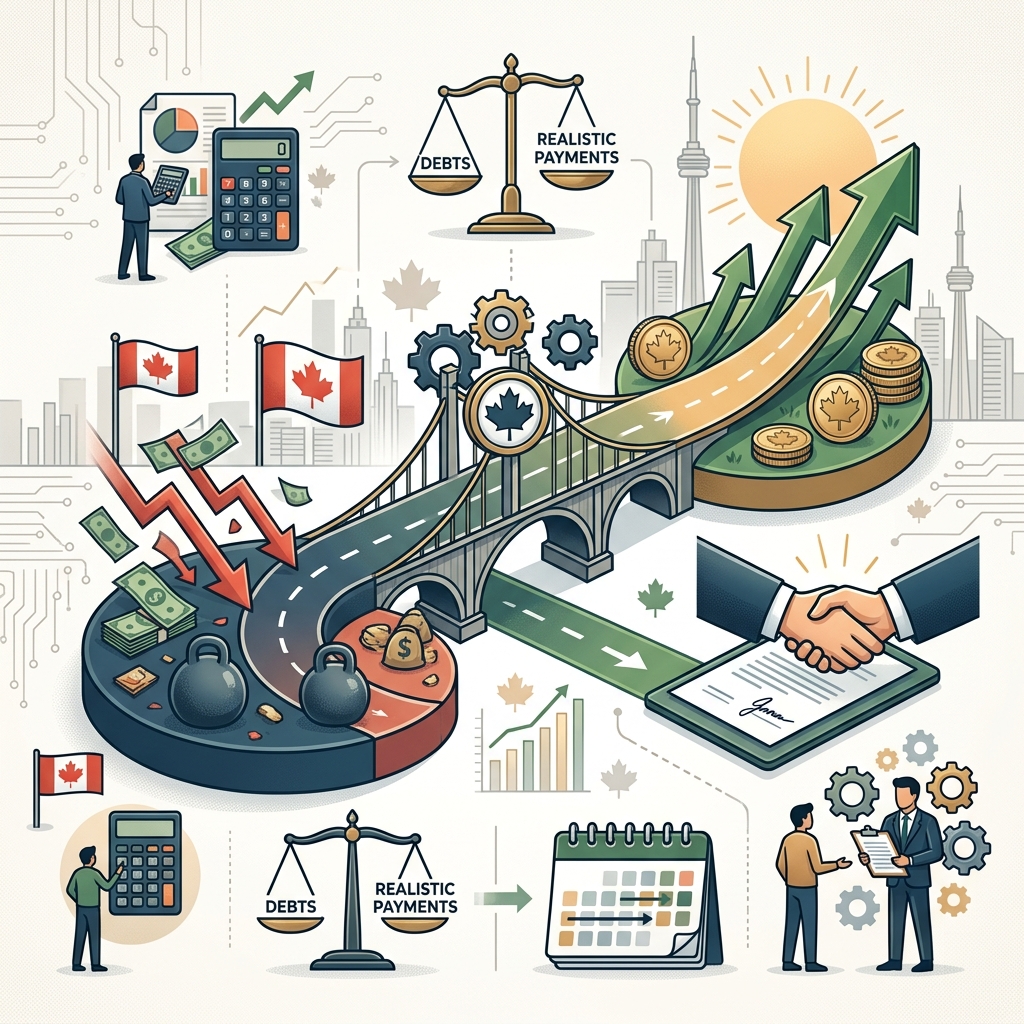
A consumer proposal is a formal, legally binding way for individuals in Canada to settle unmanageable debt by paying back only a portion of what they owe over time. It is designed as an alternative to bankruptcy and is regulated under federal law, giving you court-backed protection from creditors while you complete affordable payments.
This guide explains how consumer proposals work, who can use them, what they cost, how they affect your credit, and how they compare to other debt relief options. It is written in plain language to help you decide whether a proposal is worth discussing with a Licensed Insolvency Trustee.
What Is a Consumer Proposal?
In Canada, a consumer proposal is a legally binding agreement between you and your unsecured creditors to repay part of your debt over a set period, usually three to five years. Once approved, creditors must follow the proposal terms and cannot pursue further collection action.
Consumer proposals:
- Are governed by the federal Bankruptcy and Insolvency Act (BIA).
- Must be administered by a Licensed Insolvency Trustee (LIT), an officer of the court.
- Typically reduce unsecured debts by a significant percentage (often 30–70%, depending on your situation).
- Consolidate eligible debts into one fixed monthly payment made to your trustee.
- Provide a legal “stay of proceedings,” stopping most collection actions, including wage garnishments and lawsuits.
The core idea is simple: you offer creditors a realistic, court‑supervised repayment plan. In exchange, they agree to forgive the remaining balance once you successfully complete the proposal.
Who Can Use a Consumer Proposal?
Consumer proposals are intended for individuals who are insolvent but still able to make some payments toward their debts. Under Canadian law and common trustee practice, you generally must meet the following criteria to be eligible:
- Insolvent status: You are unable to pay your debts as they become due, or your total debts exceed the value of your assets.
- Debt range: Your total unsecured debt (excluding the mortgage on your primary residence) is more than $1,000 and less than $250,000.
- Residency: You are a Canadian resident or own property in Canada.
- Capacity to pay: You can afford a reduced monthly payment but cannot realistically repay all of your debts in full.
Consumer proposals are available only to individuals (not corporations) and are most commonly used by people dealing with high credit card balances, lines of credit, personal loans, and other forms of unsecured borrowing.
Types of Debts Covered and Excluded
Understanding which debts can be included is crucial before you consider filing.
Debts Commonly Included
Consumer proposals cover most unsecured debts, meaning debts that are not backed by specific collateral. Examples often include:
- Credit cards
- Personal loans and lines of credit
- Overdrafts
- Store cards and retail financing
- Some tax debts and government overpayments (subject to specific rules)
- Unsecured student loans, depending on the age and type of the loans
Debts Usually Not Included
Some obligations are excluded or treated differently in consumer proposals:
- Secured debts (e.g., mortgages, car loans) generally remain outside the proposal, and you must continue paying them to keep the asset.
- Fines, penalties, and certain court‑ordered payments are often not dischargeable.
- Recent student loans may have special restrictions under federal law.
Because these distinctions can be technical, a Licensed Insolvency Trustee will review your specific debts and explain which ones can be included and how they will be treated.
How the Consumer Proposal Process Works
Although the legal framework is complex, the practical steps for consumers follow a relatively predictable sequence from first meeting to completion.
Step 1: Initial Assessment With a Trustee
The process starts with a free consultation with a Licensed Insolvency Trustee. Only LITs are legally allowed to file consumer proposals and bankruptcies in Canada. In this meeting, the trustee will:
- Review your income, expenses, debts, and assets.
- Confirm whether you are insolvent and meet eligibility criteria.
- Compare options such as budgeting changes, debt consolidation, credit counselling, consumer proposal, and bankruptcy.
- Answer questions about fees, timelines, and impact on your credit.
Step 2: Designing Your Repayment Offer
If a proposal appears suitable, your trustee will help design an offer that balances what you can afford with what creditors are likely to accept.
Key elements of the offer include:
- The total amount you will repay, often significantly less than the full balance.
- The length of the proposal (usually 3–5 years).
- The monthly payment you will make to the trustee.
Trustees draw on experience and statutory guidance to estimate what creditors will support, considering your income, assets, and prior payment history.
Step 3: Filing the Proposal and Gaining Protection
Once you approve the repayment plan, the trustee prepares the legal documents and files your consumer proposal with the Office of the Superintendent of Bankruptcy. At that moment:
- A stay of proceedings takes effect, stopping most collection actions, wage garnishments, and creditor lawsuits.
- Interest on included unsecured debts typically stops.
- Your creditors receive notice of the proposal and your financial situation.
The filing creates a public record and is reported to major credit bureaus.
Step 4: Creditor Review and Voting
Creditors have 45 days to review your proposal and decide whether to accept or request changes.
- If creditors holding at least 25% of the proven claims ask for a meeting, one will be held.
- At the meeting, creditors vote; a simple majority (by dollar value of claims) in favour is usually required for approval.
- If less than 25% request a meeting, the proposal may be deemed accepted after the 45‑day period.
Once approved, the proposal becomes legally binding on all unsecured creditors included in the plan, even those who voted against it.
Step 5: Making Payments and Completing Duties
After court approval, your main responsibility is to make the agreed‑upon payments and complete any required financial counselling sessions.
- You make one fixed monthly payment to your trustee, who distributes funds to creditors.
- You attend two mandatory financial counselling sessions to improve money management skills.
- You must keep contact and income information up to date and respond to trustee requests.
If you miss payments beyond the allowed limits, the proposal can be deemed annulled, and creditors may regain the right to pursue the full amount of your debts.
Step 6: Certificate of Full Performance
After you make all required payments, your trustee issues a Certificate of Full Performance, officially confirming that you have completed the proposal.
At that point:
- The unpaid portion of included unsecured debts is legally discharged.
- You can focus on rebuilding savings and improving your credit profile.
Costs and Trustee Fees
The cost of a consumer proposal is built into the monthly payments you agree to make; you do not usually pay the trustee separately out of pocket. Federal law sets the fee structure, which includes filing fees and a percentage of the amounts you repay.
According to Canadian non‑profit credit counselling information, the typical structure may involve:
- A base cost to file the proposal and an additional cost if creditors accept it.
- A trustee fee equal to a portion (commonly around 20%) of your proposal payments for administration.
Because the fees are standardized and deducted from the payments you already agreed to make, you can compare the total proposal cost with other options such as consolidation loans, debt management plans, or bankruptcy.
Impact on Credit Rating and Public Record
One of the most important considerations is how a consumer proposal affects your credit report and ability to borrow in the future.
Credit Report Notation
When you file a consumer proposal, credit reporting agencies such as Equifax and TransUnion add a notation to your file indicating that you have entered into a formal debt repayment arrangement.
- Your proposal is typically assigned an R7 rating, which is the second lowest rating on common Canadian scales.
- The notation appears in the public records section of your report.
- It may be visible for up to six years from the filing date, or three years from completion, whichever comes first.
Non‑profit agencies note that some lenders view consumer proposals similarly to bankruptcy when assessing applications, and it can be difficult to obtain new credit while the notation is present.
Public Insolvency Record
Consumer proposals are recorded in a federal, searchable insolvency database maintained under the authority of the Office of the Superintendent of Bankruptcy. This makes the proceeding a matter of public record, although most people outside financial and legal professions do not access these databases regularly.
Rebuilding After a Proposal
Once your proposal is complete and your unsecured debts are discharged, you can begin rebuilding your credit by:
- Paying all remaining obligations (such as secured loans) on time every month.
- Keeping credit card balances low relative to limits.
- Using small, carefully managed forms of credit when appropriate.
- Monitoring your credit reports to ensure information is accurate and updated.
Trustees and credit counsellors often provide education and suggestions to help you avoid future debt problems and make use of the fresh start provided by the proposal.
Advantages and Disadvantages at a Glance
| Advantages | Disadvantages |
|---|---|
|
|
Consumer Proposal vs. Bankruptcy vs. Other Options
Deciding on a consumer proposal involves comparing it to alternatives like bankruptcy, consolidation loans, and credit counselling. Each option has different consequences.
- Bankruptcy: Usually faster (often 9–21 months), can discharge more types of debts but may require surrendering certain assets and carries the lowest credit rating. It is also a court‑supervised process administered by an LIT.
- Consumer Proposal: Longer commitment but lets you keep most assets and pay back only part of your debt. Credit impact is serious but generally less severe than bankruptcy (R7 vs. R9).
- Debt consolidation loan: Combines debts into one loan, but you still repay the full amount plus interest. Requires good enough credit to qualify and does not provide court protection from creditors.
- Credit counselling / debt management plan: Non‑profit agencies may negotiate lower interest rates and structured payments, but debts typically must be repaid in full. No legal discharge and less impact on public records.
The right choice depends on your income, assets, types of debt, and long‑term goals. Reputable sources, including Canada’s Financial Consumer Agency, recommend speaking to more than one professional and asking explicitly whether they are Licensed Insolvency Trustees before committing to any insolvency solution.
Key Practical Tips Before You File
Before deciding on a consumer proposal, consider the following practical steps:
- Get independent advice from at least one Licensed Insolvency Trustee and, if possible, a non‑profit credit counsellor.
- Ask for a full cost breakdown, including total payments, timeline, and trustee fees.
- Discuss alternatives such as consolidation loans, budgeting changes, or debt management plans.
- Review the credit impact and how long the proposal will remain on your report.
- Confirm which debts are included and whether any obligations will remain unchanged.
Frequently Asked Questions
1. Is a consumer proposal the same as bankruptcy?
No. Both are legal insolvency proceedings under the Bankruptcy and Insolvency Act, but they work differently. A consumer proposal focuses on repaying part of your unsecured debt over time while keeping most assets, whereas bankruptcy can discharge more types of debts but may involve surrendering non‑exempt assets and leads to a more severe credit rating.
2. Will collection calls stop once I file?
In most cases, yes. When your trustee files the proposal, a stay of proceedings comes into effect. This legal protection generally stops wage garnishments, lawsuits, and collection calls related to included debts.
3. How long will a consumer proposal affect my credit?
Consumer proposals are usually reported as an R7 rating and can remain on your credit file for up to six years from filing or three years from completion, whichever occurs first. The exact timing may vary slightly between credit bureaus.
4. Can I include my mortgage or car loan?
Typically, no. Mortgages and most car loans are secured by the property or vehicle, and consumer proposals focus on unsecured debts. You generally continue paying secured loans as usual if you wish to keep the asset.
5. Who supervises the process?
The process is overseen by a Licensed Insolvency Trustee and regulated by the Office of the Superintendent of Bankruptcy under the federal Bankruptcy and Insolvency Act. Trustees act as officers of the court and must follow strict professional and legal standards.
References
- Filing a Consumer Proposal in Canada — BDO Debt Solutions. 2023-05-01. https://debtsolutions.bdo.ca/solutions/consumer-proposal/
- Consumer Proposals in Canada – Affordable Debt Solutions — Farber. 2023-04-10. https://www.farber.ca/consumer-proposal
- Consumer Proposal Canada: Advantages & Disadvantages — Credit Counselling Society. 2022-11-15. https://nomoredebts.org/debt-help/consumer-proposal/what-is-consumer-proposal-cp
- Consumer Proposal Canada: #1 Alternative to Bankruptcy — Hoyes, Michalos & Associates Inc. 2023-06-20. https://www.hoyes.com/consumer-proposals/
- Bankruptcy and Insolvency Act (R.S.C., 1985, c. B-3) — Government of Canada, Justice Laws Website. 2024-01-01. https://laws-lois.justice.gc.ca/eng/acts/b-3/page-14.html
- What you need to know when getting help to pay off debt or repair your credit — Financial Consumer Agency of Canada. 2023-03-27. https://www.canada.ca/en/financial-consumer-agency/services/debt/debt-help/alert-debt-credit-repair.html
- 6 Easy Steps On How To File A Consumer Proposal In Ontario — Hoyes, Michalos & Associates Inc. 2022-08-09. https://www.youtube.com/watch?v=Mhcz6rnZRxo
Similar Articles








Read full bio of medha deb




