
Connecticut Adoption Laws: A Complete Guide For 2025 And FAQs
A practical guide to Connecticut’s adoption rules, eligibility, procedures, and rights for adoptive parents and children.
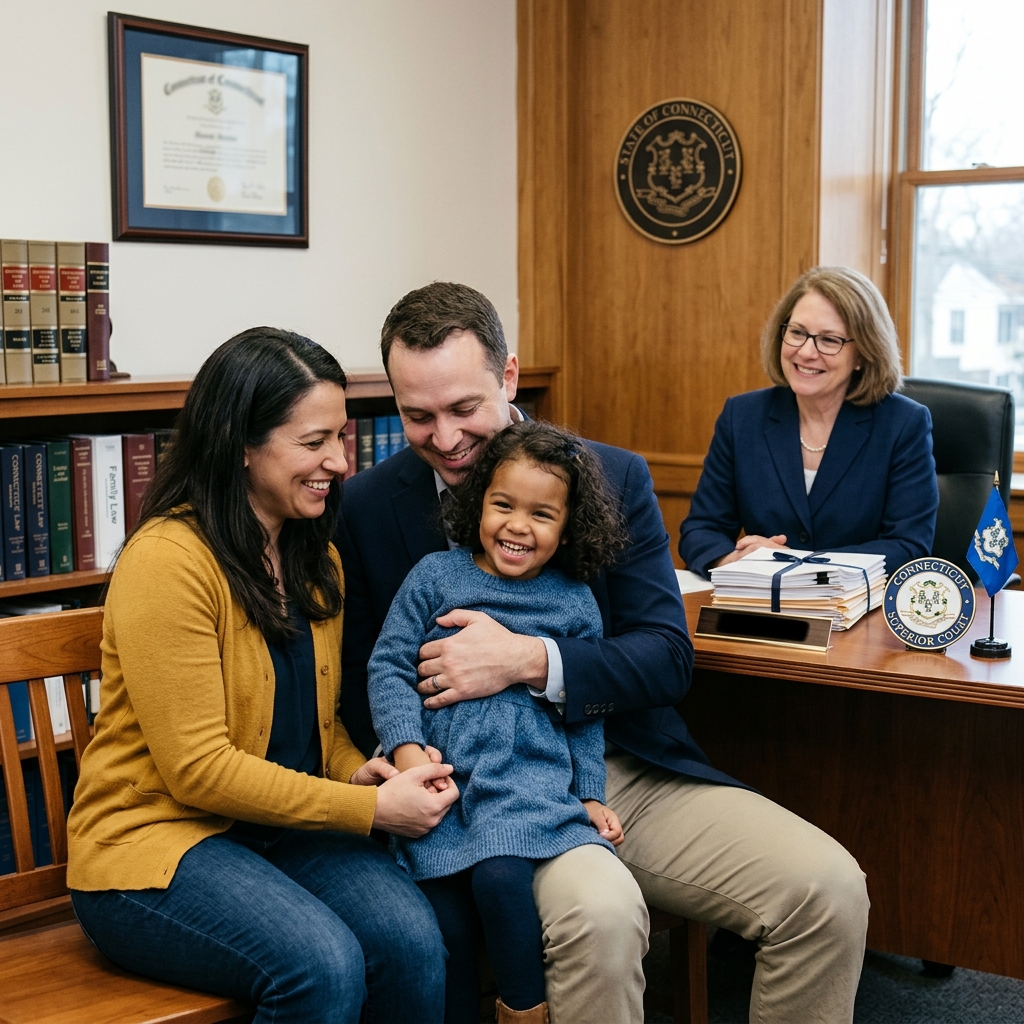
Adoption in Connecticut is governed by a detailed set of statutes designed to protect children, support birth parents, and regulate the responsibilities of adoptive families. This guide explains the core features of Connecticut adoption laws in clear, practical terms, so you can better understand eligibility, procedures, and rights before beginning the process.[10]
Connecticut’s Legal Framework for Adoption
Adoption in Connecticut is primarily regulated by the Connecticut General Statutes, Chapter 803, which includes sections governing who may adopt, who may be adopted, the role of state agencies, and how adoptions are finalized.[10] Probate courts handle most adoption matters, working in coordination with the Connecticut Department of Children and Families (DCF) and licensed child placement agencies.[10]
Key features of the legal framework include:
- Use of probate courts for filing adoption applications and approving adoption agreements.[10]
- Oversight and involvement of DCF in foster care and statutory parent adoptions.
- Statutes specifying consent requirements, eligibility, and protections for children and parents.[10]
Who May Adopt in Connecticut?
Connecticut adoption law allows any adult who meets legal and practical requirements to adopt, with specific rules for married people and certain limitations based on safety and welfare concerns.
Age and General Eligibility
Under Connecticut law:
- Any person 18 or older may adopt another person, as long as they are a legal adult and otherwise eligible.
- For adoptions through DCF or many agencies, prospective parents are typically expected to be at least 21 years old, reflecting agency standards and foster care guidelines.
- Adoptive parents must be able to provide a safe, stable, and financially secure home, including enough income to meet their own needs and those of the child.
Connecticut does not exclude adoptive parents solely on the basis of marital status, sexual orientation, or being single. Any adult may petition to adopt, but additional requirements apply if the person is married.
Married and Unmarried Prospective Parents
The law sets out different expectations depending on whether the prospective parent is married:
| Prospective Parent Status | Adoption Requirement |
|---|---|
| Married | Generally must adopt jointly with their spouse, unless the probate court finds a valid reason for the spouse not to join in the adoption. |
| Unmarried / Single | May adopt as an individual if they otherwise meet legal and agency requirements. |
While the statutes do not discriminate based on sexual orientation, private agencies may have additional policies or eligibility criteria. These are agency-specific, not mandated by state law.
Criminal History and Fitness to Adopt
Connecticut law focuses on the safety and best interests of the child. A criminal record does not automatically bar someone from adopting, but certain offenses will likely prevent approval. Examples include:
- Convictions related to child abuse or neglect.
- Violent felonies, such as homicide or sexual assault.
As part of the vetting process, prospective foster and adoptive parents undergo criminal background checks and reviews of their character and prior conduct. The court and agencies evaluate each case individually, but child safety is the overriding priority.
Who May Be Adopted in Connecticut?
Connecticut law is relatively broad about who can be adopted. Virtually any person may be adopted, including minors and, under certain conditions, adults.
Adoption of Minors
Children may be adopted when the statutory requirements regarding consent, termination of parental rights, and court approval are satisfied. The law emphasizes that an adoption must serve the best interests of the child, which the court evaluates at the time of finalization.
Before a child is adopted, there may be a period of placement or foster care, depending on the type of adoption. Connecticut does not require a specific minimum period of living in the adoptive home before finalization in all cases, but agencies may set their own policies.
Adoption of Adults
Connecticut also allows adult adoption, subject to special rules:
- Any person 18 or older may adopt another person who is at least 18 but younger than the adoptive parent.
- Adult adoptions generally require a written agreement approved by the probate court.
- Certain close relatives (such as a spouse, brother, sister, uncle, or aunt of the whole or half blood) may not be adopted under this adult adoption provision.
Adult adoption can formalize long-standing relationships or secure inheritance and legal rights, but it still requires court approval to ensure compliance with statutory limits.
Consent Requirements in Connecticut Adoptions
Consent is a central element of Connecticut adoption law. Depending on the circumstances, consent may be required from the child, from one or both parents, or from a statutory parent or guardian.
Child’s Consent
Connecticut requires written consent from older children:
- A child who is 12 years of age or older must sign the adoption agreement or otherwise consent to the adoption.
This ensures that adolescents have a voice in the process and agree to the new legal parent-child relationship.
Birth Parent and Statutory Parent Consent
Depending on the type of adoption, the following may need to consent before the court can approve the adoption:
- A statutory parent appointed by the court, often DCF or an approved agency with legal custody of the child.
- A birth parent who voluntarily agrees to relinquish parental rights, including in stepparent adoptions.
- A guardian who has authority and agrees in writing to a relative or other person adopting the child.
For voluntary relinquishment, the court will typically appoint a guardian ad litem or otherwise ensure the parent understands the consequences and consents freely.
Timing of Birth Mother’s Consent
Connecticut law requires a waiting period before a birth mother can legally consent to adoption:
- The child’s mother must wait at least 48 hours after birth before petitioning for voluntary termination of parental rights in order to proceed with an adoption.
This rule is designed to avoid decisions made under extreme stress and allow some time for recovery and reflection.
When Parental Consent Is Not Required
A court may terminate parental rights and proceed with an adoption without the parent’s consent if certain serious conditions are met. Examples include:
- Abandonment of the child.
- Sexual or physical abuse of the child.
- Failure to establish an ongoing relationship or repeated neglect.
- Prior termination of parental rights as to another child.
- Deliberate killing, attempted killing, or conspiring to kill a child.
- Serious assault of a child, or conviction for a sexual assault leading to conception of the child.
In these circumstances, the court may deem it unnecessary or inappropriate to obtain parental consent and instead focus solely on the child’s welfare.
Paternity Claims and Fathers’ Rights
Connecticut requires alleged fathers of children born outside marriage to act promptly if they wish to preserve parental rights. Under state law, a man who claims to be a child’s father must file a paternity claim within a specified period after receiving notice—often within 60 days.
If an alleged father does not file, is not legally determined to be the father, does not contribute regularly to support, and is not named on the birth certificate, he may have no legal rights to the child and therefore may not have a legal role in the adoption decision.
Types of Adoption Recognized in Connecticut
Connecticut law provides for several common adoption pathways, each with different procedures and participants.
Stepparent Adoption
Stepparent adoption occurs when a person marries the child’s parent and seeks to become a legal parent as well. In these cases:
- The stepparent files an adoption petition in probate court, often with the consent of the custodial parent and, if required, the noncustodial parent or statutory parent.
- Once complete, the stepparent obtains full legal parental rights and responsibilities.
Relative Adoption
Relative adoption involves a child being adopted by a grandparent, aunt, uncle, or other family member. These adoptions may follow similar procedures but often rely on the guardian’s written agreement and the court’s approval.
Statutory Parent Adoption (DCF and Agencies)
When a child is in foster care or placed through the state or a licensed agency, adoption may proceed through a statutory parent arrangement:
- DCF or a child placement agency acts as the statutory parent.
- The statutory parent gives the child in adoption by written agreement, subject to probate court approval.
- Prospective parents must typically complete training, home studies, and licensing procedures.
Connecticut does not generally allow a direct private adoption between intended adoptive parents and biological parents without involvement of a statutory parent or court oversight.
Home Study and Practical Requirements
Regardless of the adoption type, most families must complete a home study and meet practical standards for caring for a child.
Home Study and Training
For foster care or agency adoptions, core requirements often include:
- A comprehensive home study assessing the family’s suitability, living situation, and readiness.
- Completion of a training program, commonly around 10 weeks, covering parenting, trauma, and child welfare topics.
- Criminal background checks and verification of good character.
Housing and Financial Stability
Practical standards for households include:
- Having a home with two or more bedrooms, so children have appropriate sleeping arrangements.
- Demonstrating sufficient income to meet all existing and anticipated needs without relying solely on adoption subsidies.
- Providing a loving, supportive environment conducive to the child’s wellbeing.
Costs and Financial Rules
Adoption expenses in Connecticut vary depending on whether the adoption is through foster care, a private agency, or internationally:
- Foster care adoptions from DCF are often completed with no direct adoption fee to the parents.
- Private agency adoptions may charge significant fees, commonly estimated between $20,000 and $45,000 for services.
- There are limits on paying birth parents’ living expenses; for example, Connecticut restricts the amount prospective parents may pay for a birth mother’s living costs, and exceeding these limits is not permitted.
Families considering adoption should consult an attorney or agency about allowable payments and potential financial assistance, including subsidies available for adopting children from foster care.
Rights of Adoptees in Connecticut
Connecticut has taken steps to expand the rights of adoptees, particularly concerning access to original birth records.
Access to Original Birth Certificates
All adults who were born in Connecticut and adopted have an unrestricted right to request and obtain their own original birth certificates once they reach a specified age. Current law allows access when the adoptee is 18 or older.
This means that adult adoptees can see the original record bearing their birth parents’ names, subject to the exact procedures and any updates in statute or administrative guidance.[10]
Frequently Asked Questions About Connecticut Adoption Laws
Do I have to be married to adopt a child in Connecticut?
No. Single adults are allowed to adopt if they meet all legal and agency requirements. If you are married, you generally must adopt jointly with your spouse unless the court finds a specific reason to permit a single-spouse adoption.
At what age does a child have to consent to adoption?
In Connecticut, a child who is 12 years old or older must consent to the adoption, usually by signing the adoption agreement or equivalent documentation.
Is there a waiting period before a birth mother can consent to adoption?
Yes. A birth mother must wait at least 48 hours after delivery before she can petition the court to voluntarily terminate her parental rights for adoption purposes.
How much does it cost to adopt a child in Connecticut?
Costs depend heavily on the type of adoption. Adopting a child from foster care through DCF is often free in terms of agency adoption fees, while private agency adoptions may range roughly between $20,000 and $45,000 for services. The law also restricts how much prospective parents can pay for a birth parent’s living expenses.
Can an adult be adopted in Connecticut?
Yes. Connecticut law allows adult adoption when both parties are at least 18, the adoptee is younger than the adoptive parent, and the relationship is approved by the probate court. Certain close relatives, such as a spouse or siblings, are excluded from this adult adoption provision.
Who handles adoption cases in Connecticut?
Most adoption matters are heard in the Probate Court, often in coordination with the Department of Children and Families or licensed child placement agencies, depending on the type of adoption.[10]
References
- Connecticut Adoption Laws — FindLaw. 2023-05-01. https://www.findlaw.com/state/connecticut-law/connecticut-adoption-laws.html
- What to Know About Connecticut Adoption Laws — American Adoptions. 2022-04-15. https://www.americanadoptions.com/connecticut-adoption/connecticut-adoption-laws
- Connecticut Adoption Attorney — The Christie Law Firm, LLC. 2021-09-10. https://thechristielawfirm.com/child-adoptions
- Connecticut — Adoptee Rights Law Center. 2021-01-01. https://adopteerightslaw.com/connecticut/
- Second Parent Adoption | Connecticut — GLBTQ Legal Advocates & Defenders (GLAD). 2020-06-30. https://www.gladlaw.org/issues/second-parent-adoption-connecticut/
- Connecticut foster care and adoption guidelines — AdoptUSKids / U.S. Department of Health and Human Services. 2023-02-20. https://adoptuskids.org/adoption-and-foster-care/how-to-adopt-and-foster/state-information/connecticut
- Connecticut Law About Adoption — Connecticut Judicial Branch Law Libraries. 2022-11-01. https://www.jud.ct.gov/lawlib/law/adoption.htm
Similar Articles








Read full bio of Sneha Tete


