
Civil Wedding Ceremony: Step-By-Step Planning Guide For Couples
Learn what makes a civil wedding ceremony different, how it works legally, and how to plan a meaningful nonreligious celebration.
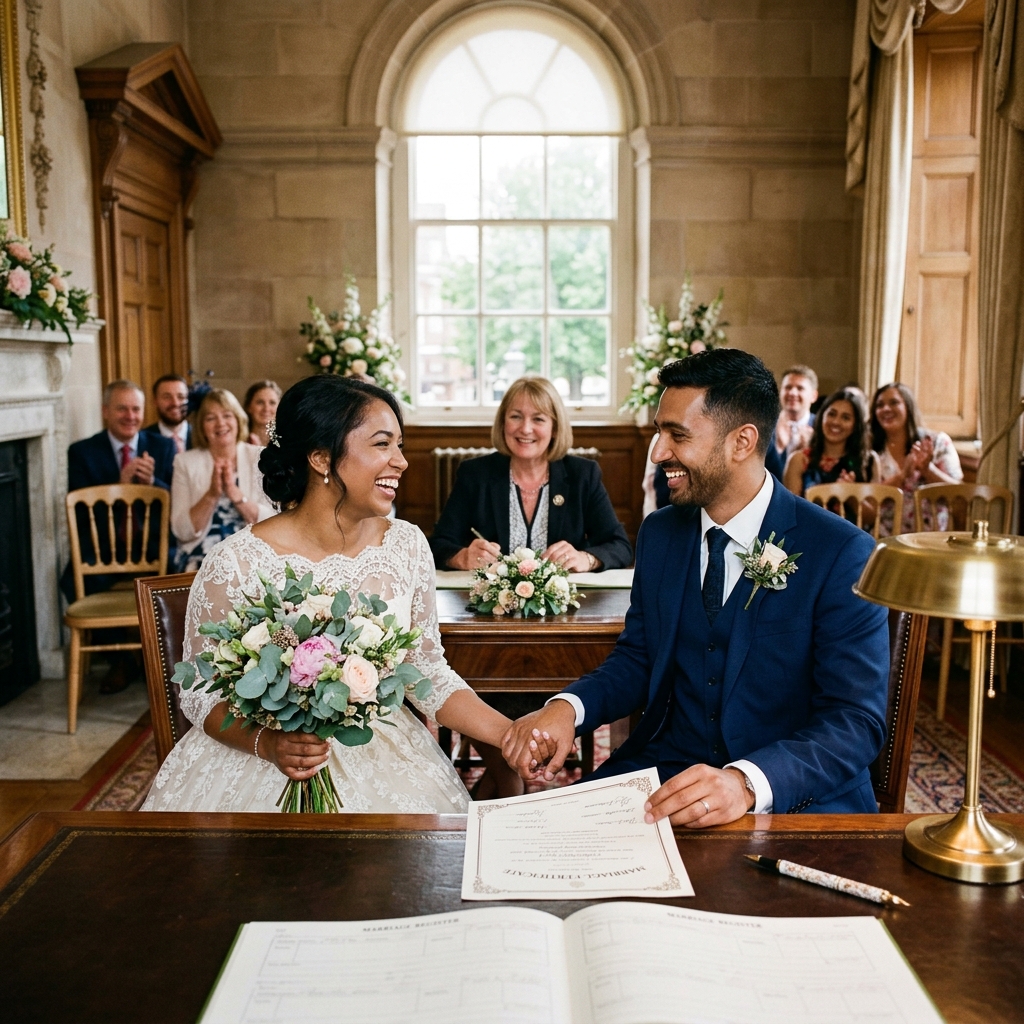
A civil wedding ceremony is a legally recognized marriage ceremony conducted by a government-authorized official and typically free of religious rituals or spiritual content. It offers couples a flexible, secular way to marry while still meeting all legal requirements for a valid marriage. This guide explains what civil ceremonies are, how they compare to religious weddings, the legal steps involved, and how to plan a personal and memorable event.
What Is a Civil Wedding Ceremony?
In simple terms, a civil wedding ceremony is a nonreligious, legal marriage ceremony overseen by an official such as a judge, mayor, registrar, city clerk, or other authorized government representative.[10] The focus is on meeting legal requirements—consent, declarations, and proper documentation—rather than on religious teachings or worship.
Key characteristics include:
- Legal rather than religious: The ceremony is designed to satisfy marriage laws in your jurisdiction.
- Officiated by a public official: Common officiants include judges, registrars, clerks, and other government-authorized personnel.[10]
- Secular content: Prayers, scripture readings, and explicit religious rituals are generally excluded, though some locations may allow neutral or cultural readings.
- Same legal status as any other marriage: A civil wedding produces a marriage recognized by the state at local, state, and federal levels.
Civil Ceremony vs. Religious Wedding
Couples often decide between a civil ceremony and a religious wedding based on their beliefs, traditions, and practical considerations. Both can be emotionally meaningful; the main differences are in who conducts the ceremony, how it is structured, and what content is allowed.
| Aspect | Civil Wedding Ceremony | Religious Wedding Ceremony |
|---|---|---|
| Officiant | Government-authorized official (judge, registrar, clerk, mayor).[10] | Religious leader (priest, minister, imam, rabbi, etc.). |
| Content | Secular, focused on legal declarations; no required prayers or scripture. | Includes religious readings, prayers, and rituals specific to a faith tradition. |
| Location | Courthouse, city hall, registrar’s office, or approved venue.[10] | Places of worship or other locations approved by the religious institution. |
| Legal status | Always a legally binding marriage recorded by the state. | May be legally binding if recognized by the state and accompanied by required civil registration. |
| Typical length | Often brief (about 10–30 minutes, and sometimes under 10 minutes). | Can be longer due to additional rituals and readings. |
Why Couples Choose a Civil Ceremony
Civil weddings appeal to many couples for practical, cultural, or personal reasons. The ceremony can be simple or elaborate, but it remains rooted in secular, legal requirements.
Common Reasons
- Nonreligious or mixed-faith couples: Partners who do not share the same faith—or do not practice a religion—often prefer a neutral ceremony.
- Legal clarity and simplicity: A civil wedding is the direct way to ensure your marriage is recognized, without additional registration steps.
- Flexibility in personalization: Couples can design vows, readings, and structure to reflect their values, while still meeting legal requirements.
- Smaller, more intimate events: A brief civil ceremony at a courthouse or city hall appeals to couples who want a low-key celebration or are planning a larger reception later.[10]
- Venue options: In many jurisdictions, civil ceremonies can take place in approved venues beyond government buildings, such as hotels, historic sites, or licensed event spaces.
Legal Foundations of a Civil Marriage
A civil wedding ceremony is part of a broader framework known as civil marriage—a marriage performed, recorded, and recognized by a government authority. While details vary by country, state, or region, several core legal components appear almost everywhere.
Core Legal Requirements
- Capacity to marry: Both partners must meet age requirements and not be currently married to someone else, among other criteria specified by law.
- Free and informed consent: The officiant must confirm that each person willingly enters the marriage without coercion.
- Marriage license or equivalent: Many jurisdictions require you to apply for and obtain a marriage license before the ceremony.[10]
- Authorized officiant: The ceremony must be conducted by someone legally permitted to solemnize marriages in that jurisdiction.[10]
- Witnesses: One or more witnesses may be required to observe and sign the marriage documentation.[10]
Some regions also impose timelines: for example, certain U.S. states require the ceremony to occur within a fixed period after the license is issued and within the same state.[10]
Preparing for a Civil Wedding: Step-by-Step
Planning a civil ceremony involves both legal preparation and practical decisions about your celebration. The exact steps vary by jurisdiction, so always check official guidance from local authorities.
1. Research Local Marriage Laws
Before doing anything else, confirm how civil marriage works where you live or where you plan to marry. Government or official court websites often provide clear instructions, including eligibility, timelines, and fees.
- Look up minimum age requirements and consent rules.
- Check whether you must be a resident of the district where you marry.
- Review any waiting periods between notice, license issuance, and ceremony.[10]
2. Obtain a Marriage License or Give Notice
Most jurisdictions require either a formal marriage license or advance notice filed with a registrar.
- Documents often include photo identification, proof of age, nationality, and sometimes proof of divorce if previously married.[10]
- Notice or license may need to be displayed or recorded for a set period before you can marry.
- Fees are usually due when you apply; amounts vary by region.
3. Choose Your Civil Ceremony Venue
Depending on local rules, civil ceremonies can be held in government buildings or approved external venues.[10]
- Courtroom or city hall: Often the quickest, most straightforward option; ceremonies are typically brief and scheduled like appointments.[10]
- Registrar’s office: Common in places such as the United Kingdom, where the registrar conducts a standard civil ceremony.
- Licensed venue: Hotels, country houses, or other venues may be authorized for civil marriages, especially in the UK and parts of Europe.
Always confirm that your desired venue is legally approved for civil weddings in your jurisdiction.
4. Arrange an Authorized Officiant
A civil wedding must be led by a person with legal authority to solemnize marriages.[10]
- Typical officiants include judges, mayors, city or county clerks, and registrars.[10]
- Some areas allow additional officials or even private individuals who have obtained special authorization, subject to local rules.[10]
- If you want a friend or relative to officiate, check whether your jurisdiction allows temporary or limited-purpose authorization.[10]
5. Invite Witnesses and Guests
Even the simplest civil ceremonies often require at least one or two witnesses to sign the marriage record.[10] Beyond that, you can invite guests as you wish, whether you prefer an intimate gathering or a larger celebration.
- Confirm how many witnesses are legally required.
- Ask witnesses in advance so they understand their role.
- Determine whether your chosen location limits guest numbers (for example, small rooms at city hall).
6. Design the Structure and Wording
While the officiant must follow certain legal wording, couples usually have flexibility in shaping the rest of the ceremony.Many civil ceremonies include:
- Opening words and welcome from the officiant.
- Optional readings by friends or family (nonreligious in most jurisdictions).
- Exchange of vows—either traditional legal wording or personalized promises.
- Ring exchange, if the couple chooses to include it.
- Pronouncement of marriage by the officiant and signing of the official register.
Civil ceremonies are often shorter than religious services, with many lasting between 10 and 30 minutes. Keeping the ceremony concise ensures the legal elements are clear and guests remain engaged.
Personalizing Your Civil Ceremony
Even though civil weddings are secular and focused on legal requirements, they can still be deeply personal and emotionally rich. The absence of fixed religious rituals often gives couples more room to express their unique story.
Ideas for Personal Touches
- Custom vows: Write brief, heartfelt promises that reflect your values and relationship. Many officiants will guide you to ensure your vows complement required legal wording.
- Meaningful readings: Choose excerpts from literature, poetry, or speeches that speak to commitment, love, or partnership without religious themes.
- Music choices: Select entrance and exit music that fits your style, keeping in mind venue restrictions that may apply to public buildings.
- Ceremonial elements: Some couples incorporate symbolic acts, such as lighting a candle, blending sand, or presenting gifts to family, provided these do not conflict with local regulations.
- Decor and attire: Even a courthouse ceremony can feel special with thoughtful outfits, flowers, or small decorative touches approved by the venue.
Frequently Asked Questions About Civil Wedding Ceremonies
Is a civil wedding legally valid everywhere?
A civil wedding conducted according to the laws of the jurisdiction and recorded by the appropriate authority generally creates a fully legal marriage. Recognition in other regions or countries depends on their rules, but civil marriages are widely accepted.
Can a civil ceremony include religious content?
In many places, civil ceremonies are required to remain secular and cannot include formal prayers or religious texts. Some jurisdictions may allow neutral or culturally significant readings, but you should always confirm with the registrar or clerk.
Do we need a separate courthouse ceremony if we have a civil wedding at a venue?
If your venue and officiant are legally authorized to conduct civil marriages, your ceremony there is typically sufficient. There is usually no need for a second courthouse ceremony, provided all legal requirements are met and the marriage is properly recorded.
How long does a civil wedding ceremony take?
Civil weddings are often shorter than religious services. Many government-based ceremonies take under 10 minutes, while more personalized civil events may last 10–30 minutes.
Can we have a big wedding with a civil ceremony?
Yes. A civil ceremony can range from a quick, private appointment to a large, formal wedding with many guests. The term “civil” describes the legal and secular nature of the ceremony, not its size or formality.
What happens after the ceremony?
After the officiant pronounces you married, you usually sign the official register or marriage certificate along with your witnesses. The marriage is then recorded by the relevant authority, and you can request certified copies of the marriage certificate for legal and administrative purposes.
Key Takeaways for Planning Your Civil Wedding
Planning a civil wedding involves a balance of legal diligence and personal creativity. To keep the process smooth:
- Start with official guidance from your local marriage or registrar’s office.
- Secure required documentation and observe any notice or license timelines before setting a date.[10]
- Confirm your venue and officiant are legally authorized for civil marriages.[10]
- Invite the necessary witnesses and decide whether you want additional guests.
- Work with your officiant to shape a ceremony that fulfills legal requirements while reflecting your relationship.
By understanding the nature of civil ceremonies and the steps involved, couples can confidently design a wedding day that is both legally sound and personally meaningful.
References
- Civil ceremony — Wikipedia (summary of legal concept; based on multiple primary sources). 2023-10-10. https://en.wikipedia.org/wiki/Civil_ceremony
- Civil marriage — Wikipedia (overview of civil marriage framework). 2023-09-15. https://en.wikipedia.org/wiki/Civil_marriage
- What Is a Civil Marriage? Ceremony Details, FAQ and Tips — The Knot. 2022-06-01. https://www.theknot.com/content/civil-ceremony-basics
- CIVIL CEREMONY definition — Cambridge Dictionary. 2024-01-01. https://dictionary.cambridge.org/dictionary/english/civil-ceremony
- A Guide to Civil Wedding Ceremonies in the UK — Harper Wedding Venues. 2023-03-10. https://harperweddingvenues.co.uk/a-guide-to-civil-wedding-ceremonies-in-the-uk/
- What Is a Civil Marriage Ceremony? — Get Ordained. 2021-08-05. https://getordained.org/blog/what-to-know-about-planning-a-civil-ceremony
- What is a civil ceremony wedding? — Rocket Lawyer. 2020-04-01. https://www.rocketlawyer.com/family-and-personal/family-matters/marriage/legal-guide/what-is-a-civil-ceremony-wedding
Similar Articles








Read full bio of Sneha Tete


