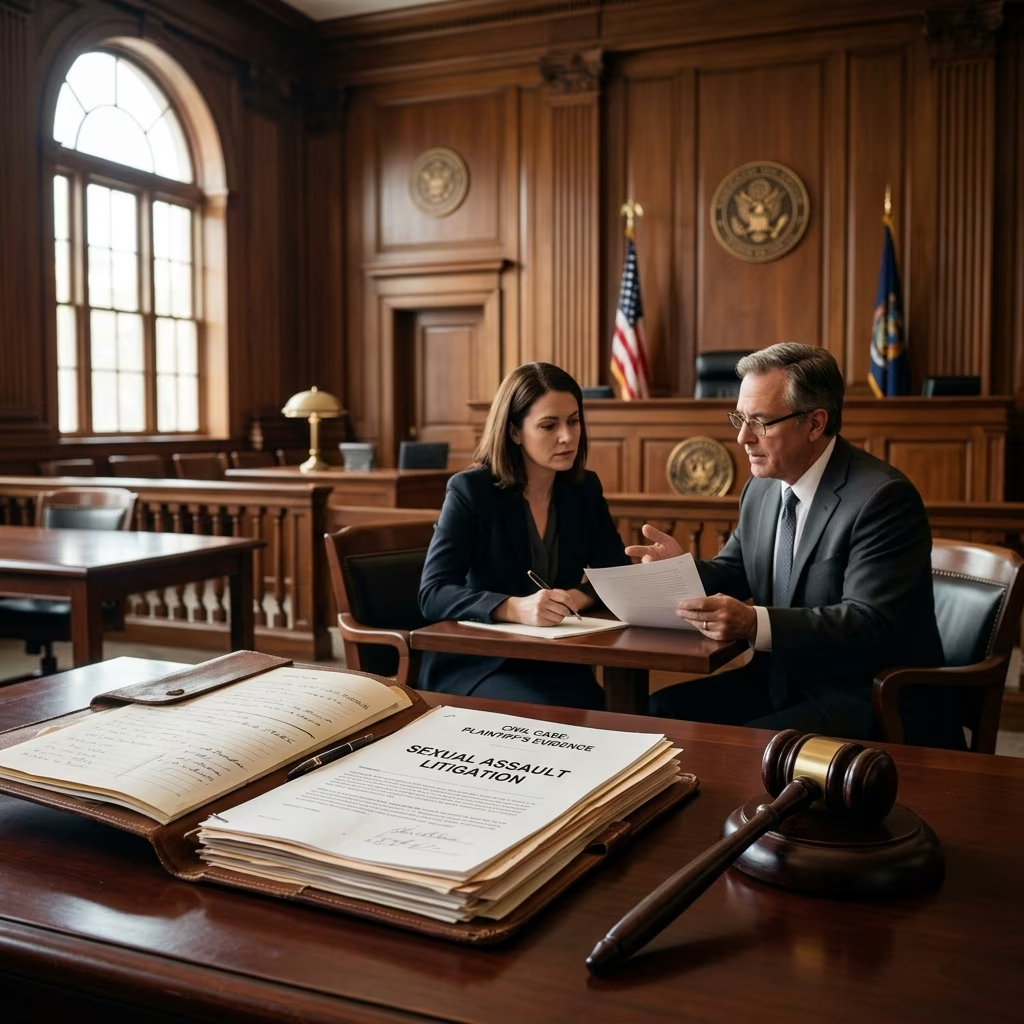
Civil sexual assault lawsuits give survivors a way to seek financial compensation and accountability from their abusers and enabling institutions, separate from the criminal justice process. These cases are handled in civil court and focus on repairing harm to the survivor, rather than imposing jail or prison time on the perpetrator.
What Is a Civil Sexual Assault Lawsuit?
A civil sexual assault lawsuit is a legal claim brought by a survivor (or their representative) seeking money damages from the person who committed the assault and, in many cases, from organizations that allowed or failed to prevent the abuse.
Unlike criminal prosecutions, which are filed by the government, civil cases are initiated by the survivor or their attorney. The core goals in civil court include:
- Financial compensation for physical, emotional, and economic harm.
- Accountability for individuals and institutions that contributed to the assault.
- Potential systemic change when lawsuits expose patterns of abuse or negligent practices.
Civil vs. Criminal Sexual Assault Cases
Civil and criminal sexual assault proceedings often address the same underlying conduct, but they operate under different rules, standards of proof, and goals.
| Feature | Criminal Case | Civil Case |
|---|---|---|
| Who brings the case? | Government prosecutor (e.g., district attorney). | Survivor (plaintiff) files a lawsuit through a private attorney. |
| Main purpose | Punish the offender and protect the public. | Compensate the survivor and hold wrongdoers financially accountable. |
| Burden of proof | “Beyond a reasonable doubt”—the highest standard. | “Preponderance of the evidence”—more likely than not (>51%). |
| Potential outcomes | Conviction, incarceration, probation, fines, registration as a sex offender. | Monetary damages, settlements, and sometimes non-monetary relief (e.g., policy changes). |
| Victim’s role | Often a key witness, but the prosecution controls strategy and decisions. | Plaintiff directs the litigation with counsel, including evidence, settlement, and trial choices. |
| Case independence | Can proceed regardless of civil litigation. | Can proceed even if no criminal charges are filed or if the criminal case results in acquittal. |
Many survivors pursue both types of cases. Some file a civil lawsuit after a criminal conviction, while others only use the civil system when criminal charges are not brought or do not lead to a guilty verdict.
Who Can Be Sued in a Civil Sexual Assault Case?
Civil law allows survivors to target multiple responsible parties, not just the individual abuser.
Individual Perpetrators
The most direct claim is against the person who committed the assault or abuse. In civil court, this may be framed as:
- Assault and battery claims, which focus on intentional harmful or offensive contact.
- Intentional infliction of emotional distress, where the conduct is extreme and causes severe emotional harm.
Institutions and Third Parties
Survivors may also sue organizations that contributed to the assault through negligence or enabling behavior.
- Schools, colleges, and universities.
- Religious organizations.
- Healthcare providers and facilities.
- Employers and businesses providing services (e.g., hotels, clubs).
Common legal theories for institutional liability include:
- Negligent hiring or supervision of staff who committed abuse.
- Negligent security when a property owner failed to provide reasonable safety measures, allowing an assault to occur.
- Failure to report or intervene when the institution had notice of prior misconduct.
What Damages Can Survivors Seek?
Damages are the financial amounts awarded to a survivor if they win or settle a civil sexual assault lawsuit. They are designed to compensate for losses and, in some cases, punish extreme misconduct.
Main Categories of Damages
- Economic damages: Out-of-pocket financial losses.
- Medical and hospital bills.
- Therapy and counseling costs.
- Lost income or reduced earning capacity due to trauma.
- Costs of relocation, security measures, or long-term care.
- Non-economic damages: Intangible harms that are nonetheless very real.
- Pain and suffering.
- Emotional distress and mental anguish.
- Loss of enjoyment of life and impact on relationships.
- Punitive damages: Additional sums intended to punish particularly egregious conduct and deter similar behavior.
- Not tied to a specific economic loss.
- Often reserved for deliberate, malicious, or outrageous misconduct.
- Legal costs: In some cases, recovery may include attorney’s fees and litigation expenses, depending on state law.
Exact amounts vary widely and depend on the severity of the assault, documented impacts on the survivor, the defendant’s resources, and the laws of the state where the lawsuit is filed.
Evidence in Civil Sexual Assault Lawsuits
Civil cases use a lower standard of proof than criminal prosecutions—liability must be shown by a preponderance of the evidence, meaning the claim is more likely true than not. A broad range of evidence can support a survivor’s case.
Common Types of Evidence
- Survivor testimony: The survivor’s detailed account of what occurred is often central to the case, including description of the assault, context, and impact.
- Witness testimony: Statements from people who observed the incident, saw the aftermath, or noticed changes in the survivor’s behavior.
- Medical records: Documentation of physical injuries, forensic exams, and psychological assessments that corroborate the assault and its effects.
- Digital communications: Text messages, emails, social media posts, or chat logs between the survivor and the perpetrator that reference the incident or consent.
- Video or audio recordings: Surveillance footage, recorded calls, or other media capturing relevant interactions or the assault itself.
- Police reports: Official records of any criminal complaint, investigation, or arrest, even if no charges ultimately result.
- Prior similar acts: Evidence that the defendant has engaged in similar misconduct with others, which can help establish a pattern.
- Character witnesses: Individuals who can speak to the credibility of the survivor or the defendant.
Because civil cases focus on whether the assault is more likely than not to have occurred, a combination of these evidence types can be powerful even without a criminal conviction.
Typical Civil Lawsuit Process
While every case is unique, civil sexual assault lawsuits generally move through several stages.
1. Initial Consultation and Case Evaluation
Survivors usually begin by meeting with an attorney experienced in sexual abuse litigation. During this stage, the lawyer:
- Listens to the survivor’s account in a confidential setting.
- Assesses potential claims, defendants, and legal strategies.
- Explains time limits, possible outcomes, and costs.
2. Filing the Complaint
If the survivor decides to proceed, the attorney files a formal complaint in civil court describing the facts, legal theories, and requested damages. This document is then served on the defendants, who have an opportunity to respond.
3. Discovery and Evidence Gathering
Discovery is the pre-trial phase where both sides collect and exchange information.
- Depositions (sworn testimony outside of court).
- Requests for documents, including records, messages, and policies.
- Expert evaluations, such as medical or psychological assessments.
4. Settlement Negotiations
Many civil sexual assault cases settle before trial. Settlement discussions may occur throughout the litigation and can result in a payment to the survivor and, in some cases, non-monetary terms such as policy changes or confidentiality provisions.
5. Trial and Verdict
If no settlement is reached, the case goes to trial, either before a judge or jury. The parties present evidence, examine witnesses, and make legal arguments. The judge or jury decides whether the defendant is liable and, if so, determines the damages awarded.
Time Limits and Legal Deadlines
Civil sexual assault claims are subject to statutes of limitations, which set deadlines for filing lawsuits. These deadlines vary by jurisdiction and may depend on factors such as whether the survivor was a minor and when the harm was discovered.
Key points on time limits include:
- Many states extend or pause deadlines for survivors who were minors at the time of the abuse.
- Some jurisdictions allow claims to be filed based on when the survivor discovered the connection between the assault and long-term injuries.
- Recent legislative reforms in several states have expanded time limits for sexual assault civil claims, particularly involving children.
Because these rules are highly state-specific and subject to change, survivors are encouraged to seek legal advice as early as possible to avoid missing critical deadlines.
Interaction With Other Legal and Safety Options
Civil sexual assault lawsuits are one of several potential paths for survivors seeking justice and safety.
Criminal Prosecution
Survivors may report the assault to law enforcement and cooperate in a criminal investigation and prosecution. This can proceed independently from any civil lawsuit.
Civil Protection Orders
Many survivors seek civil protection orders (sometimes called restraining orders) to limit contact with the perpetrator. These orders can require the defendant to stay away from the survivor’s home, workplace, or school and avoid any direct or indirect contact.
Administrative and Institutional Complaints
Survivors may also file complaints with workplaces, schools, or professional licensing bodies. For example:
- Educational institutions often have procedures for addressing sexual violence.
- Employers may investigate workplace misconduct and impose discipline.
- Professional boards may sanction licensed professionals who commit abuse.
These processes can occur alongside civil litigation and may provide additional forms of accountability or protection.
Practical Considerations for Survivors
Choosing whether to bring a civil sexual assault lawsuit is deeply personal and often complex. Survivors may weigh legal, emotional, and practical factors.
Potential Benefits
- Financial support for medical care, counseling, and lost income.
- Control over the process, including decisions about settlement and trial.
- Accountability for individuals and institutions beyond the criminal system.
- Possibility of systemic change when litigation exposes patterns of abuse or inadequate safeguards.
Challenges and Considerations
- Emotional difficulty of revisiting traumatic experiences and participating in legal proceedings.
- Length of the litigation process and uncertainty about outcomes.
- Potential privacy concerns, though protective orders and confidentiality agreements may mitigate these risks.
Support and Resources
Legal action is only one part of recovery. Survivors often benefit from medical care, counseling, and confidential support services. Organizations such as the National Sexual Assault Hotline, operated by RAINN, provide 24/7 assistance and referrals.
- Confidential, trauma-informed support via phone or online chat.
- Information about local medical, legal, and counseling resources.
- Specialized services for members of the military and their families.
Frequently Asked Questions (FAQs)
Can I file a civil lawsuit if there are no criminal charges?
Yes. Civil sexual assault lawsuits can be filed even if law enforcement does not bring criminal charges or if a criminal case results in acquittal. The civil standard of proof is lower than in criminal court, and the survivor decides whether to pursue the case.
Do I need to report the assault to the police before suing?
In many jurisdictions, a police report is not legally required to file a civil lawsuit, though it can serve as important evidence. Survivors can discuss reporting options with both legal and support professionals before deciding.
How long do I have to file a civil sexual assault claim?
The deadline depends on state law, the survivor’s age, and when the injury was discovered. Some states extend or eliminate time limits for childhood sexual abuse claims. Because these rules change over time, consulting an attorney promptly is important.
What if the perpetrator has few financial resources?
In addition to suing the individual abuser, survivors may be able to bring claims against institutions that enabled the assault, such as schools, religious organizations, or employers, if they were negligent or complicit. These entities may have insurance or assets that can fund settlements.
Will I have to testify in court?
Testimony from the survivor is often a central component of a civil case. However, many lawsuits resolve through settlement before trial, and courts can implement measures to reduce the stress of testifying, such as protective orders or closed proceedings in some situations.
References
- Criminal vs. Civil Sexual Abuse Cases — Shrader & Associates, L.L.P. 2022-05-10. https://shraderlaw.com/blog/sex-abuse/criminal-vs-civil-sexual-abuse-cases/
- What Types of Evidence Are Needed in a Sexual Assault Civil Lawsuit? — Blankenship Law Firm. 2021-08-03. https://www.blankenshiplawfirm.com/faqs/evidence-in-sexual-assault-civil-lawsuits-seattle-civil-rights-attorney.cfm
- Sexual Assault / Rape: What Are My Options for Filing a Complaint? — WomensLaw.org. 2023-06-01. https://www.womenslaw.org/about-abuse/forms-abuse/sexual-abuse-and-exploitation/sexual-assault-rape/steps-take-after-sexual-2
- Sexual Abuse Civil Lawsuit | Settlements for SA Survivors — Sokolove Law. 2023-09-15. https://www.sokolovelaw.com/personal-injury/sexual-abuse/
- What Damages Can I Collect in a Civil Lawsuit for Sexual Assault? — S. Burke Law. 2020-11-12. https://www.sburkelaw.com/faqs/what-damages-can-i-collect-in-a-civil-lawsuit-for-sexual-assault-.cfm
- A Guide to Sexual Assault Lawsuits in Florida Civil Court — Lehrman Law. 2023-09-01. https://lehrmanlaw.com/sexual-abuse/a-guide-to-sexual-assault-lawsuits-in-florida-civil-court/
- RAINN’s National Sexual Assault Hotline — RAINN. 2024-02-10. https://rainn.org/help-and-healing/hotline/