
Understanding Child Abuse: Legal Definitions, Duties, and Consequences
A practical legal guide to how the law defines, investigates, and prosecutes child abuse and neglect in the United States.
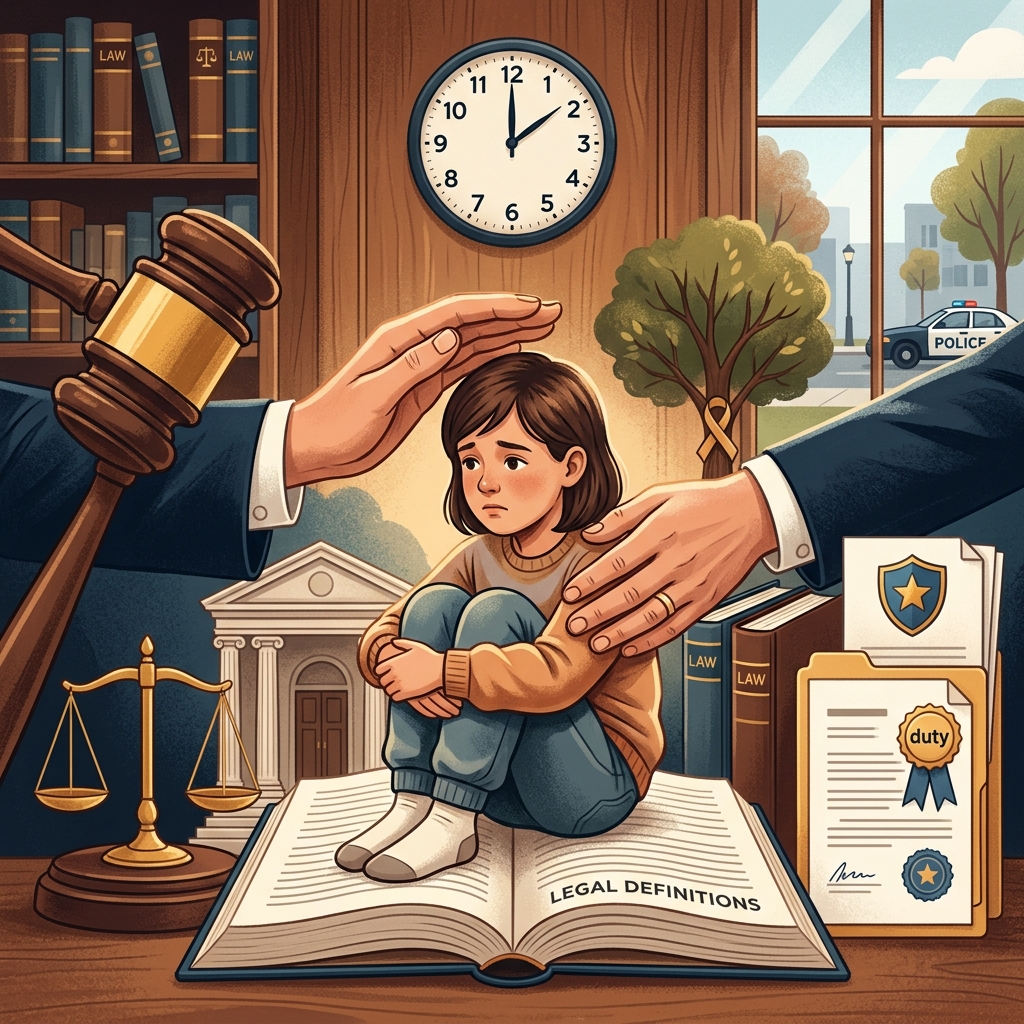
Child abuse and neglect are not only grave moral wrongs; they are also serious legal violations that can lead to removal of a child from the home, loss of parental rights, and criminal prosecution. To protect children effectively, it is important to understand how the law defines abuse, who is required to report it, how authorities investigate allegations, and what penalties may follow when abuse is proven.
Foundations of Child Protection in U.S. Law
In the United States, child protection is governed by a combination of federal and state laws. Federal statutes set a baseline definition of child abuse and neglect and offer funding and guidance, while each state enacts its own detailed rules on what conduct constitutes abuse, how cases are reported, and the consequences for offenders.
The cornerstone federal statute is the Child Abuse Prevention and Treatment Act (CAPTA). CAPTA ties federal funding for child welfare programs to certain minimum child protection standards and defines core acts and omissions that qualify as abuse or neglect.
- Federal law: establishes a minimum national standard and supports state child protection systems.
- State law: supplies detailed definitions, procedures, and penalties that apply within each state.
- Local implementation: child protective services (CPS), courts, and law enforcement apply these rules in individual cases.
Legal Definition of Child Abuse and Neglect
CAPTA provides a baseline definition that all states use as a starting point. Under this federal framework, child abuse and neglect involve harmful acts or failures to act by a parent or caregiver that cause or threaten serious harm.
| Key Element | Legal Meaning (Federal Baseline) |
|---|---|
| Actor | Parent or caregiver responsible for the child. |
| Conduct | Recent act or failure to act. |
| Result | Death, serious physical or emotional harm, sexual abuse, or exploitation. |
| Risk | Imminent risk of serious harm, even if harm has not yet occurred. |
Each state builds on this baseline to define more precisely the acts and omissions that must be reported to authorities and that may lead to court intervention.
Physical Abuse
Physical abuse generally refers to non-accidental physical harm inflicted on a child. Federal law addressing reporting in Indian country, for example, lists conditions such as unexplained bruises, bleeding, fractures, burns, malnutrition, or failure to thrive as indicators of abuse when they cannot be justified by accidental causes.
- Non-accidental injuries that result from force, hitting, shaking, burning, or similar acts.
- Serious conditions like subdural hematoma, soft-tissue swelling, or multiple unexplained injuries.
- Repeated incidents or patterns of physical harm that place the child at substantial risk.
Sexual Abuse and Exploitation
Sexual abuse involves using a child for sexual activity, contact, or exploitation. Federal law explicitly includes sexual assault, molestation, exploitation, sexual contact, and prostitution of a child as forms of abuse.
- Sexual assault or molestation committed against a minor.
- Sexual exploitation, including using a child in commercial sex or sexually explicit materials.
- Arranging or permitting a child to engage in prostitution.
Neglect
Neglect generally involves an ongoing failure to meet a child’s basic needs. CAPTA includes a failure to act that results in serious physical or emotional harm or presents an imminent risk of serious harm.
- Failure to provide adequate food, shelter, medical care, or supervision.
- Chronic disregard of the child’s physical or emotional needs.
- Situations where the parent or caregiver places the child in dangerous conditions or fails to intervene to prevent harm.
Emotional Abuse
Emotional abuse is often defined in state civil codes as acts or omissions that cause or risk serious emotional or mental harm, such as persistent humiliation, threats, or rejection. While definitions vary, laws typically recognize emotional abuse when the conduct is severe and sustained.
- Ongoing verbal assaults or threats that cause significant psychological harm.
- Extreme isolation or rejection of the child.
- Patterns of behavior documented by mental health professionals and CPS.
Who Is Considered a Child Under the Law?
Most child abuse statutes limit protection to individuals under a specified age. Federal law commonly defines a child as a person under 18 years of age who is not married and not emancipated.
- Age threshold: generally younger than 18.
- Emancipated minors: some legal protections and obligations differ once emancipation is granted.
- Marital status: certain federal provisions apply only to unmarried minors.
Mandatory Reporting: Legal Duty to Speak Up
Mandatory reporting laws are a critical component of the child protection system. These laws require specific individuals – and in some states, all adults – to report suspected child abuse or neglect to authorities. Failure to report can itself be a crime in certain jurisdictions.
Who Must Report?
States identify categories of mandated reporters, typically including professionals who have regular contact with children. Depending on the jurisdiction, these may include:
- Health care providers (physicians, nurses, mental health professionals).
- Teachers, school administrators, and childcare workers.
- Social workers and child welfare caseworkers.
- Law enforcement officers and juvenile justice staff.
Some states go further. For example, laws in several jurisdictions provide that everyone has a duty to report suspected child abuse or neglect, not just professionals, extending the responsibility to the general public.
Standard for Making a Report
Mandatory reporting statutes typically require action when the reporter has reasonable suspicion or a reasonable belief that a child has been abused or neglected.
- Reports are usually made to CPS hotlines or local law enforcement.
- Many laws provide immunity from civil or criminal liability for good-faith reports based on reasonable belief.
- False or malicious reports can still lead to legal consequences, but honest mistakes are generally protected.
Consequences for Failing to Report
In some jurisdictions, failing to report suspected abuse when required by law is itself a criminal offense. Federal law concerning Indian country, for instance, provides that certain professionals who reasonably suspect abuse and do not report may face fines or up to six months of imprisonment.
- Criminal penalties such as fines or short jail terms for non-reporting.
- Professional discipline, including loss of licenses or employment.
- Potential civil liability in certain circumstances.
From Report to Investigation: What Happens Next?
Once a report is made, agencies must determine whether the allegations warrant investigation. The process usually involves child protective services, law enforcement, and sometimes the courts.
Screening and Intake
CPS or a designated hotline screens incoming reports to decide whether they meet the legal definition of abuse or neglect and whether the child appears to be in immediate danger.
- Assessing the credibility and detail of the report.
- Checking prior reports involving the same child or family.
- Determining whether to send investigators urgently or within a routine timeframe.
Investigation and Evidence Gathering
If an investigation is opened, CPS and/or law enforcement collect information to assess risk and determine whether abuse has occurred. This may include interviews, physical examinations, and review of medical and school records.
- Interviewing the child, caregivers, and other witnesses.
- Obtaining medical evaluations to distinguish intentional injury from accidents.
- Reviewing records and prior reports to identify patterns of harm.
Immediate Safety Measures
If authorities conclude that the child faces substantial risk of harm, they may take emergency steps to protect the child. Civil courts can authorize removal from the home, place the child with relatives or foster care, and issue protective orders limiting contact with the alleged perpetrator.
- Emergency removal from the home when the child’s safety is at risk.
- Temporary placement with relatives or licensed foster families.
- Orders restricting or supervising parental visitation during the investigation.
Civil vs. Criminal Responses to Child Abuse
Child abuse cases often proceed on two legal tracks: civil child welfare proceedings and criminal prosecutions. The same facts can lead to both the loss of custody in family or juvenile court and criminal charges in a separate criminal case.
Civil Child Protection Actions
Civil actions focus on the child’s safety and well-being rather than punishment of the parent. Courts may:
- Order services such as parenting classes, counseling, or substance abuse treatment.
- Direct CPS to supervise the family and monitor compliance.
- Terminate parental rights in severe or repeated abuse cases.
Criminal Charges and Prosecution
When the conduct meets criminal definitions, prosecutors may file charges such as assault, sexual abuse, endangering the welfare of a child, or homicide. Penalties depend on the state’s criminal code and the severity of the harm.
- Charges ranging from misdemeanors to serious felonies, depending on the facts.
- Potential sentences including fines, probation, and imprisonment; severe cases can result in long prison terms or life sentences.
- Sex offender registration requirements for certain sexual abuse convictions.
Federal Criminal Law and Child Abuse
Most child abuse prosecutions occur under state law, but some situations trigger federal criminal jurisdiction. Federal statutes criminalize sexual abuse and exploitation of children in specific contexts, such as abuse on federal property or cross-border trafficking.
- Abuse on federal lands or in Indian country may fall under federal law.
- Transporting a child across state or national borders for sexual exploitation can be prosecuted under federal trafficking or related statutes.
- Sexual abuse involving force, threats, or coercion can be charged under federal sexual abuse provisions.
Federal penalties can be severe, reflecting the gravity of sexual exploitation and trafficking, and may include lengthy prison sentences and lifetime supervision.
Long-Term Consequences for Offenders
Beyond the immediate criminal sentence, individuals found responsible for child abuse can face enduring legal and social consequences.
- Sex offender registration: Required in many sexual abuse cases, often for years or life.
- Restitution: Courts may order offenders to pay financial compensation to victims or their families.
- Supervised release: After prison, offenders may be subject to monitoring, treatment requirements, and restrictions on contact with children.
- Collateral impacts: Difficulty obtaining employment, housing, or professional licenses, and lasting restrictions on parental rights.
Frequently Asked Questions About Child Abuse Law
Is every harsh discipline considered child abuse?
Not necessarily. Law generally distinguishes between lawful discipline and abuse by examining factors such as the severity of injury, the method used, and whether the conduct causes or risks serious physical or emotional harm. When discipline results in injuries like fractures, burns, or substantial bruising that cannot be explained as accidental, it is likely to be considered abuse.
What should I do if I suspect a child is being abused?
If you have reasonable suspicion that a child is being harmed or is at imminent risk of serious harm, you should contact your state’s child abuse hotline or local law enforcement. In many states, certain professionals – and sometimes all adults – are legally required to report suspected abuse or neglect. Good-faith reports based on reasonable belief are typically protected from civil or criminal liability.
Can someone be prosecuted if the child is only at risk but not yet harmed?
Yes. CAPTA’s baseline definition includes acts or failures to act that present an imminent risk of serious harm, and many state criminal statutes punish conduct that endangers a child’s welfare even when no injury has occurred yet. Courts and prosecutors may act to prevent harm when persuasive evidence shows the child is in serious danger.
Are reports of child abuse confidential?
Most jurisdictions treat child abuse reports as confidential and restrict disclosure of the reporter’s identity, with some exceptions. While the specifics vary by state, laws aim to encourage reporting by protecting individuals who come forward in good faith.
Why do definitions of child abuse vary between states?
Federal law provides a minimum framework, but each state retains authority to define abuse and neglect in its civil and criminal codes. Differences in local policy choices, court interpretations, and legislative priorities produce variation. For this reason, anyone dealing with a potential abuse case should consult the specific laws of their state or speak with a qualified attorney.
References
- What is child abuse or neglect? What is the definition of child abuse and neglect? — U.S. Department of Health and Human Services, Children’s Bureau. 2023-05-10. https://www.hhs.gov/answers/programs-for-families-and-children/what-is-child-abuse/index.html
- Child Abuse Prevention and Treatment Act (CAPTA) and Related Federal Legislation — Child Welfare Information Gateway, U.S. Department of Health and Human Services. 2019-12-01. https://www.childwelfare.gov/resources/capta-and-related-legislation/
- Definitions of Child Abuse and Neglect — Child Welfare Information Gateway, U.S. Department of Health and Human Services. 2019-01-01. https://www.childwelfare.gov/resources/definitions-child-abuse-and-neglect/
- Child Abuse Laws and Information by State — FindLaw. 2022-03-15. https://www.findlaw.com/family/child-abuse/child-abuse-laws-state-by-state.html
- Child Abuse Protection Laws — Darkness to Light. 2021-06-10. https://www.d2l.org/child-abuse-protection-laws/
- 18 U.S. Code § 1169 – Reporting of child abuse — Legal Information Institute, Cornell Law School. 2018-01-01. https://www.law.cornell.edu/uscode/text/18/1169
- Child Abuse Offenses Addressed by Federal Law — NJ DCPP Lawyers. 2020-09-01. https://www.njdcpplawyers.com/child-abuse-offenses-addressed-by-federal-law/
Similar Articles








Read full bio of Sneha Tete




