
Understanding Chapter 13 Bankruptcy: Background, Process, and Key Advantages
Learn how Chapter 13 bankruptcy helps wage earners reorganize debt, protect property, and build a realistic path toward long‑term financial stability.
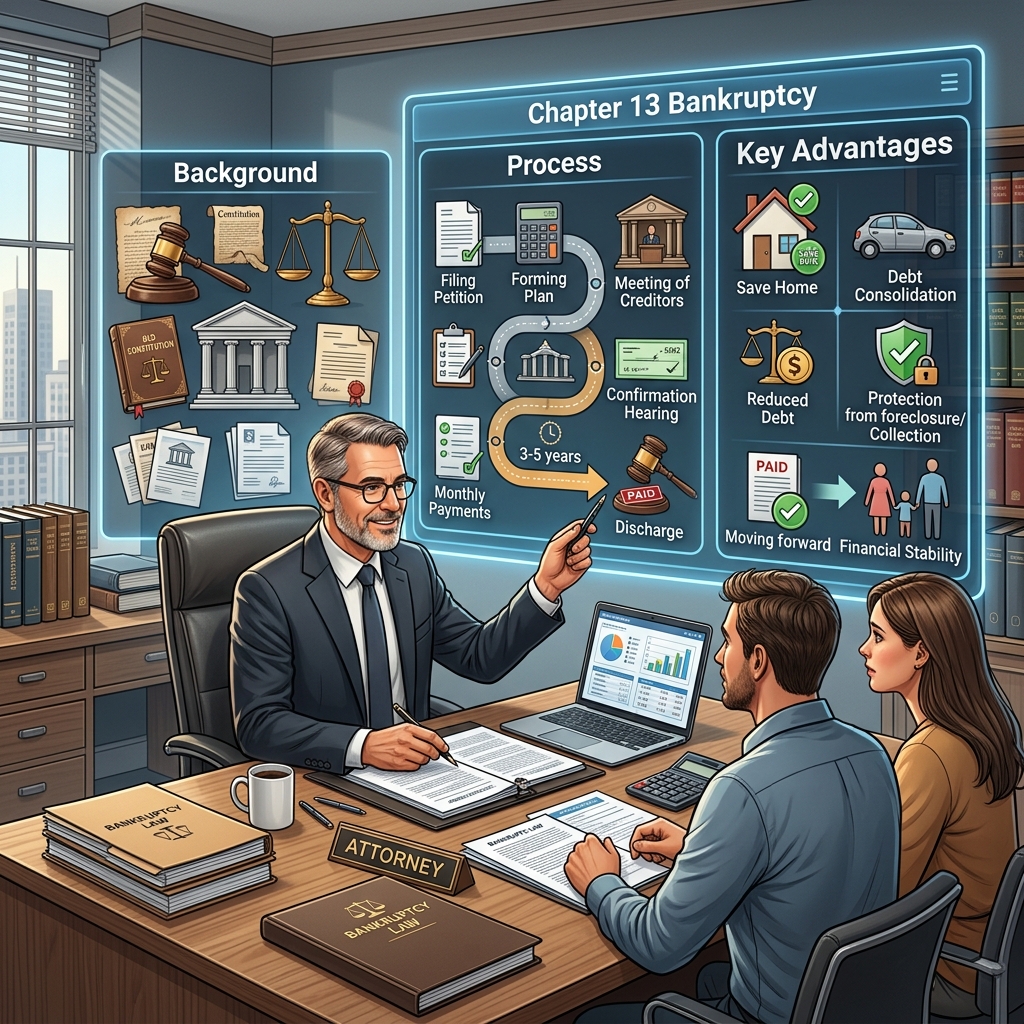
Chapter 13 bankruptcy is often called a wage earner’s plan because it is designed for people who have regular income and need a structured way to repay their debts over time without losing essential property like a home or car. It allows you to reorganize what you owe into a court-approved repayment plan that typically lasts three to five years. During that period, you make set payments to a trustee, who then distributes funds to your creditors.
This article explains the background of Chapter 13, how the process works, who qualifies, and the major advantages and drawbacks. It is written for individuals considering bankruptcy as a way to stabilize their finances while keeping important assets.
1. What Makes Chapter 13 Different from Other Forms of Bankruptcy?
Bankruptcy law in the United States provides several chapters under the Bankruptcy Code to address different financial situations. The two most common for individuals are Chapter 7 and Chapter 13. While both give you relief from overwhelming debt, they operate in very different ways.
1.1 Core Concept: Reorganization Instead of Liquidation
Under Chapter 7, the focus is on liquidating non-exempt assets to pay creditors and wiping out many debts quickly. In contrast, Chapter 13 is a reorganization approach that lets you keep property and catch up on payments over time. A Chapter 13 trustee does not sell your assets; instead, you commit to a repayment plan funded by your future income.
- Chapter 7: Often called “straight bankruptcy” or “liquidation”; non-exempt assets can be sold.
- Chapter 13: Known as a “wage earner’s plan”; you keep your property and repay debts according to a plan.
For many individuals who are behind on a mortgage or car loan but have steady earnings, Chapter 13 provides a more targeted solution than Chapter 7.
1.2 How Long Does a Chapter 13 Case Last?
A Chapter 13 plan must run for at least three years and not more than five years, with the exact duration depending largely on your income level. People whose income is above the median for their state usually must propose a five‑year plan, while those below may be permitted to finish in three years.
| Feature | Chapter 7 | Chapter 13 |
|---|---|---|
| Primary approach | Liquidation of non‑exempt assets | Reorganization of debt with repayment plan |
| Typical duration | 3–6 months | 3–5 years |
| Property treatment | Non‑exempt property may be sold | You usually keep property; trustee does not sell assets |
| Best for | No or low income, few assets | Regular income, need time to catch up on secured debts |
2. Who Can File for Chapter 13 Bankruptcy?
Chapter 13 is tailored to individuals with income, not corporations or partnerships. The eligibility rules are meant to ensure that you have enough earnings and a manageable level of debt to fund a feasible repayment plan.
2.1 Basic Eligibility Requirements
- Individual or joint filers only: Businesses as separate entities cannot use Chapter 13, although self‑employed individuals and sole proprietors may qualify.
- Regular income: You must show that you have a stable income stream sufficient to make plan payments over time.
- Debt limits: There are statutory caps on secured and unsecured debts. As of recent updates, Chapter 13 is available only if your unsecured debts are below a specified limit and your secured debts are below another limit at the time of filing. (Debt limits are adjusted periodically by law.)
- Credit counseling: With limited exceptions, you must complete credit counseling from an approved agency within 180 days before filing.
The debt caps reflect Congress’s intent that Chapter 13 be used for individuals with significant but not extremely large debts, while businesses or very high‑debt individuals may need different chapters.
2.2 The Role of “Disposable Income”
Your ability to fund a Chapter 13 plan depends on your disposable income—the money left after reasonable and necessary living expenses and payments on priority or secured debts. This amount is central to determining how much you must pay each month.
- Disposable income calculation considers housing, food, transportation, insurance, and other basic expenses.
- The more disposable income you have, the more you pay into the plan for unsecured creditors.
- Courts also apply a “best efforts” rule, requiring you to pay at least as much as creditors would receive in a Chapter 7 liquidation.
This calculation ensures that you are not sheltering income that could reasonably be used to repay debt while still allowing necessary funds for basic living costs.
3. How a Chapter 13 Case Works Step by Step
While every case is unique, Chapter 13 follows a fairly standard process. Understanding the stages can help you evaluate whether it fits your situation.
3.1 Filing the Petition and Initial Documents
A Chapter 13 case begins with filing a bankruptcy petition in the federal bankruptcy court for the district where you live. Along with the petition, you must file detailed schedules and statements describing your financial situation:
- Assets and liabilities
- Current income and expenses
- Executory contracts and unexpired leases
- Statement of financial affairs
These documents give the court, trustee, and creditors a clear picture of your finances and form the basis for evaluating your repayment plan.
3.2 The Automatic Stay: Immediate Protection from Creditors
Once your case is filed, an automatic stay goes into effect, generally stopping most collection actions, lawsuits, wage garnishments, and foreclosure proceedings. This legal stay is one of the most powerful tools in bankruptcy, giving you breathing room while the court reviews your case.
While some exceptions exist (for example, certain family support actions), the stay usually prevents creditors from continuing aggressive collection efforts during the case.
3.3 Proposing the Repayment Plan
The heart of Chapter 13 is your repayment plan. You must file a written plan describing how you will repay your debts over three to five years. The plan must:
- Provide for regular payments to the Chapter 13 trustee.
- Explain how secured debts (such as mortgages and car loans) will be treated, including any arrears.
- Address priority debts such as certain taxes or domestic support obligations, which often must be paid in full.
- Specify what percentage, if any, of unsecured debts will be paid.
In some cases, unsecured creditors may receive only a small portion of what is owed, or even no payment at all, if disposable income and bankruptcy rules allow.
3.4 Confirmation of the Plan
After you propose the plan, the court holds a confirmation hearing to decide whether to approve it. The judge will consider whether the plan is feasible, proposed in good faith, and complies with the law. Creditors and the trustee can object if they believe the plan is unfair or legally insufficient.
Once confirmed, the plan becomes binding on you and your creditors. You must make payments as promised, usually by sending monthly payments to the trustee.
3.5 Completing the Plan and Receiving a Discharge
If you successfully make all required payments and meet other obligations, you can receive a Chapter 13 discharge. This discharge releases you from personal liability for many debts included in the plan.
Certain obligations cannot be discharged, including domestic support obligations, most student loans, some taxes, criminal fines, and debts from drunk driving injuries. However, Chapter 13 can discharge some debts that would remain in Chapter 7, such as certain property settlements in divorce or debts incurred to pay nondischargeable taxes.
4. Major Advantages of Chapter 13 Bankruptcy
Chapter 13 offers several significant benefits that make it appealing to individuals with regular income who want to protect important assets and create a realistic pathway out of debt.
4.1 Keeping Your Home, Car, and Other Property
One of the strongest advantages is the ability to retain property. In Chapter 13, the trustee does not sell your assets; instead, you keep your home, car, and other property as long as the plan meets statutory requirements and you maintain payments.[10]
- You can catch up on missed mortgage payments over the life of the plan, often stopping foreclosure.
- You may be able to cure car loan arrears and prevent repossession.
- You are allowed to retain non‑exempt property, provided your plan pays unsecured creditors at least the value they would get in a Chapter 7 liquidation.[10]
For homeowners who have fallen behind but still have income, this structure can be vital to keeping their residence.
4.2 Control Over Secured Debts and Arrears
Chapter 13 enables you to spread arrears on secured debts over several years, making catch‑up payments affordable. Instead of having to pay all missed amounts at once, you can repay them gradually through the plan.
In some situations, you may also reduce the amount owed on certain secured debts through techniques like cramdown, where you pay just the value of the collateral rather than the full loan balance, subject to complex legal rules and limitations.
4.3 Protection from Collection Actions
Throughout the case, the automatic stay and the presence of the court provide strong protections against creditors:
- Stop wage garnishments (with some exceptions).
- Halt most lawsuits and judgment enforcement efforts.
- Pause foreclosure and repossession proceedings while you address arrears in your plan.
This breathing room allows you to reorganize finances without the constant threat of losing property or seeing wages taken.
4.4 Broader Discharge for Certain Debts
Compared to Chapter 7, Chapter 13 may allow a wider discharge of some types of debt. Examples include:
- Debts arising from property settlements in divorce or separation.
- Debts incurred to pay certain nondischargeable tax obligations.
- Debts for willful and malicious injury to property (not to a person).
These additional dischargeable categories can be especially important for individuals dealing with complex family law and tax‑related obligations.
5. Important Drawbacks and Risks to Consider
Despite its advantages, Chapter 13 is not a simple or risk‑free solution. The long-term commitment and strict requirements make it essential to weigh the downsides carefully.
5.1 Long-Term Commitment and Budget Discipline
A Chapter 13 plan can last up to five years, during which you must make every payment on time and maintain a tight budget. Missing payments can lead to dismissal of your case or conversion to Chapter 7, putting property at risk.
The structure can feel restrictive, and major lifestyle changes or unexpected expenses may make it challenging to stay on track.
5.2 Impact on Credit and Future Borrowing
Filing any bankruptcy, including Chapter 13, negatively affects your credit report for years. A Chapter 13 may stay on your credit record for up to seven years, influencing your ability to obtain new credit and potentially raising interest rates on future loans.
Although Chapter 13 can sometimes be viewed more favorably than Chapter 7 because creditors receive at least some payment, the practical impact on credit is still significant.
5.3 Non-Dischargeable Debts Remain
Some financial obligations cannot be wiped out even after a successful Chapter 13 discharge. These typically include:
- Child support and alimony.
- Most student loans.
- Certain recent or priority taxes.
- Criminal fines and restitution.
- Debts arising from drunk driving injuries.
Because these obligations survive, you must plan carefully to ensure your budget and repayment plan accommodate them alongside other debts.
6. Is Chapter 13 Right for You? Key Factors to Evaluate
Choosing between Chapter 13, Chapter 7, or non‑bankruptcy solutions requires a holistic look at your finances, goals, and future plans. Below are practical indicators that Chapter 13 may be appropriate.
6.1 Situations Where Chapter 13 Is Often Useful
- You have steady income but are behind on mortgage or car payments.
- You want to stop foreclosure or repossession and catch up over time.
- You own non‑exempt property that would likely be sold in Chapter 7, such as significant home equity or valuable assets.[10]
- You need to manage tax debts or divorce‑related obligations that Chapter 13 may handle more flexibly than Chapter 7.
6.2 Questions to Discuss with a Professional
Because bankruptcy law is complex and outcomes depend on detailed financial facts, consulting a qualified attorney or legal aid organization is strongly recommended. Some useful questions include:
- How do my income and debt levels affect my eligibility?
- What would my approximate monthly plan payment be?
- How would my home equity and other assets be treated?
- Are there alternatives to bankruptcy that might work, such as loan modifications or negotiated settlements?
An attorney or trusted legal resource can help you compare the likely consequences of Chapter 13 with other options.
7. Frequently Asked Questions About Chapter 13 Bankruptcy
7.1 Will I lose my house in Chapter 13?
Chapter 13 is specifically designed to help you keep your home, as long as you can make ongoing mortgage payments and cure any arrears through the plan. While no outcome is guaranteed, many filers use Chapter 13 to stop foreclosure and retain their properties.
7.2 Do all my creditors have to be paid in full?
No. In many Chapter 13 cases, unsecured creditors receive only a portion of what is owed, and sometimes even 0%, depending on disposable income, asset values, and legal requirements. Secured and priority creditors may have to be paid more completely, but the plan can still provide significant relief.
7.3 Can I keep using my credit cards during Chapter 13?
Generally, you cannot continue using existing credit lines once you file, and new credit during the case often requires court or trustee approval. The goal is to stabilize finances, not to accumulate additional consumer debt.
7.4 What happens if my income changes during the plan?
If your income rises or falls, you may be able to modify the plan, subject to court approval and legal rules. In some situations, a significant drop in income might lead to conversion to Chapter 7 or dismissal, depending on what is most appropriate. Always consult your attorney promptly if circumstances change.
7.5 How long will bankruptcy stay on my credit report?
A Chapter 13 filing generally remains on your credit report for up to seven years. Although that mark is serious, many people gradually rebuild credit by making on‑time payments, maintaining stable employment, and using new credit responsibly when available.
References
- Chapter 13 – Bankruptcy Basics — United States Courts. 2024-03-01. https://www.uscourts.gov/court-programs/bankruptcy/bankruptcy-basics/chapter-13-bankruptcy-basics
- What is Chapter 13 Bankruptcy? — TexasLawHelp.org. 2023-06-15. https://texaslawhelp.org/article/what-is-chapter-13-bankruptcy
- Chapter 13 Bankruptcy: How It Works and Who Qualifies — Nolo. 2023-04-10. https://www.nolo.com/legal-encyclopedia/chapter-13-bankruptcy-overview-30099.html
- Chapter 13 bankruptcy – voluntary reorganization of debt for individuals — Internal Revenue Service (IRS). 2022-08-12. https://www.irs.gov/businesses/small-businesses-self-employed/chapter-13-bankruptcy-voluntary-reorganization-of-debt-for-individuals
- An Overview of Chapter 13 Bankruptcy — Indiana State Medical Association / AnthemEAP. 2022-05-20. https://www.anthemeap.com/isma/find-legal-support/resources/bankruptcy/legal-assist/an-overview-of-chapter-13-bankruptcy
- Chapter Thirteen Bankruptcy: An Overview — LawShelf Educational Media. 2021-11-01. https://www.lawshelf.com/shortvideoscontentview/chapter-13-bankruptcy-an-overview/
Similar Articles








Read full bio of Sneha Tete




