
Understanding CBD Legality in the United States
A practical guide to how federal and state laws treat cannabidiol (CBD) and what consumers and businesses need to know.
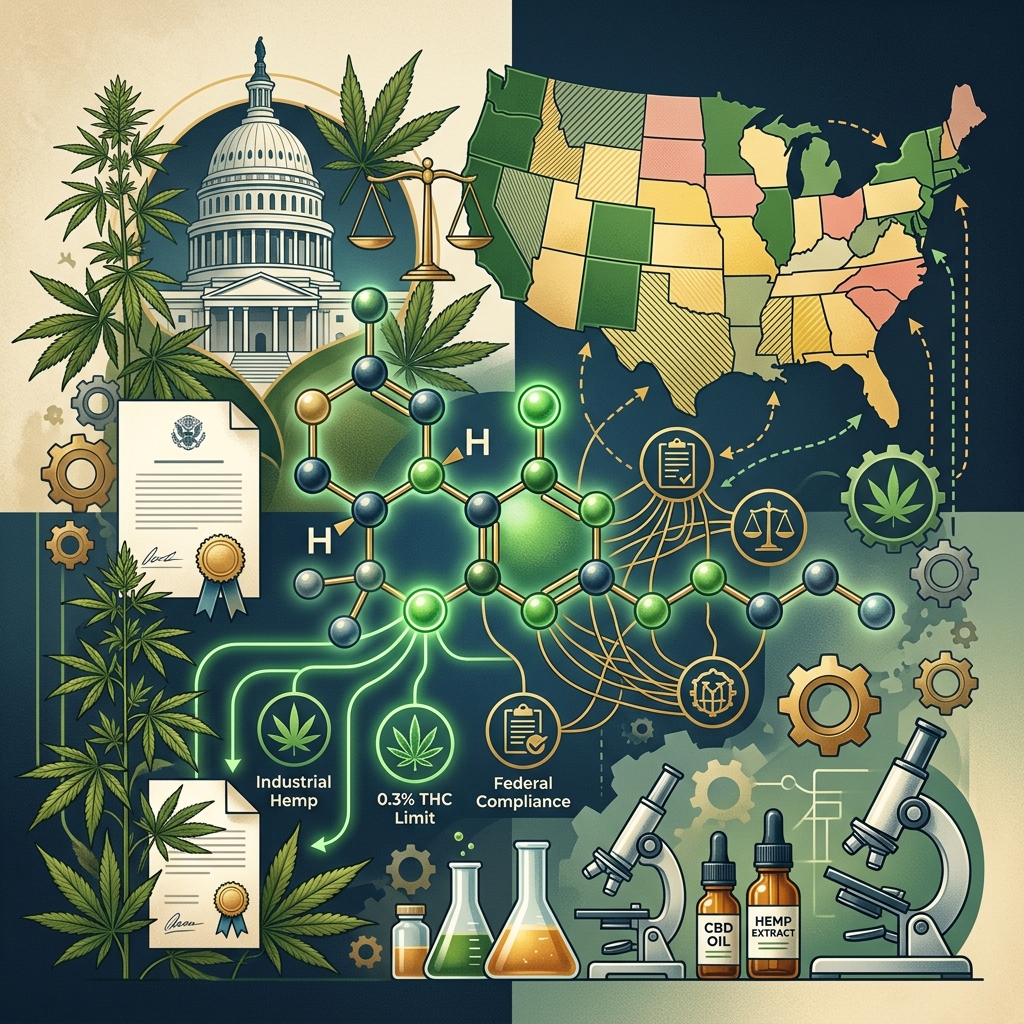
Cannabidiol, commonly known as CBD, has become a staple in wellness products, cosmetics, and even pet care. Yet the question many consumers and businesses still ask is simple: Is CBD legal? The answer depends on where it comes from, how it is marketed, and what your state law says. This article explains the key legal rules that shape CBD’s status in the United States, using current federal guidance and recent state-level trends.
What CBD Is and Why Its Legal Status Is Complicated
CBD is one of many chemical compounds found in the cannabis plant. Unlike tetrahydrocannabinol (THC), CBD does not produce the intoxicating “high” typically associated with marijuana use. CBD can be derived from both marijuana and hemp varieties of cannabis, and that distinction is central to how the law treats it.
Under U.S. law, “hemp” refers to cannabis plants and derivatives containing no more than 0.3% THC on a dry weight basis. Marijuana generally refers to cannabis that exceeds this THC threshold. CBD extracted from hemp is treated very differently than CBD extracted from marijuana.
- Hemp-derived CBD: Low THC (≤0.3%), not a controlled substance under federal law, but still regulated.
- Marijuana-derived CBD: Higher THC levels, typically regulated within medical or adult-use cannabis programs and, historically, treated as a controlled substance.
Federal Law: The Impact of the 2018 Farm Bill
The turning point for hemp-derived CBD came with the Agriculture Improvement Act of 2018, commonly known as the 2018 Farm Bill. This law removed hemp from the federal Controlled Substances Act (CSA), as long as it contains no more than 0.3% THC on a dry weight basis. As a result, hemp and its derivatives—including hemp-derived CBD—are no longer federally classified as controlled substances when produced in compliance with the Farm Bill.
However, the Farm Bill did not create a free-for-all CBD marketplace. It explicitly preserved the authority of the U.S. Food and Drug Administration (FDA) over products containing cannabis or cannabis-derived compounds. That means CBD is still subject to the same rules that apply to other ingredients in foods, drugs, cosmetics, and dietary supplements.
Key Federal Principles for CBD
- Not a controlled substance if from hemp: Hemp-derived CBD from properly licensed producers and containing ≤0.3% THC is not a controlled substance under the CSA.
- Still subject to FDA rules: Any product containing CBD must comply with the Federal Food, Drug, and Cosmetic Act (FD&C Act) and other applicable FDA laws.
- State laws may impose further restrictions: Some states still treat hemp or hemp-derived CBD as controlled substances, or impose unique licensing and labeling requirements.
How the FDA Regulates CBD Products
Although hemp-derived CBD is lawful at the federal level in certain contexts, FDA oversight significantly limits the ways companies can market CBD. FDA regulates cannabis-derived products in the same way as any other product it oversees. The legality of a CBD product depends on its intended use and how it is labeled.
CBD as a Drug
FDA has approved one CBD-based prescription drug for specific seizure disorders. Apart from this product, FDA has not approved any other CBD drugs. Firms that market CBD products as treatments for diseases or serious medical conditions risk enforcement actions, including warning letters, because such claims fall under the drug provisions of the FD&C Act.
CBD in Dietary Supplements and Foods
Under the FD&C Act, ingredients that are active components in approved drugs generally cannot be added to foods or marketed as dietary supplements unless specific exceptions apply. FDA has concluded that CBD is excluded from the definition of dietary supplements for this reason, and that it was not lawfully marketed in food or supplements before its development as a drug ingredient.
As a result:
- Adding CBD to conventional foods or beverages is not permitted under current FDA interpretation.
- Marketing CBD products as dietary supplements is considered a prohibited act under the FD&C Act.
CBD in Cosmetics and Topicals
Cosmetics and topical products containing CBD are not automatically illegal. However, they must be safe for their intended use and cannot be marketed with drug-like claims (for example, claiming to cure a disease). If a CBD cosmetic is misbranded or adulterated, or if it is promoted for treating medical conditions, it may violate federal law.
State Laws: The Patchwork of CBD Regulation
Federal law establishes a baseline, but state laws ultimately determine how CBD can be sold and used within each state. Some states follow the federal hemp standard closely, while others impose stricter conditions or continue to treat certain hemp-derived products as illegal.
Recent analyses suggest three broad categories of state approaches to CBD:
- Fully legal: CBD is generally allowed for consumer use, with few state-level restrictions beyond federal hemp rules.
- Conditionally legal: CBD is permitted only under specific conditions, such as participation in a medical program or adherence to very low THC thresholds.
- Illegal: Some states still classify CBD as illegal under state law, regardless of federal hemp standards.
States Where CBD Is Fully Legal
In many states, hemp-derived CBD meeting federal THC limits is broadly legal for consumer purchase. One recent review indicates that 24 states and the District of Columbia allow CBD products without extra state-level restrictions beyond federal hemp standards. Examples of states in this category include Alaska, California, Colorado, New York, Oregon, Vermont, Virginia, and Washington.
In these jurisdictions, CBD products can typically be sold at retail outlets as long as they comply with labeling, testing, and quality requirements.
States With Conditional Legality
In about 20 states, CBD is classified as conditionally legal. These states may:
- Restrict CBD access to registered medical cannabis patients.
- Limit CBD products to low-THC formulations.
- Require special licensing or state program participation for retail sales.
Examples include states such as Alabama, Florida, Georgia, Indiana, Kentucky, and Texas. In these places, consumers may find fewer CBD products on general store shelves, and businesses may need medical cannabis licensing or adherence to strict testing and packaging rules.
States Where CBD Remains Illegal
Despite federal legalization of hemp, some states continue to classify CBD products as illegal. A recent survey lists six states—Idaho, Kansas, Nebraska, North Carolina, South Carolina, and Wyoming—where CBD is currently considered illegal under state law. In these states, there is no authorized retail market for hemp-derived CBD, and possession or sale may trigger criminal penalties.
Comparing Federal and State Rules
The interaction between federal and state law can be confusing. The table below summarizes key differences that influence whether CBD is lawful in practice.
| Legal Level | Main Focus | Impact on CBD |
|---|---|---|
| Federal (Farm Bill) | Defines hemp and removes it from CSA | Hemp-derived CBD ≤0.3% THC is not a controlled substance; interstate commerce allowed if other laws are followed. |
| Federal (FDA) | Regulates food, drugs, supplements, cosmetics | CBD cannot be marketed as dietary supplement or added to conventional foods; drug claims require approval. |
| State Cannabis Laws | Medical and adult-use marijuana frameworks | Marijuana-derived CBD may be legal within medical or adult-use programs; non-program sales can remain illegal. |
| State Hemp/CBD Rules | Licensing, testing, packaging, retail rules | Some states fully allow CBD, some limit it to medical use or low THC, and a few prohibit CBD entirely. |
CBD and Medical Cannabis Programs
CBD also plays a role in medical cannabis laws. In many states, cannabis is approved for medical use, and these programs often include products with varying ratios of THC to CBD. As of mid-2025, medical cannabis is legal in 41 states and several U.S. territories. Another group of states maintain narrower laws that primarily allow access to high-CBD, low-THC products for specific medical conditions.
These medical frameworks influence how CBD products are regulated when derived from marijuana instead of hemp. Patients in medical cannabis programs may obtain CBD-rich products from licensed dispensaries, but these products usually fall under state cannabis rules rather than general consumer CBD law.
Consumer Risks and Safety Considerations
Legal questions are only part of the picture. Health and safety agencies have raised concerns about CBD products, particularly when self-prescribed or used during pregnancy and breastfeeding. The Centers for Disease Control and Prevention (CDC) notes that CBD is not impairing, but highlights several unknowns and risks.
- Pregnancy and breastfeeding: CBD use during pregnancy or breastfeeding is not recommended. Animal studies show high doses of CBD may harm developing fetuses, and it is unclear whether CBD passes into breast milk.
- Product quality: Mislabeling, contamination, and variable potency can pose risks, especially in unregulated or lightly regulated markets.
- Adverse effects: Consumers who experience serious adverse effects from THC or CBD products are advised to seek immediate medical attention or contact poison control.
Practical Tips for Staying Within the Law
Because CBD law is a moving target, both consumers and businesses benefit from cautious, informed practices. The following points can help reduce legal risk:
For Consumers
- Check your state law: State statutes and regulatory websites often provide specific guidance on whether CBD is legal, restricted, or prohibited.
- Verify product type: Confirm whether the product is hemp-derived (≤0.3% THC) or marijuana-derived, and whether you are in a state where marijuana products are legal only within medical or adult-use programs.
- Be wary of health claims: Products advertised as curing diseases or serious conditions may be violating FDA rules and could be misleading or unsafe.
- Consult healthcare professionals: Especially if you are pregnant, breastfeeding, or managing chronic illness, discuss CBD use with a clinician familiar with your medical history.
For Businesses
- Comply with hemp and licensing requirements: Ensure your supply chain uses legally produced hemp that meets the 0.3% THC standard and any state licensing rules.
- Avoid unapproved drug claims: Marketing statements that imply diagnosis, cure, mitigation, or treatment of disease can trigger FDA enforcement.
- Understand FDA’s stance on supplements and foods: Do not position CBD products as dietary supplements or add CBD to conventional foods unless the legal landscape changes.
- Follow state-specific labeling and testing rules: Many states require lab testing, potency disclosure, and specific packaging elements for hemp-derived products.
Frequently Asked Questions About CBD Legality
Is CBD legal everywhere in the United States?
No. While hemp-derived CBD is generally lawful at the federal level if it contains no more than 0.3% THC and is produced in compliance with the Farm Bill, some states still restrict or ban CBD altogether. Always review your state’s laws before buying or selling CBD products.
Does federal law override state bans on CBD?
The 2018 Farm Bill removed hemp from the federal Controlled Substances Act, but it did not require states to legalize hemp or CBD. States can maintain stricter controls, including outright bans on CBD products. In practice, this means a product that is federally lawful may still be illegal under certain state laws.
Can CBD be sold as a dietary supplement?
Under current FDA guidance, CBD cannot be marketed as a dietary supplement because it is an active ingredient in an approved prescription drug, and it was not in lawful supplement use before drug approval. Selling CBD under a supplement label may violate the FD&C Act.
Is it legal to add CBD to food or beverages?
FDA has concluded that adding CBD to conventional foods or beverages is not permitted under the FD&C Act. Some states may allow CBD-infused foods under their own rules, but such products exist in a legally uncertain space from the federal perspective.
What is the difference between hemp-derived and marijuana-derived CBD?
Hemp-derived CBD comes from cannabis plants containing no more than 0.3% THC and is not a controlled substance under federal law when produced in compliance with the Farm Bill. Marijuana-derived CBD is extracted from plants with higher THC levels and is generally regulated within state medical or adult-use cannabis programs, often still subject to stricter controls.
How can I confirm whether a CBD product is legal?
To assess legality, consider:
- Whether the CBD is hemp-derived and meets the 0.3% THC threshold.
- Whether the product type (oil, topical, edible) complies with FDA rules.
- Whether your state permits CBD generally, only under medical conditions, or bans it outright.
Consulting local regulations or a qualified attorney can help clarify these issues.
References
- About CBD | Cannabis and Public Health — Centers for Disease Control and Prevention. 2026-03-09. https://www.cdc.gov/cannabis/about/about-cbd.html
- FDA Regulation of Cannabis and Cannabis-Derived Products, Including Cannabidiol (CBD) — U.S. Food and Drug Administration. 2023-01-26 (last updated). https://www.fda.gov/news-events/public-health-focus/fda-regulation-cannabis-and-cannabis-derived-products-including-cannabidiol-cbd
- Is CBD Legal? — FindLaw. 2023-07-11. https://www.findlaw.com/criminal/criminal-law-basics/is-cbd-legal.html
- CBD Legal States 2026 — World Population Review. 2026-05-15. https://worldpopulationreview.com/state-rankings/cbd-legal-states
- Where is CBD Legal in North America in 2026? — Cova Software. 2025-12-10. https://www.covasoftware.com/blog/where-is-cbd-legal-in-north-america-in-2025
- Regulatory Status of Cannabidiol in the United States: A Perspective — Bonn-Miller et al., The Journal of Clinical Pharmacology. 2018-10-01. https://pmc.ncbi.nlm.nih.gov/articles/PMC6154432/
- Medical Cannabis in the United States — Summary from peer-reviewed and governmental data as compiled by major reference sources. 2025-07-01. https://en.wikipedia.org/wiki/Medical_cannabis_in_the_United_States
Similar Articles








Read full bio of Sneha Tete




