Payment cards are convenient, fast and widely accepted, but they also create opportunities for criminals to steal card data without ever touching your wallet. One of the oldest and most persistent tools they use is the card skimmer—a hidden device that captures card information when you insert, swipe or sometimes even tap your card.
Despite advances in chip technology, contactless payments and sophisticated fraud monitoring, skimming remains a global problem that has adapted to modern systems rather than disappearing. This guide explains how skimmers work, how they fit into today’s broader card fraud landscape, and exactly what you can do to stay safer when using ATMs, gas pumps and retail terminals.
What Is Card Skimming?
Card skimming is the unauthorized capture of payment card data from a legitimate card reader using a hidden device. At its core, skimming involves:
- A rogue device that reads data from the card’s magnetic stripe or attempts to intercept chip data.
- Often, a second device such as a tiny camera or bogus keypad overlay to record your PIN.
- Later use of the stolen data to create counterfeit cards or conduct unauthorized transactions online or in person.
Skimmers are most commonly installed on:
- ATMs.
- Fuel pumps and outdoor payment terminals.
- Standalone card readers and unattended kiosks.
Because skimmers mimic legitimate hardware and are often very small, many users never notice anything unusual. The fraud is discovered only when unauthorized transactions appear on account statements.
How Card Skimmers Have Evolved
Early skimmers were bulky, poorly fitted overlays attached to ATM card slots. Today’s devices are more advanced, slimmer and better disguised, making detection more challenging.
From Magnetic Stripe to Chip and Contactless
Historically, skimming targeted the magnetic stripe, which stores card information in a relatively simple format that can be duplicated onto another card. Chip (EMV) technology introduced stronger security by generating unique transaction codes and making cloned chip cards harder to use.
Criminals have responded in two ways:
- Focusing on the magnetic stripe still present on many cards, particularly in regions or devices that fall back to stripe transactions.
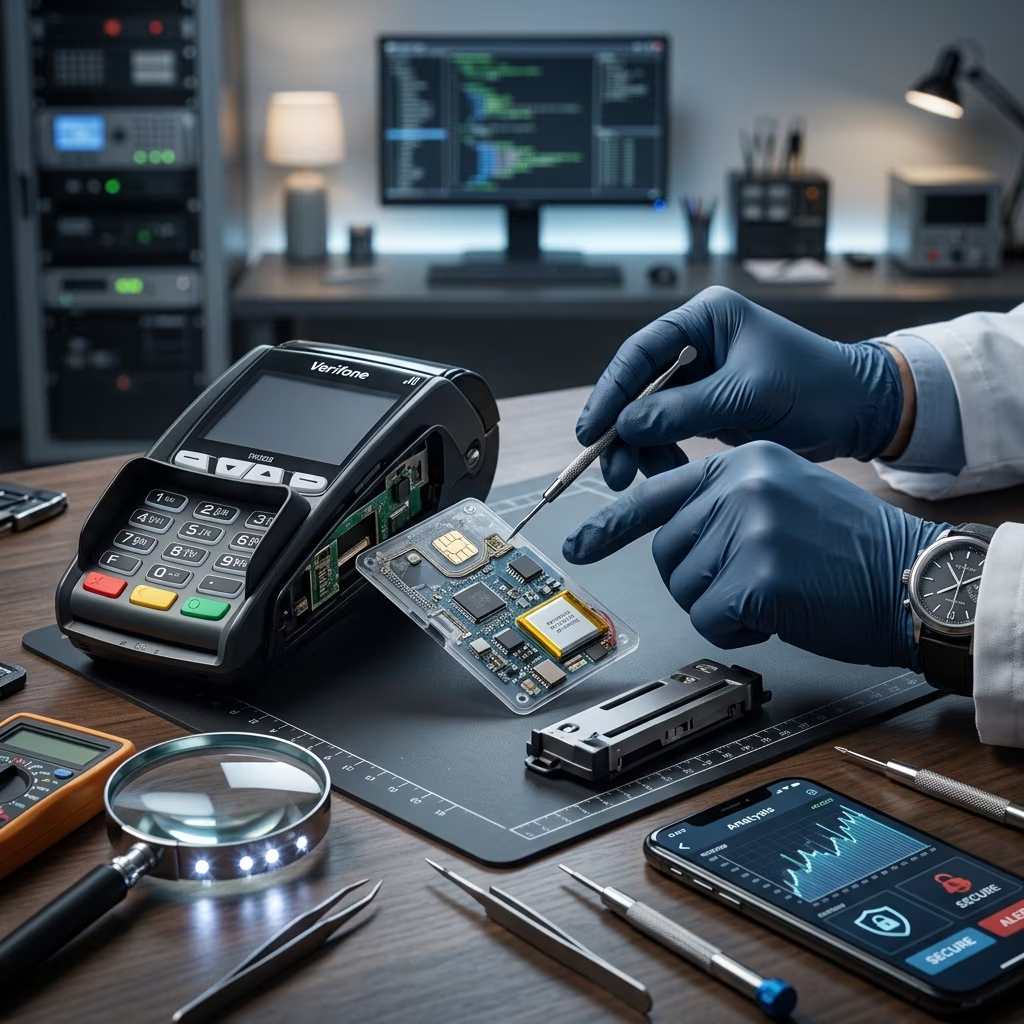
- Developing devices called shimmers, thin inserts designed to sit inside chip readers and try to intercept data exchanged between the chip and terminal.
At the same time, some attackers no longer rely solely on physical devices. They combine skimming with broader fraud methods such as data breaches, social engineering scams and digital wallet abuse.
Miniaturization and Better Camouflage
Modern skimmers may be so slim they fit directly inside a card slot, behind a bezel or within the terminal housing. In some cases, even technicians and investigators need specialized tools to locate them. Common camouflage techniques include:
- Overlays that match the color and design of the original machine.
- Fake card slots placed on top of real ones.
- Pinpad covers that appear to be protective shields but record keystrokes.
- Micro-cameras hidden in brochure racks, light fixtures or fake panels.
Because of this sophistication, relying solely on a quick glance is not enough. A more systematic approach to inspection is essential for high-risk environments like unattended ATMs and pumps.
Where Skimmers Are Most Common
Skimmers can appear anywhere cards are read, but some locations present higher risk because they offer criminals more time and less oversight to install devices.
ATMs
ATMs remain a prime target. Many machines are outdoors, accessible 24/7 and sometimes located away from bank branches, making tampering easier. Typical risk factors include:
- Machines in poorly lit or secluded areas.
- ATMs connected to convenience stores or standalone kiosks.
- Lack of visible cameras or security presence.
Law enforcement and industry reports indicate tens of thousands of devices inspected and skimmers discovered at ATMs and point-of-sale terminals, demonstrating the scale of the threat.
Gas Station and Fuel Pumps
Fuel pumps often use older hardware and may be less frequently inspected, making them attractive to skimmer installers. Outdoor, unattended terminals also give criminals longer windows to tamper with equipment without drawing attention.
In many jurisdictions, gas stations have increased security measures, but consumers should still treat pay-at-the-pump transactions as higher risk compared with paying inside at a staffed register.
Retail Point-of-Sale Terminals
Skimmers can also be installed on in-store card readers and self-checkout terminals. In some cases, criminals swap legitimate devices with modified ones or attach overlays during busy periods when staff may not notice.
For consumers, this means even familiar environments are not guaranteed safe. Visual checks and awareness remain important.
Skimming in the Broader Card Fraud Landscape
Card skimming is just one piece of a much larger fraud ecosystem. While physical skimmers continue to compromise hundreds of thousands of cards, industry data shows that scams and social engineering now account for a growing share of payment fraud.
Common related threats include:
- Card cloning: Skimmed data is written onto blank cards used for cash withdrawals or purchases.
- Digital wallet abuse: Stolen card details are added to mobile wallets and used at contactless terminals and online stores.
- Account takeover: Scammers obtain login credentials via phishing or SIM swap attacks, then use legitimate apps to make fraudulent transactions.
From mid-2025, one major payment network reported nearly a billion dollars in scam-related activity over six months, underscoring how social engineering has become a dominant threat alongside traditional skimming.
How Financial Institutions Are Responding
Banks, card networks and law enforcement agencies are actively tracking and dismantling skimming operations. Their strategies combine physical security upgrades and advanced data analytics.
Physical and Technical Controls
To reduce skimming risk at ATMs and terminals, institutions are deploying controls such as:
- Anti-skimming card readers that detect foreign devices and disrupt attempts to capture data.
- Tamper detection sensors and alarms when panels are opened or removed.
- Improved locks and restricted access to internal components.
- More frequent inspections of high-risk terminals and remote ATM sites.
These measures can deter or quickly reveal skimmer installations, but they cannot replace user vigilance.
Data Monitoring and Fraud Analytics
Financial institutions also rely heavily on real-time monitoring of transaction data.
- AI-based systems analyze card usage patterns to detect anomalies that may indicate skimming or other fraud.
- Network-wide monitoring helps identify clusters of compromised terminals or cards.
- Suspicious transactions can be blocked or flagged, and customers contacted to verify activity.
Law enforcement agencies likewise conduct targeted inspections and investigations. For example, national authorities have reported inspecting tens of thousands of terminals in a single year and removing illegal skimming devices, preventing hundreds of millions of dollars in fraud.
Practical Steps Consumers Can Take
Consumers are a critical line of defense. While you cannot control every aspect of terminal security, you can significantly reduce risk through consistent habits. The following actions help protect both your card data and PIN.
Inspect Before You Use
Before inserting or swiping your card, take a moment to look carefully at the machine.
- Check the card slot: Does it look loose, misaligned or different from other nearby machines?
- Test for movement: Gently wiggle the card reader and keypad. Overlays may feel unstable or detach.
- Look for extra parts: Unfamiliar panels, stickers or plastic pieces near the card slot or keypad can hide skimmers or cameras.
- Compare across terminals: If one device looks different from others at the same location, use another machine or pay inside.
Protect Your PIN
Since many skimming operations rely on PIN capture, blocking prying eyes and cameras can limit the damage if your card data is compromised.
- Always cover the keypad with your hand or body when entering your PIN.
- Be wary of unusual keypad overlays or shields that look recently installed.
- Consider using machines with built-in privacy shields around the keypad.
Choose Safer Terminals
The environment of the machine matters. When you have a choice:
- Prefer ATMs inside bank branches or well-monitored locations over isolated machines.
- At gas stations, consider paying inside at a staffed register rather than at the pump.
- Avoid using devices that appear damaged, altered or poorly maintained.
Use Technology in Your Favor
Modern banking tools can alert you quickly if a skimming incident leads to fraudulent use of your card.
- Turn on transaction alerts via text or app notifications.
- Use mobile banking to regularly review recent transactions.
- Where available, prioritize contactless or in-app payments at secure terminals, which can reduce physical contact with potentially compromised readers.
Act Quickly If Something Seems Wrong
If a machine behaves unusually—for example, retains your card, displays unexpected errors, or fails to dispense cash—cancel the transaction if possible and contact your bank immediately. Rapid reporting can limit losses and help institutions identify compromised terminals.
What to Do If You Suspect Skimming
If you discover unauthorized charges or suspect your card was skimmed, immediate steps can reduce both financial and personal impact.
| Step | What to Do |
|---|---|
| Contact your bank | Report suspicious transactions, request card cancellation and replacement, and ask about temporary account holds or monitoring. |
| Review statements | Check recent and upcoming statements for unauthorized activity and dispute fraudulent charges promptly. |
| Alert authorities | Consider filing a report with local law enforcement and appropriate national fraud reporting centers. |
| Monitor credit | Place a fraud alert or credit freeze with major credit bureaus if identity theft is suspected, and watch for new accounts opened in your name. |
| Update security | Change online banking passwords and review security settings on financial apps and email accounts. |
Government initiatives increasingly recognize cyber-enabled fraud and skimming as serious threats. Some policies focus on identifying organized criminal groups behind scams and considering programs to help victims recover losses where assets can be seized or clawed back.
FAQs About Card Skimmers and ATM Safety
1. Can chip cards be skimmed?
Chip cards are more secure than magnetic stripe cards, but they are not immune. Skimmers usually target the stripe when possible, while shimming devices attempt to exploit chip transactions. Stronger encryption and dynamic data make successful chip cloning harder, but criminals may still use card details for online or mobile wallet fraud.
2. Are contactless payments safer?
Contactless payments reduce physical contact with readers, which can lower exposure to some types of skimmers. However, if card details are stolen through other means—such as data breaches or social engineering—fraudsters may add them to digital wallets and spend via contactless terminals. As with any method, monitoring and secure behavior remain important.
3. How often are skimmers found?
Exact numbers vary by region and year, but reports from financial analytics firms and law enforcement show hundreds of thousands of cards compromised in recent years and many illegal devices discovered through inspections. These figures highlight that skimming is an ongoing, not historical, risk.
4. Does covering the keypad really help?
Yes. Many skimming operations rely on a camera or overlay to capture your PIN. If criminals obtain your card data but lack the PIN, they face greater difficulty using the card for ATM withdrawals. Shielding the keypad with your hand or body is a simple, effective habit.
5. Who is responsible for losses from skimming?
Responsibility depends on local laws, card network rules and how quickly the fraud is reported. In many cases, consumers are protected if they notify their bank promptly and have not acted with gross negligence. Banks and card networks often absorb direct financial losses, while law enforcement and regulators pursue organized groups behind the schemes.
References
- Top 5 ATM Security Threats in 2026 (And How to Prevent Them) — ATM Marketplace. 2026-01-15. https://www.atmmarketplace.com/blogs/top-5-atm-security-threats-in-2026-and-how-to-prevent-them/
- Card fraud in 2026: the threats you need to know about — Which?. 2026-02-10. https://www.which.co.uk/news/article/card-fraud-in-2026-the-threats-you-need-to-know-about-ahuqy4q3bZFw
- Six Common Scams to Watch for During 2026 — WSFS Bank. 2026-01-05. https://www.wsfsbank.com/resources/six-common-scams-to-watch-for-during-2026/
- Spring 2026 Biannual Threats Report — Visa. 2026-03-20. https://corporate.visa.com/en/sites/visa-perspectives/newsroom/visa-spring-2026-biannual-threats-report.html
- ATM Skimming Risks: What Consumers Should Know in 2026 — Expert Time (FICO data referenced). 2026-02-01. https://action.alz.org/expert-time/ATM-Skimming-Risks-What-Consumers-Should-Know-in-2026-32-361
- In 2025, we investigated 60,000 point-of-sale card readers and terminals… — U.S. Secret Service (Official Facebook post). 2025-12-15. https://www.facebook.com/UnitedStatesSecretServiceOfficial/posts/in-2025-we-investigated-60000-point-of-sale-card-readers-and-terminals-uncoverin/1193163109656332/
- 2026 Trends in Financial Fraud Prevention — Alkami Technology. 2026-02-18. https://www.alkami.com/blog/from-defense-to-resilience-the-pathway-to-financial-fraud-prevention/
- Combating Cybercrime, Fraud, and Predatory Schemes Against American Citizens — The White House (Executive Order 14390). 2026-03-06. https://www.whitehouse.gov/presidential-actions/2026/03/combating-cybercrime-fraud-and-predatory-schemes-against-american-citizens/