
California Living Will: Legal Requirements And Practical Steps
Learn how California living wills work, their legal requirements, and how to use them to protect your medical choices.
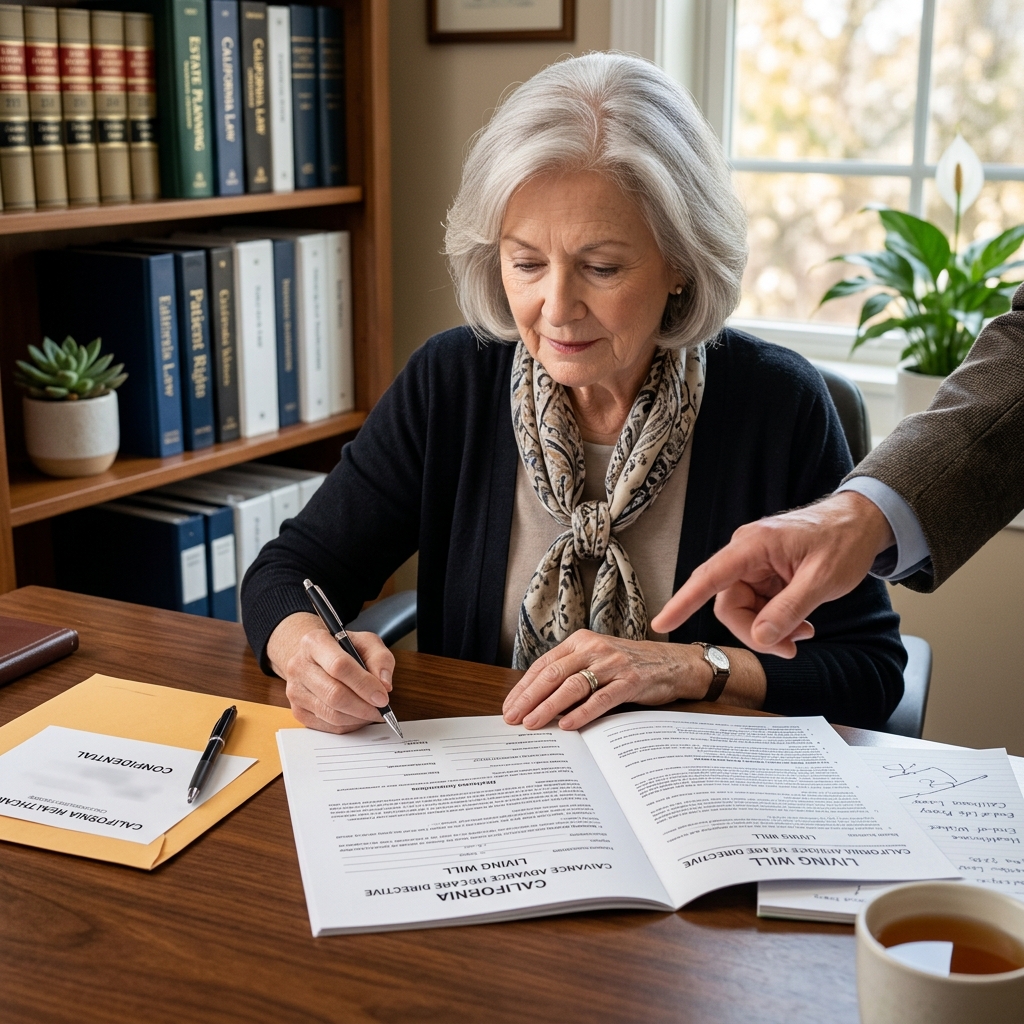
A California living will is a legal document that allows you to state your wishes about medical treatment if you become unable to communicate or make decisions for yourself. In California, these instructions are typically part of a broader advance health care directive, which can combine treatment preferences with the appointment of a health care decision-maker.
This guide explains how living wills operate under California law, the specific legal requirements for validity, how and when they can be revoked, what happens if a physician is unwilling to follow them, and how they are treated when you travel or move across state lines.
What a California Living Will Does — and Does Not Do
In California, a living will focuses exclusively on healthcare decisions if you are incapacitated. It is distinct from documents that deal with money or property.
Core Purpose of a Living Will
- Express medical preferences when you cannot speak for yourself, such as whether you want life-sustaining treatment.
- Guide physicians and hospitals in making decisions consistent with your values.
- Reduce conflict among family members by providing clear written instructions.
California law allows you to specify your wishes for situations such as terminal illness or permanent unconsciousness, so long as the document meets statutory requirements.
How It Differs from Other Planning Documents
| Document Type | Main Focus | Effective When | Typical Contents |
|---|---|---|---|
| Living Will / Advance Health Care Directive | Medical treatment and end-of-life decisions | While you are alive but unable to make or communicate decisions | Treatment preferences, life support decisions, pain relief instructions, appointment of a health care agent |
| Last Will and Testament | Distribution of assets and guardianship for minor children | After death | Beneficiaries for property, executor, guardians for children |
| Living Trust | Management of assets during life and after death | Immediately after creation, continues after death | Instructions for holding, managing, and distributing assets through a trustee |
A living will therefore addresses healthcare only; it does not transfer property, appoint an executor, or control your financial estate.
Legal Requirements for a Valid California Living Will
California law imposes specific conditions that must be met before a living will is considered legally effective. These rules help ensure that your instructions are voluntary, clear, and made when you are capable of understanding their consequences.
Eligibility to Make a Living Will
To create a valid living will in California, you must satisfy the following basic criteria:
- Age requirement: You must be at least 18 years old.
- Mental capacity: You must be of sound mind — meaning you understand the nature of the document and the decisions you are making.
- Voluntary action: The document must be signed voluntarily, without coercion.
Signature and Witness Rules
California law requires formal execution of a living will to make it valid.
- Signature by the declarant: The document must be signed by you (the declarant) or by someone signing at your direction if you are unable to sign yourself.
- Witnesses or notarization: Generally, you need two adult witnesses, or in many cases, a notary can be used as an alternative, depending on the form.
- Disinterested witnesses: Witnesses should not be people who are managing your care or substantially benefiting from your estate, and only limited relatives may serve as witnesses.
These rules are designed to reduce the risk of fraud or undue influence and to provide evidence that the document reflects your authentic choices.
Required Content and Form
California law does not demand perfect wording, but it does require that the living will contain information substantially similar to the statutory form. In practice, this means the document should:
- Clearly state that it is a declaration of your health care and end-of-life wishes.
- Indicate when it is intended to take effect, such as during a terminal condition certified by physicians.
- Describe the types of treatment you accept or refuse, such as life-sustaining procedures.
Using official or widely accepted forms, such as California’s advance health care directive template, helps ensure your document includes all required elements.
When a California Living Will Becomes Operative
Even after you sign a valid living will, it does not immediately control every medical decision. California law specifies conditions that must be met before the document becomes operative.
Triggering Conditions
Generally, a California living will takes effect when:
- You have been diagnosed with a terminal condition by two physicians who certify their findings in writing.
- You are unable to make or communicate informed decisions about your medical care.
Once these conditions are met and your attending physician is aware of the declaration, the living will guides treatment decisions consistent with its terms.
Limitations, Including Pregnancy
California law includes specific limits on when a living will can be applied. One key restriction is that the document is not effective while the patient is pregnant, meaning medical professionals must comply with other applicable legal and medical standards in that situation.
Revoking or Changing a Living Will in California
California allows substantial flexibility to change or cancel a living will, recognizing that your wishes and medical circumstances may evolve over time.
How Revocation Works
Under California law, a living will is revocable at any time, in any manner, regardless of your mental or physical condition. In practice, this means:
- You can revoke by destroying the document, signing a new one, or making a clear verbal statement of revocation.
- Your revocation is legally effective once it is communicated to your attending physician or healthcare provider.
While the law permits informal revocation, most attorneys and courts encourage written changes or replacement documents to reduce confusion.
Updating Your Living Will
Many people revisit their living will after major life events, such as marriage, divorce, the birth of a child, or significant changes in health status. When updating:
- Review your current medical preferences and values.
- Prepare a new document that clearly supersedes prior versions.
- Notify family members, your healthcare agent, and your physicians of the new directive and provide updated copies.
Recognition of Living Wills from Other States
California law addresses what happens if you created a living will while residing elsewhere and later receive care in California.
Interstate Validity
Generally, a living will that was executed in another state is valid in California if:
- It complies with the law of the state where it was executed, or
- It satisfies California’s own statutory requirements for a living will.
This recognition promotes continuity of care and respects decisions made while you lived or traveled in other jurisdictions.
Practical Considerations for Interstate Planning
If you frequently travel or have moved to California from another state, you may wish to:
- Review your existing living will with a California attorney to confirm compliance with local law.
- Consider executing a California-specific advance health care directive to avoid any uncertainty.
- Provide copies of your directives to California healthcare providers and inform your family of your current documents.
Physician Obligations and Legal Protections
California law balances your right to control medical treatment with practical considerations for healthcare providers. The statutes outline what happens when a physician is unwilling to follow a living will and what protections apply when they act in good faith.
If a Physician Is Unwilling to Follow the Living Will
Sometimes a physician may have ethical, professional, or personal objections to carrying out your directive. In such cases, California law requires the physician to:
- Take all reasonable steps as promptly as practicable to transfer you to another physician who is willing to comply with your living will.
- Ensure that your medical records and directive accompany you to the new provider.
This framework strives to respect both patient autonomy and provider conscience, while keeping your access to compliant care as seamless as possible.
Immunity for Physicians Acting in Good Faith
To encourage adherence to living wills, California law provides legal immunity to attending physicians who act in good faith pursuant to a valid declaration.
- Physicians are not subject to civil liability for damages when they follow a living will in good faith.
- They are shielded from criminal charges based solely on compliance with your directive.
- They are protected from professional disciplinary actions related to their good-faith adherence.
This immunity reassures medical professionals that following your documented wishes will not expose them to legal risk, provided they act within the bounds of the law and accepted medical standards.
Best Practices for Using a Living Will in California
Beyond legal technicalities, there are practical steps you can take to ensure your living will functions effectively when needed.
Drafting Clear Instructions
- Be specific about treatments you want or refuse, such as artificial ventilation, feeding tubes, or resuscitation measures.
- Include preferences about pain relief, comfort care, and quality-of-life considerations.
- Consider various scenarios, including sudden emergencies and long-term illness.
Communicating With Key People
- Discuss your living will with your chosen healthcare agent, family members, and close friends.
- Ensure your agent agrees to serve and understands your values and priorities.
- Provide copies of your directive to your primary physician, hospital, and anyone who may be involved in your care.
Keeping Documents Accessible
- Store the original directive in a safe but accessible place, not in a locked box that others cannot reach in an emergency.
- Give copies to your healthcare agent and close family, and inform them where the original is kept.
- Consider registering the directive with relevant agencies or services when available, so healthcare providers can access it quickly.
Frequently Asked Questions About California Living Wills
1. Is a living will the same as an advance health care directive?
In California, the term “advance health care directive” often refers to a document that combines living will provisions (treatment preferences) with the appointment of a health care agent. A living will is generally the portion that spells out your specific medical wishes.
2. Do I need a lawyer to create a California living will?
California law does not require you to hire an attorney to create a valid living will. However, legal guidance can be helpful if you have complex medical concerns, property planning issues, or questions about how the directive fits into your broader estate plan.
3. Can my family override my living will?
When a living will is valid and operative, healthcare providers are expected to follow your documented instructions, even if family members disagree. That said, open communication with family before a crisis can reduce conflict and make adherence to your wishes smoother.
4. What if my medical condition is not clearly covered in the document?
If your living will does not explicitly address a particular scenario, physicians and your healthcare agent will interpret your general preferences and values, together with standard medical practice, to make decisions on your behalf. This is why many forms encourage broad guidance about quality of life and acceptable levels of intervention.
5. Does a living will affect my property or financial affairs?
No. A living will deals exclusively with health care and end-of-life treatment decisions. To manage property or finances, you would need separate documents, such as a last will and testament, a living trust, or powers of attorney for finances.
6. How often should I review my living will?
Many advisors recommend reviewing your living will every few years or after major life changes, such as marriage, divorce, a new diagnosis, or moving to another state. Regular review ensures your directive reflects your current values and medical preferences.
References
- California Living Wills Laws — FindLaw. 2024-01-01. https://www.findlaw.com/state/california-law/california-living-wills-laws.html
- Do You Need a Living Will in California? — Vistas Law Group. 2023-09-15. https://vistaslawgroup.com/living-will/
- Wills, estates, and advance care planning — California Courts Self-Help Guide. 2023-06-01. https://selfhelp.courts.ca.gov/wills-estates-probate/legal-documents
- Guide to wills, estates, and probate court — California Courts Self-Help. 2022-11-10. https://selfhelp.courts.ca.gov/wills-estates-probate
- How Can a Living Will Ensure Your Medical Wishes Are Honored? — Kershner Law. 2023-05-20. https://kershnerlaw.com/resources/blog/how-can-a-living-will-ensure-your-medical-wishes-are-honored/
- Living Will vs. Last Will in California — Desert Law Group. 2022-08-01. https://desertlawgroup.com/blog/living-will-vs-will/
- Free California Living Will — Rocket Lawyer. 2023-03-10. https://www.rocketlawyer.com/family-and-personal/health-and-medical/healthcare-decisions/document/living-will/ca
Similar Articles








Read full bio of medha deb


