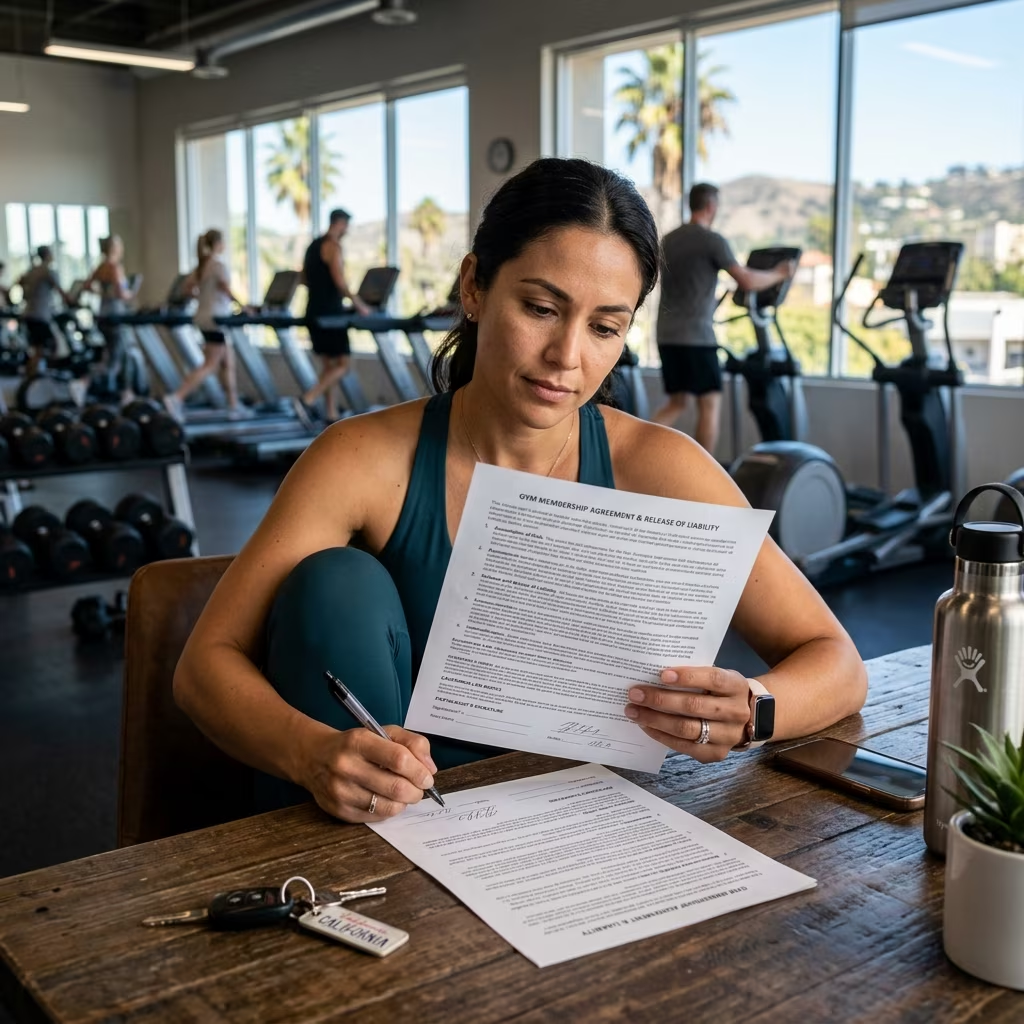
Joining a gym in California almost always begins with paperwork. Hidden within membership contracts and sign-up forms is usually a waiver of liability—a legal document where you agree not to sue the gym for certain types of injuries. Understanding what these waivers can and cannot do is essential for protecting your health, your finances, and your legal rights.
This guide explains how California law treats gym waivers, what the Health Studio Act requires, and when a waiver will fail in court. It is designed for consumers who want to get fit without getting burned by unfair or unenforceable contract terms.
Why Gyms Use Waivers and What They Are Trying to Prevent
Gyms and fitness studios operate in an environment where physical injury is possible: heavy weights, moving machines, high-intensity classes, and crowded spaces. To manage legal risk, they rely on release of liability waivers, sometimes called “assumption of risk” agreements.
- Primary purpose: Shift the financial risk of ordinary negligence away from the gym and onto the member.
- Common scenarios: Equipment malfunction, slips and falls, minor trainer mistakes, or injuries inherent in strenuous exercise.
- Business rationale: Help keep insurance costs manageable and reduce exposure to lawsuits that arise from typical fitness-related injuries.
California courts generally recognize these waivers as contracts and will enforce them as long as they meet specific legal requirements and do not conflict with public policy.
Ordinary Negligence vs. Gross Negligence: The Line That Waivers Cannot Cross
The key distinction in California law is between ordinary negligence and gross negligence. Gym waivers are often effective only up to that line.
| Type of Conduct | Definition (Simplified) | Can a Gym Waiver Release It? |
|---|---|---|
| Ordinary negligence | Failure to use reasonable care, simple mistakes or oversights in day-to-day operations. | Generally yes, if the waiver is clear and valid. |
| Gross negligence | Serious carelessness showing a reckless disregard for safety; much more than a minor error. | No, California courts will not enforce waivers of gross negligence. |
| Recklessness / Intentional acts | Deliberate or knowingly dangerous behaviors, or intentional harm. | No, waivers cannot excuse reckless or intentional wrongs. |
| Illegal acts / statutory violations | Conduct that violates state or federal law, or mandatory consumer protections. | No, contracts cannot override statutes or public policy. |
According to California case law and practice guidance, liability waivers may bar lawsuits arising from ordinary negligence but remain ineffective against claims involving gross negligence, recklessness, intentional torts, or unlawful behavior.
Core Legal Requirements for Enforceable Gym Waivers in California
Even when a waiver is aimed only at ordinary negligence, it must satisfy several criteria before a California court will treat it as enforceable. These requirements stem from general contract principles and specific rules governing releases.
1. Clarity and Unambiguity
A gym waiver must clearly state that the member is releasing the facility from liability for ordinary negligence and assuming the risk of injury. Courts demand that this language be:
- Clear: No confusing phrasing or hidden legal jargon; the intent to release negligence claims should be obvious.
- Unambiguous: Not open to multiple interpretations; the risks covered must be reasonably tied to the nature of the gym activities.
- Explicit: The document should expressly mention negligence and the types of claims being waived.
Courts generally reject vague waivers that simply ask participants to “assume all risk” without clearly explaining what rights they are relinquishing.
2. Conspicuous Presentation
The waiver language must be noticeable. If the release is buried in dense text or printed in tiny font within a lengthy membership agreement, a court may find that the terms were not reasonably disclosed.
- Use of headings such as “Liability Release” or “Waiver” helps make the clause stand out.
- Bold, capitalized, or otherwise highlighted text may signal to judges that the gym made a good-faith effort to draw attention to the waiver.
California law looks at whether the parties genuinely intended to allocate risk, and conspicuous formatting is part of that analysis.
3. Express Assumption of Risk
In the context of gym and recreational activities, California emphasizes an express assumption of risk. That means the member affirmatively acknowledges the dangers involved and consents to bear them.
An effective waiver typically includes language on:
- Potential injuries from equipment use, group classes, or physical exertion.
- Known and unknown risks associated with exercise, including the possibility of serious injury or death.
- The member’s agreement not to hold the gym responsible for such injuries arising from ordinary negligence.
4. Basic Contract Validity
Like any contract, a gym waiver can be invalidated if it is obtained through improper means or contains unfair terms. Under California law, a release may be set aside if:
- It violates a statute or regulatory requirement.
- The terms are unconscionable—so one-sided or harsh that they offend basic fairness.
- The member signed under duress, undue influence, or as a result of fraud or misrepresentation.
These general rules apply to gym waivers just as they do to other consumer contracts.
The Health Studio Act: Extra Protection in Gym Membership Contracts
Beyond common law principles, California’s Health Studio Services Contract Law regulates the business practices of health clubs and fitness studios. This statute sets minimum requirements for membership contracts and provides additional remedies when gyms fail to comply.
Key Consumer Protections Under the Health Studio Act
While the Act addresses many issues, some features are particularly relevant to waiver and contract enforceability:
- Right to cancel: Consumers generally have a cooling-off period to cancel newly signed health club contracts, with longer periods for higher-priced memberships.
- Opening date requirement: If a club has not opened within six months of signing, the consumer may cancel the contract.
- Disability or death: Contracts must allow cancellation if the member becomes disabled or dies, and prepaid amounts must be partially refunded.
- Relocation beyond 25 miles: Members who move more than 25 miles from the facility may cancel and receive appropriate refunds.
- Enhanced remedies: Injured consumers may be able to recover up to three times the amount of damages plus reasonable attorney’s fees when a health club violates the Act.
If a gym fails to include mandatory statutory language or ignores these rights, any waiver embedded in the contract may be vulnerable to challenge because courts are reluctant to enforce agreements that conflict with explicit consumer protection laws.
When a Gym Waiver May Be Invalid or Unenforceable
Even a carefully drafted waiver is not automatically ironclad. California courts look at the full context, including the gym’s behavior and compliance with public policy.
Situations Where Waivers Often Fail
- Grossly negligent operation: If the facility shows extreme disregard for safety—for example, ignoring known hazards or failing to maintain crucial equipment—courts are unlikely to honor the waiver.
- Violation of statutory duties: Breaches of the Health Studio Act or other statutes can render contract provisions, including waivers, ineffective.
- Hidden or confusing release language: If a member could not reasonably understand that they were surrendering the right to sue for ordinary negligence, the waiver may be void.
- Failure to provide copies or disclosures: Some statutory provisions require that consumers receive a copy of the contract; noncompliance may undermine the gym’s ability to prove informed consent.
Court decisions often emphasize whether enforcing the waiver would contradict California’s broader public policy of protecting consumers from unfair or dangerous business practices.
Practical Tips for California Gym Members
While most gym-goers are focused on workouts, taking a few minutes to review waiver and contract terms can significantly improve your legal position. Consider the following strategies before signing.
What to Look For in Your Gym Waiver
- Clear mention of negligence: Confirm whether the waiver explicitly states that you are releasing claims for ordinary negligence.
- Scope of covered activities: Check that the release relates to gym activities and not unrelated matters (such as data privacy or billing disputes).
- Duration of the waiver: Be aware if the waiver purports to last indefinitely or only during a specific program or membership term.
- Language on gross negligence or intentional acts: Understand that even if the waiver says it covers these, California law generally does not allow such releases.
Questions to Ask the Gym
- Can I receive a copy of the entire contract, including the waiver, before I sign and for my records afterward?
- What is your policy if a member is injured because equipment is not maintained properly?
- How do I cancel my contract, and what deadlines apply under California law?
- Do you follow the Health Studio Act requirements for cancellation due to relocation, disability, or death?
Documenting your questions and the gym’s answers—by email or written communication—can help clarify expectations and may become relevant if a dispute arises.
Special Considerations for Minors and Family Memberships
Gyms often serve entire families, and youth fitness programs are increasingly common. California law treats minors differently when it comes to signing waivers, and parents should pay attention to how releases are structured for children.
- Minors cannot bind themselves: Children generally cannot enter legally binding contracts on their own, including liability waivers; a parent or legal guardian must sign.
- Parent-signed waivers: In California, parents may sign releases on behalf of their children in some contexts, though enforceability can be fact-specific and may vary with the nature of the activity.
- Separate forms: Many gyms use dedicated minor consent and waiver forms detailing risks specific to youth programs.
Given the complexity of minor waivers, families who face serious injury in a gym setting often benefit from individualized legal advice to understand what rights remain available.
Frequently Asked Questions About California Gym Waivers
Can I still sue my gym if I signed a waiver?
In many situations, you can. California waivers generally cover only ordinary negligence. If your injury stems from gross negligence, recklessness, intentional misconduct, or violations of law, the waiver may not bar your claim.
Does the Health Studio Act make all unfair waivers invalid?
Not automatically. The Act focuses on specific contract requirements and cancellation rights. However, a gym’s failure to comply with the statute can support arguments that parts of the contract, including a waiver, are unenforceable and may open the door to enhanced remedies.
What if I never received a copy of my signed contract?
Certain California provisions require that consumers receive contract copies, especially in health club settings. If you were not given one, that fact may weaken the gym’s position and could form part of a challenge to the waiver or contract, particularly if the missing copy prevented you from exercising cancellation rights.
Are all injuries at the gym considered ordinary negligence?
No. Courts distinguish between ordinary and gross negligence based on the seriousness of the conduct and the level of disregard for safety. Routine mishaps may fall under ordinary negligence, while systemic failures, ignored warnings, or extremely hazardous practices can cross into gross negligence.
Do I need a lawyer if I am injured but signed a waiver?
Consulting an attorney is often advisable. Because enforceability turns on details—contract language, the nature of the injury, statutory compliance—a lawyer familiar with California personal injury and consumer law can evaluate whether the waiver blocks your claim or leaves meaningful avenues for recovery open.
Balancing Fitness Goals with Legal Awareness
California law does not aim to shut down gym use; rather, it tries to balance the reality of inherent exercise risks with consumer protection. Understanding how waivers work allows you to:
- Recognize which rights you are being asked to surrender.
- Identify contract terms that conflict with public policy or statutory requirements.
- Make informed decisions when comparing gym memberships and their legal protections.
- Respond effectively if a serious injury or dispute arises.
By reading your waiver carefully, asking questions, and knowing that releases cannot excuse gross negligence or illegal conduct, you can pursue your fitness goals with greater confidence and legal awareness.
References
- California “Release of Liability” Waiver – Enforceable? — Shouse Law Group. 2023-05-10. https://www.shouselaw.com/ca/personal-injury/liability-waiver/
- Suing A Gym When You’ve Signed A Waiver — McCune Law Group. 2016-10-12. https://mccunelawgroup.com/blog/2016/10/suing-a-gym-when-youve-signed-a-waiver/
- Enforceability Law for Release of Liability Waivers for Your California Gym — LenzVU. 2022-04-01. https://www.lenzvu.com/enforceability-law-for-release-of-liability-waivers-for-your-california-gym/
- Overview of California’s Health Studio Services Contract Law — California Department of Consumer Affairs. 2015-07-01. https://www.dca.ca.gov/publications/legal_guides/w_10.shtml
- Create Bulletproof Liability Waivers for California Trainers & Gyms — Spencer Law. 2021-09-15. https://spencerks.com/waiver