
Understanding California Conservatorships
Learn how California conservatorship laws work, who they protect, and what families should know before turning to the courts for help.
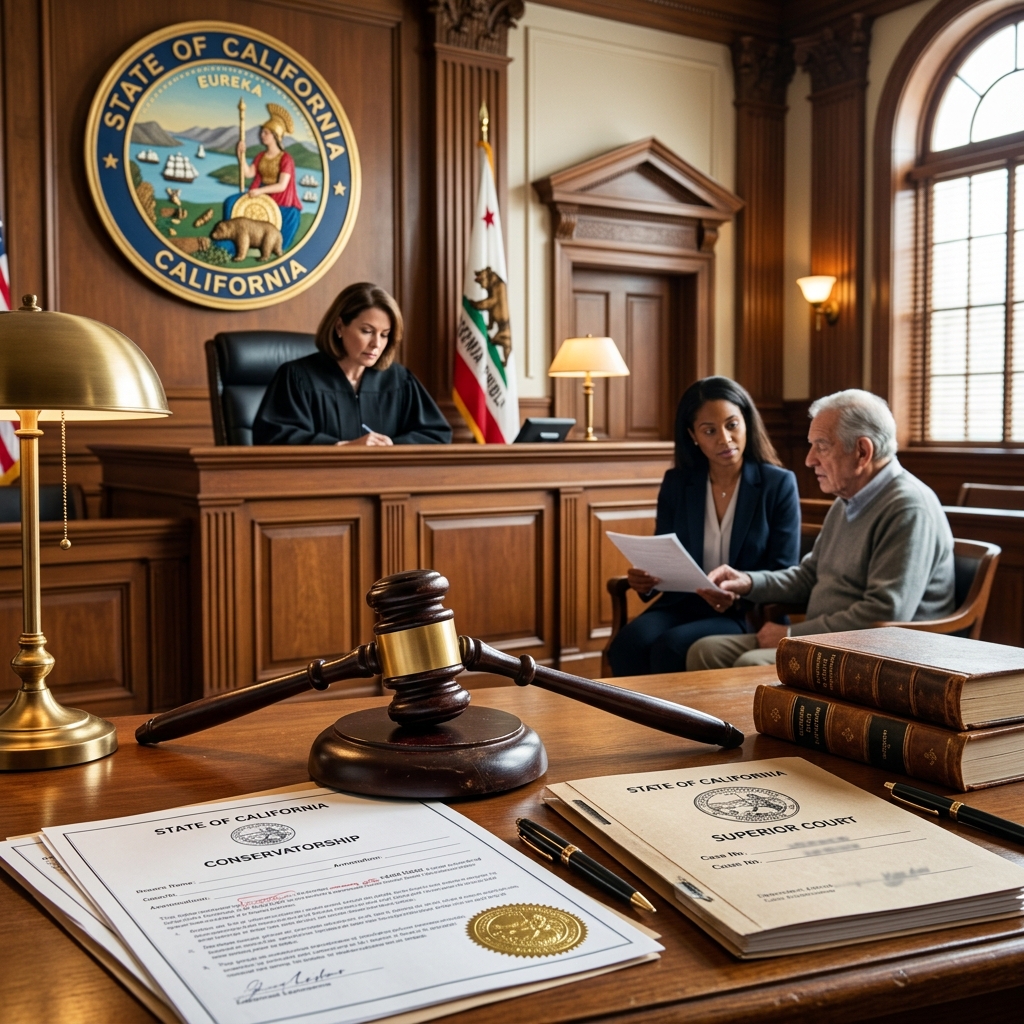
California conservatorship law is designed to protect adults who can no longer manage critical parts of their lives on their own, while still honoring their autonomy as much as possible. At its core, a conservatorship is a court-supervised relationship where a judge appoints a responsible adult or organization to make decisions for someone who lacks sufficient capacity to do so safely.
This guide explains how conservatorships work in California, who may need one, the different types available, what the court looks for, and what families should consider before asking the court to step in.
Key Concepts: Conservator, Conservatee, and Capacity
California law uses specific terms in conservatorship cases:
- Conservatee: The adult who needs help because they cannot reliably provide for their basic needs or manage finances.
- Conservator: The person or entity appointed by the court to make decisions for the conservatee.
- Capacity: The legal ability to understand information and make informed decisions about one’s own life, health, and property.
A judge can appoint a conservator only when evidence shows that the adult is substantially unable to provide for their personal needs or manage their financial affairs, and when less restrictive options will not work.
When a Conservatorship May Be Necessary
Conservatorships are intended as a last resort. They are typically considered when an adult:
- Has significant cognitive or mental impairment and cannot reliably make decisions about medical care, housing, or safety.
- Is unable to manage money, pay bills, or protect assets from exploitation.
- Is at serious risk of harm, neglect, financial abuse, or homelessness without court intervention.
Adults who may require a conservatorship include:
- Older adults with advanced dementia or other neurocognitive disorders.
- Adults with serious mental illnesses that significantly affect judgment and functioning.
- Individuals with developmental disabilities who need ongoing support in adulthood.
- Adults with catastrophic brain injuries or illnesses that dramatically reduce decision-making ability.
Before granting a conservatorship, the court evaluates whether less restrictive arrangements—such as powers of attorney, supported decision-making, or representative payees—could adequately protect the person.
Types of Conservatorships in California
California law recognizes several conservatorship structures, depending on the needs of the adult and the source of the court’s authority.
Conservatorship of the Person
A conservatorship of the person focuses on personal and medical decisions. The conservator may be responsible for:
- Arranging appropriate housing and daily care.
- Ensuring access to food, clothing, and hygiene.
- Authorizing medical treatment and coordinating with health providers.
- Promoting social interaction and overall well-being.
The conservator of the person does not automatically control money or property; that is handled through a separate conservatorship of the estate.
Conservatorship of the Estate
A conservatorship of the estate addresses financial and property management. The conservator may be required to:
- Collect income from wages, benefits, rental properties, or investments.
- Pay bills, taxes, and debts.
- Manage bank accounts, real estate, and other assets.
- Prepare formal accountings for the court on a regular schedule.
Because the conservator of the estate has power over money and property, California courts require detailed reporting and often a bond (a type of insurance) to protect the conservatee’s estate from mismanagement.
General vs. Limited Conservatorship
Within probate conservatorships, California distinguishes between general and limited conservatorships.
| Type | Who It Serves | Scope of Powers |
|---|---|---|
| General conservatorship | Impaired adults, often older adults with significant cognitive or physical limitations. | Broad authority over personal and/or financial decisions, depending on what the court grants. |
| Limited conservatorship | Adults with developmental disabilities, as defined under California law. | Narrowly tailored powers, limited to those areas where the person truly needs help, to promote independence. |
A limited conservatorship is meant to preserve as much autonomy as possible for an adult with developmental disabilities while still providing necessary support and protection.
LPS Conservatorships (Mental Health)
Separate from probate conservatorships, California has Lanterman-Petris-Short (LPS) conservatorships for adults with serious mental illness who need involuntary treatment and cannot or will not accept voluntary care. These conservatorships are requested through the mental health system, not the probate court, and involve additional due process protections because they may restrict liberty more significantly.
Who Can Serve as Conservator
California law sets out a priority list for who may serve as conservator when a conservatorship is necessary. The court typically considers:
- Spouse or registered domestic partner.
- Adult children.
- Parents.
- Siblings.
- Other appropriate relatives or trusted individuals.
- The county public guardian, when no suitable private conservator is available.
The judge’s ultimate obligation is to appoint the person or entity that will best serve the conservatee’s interests, even if that differs from the priority list, provided the law allows it.
Starting a Conservatorship Case: Key Steps
Conservatorship proceedings take place in the California Superior Court, usually in the probate division. While local rules vary by county, the process typically includes the following elements.
1. Preparing and Filing the Petition
The process begins when a person—often a relative—files a formal petition for appointment of conservator with the probate court. The petition generally must include:
- Basic information about the proposed conservatee and proposed conservator.
- A description of the person’s impairments and why a conservatorship is needed.
- The specific powers the petitioner is asking the court to grant.
- Financial information if a conservatorship of the estate is requested.
Several standardized forms are used statewide, and additional local forms may be required. In complex or contested cases, supporting medical reports and declarations are often submitted to document the proposed conservatee’s limitations.
2. Notice and Service Requirements
Due process is a central feature of conservatorship law. California requires that the proposed conservatee and certain relatives receive formal notice of the hearing. Key elements include:
- Personal service on the proposed conservatee at least 15 days before the hearing.
- Mailed notice to close family members such as spouse or partner, parents, children, and siblings.
- Proof of service filed with the court to show that notice requirements were met.
The proposed conservatee has the right to attend the hearing, object to the conservatorship, and be represented by an attorney.
3. Court Investigation
Before granting a permanent conservatorship, California law requires an investigation by a neutral court investigator in most probate cases. The investigator generally:
- Interviews the proposed conservatee, proposed conservator, and sometimes relatives or caregivers.
- Reviews medical and financial information as appropriate.
- Evaluates whether less restrictive alternatives are available.
- Submits a written report and recommendation to the judge.
This step helps the court confirm that a conservatorship is necessary and that the proposed arrangement protects the conservatee’s rights and welfare.
4. The Court Hearing
At the conservatorship hearing, the judge reviews the petition, the court investigator’s report, and any objections or competing petitions. The judge may:
- Grant or deny the conservatorship.
- Limit the proposed powers or structure them differently.
- Appoint a different conservator than the one requested.
- Assign an attorney to represent the proposed conservatee if needed.
If the court approves the conservatorship, it issues an order and formal letters of conservatorship, which document the conservator’s authority.
Duties and Responsibilities of a Conservator
Once appointed, a conservator must act in the best interests of the conservatee and follow California law, court orders, and local rules. The scope of duties depends on the type of conservatorship.
For Conservators of the Person
Conservators of the person generally must:
- Ensure the conservatee has safe, appropriate housing.
- Arrange for food, clothing, hygiene, and personal care.
- Coordinate medical care, including making health decisions consistent with the conservatee’s wishes and values when known.
- Encourage independence and self-reliance to the greatest extent possible.
- Report changes in condition to the court as required.
For Conservators of the Estate
Conservators of the estate have additional, more formal obligations:
- Prepare an Inventory and Appraisal listing all assets of the estate, usually within 90 days of appointment.
- Keep estate funds in separate, properly titled accounts.
- Maintain accurate records of all income and expenditures.
- File periodic accountings (often after the first year and at least every two years thereafter) for court review.
- Obtain court approval for certain transactions, especially involving real property or large expenditures.
Misuse of estate funds or failure to comply with reporting requirements can result in removal as conservator, personal liability, or other sanctions.
Rights of the Conservatee
Even under a conservatorship, conservatees retain important rights. California law emphasizes that conservatorships should be no more restrictive than necessary, and that the conservatee’s preferences should be respected whenever reasonable.
Key rights typically include:
- The right to receive notice of the conservatorship proceedings and attend the hearing.
- The right to an attorney, including court-appointed counsel in many cases.
- The right to be treated with respect and to participate in decisions about their life to the extent possible.
- The right to request a change of conservator or termination of the conservatorship.
- The right to be visited and maintain social connections, unless limited by the court.
Courts and investigators periodically review whether the conservatorship continues to be necessary, and conservatees can raise concerns about the conservator’s actions during these reviews.
Court Oversight and Monitoring
Because conservatorships involve significant power over a vulnerable person’s life and assets, California courts maintain ongoing oversight.
Typical monitoring tools include:
- Periodic court investigator visits, especially after appointment and at intervals set by local rules, to check on the conservatee and report back to the court.
- Regular financial accountings by conservators of the estate, subject to judicial review and approval.
- Bonds for conservators of the estate, which can provide financial recovery if funds are mismanaged.
- Hearings to address complaints, requests to change conservators, or petitions to end the conservatorship.
The court can modify the conservator’s powers, remove the conservator, appoint a new one, or terminate the conservatorship if circumstances change.
Alternatives to Conservatorship
Because conservatorships limit a person’s rights, courts expect petitioners to consider and, when possible, use less restrictive alternatives first. Depending on the situation, some alternatives may include:
- Durable powers of attorney for finances or health care, signed while the person still has capacity.
- Advance health care directives to specify medical wishes and appoint a health care agent.
- Representative payees for managing government benefits such as Social Security.
- Joint bank accounts or trusted bill-pay arrangements, with appropriate safeguards.
- Supported decision-making, where the person retains legal authority but receives structured help understanding and evaluating choices.
These options are not appropriate for every situation, but when they provide adequate protection they may avoid the need for court intervention.
Practical Tips for Families Considering Conservatorship
Families often face conservatorship decisions under stress. The following practical considerations can help guide the process:
- Document the need: Keep records of unpaid bills, unsafe incidents, medical diagnoses, and failed informal arrangements.
- Talk to the person: When possible, include the adult in discussions and explain why a conservatorship is being considered.
- Compare alternatives: Review less restrictive tools with a legal or social services professional before filing.
- Understand the time frame: Court investigations and hearings can take weeks or months; urgent situations may justify temporary conservatorships.
- Seek legal advice: Conservatorship laws and local rules are complex; consulting with an attorney or legal aid organization is often helpful.
Frequently Asked Questions About California Conservatorships
Does the court always grant a conservatorship if I file a petition?
No. The judge will only grant a conservatorship if the legal standards are met and less restrictive alternatives are inadequate. If there is not enough evidence, or if other arrangements could protect the person, the court may deny the petition or suggest different solutions.
Can the proposed conservatee object to the conservatorship?
Yes. The proposed conservatee has the right to object, attend the hearing, and have an attorney. The court must consider their views, even if it ultimately decides that a conservatorship is still necessary for safety and well-being.
How long does a conservatorship last?
Most probate conservatorships are open-ended but remain in place only as long as they are needed. The court can terminate a conservatorship if the conservatee regains capacity, if less restrictive options become available, or if the arrangement no longer serves the person’s best interests.
What if I suspect a conservator is abusing their authority?
Concerns about a conservator’s conduct can be reported to the court, to the court investigator, or, in serious cases, to law enforcement or adult protective services. The court can order an investigation, require additional accountings, modify powers, or remove and replace the conservator.
Is a lawyer required to start a conservatorship in California?
Some individuals file conservatorship petitions without an attorney using court self-help resources, but the process is complex and consequences are significant. Consulting with a qualified attorney or legal aid program is highly recommended, especially in contested or high-asset cases.
References
- Conservatorships — Judicial Council of California, Self-Help Guide. 2023-05-01. https://selfhelp.courts.ca.gov/conservatorships
- Conservatorships of Adults — Superior Court of California, County of San Francisco. 2022-08-10. https://sf.courts.ca.gov/divisions/probate-court/conservatorships-adults
- California Conservatorship Facts — CaliforniaConservatorshipFacts.com. 2021-11-15. https://californiaconservatorshipfacts.com/
- Conservatorship — Disability Rights California. 2022-06-30. https://www.disabilityrightsca.org/resources/conservatorship
- Conservatorship/Guardian — California State University, Los Angeles. 2020-09-01. https://www.calstatela.edu/coe/cats/conservatorship/guardian
- Conservatorship — Superior Court of California, County of Orange. 2023-02-14. https://www.occourts.org/self-help/self-help-probate/conservatorship
- Conservatorship in California: Types, Process & Costs — Lawvex. 2026-01-05. https://lawvex.com/conservatorship-california-guide/
Similar Articles








Read full bio of medha deb


