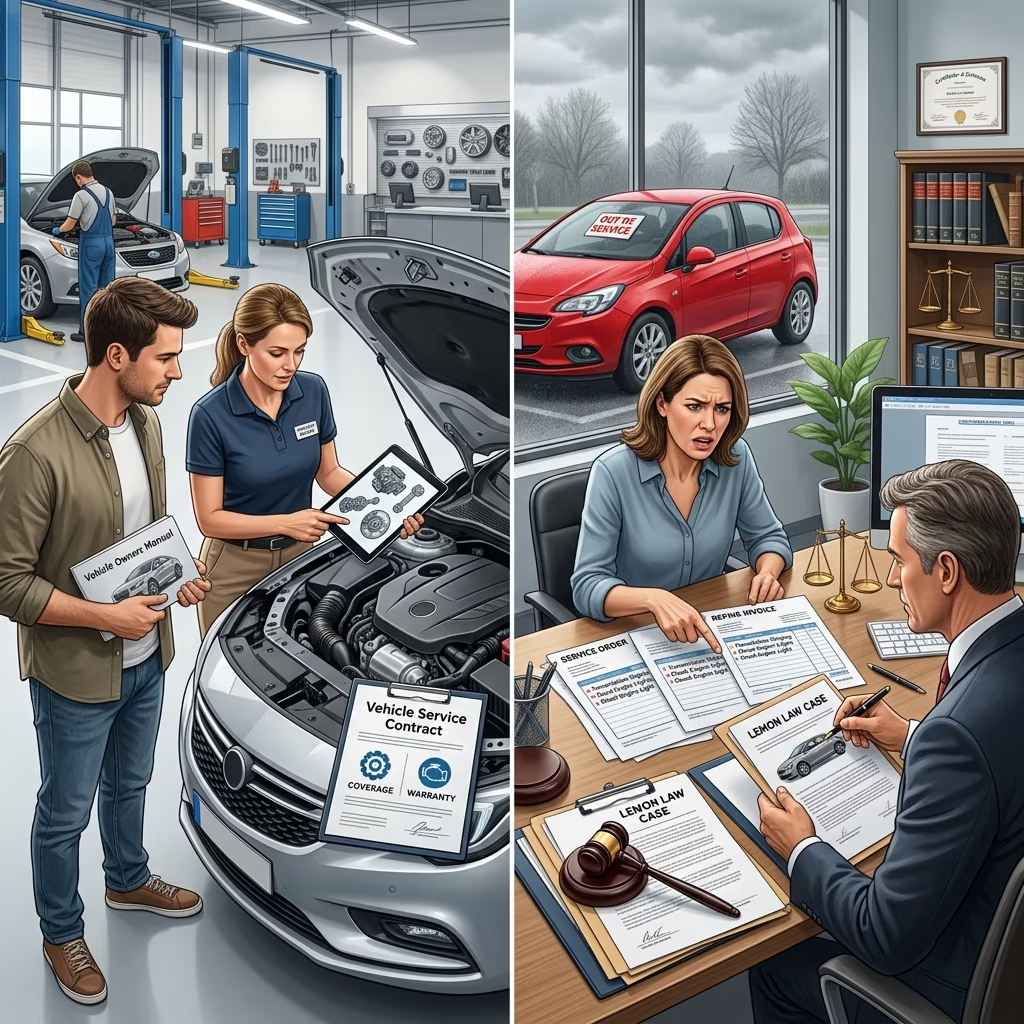
Buying or leasing a vehicle is a major investment, and most consumers rely on warranties and lemon law protections to ensure they are not stuck with a defective car. This guide explains the major types of automobile warranties, how state and federal laws protect you, and what practical steps you can take if your vehicle turns out to be a “lemon.”
1. Why Warranties Matter When You Buy a Vehicle
A warranty is a legally enforceable promise about the condition and performance of a product. When you purchase or lease a vehicle, warranties define what the manufacturer or dealer must do if the car has defects, including repair, replacement, or refund in some situations.
Understanding these protections is crucial because:
- It determines who pays for repairs and for how long.
- It affects your ability to demand a refund or replacement if the vehicle is defective.
- It can influence financing, resale value, and long‑term ownership costs.
2. Key Types of Auto Warranties
Automobile warranty coverage generally falls into several main categories. Each type provides different protections and may be governed both by contract law and specific consumer protection statutes.
2.1 Express Written Warranties
An express warranty is a clear, written promise about the condition or performance of the vehicle, typically included in the purchase or lease paperwork.
- New car manufacturer warranty – Covers defects in materials or workmanship for a fixed time or mileage (for example, 3 years/36,000 miles).
- Powertrain warranty – Focuses on the engine, transmission, and drivetrain components for a longer period than the basic warranty.
- Dealer warranty for used cars – In some states, dealers must provide a written warranty on used vehicles sold by them, specifying covered parts and duration.
These warranties typically promise that the manufacturer or dealer will repair covered defects at no cost during the warranty period.
2.2 Implied Warranties Under State Law
Most states recognize implied warranties, which arise automatically when a product is sold, even if no written warranty is provided.
- Implied warranty of merchantability – The vehicle must be fit for ordinary driving and reasonably safe.
- Implied warranty of fitness for a particular purpose – Applies when a seller recommends a vehicle for a specific use and the buyer relies on that advice.
However, implied warranties can sometimes be limited or disclaimed (for example, in “as‑is” sales), subject to federal and state law requirements.
2.3 Extended and Service Contract Warranties
Dealers and third‑party companies often sell extended warranties or service contracts that provide additional coverage beyond the manufacturer’s warranty.
- They may cover specific components, like electronics or advanced safety systems.
- They often include deductibles, exclusions, and requirements to use particular repair facilities.
- They are typically regulated by state insurance or consumer protection agencies, and must clearly disclose terms in writing.
Consumers should read these contracts carefully to understand what is covered and whether the additional cost is justified.
3. Federal Protection: The Magnuson-Moss Warranty Act
The Magnuson‑Moss Warranty Act is a key federal law governing consumer product warranties, including many vehicles.
3.1 Scope of the Magnuson-Moss Act
This law applies to written warranties on consumer goods used for personal or household purposes with a retail price of at least $15.
For vehicle owners, its importance lies in several requirements:
- Warranty terms must be presented clearly and in easily understandable language.
- Manufacturers must label warranties as either “full” or “limited,” with specific legal consequences.
- Restrictions on disclaiming implied warranties when a written warranty is provided.
3.2 Rights and Remedies Under Magnuson-Moss
Under the Magnuson‑Moss Act, consumers can bring legal claims if a warrantor fails to honor the warranty. Courts may award damages, and the Act allows successful consumers to recover attorney’s fees, which makes it easier to pursue smaller claims.
In practical terms, if a vehicle under warranty cannot be repaired after a reasonable number of attempts, federal law can support claims for:
- Repair costs and consequential damages.
- Refunds or value adjustments when defects reduce the vehicle’s worth.
- Payment of attorney’s fees in many successful cases.
4. State Lemon Laws: Extra Protection for Defective Vehicles
Separate from warranty law, every U.S. state has some form of lemon law that protects consumers who purchase or lease seriously defective vehicles.
4.1 What Is a “Lemon” Vehicle?
Although definitions vary by state, a vehicle is generally considered a lemon if:
- It has substantial defects that impair use, value, or safety.
- The defects arise within a specified time or mileage period after delivery.
- The manufacturer or dealer cannot repair the defect after a reasonable number of attempts.
4.2 Typical Lemon Law Remedies
When a vehicle meets the criteria, state lemon laws often require the manufacturer to:
- Replace the vehicle with a comparable new one.
- Refund the purchase price, sometimes with allowances for mileage or usage.
- Cover incidental and consequential damages, such as towing or rental car costs, in some states.
These remedies go beyond simple repair and may apply whether the vehicle was purchased or leased.
4.3 Example: Time and Mileage Limits
| State Example | Lemon Law Rights Period | Key Condition |
|---|---|---|
| Florida | First 24 months after delivery. | Defects must substantially impair use, value, or safety. |
| New York (new cars) | Earlier of 2 years or 18,000 miles from original delivery. | Vehicle must not conform to written warranty and cannot be repaired after reasonable attempts. |
| Virginia | 18 months from original delivery. | Rights enforced through private action by the consumer. |
4.4 Reasonable Number of Repair Attempts
Many lemon laws define what counts as a “reasonable” number of repair attempts. A common pattern is:
- Three or four unsuccessful attempts to fix the same defect; or
- A cumulative number of days out of service for repairs (for example, 30 days or more).
Some laws add presumptions: if these thresholds are met, the law presumes that the manufacturer has had enough opportunity to repair the vehicle.
5. Protections for Used Car Buyers
Used cars can also be subject to warranty and lemon law protections, but coverage is more complex and varies heavily by state.
5.1 Used Car Lemon Laws
Several states, such as New York, have specific used car lemon laws requiring dealers to provide a written warranty on qualifying vehicles.
- Coverage often depends on the mileage at purchase.
- Warranty periods may decrease as mileage increases.
- If the dealer cannot repair a covered defect after reasonable attempts, the buyer may be entitled to a refund.
5.2 Federal Coverage for Used Cars Under Manufacturer Warranty
Even where state lemon law protections do not extend to used cars, the Magnuson‑Moss Warranty Act can still apply if the vehicle remains under the original manufacturer’s warranty.
In that situation:
- Repeated failures to repair covered defects may lead to claims for compensation equal to the loss in value caused by the defects.
- Attorney’s fees may be recoverable in successful federal warranty cases.
5.3 “As‑Is” Used Car Sales
If a used car is sold strictly “as‑is,” meaning with no warranty, both state lemon law and federal warranty protections may be limited or unavailable. However, separate legal remedies based on fraud or deceptive practices may exist if the seller misrepresented the vehicle’s condition.
6. Special Rules for Leased Vehicles
Leased vehicles often receive similar protections to purchased vehicles, but the rights and remedies may be shared among the consumer, the leasing company, and the manufacturer.
- Many state lemon laws explicitly cover leased vehicles when used primarily for personal purposes.
- In some jurisdictions, leasing consumers may receive refunds of sums paid under the lease along with incidental and consequential damages.
- The lessor (leasing company) may also recover from the manufacturer when a vehicle is legally determined to be a lemon.
If you lease, carefully review the lease agreement and your state’s lemon law to understand how refunds or replacements are handled and how payments are adjusted.
7. Practical Steps If Your Vehicle Has Serious Defects
When a vehicle begins to show persistent problems, acting systematically is important for preserving your rights under warranty and lemon law protections.
7.1 Document Everything
- Keep copies of all repair orders, invoices, and correspondence with the dealer or manufacturer.
- Note dates, mileage, and descriptions of each defect and repair attempt.
- Maintain records of related costs, such as towing or rental cars, which may be recoverable.
7.2 Follow Notice Requirements
Many lemon laws require you to notify the manufacturer in writing after a certain number of repair attempts so they have a final opportunity to fix the vehicle.
- Use certified, registered, or express mail as specified in your state’s law.
- Send the notice to the manufacturer, not just the dealer.
- Keep proof of delivery and a copy of your letter.
7.3 Use Arbitration or State Programs When Required
Some states require consumers to attempt arbitration before going to court. For example, Florida directs consumers to manufacturer‑sponsored or state‑certified arbitration programs before claims reach the state’s motor vehicle arbitration board.
- Check whether your manufacturer has a state‑certified arbitration program and follow its filing rules.
- If the program fails to issue a timely decision or you disagree with the result, you may proceed to a state‑administered arbitration board or court.
7.4 Consider Legal Advice
Because lemon laws and warranty rules differ by state, speaking with an attorney experienced in consumer protection can help you understand the best strategy. Some state attorney general offices provide guidance or referral services for private lawyers.
8. Common Misunderstandings About Warranties and Lemon Laws
Consumers frequently hold mistaken assumptions that can weaken their position. Clarifying these issues helps avoid costly errors.
- Misconception: Any defect makes the car a lemon.
In reality, the defect must substantially impair use, value, or safety, and arise within the specified rights period. - Misconception: Lemon laws apply to all vehicles, including heavy commercial trucks.
Many states limit lemon law coverage to vehicles below a certain weight and primarily used for personal purposes. - Misconception: You can skip written notice requirements.
Failing to send required written notices to the manufacturer can delay or jeopardize lemon law claims in some states. - Misconception: “As‑is” means you have no rights at all.
While warranty protections may be limited, separate remedies based on fraud or deceptive practices can still be available.
9. FAQ: Auto Warranties and Lemon Law Protections
9.1 Does every state have a lemon law?
Yes. All U.S. states have some form of lemon law addressing defective vehicles, though details vary widely in terms of covered vehicles, deadlines, and remedies.
9.2 Do lemon laws apply to used cars?
In some states, yes. States like New York provide specific used car lemon law protections that require dealers to give a written warranty and provide refunds when defects cannot be repaired within a reasonable number of attempts. In other states, used cars may rely more on federal warranty law or general consumer protection statutes.
9.3 What if my car is in the shop constantly but the dealer says it is “normal”?
If repeated repairs fail to fix substantial defects that impair use, value, or safety, you may have claims under both warranty law and your state’s lemon law, especially if repair attempts reach the thresholds your state considers “reasonable.”
9.4 Can I get my money back for a leased lemon vehicle?
Often, yes. Many state lemon laws include leased vehicles and may entitle leasing consumers to refunds of lease payments and related damages when a vehicle meets the legal definition of a lemon.
9.5 Do I need a lawyer to use lemon law protections?
Not always. Some consumers resolve disputes through arbitration or state programs without legal representation. However, because lemon law requirements can be technical and manufacturers may contest claims, consulting a lawyer knowledgeable in consumer protection can improve your chances of a favorable outcome.
References
- Lemon Law for Consumers — Justia. 2023-05-01. https://www.justia.com/consumer/deceptive-practices-and-fraud/lemon-law/
- North Carolina Lemon Law Rights Consumer Guide — North Carolina Attorney General. 2022-07-15. https://www.carlemon.com/north-carolina-lemon-law-rights-consumer-guide.html
- How the Florida Lemon Law Works — Office of the Attorney General, Florida. 2023-04-10. https://www.myfloridalegal.com/lemon-law/how-the-florida-lemon-law-works
- New York’s Lemon Laws — Office of the New York State Attorney General. 2022-09-01. https://ag.ny.gov/publications/new-yorks-lemon-laws
- Lemon Laws: State Guide — FindLaw. 2021-11-20. https://www.findlaw.com/consumer/lemon-law/lemon-laws-state-specific-information.html
- Lemon Law — Office of the Attorney General, Virginia. 2022-06-30. http://www.oag.state.va.us/consumer-protection/index.php/file-a-complaint?view=article&id=158:lemon-law&catid=15
- Lemon Laws for Used Cars — Law Offices of John T. Orcutt. 2021-08-12. https://www.filenclemonlaw.com/lemon-law-overview/lemon-law-for-used-cars/