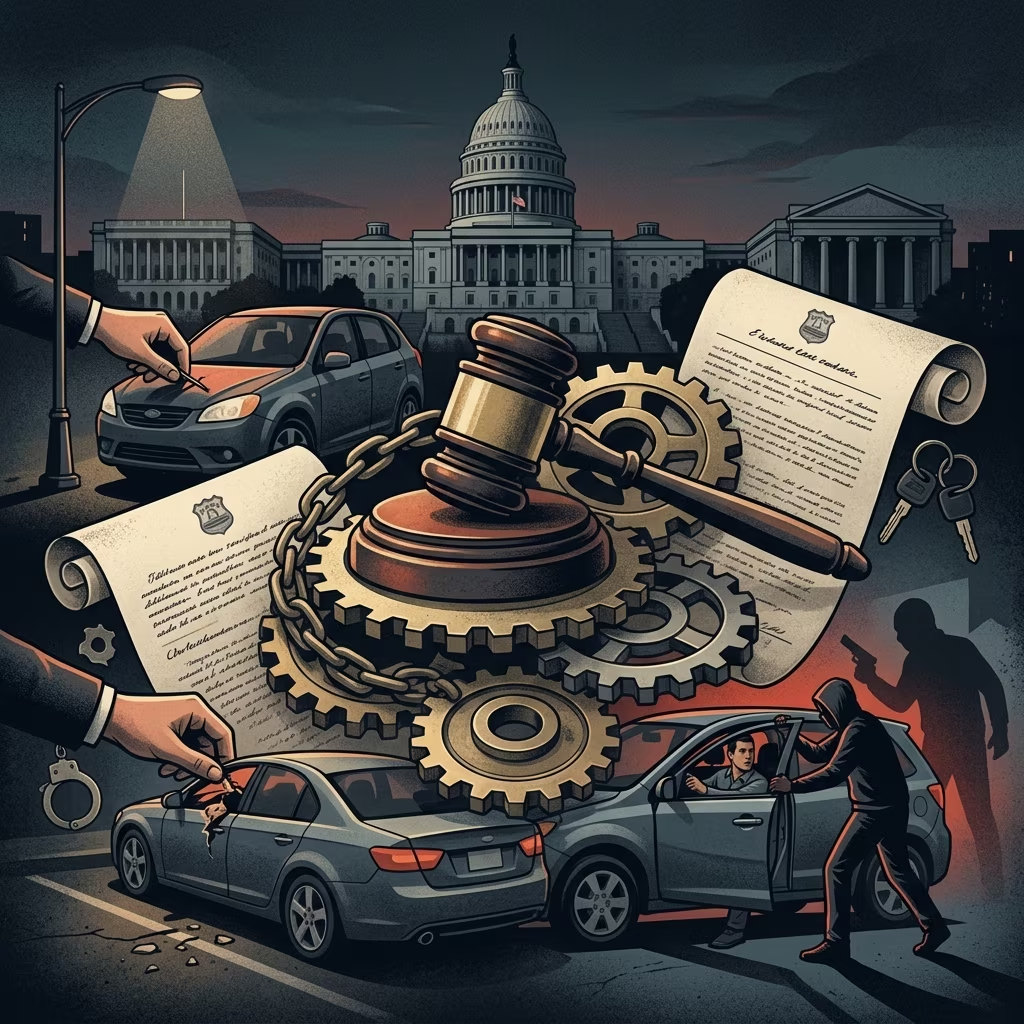
Motor vehicle crime is treated very seriously in Washington, D.C., and the law draws clear distinctions between simply taking a vehicle without permission, forcibly stealing a vehicle from its driver, and committing that act while armed with a weapon. For anyone who owns, drives, rents, or lends vehicles in the District, knowing these rules is essential to both staying safe and avoiding criminal liability.
This guide explains how D.C. law defines unauthorized use of a motor vehicle (often called auto theft), carjacking, and armed carjacking, what penalties apply, what defenses may be available, and how you can help protect yourself and your vehicle.
1. The Legal Landscape of Auto Theft in Washington, D.C.
Auto-related crime in D.C. is governed primarily by Title 22 of the D.C. Code, which covers criminal offenses and penalties. Within that title, specific sections address theft-related offenses and the unlawful use or taking of motor vehicles. In practice, many cases that people describe as “car theft” are prosecuted under the offense known as unauthorized use of a motor vehicle, rather than under general theft statutes.
- General theft laws (first and second degree theft) focus on taking property of any kind, including vehicles, based on value.
- Unauthorized use of a motor vehicle targets the specific act of taking, using, or failing to return a vehicle without the owner’s consent, even if the person does not intend to permanently keep it.
- Carjacking and armed carjacking deal with violent vehicle theft directly from a person through force, intimidation, or weapons.
The choice of charge—general theft versus unauthorized use or carjacking—depends heavily on how the vehicle was obtained, the circumstances of the incident, and the accused person’s intent.
2. Unauthorized Use of a Motor Vehicle (Auto Theft)
2.1 Basic Definition
Under D.C. Code § 22‑3215, a person commits unauthorized use of a motor vehicle when they take, use, or operate a motor vehicle without the owner’s consent for their own profit, use, or purpose. This can include causing someone else to take or operate the vehicle on their behalf.
Unlike classic theft, unauthorized use does not necessarily require proof that the person intended to permanently deprive the owner of the vehicle. The focus is on operating or using the vehicle in a way the owner did not authorize.
2.2 Rental and Leasing Situations
D.C. law also covers situations where a vehicle is obtained lawfully at first—such as by renting or leasing—but the person later fails to return it according to the written agreement.
- The agreement must specify a time and place for return.
- The owner or rental company must make a written demand for the vehicle’s return.
- If the person knowingly fails to return the vehicle within 18 days after that written demand, and the legal conditions are met, that failure can qualify as unauthorized use.
This provision is designed to address so-called “long-term taking” of rental vehicles, which can resemble theft even though the vehicle was initially obtained with consent.
2.3 Penalties for Unauthorized Use
The penalties for unauthorized use of a motor vehicle depend on how the offense is committed and whether the person has prior convictions.
| Unauthorized Use Scenario | Maximum Imprisonment | Possible Fine |
|---|---|---|
| Basic unauthorized use (taking/using without consent) | Up to 5 years | Up to the general felony fine limit (often cited around $12,500) |
| Unauthorized use with two or more prior theft/auto use convictions | 30 months to 15 years | $5,000 minimum up to the general felony fine limit |
| Failure to return a rented vehicle after written demand | Up to 3 years | Up to the general felony fine limit |
Courts also consider factors such as the defendant’s criminal history, whether anyone was injured, and whether other crimes (like fraud or property damage) occurred at the same time.
3. Carjacking and Armed Carjacking
3.1 What Counts as Carjacking?
Carjacking is a distinct crime in D.C. that involves taking immediate possession of a motor vehicle from a person by using force or intimidation. The law covers several forms of wrongful conduct:
- Using physical force to remove a driver or passenger from a vehicle.
- Threatening or frightening someone to make them surrender the vehicle.
- Acting stealthily or aggressively in a way that is intended to cause fear and compel the owner to give up the vehicle.
Carjacking is typically charged when the vehicle is taken while the owner or driver is present, rather than when the car is simply stolen from a parking location.
3.2 Armed Carjacking
Armed carjacking is an aggravated form of carjacking that occurs when the offender is armed with a weapon during the crime. D.C. law takes a broad view of what qualifies as a weapon:
- Firearms, including pistols, rifles, shotguns, or machine guns (real or fake).
- Knives such as switchblades or razors.
- Metal knuckles or other devices designed to cause serious injury.
- Any other object that can be considered a deadly or dangerous weapon.
Even a replica or toy gun can lead to an armed carjacking charge if it is used to threaten the victim and appears capable of causing harm.
3.3 Sentencing Exposure for Carjacking Offenses
Carjacking and armed carjacking carry significantly heavier penalties than unauthorized use because they are treated as violent offenses.
| Offense | Maximum Imprisonment | Typical Fine Range |
|---|---|---|
| Carjacking | Up to 21 years | Felony-level fines (exact amount set by statute and sentencing rules) |
| Armed carjacking | Mandatory minimum 15 years; up to 40 years | Up to approximately $125,000 in fines in serious cases |
The presence of a weapon, prior criminal record, and any resulting physical injuries can dramatically increase the sentence. Armed carjacking is classified among the most serious felonies under D.C. law.
4. How Auto Theft Relates to General Theft Offenses
D.C.’s general theft statute distinguishes between theft in the first degree and theft in the second degree based on the value of the property. This framework can apply when a vehicle is stolen, especially if the prosecution focuses on the value of the vehicle itself.
- Theft in the first degree: Property worth $1,000 or more; up to 10 years in prison and up to $25,000 in fines.
- Theft in the second degree: Property worth less than $1,000; up to 180 days in jail and up to $1,000 in fines.
- Repeat theft offenders with two or more prior theft convictions may face enhanced penalties, including up to 15 years in prison.
In some cases, a person involved in auto-related misconduct could face both unauthorized use charges and theft charges, especially if the evidence indicates an intent to permanently keep or dispose of the vehicle.
5. Common Defenses in Auto Theft and Carjacking Cases
Every case is fact-specific, but several defenses frequently arise in auto theft and carjacking prosecutions. The success of any defense depends on the quality of the evidence and how the law applies to the particular situation.
5.1 Consent
One of the central questions in unauthorized use cases is whether the vehicle owner consented to the use. If the owner gave permission or reasonably appeared to give permission, that can undermine the prosecution’s claim that the use was unauthorized.
- Verbal permission, text messages, or written agreements may show consent.
- Misunderstandings about when a vehicle should be returned can complicate the issue.
- Disputes between family members, roommates, or friends often turn on who had the right to control the vehicle at the time.
5.2 Mistake of Fact
A mistake of fact defense argues that the accused person reasonably believed they had the right to use the vehicle or misunderstood key facts, such as who owned the vehicle or whether the permission was still valid. If the mistake is genuine and reasonable under the circumstances, it may negate the mental state required for the offense.
5.3 Inability to Return a Rented Vehicle
For rental or lease scenarios, D.C. law recognizes that sometimes a person fails to return a vehicle due to circumstances beyond their control.
- Serious illness or hospitalization.
- Vehicle breakdown where return is impossible despite reasonable efforts.
- Other emergencies that genuinely prevent timely return.
Importantly, the burden is on the defendant to prove that the failure to return was caused by factors they could not control. Evidence such as medical records, repair invoices, or correspondence with the rental company becomes critical.
5.4 Challenging Identification and Intent
In carjacking cases, identity and intent often become central issues. Defendants may argue:
- They were misidentified or not present at the crime scene.
- They did not intend to instill fear or use force, and events were misunderstood.
- The alleged weapon was not used in the way the prosecution claims.
Surveillance footage, witness testimony, and forensic evidence frequently play a large role in how these arguments are resolved.
6. Auto Theft Trends and Prevention in D.C.
6.1 Motor Vehicle Theft Data
Recent crime statistics show that motor vehicle theft remains a significant issue in the District of Columbia. Public crime data systems report hundreds of motor vehicle theft incidents each year, illustrating that auto theft is not a rare occurrence.
While exact numbers vary from year to year, the steady presence of these offenses has prompted ongoing law enforcement efforts and public education campaigns focused on prevention.
6.2 Practical Prevention Tips
The Metropolitan Police Department emphasizes that many auto thefts and thefts from vehicles are crimes of opportunity, meaning offenders take advantage of unlocked cars, visible valuables, or unattended vehicles. Simple precautions can significantly reduce risk:
- Always remove keys from the ignition when leaving the vehicle.
- Lock all doors and close all windows, even for brief stops.
- Park in well-lit, populated areas whenever possible.
- Never leave a vehicle running and unattended, even in cold weather.
- Install anti-theft devices such as steering wheel locks, immobilizers, or alarm systems.
- Avoid leaving valuables on seats or dashboards where they are easily visible.
The MPD also advises being vigilant when approaching or leaving your vehicle and remaining alert to anyone loitering nearby or attempting to distract you.
6.3 Buying Used Vehicles Safely
Vehicle theft sometimes intersects with fraud when stolen cars are resold to unsuspecting buyers. To protect yourself when purchasing a used vehicle, police recommend:
- Inspect the vehicle identification number (VIN) plate carefully for signs of tampering.
- Confirm the VIN matches the number on the title, registration, and door label.
- Insist on seeing the physical title or ownership documents before paying.
- Be cautious about buying vehicles for cash from informal sellers without paperwork.
Taking these steps can help avoid unwittingly buying a stolen vehicle and facing potential legal complications.
7. Frequently Asked Questions (FAQs)
7.1 Is borrowing a car without asking always a crime in D.C.?
Not every misunderstanding over a borrowed car leads to criminal charges. However, if you take or use someone’s vehicle without their consent and for your own purposes, you may expose yourself to unauthorized use allegations. To reduce risk, always obtain clear permission, and respect any limits placed on when and how you can use the vehicle.
7.2 What is the difference between auto theft and carjacking?
Auto theft/unauthorized use typically involves taking a vehicle without the owner’s permission, often while the vehicle is parked or not occupied. Carjacking involves taking a vehicle directly from a person, using force, intimidation, or stealth to cause fear. Because carjacking is treated as a violent crime, its penalties are significantly more severe.
7.3 Can a person be charged with armed carjacking if the gun was fake?
Yes. D.C. law includes replica or fake firearms within the definition of weapons for armed carjacking if they are used in a way that threatens the victim and appear capable of causing serious harm. What matters is the perceived threat and use of the object, not solely whether it can fire real bullets.
7.4 Does returning a vehicle late after rental always mean criminal charges?
Not necessarily. For criminal liability under the unauthorized use statute, the law requires a written demand for return and a knowing failure to return the vehicle within 18 days, along with other legal conditions. Civil disputes over late returns or unpaid rental fees are common, but they do not automatically result in criminal charges.
7.5 What should I do if I am a victim of carjacking?
Your safety is the first priority. Law enforcement agencies generally advise victims not to resist if doing so would put them at serious risk of injury or death. After reaching a safe location, call 911 immediately, provide as much detail as you can about the assailant, the vehicle, and the direction of travel, and avoid returning to the crime scene until police arrive. You should also contact your insurer promptly and report the incident.
8. When to Seek Legal Help
Auto theft and carjacking charges in Washington, D.C. carry long potential prison sentences and substantial fines. Anyone under investigation or formally charged should speak with a qualified criminal defense attorney as soon as possible. Counsel can evaluate whether consent, mistake of fact, or other defenses might apply, explain sentencing exposure, and help navigate negotiations or trial strategy.
Likewise, victims of car theft or carjacking may benefit from legal advice concerning insurance claims, restitution, or participation in court proceedings.
References
- District of Columbia Auto Theft Laws — FindLaw. 2023-05-01. https://www.findlaw.com/state/dc-law/district-of-columbia-auto-theft-laws.html
- § 22–3215. Unauthorized use of motor vehicles. — D.C. Law Library. 2022-09-01. https://code.dccouncil.gov/us/dc/council/code/sections/22-3215
- Subchapter II. Theft; Related Offenses. — D.C. Law Library. 2022-09-01. https://code.dccouncil.gov/dc/council/code/titles/22/chapters/32/subchapters/II
- DC Theft Laws | Robbery and Carjacking — David Benowitz, PLLC. 2023-06-15. https://criminallawdc.com/dc-theft-lawyer/laws/
- DC Auto Theft Lawyer | Consequences of Stealing Auto Vehicles — David Benowitz, PLLC. 2023-06-15. https://criminallawdc.com/dc-theft-lawyer/auto/
- Auto Theft Prevention — Metropolitan Police Department, Washington, D.C. 2024-02-10. https://mpdc.dc.gov/page/auto-theft-prevention
- Motor Vehicle Theft to Date — DC Crime Data and Stats. 2026-07-06. https://www.crimedatadc.com/todate/mvt