
Understanding Animal Cruelty Charges in the United States
A clear, practical guide to how U.S. criminal law treats animal cruelty, from basic definitions to penalties and enforcement.
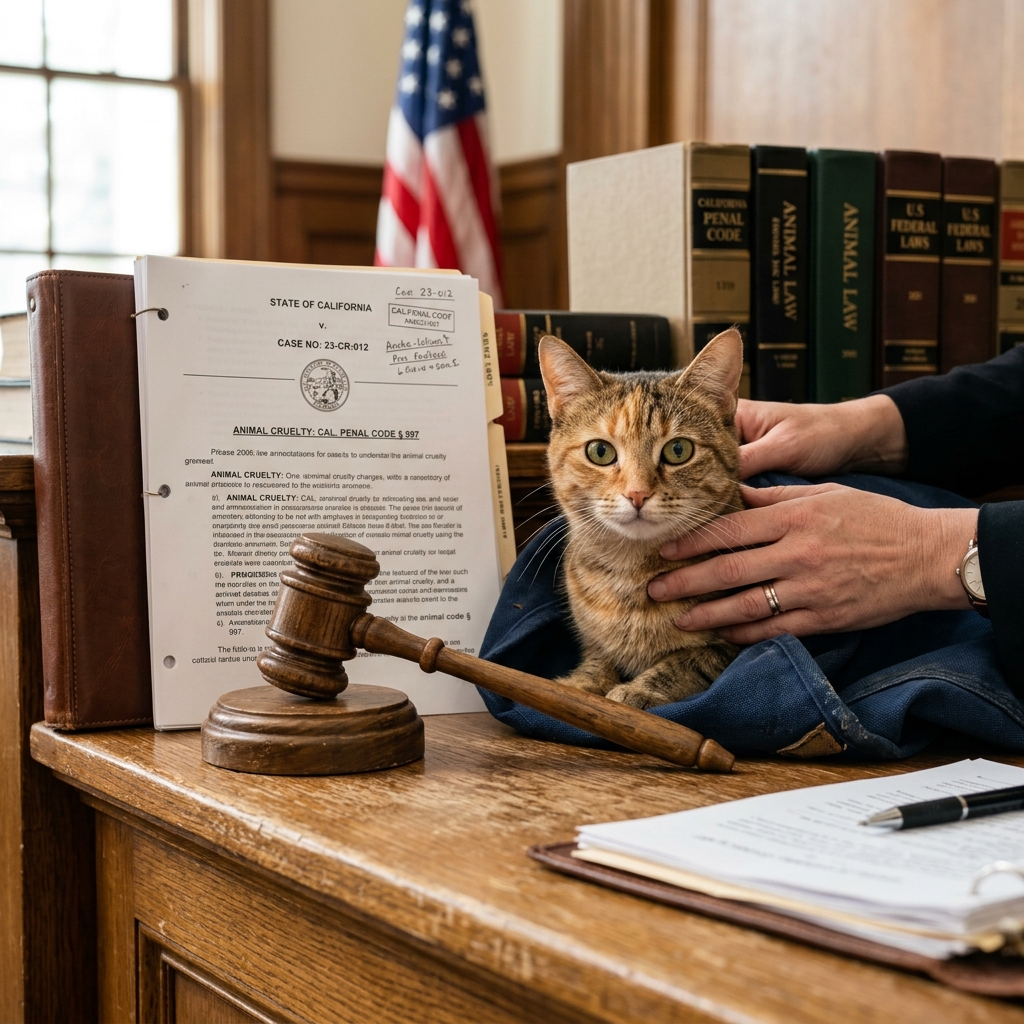
Criminal charges for animal cruelty in the United States cover a wide range of harmful conduct toward animals, from deliberate torture to severe neglect. These cases are governed by a mix of state laws and federal statutes, and penalties can include fines, probation, and imprisonment, sometimes for several years.
This article explains how animal cruelty is defined in U.S. law, the difference between state and federal jurisdiction, common types of offenses, and what someone accused of animal cruelty can expect from the criminal process. It is intended for general information and does not replace legal advice.
1. The Legal Foundation of Animal Cruelty Charges
Modern animal cruelty laws in the United States have developed over decades, combining traditional state-level police powers with newer federal protections. Most criminal prosecutions for cruelty still happen under state law, but federal charges are now possible for certain extreme conduct.
1.1 State Laws as the Primary Framework
Every U.S. state and the District of Columbia now have at least one felony animal cruelty statute, in addition to lesser misdemeanor provisions. These laws define what constitutes cruelty, specify covered species, and set out possible penalties.
- Scope of coverage: Typical state statutes apply to domestic pets, companion animals, and often farm animals, with some laws including wildlife and other non‑domestic species.
- Types of conduct: States criminalize intentional torture, organized fighting (such as dogfighting), abandonment, deprivation of food or water, denial of veterinary care, and failure to provide shelter.
- Penalties: Sanctions range from fines and short jail terms for minor neglect to multi‑year prison sentences for aggravated cruelty and repeated offenses.
The details vary significantly by jurisdiction. For example, some states treat first‑offense, non‑aggravated cruelty as a misdemeanor, while others allow felony charges when serious injury or death occurs.
1.2 Federal Statutes Protecting Animals
Although state law dominates cruelty prosecutions, federal law plays a growing role in specific situations. Two key federal frameworks are the Animal Welfare Act and the Preventing Animal Cruelty and Torture Act.
- Animal Welfare Act (AWA): The AWA, first enacted in 1966, is the primary federal law regulating the treatment of certain animals used in research, exhibition, transport, and commercial sale. It sets standards for humane handling, housing, feeding, sanitation, and veterinary care. Violations can lead to administrative sanctions and, in some cases, criminal liability.
- Preventing Animal Cruelty and Torture Act (PACT): The PACT Act, signed into law in 2019, makes certain extreme forms of animal cruelty a federal crime when they occur in interstate or foreign commerce or on federal property. It specifically prohibits intentional crushing, burning, drowning, suffocating, impalement, or other serious harm to living non‑human mammals, birds, reptiles, or amphibians, as well as the creation of “animal crush” videos.
Under the PACT Act, offenders can face fines, imprisonment of up to seven years, or both for violations. The statute supplements, but does not replace, state cruelty laws.
2. What Counts as Animal Cruelty in Criminal Law?
Animal cruelty charges typically fall into two broad categories: intentional cruelty and neglect or failure to provide care. States may use different terminology—such as “aggravated cruelty” or “animal abuse”—but the underlying conduct is similar.
2.1 Intentional Infliction of Harm
Intentional cruelty involves deliberate actions that cause pain, suffering, or death. Examples often charged as crimes include:
- Beating, torturing, or mutilating an animal
- Poisoning an animal on purpose
- Setting an animal on fire or using harmful chemicals
- Organizing or participating in dogfighting or other animal fighting ventures
- Deliberately running over an animal or causing fatal injuries out of malice
Most jurisdictions treat intentional cruelty as more serious than neglect because of the mental state involved. Where an animal suffers severe injury, prolonged pain, or death, prosecutors often seek felony charges.
2.2 Neglect, Abandonment, and Failure to Provide Care
Neglect‑based offenses focus on the failure to meet basic needs rather than direct violence. Common forms include:
- Leaving an animal without adequate food or water
- Failing to provide shelter from extreme heat or cold
- Not obtaining necessary veterinary treatment for serious illness or injury
- Keeping animals confined in overcrowded, unsanitary, or dangerous conditions
- Abandoning an animal in a public place or vacant property
Neglect is often charged as a misdemeanor, but it can rise to a felony if the animal experiences extreme suffering, long‑term deprivation, or death. Hoarding cases—where many animals are kept in poor conditions—frequently lead to multiple counts.
2.3 Special Offenses: Fighting, Bestiality, and Commercial Abuse
Many states also create separate crimes for practices considered uniquely harmful or exploitative.
- Animal fighting: Dogfighting and similar activities are outlawed in all states, and in some situations may trigger federal charges, especially when interstate commerce or organized gambling is involved.
- Sexual abuse of animals: A growing number of jurisdictions explicitly criminalize sexual acts with animals (bestiality), often as felony offenses.
- Commercial cruelty: Commercial breeding operations, pet shops, and laboratories may face criminal liability when animals are kept in conditions that violate legal standards or licensing requirements.
3. State vs. Federal Jurisdiction in Animal Cruelty Cases
Understanding who prosecutes a cruelty case—state or federal authorities—depends on where and how the conduct occurs.
3.1 When State Prosecutors Handle the Case
In most situations, local law enforcement and state prosecutors are responsible for investigating and charging animal cruelty offenses.
- Conduct occurs within a single state’s borders
- No federal property, agency, or interstate commerce is directly involved
- The applicable law is a state or local animal cruelty statute
Animal control officers, humane investigators, and local police often work together to gather evidence and refer cases to prosecutors.
3.2 When Federal Charges May Apply
Federal jurisdiction is more limited and typically requires an interstate or federal connection. Under the PACT Act and related laws, federal charges may be considered when:
- The cruelty occurs on federal land or involves federal property
- Images or videos of the abuse are distributed using interstate or foreign commerce channels (such as internet transmission across state lines)
- The conduct implicates federal regulatory schemes, like those covering transport or commercial sale of animals
The U.S. Department of Justice has proposed an Animal Cruelty Crimes Section to coordinate enforcement of federal cruelty laws, emphasizing collaboration with the Department of Agriculture and federal investigative agencies.
3.3 Comparing State and Federal Approaches
| Feature | State Animal Cruelty Laws | Federal Animal Cruelty Laws |
|---|---|---|
| Primary focus | Local offenses against pets, farm animals, and wildlife | Extreme cruelty, interstate commerce, and federal interests |
| Key statutes | State anti‑cruelty laws, fighting and neglect provisions | Animal Welfare Act, PACT Act, related federal criminal laws |
| Enforcement agencies | Local police, sheriffs, animal control, state prosecutors | Department of Justice, USDA, federal investigative agencies |
| Typical penalties | Misdemeanor or felony; fines, probation, jail or prison | Federal felony; fines and up to seven years imprisonment under PACT |
4. Penalties and Sentencing in Animal Cruelty Cases
The consequences of an animal cruelty conviction depend on the jurisdiction, the severity of the conduct, the defendant’s history, and whether the offense is classified as a misdemeanor or felony.
4.1 Misdemeanor vs. Felony Cruelty
Most states divide cruelty offenses into lower‑level misdemeanors and more serious felonies.
- Misdemeanor cruelty: Often applies to less severe neglect or first‑time offenses involving limited harm. Penalties can include fines, short jail terms, and probation.
- Felony cruelty: Usually reserved for intentional torture, repeated offenses, or cases involving serious injury or death. Felonies carry longer possible prison sentences and may have lasting consequences for employment, licensing, and firearm rights.
4.2 Typical Sentencing Options
Courts have several tools available when sentencing someone convicted of animal cruelty:
- Incarceration: Jail or prison time, especially in aggravated cases or where there is a prior record.
- Fines: Monetary penalties proportional to the seriousness of the offense and the defendant’s circumstances.
- Probation: Supervised release with conditions such as counseling, community service, or inspections of current animals.
- Restitution: Orders to reimburse shelters, veterinarians, or owners for costs of treatment and care.
- Restrictions on animal ownership: Many courts prohibit future ownership or contact with animals for a specified period, particularly in hoarding or torture cases.
4.3 Collateral Consequences
Beyond direct criminal penalties, animal cruelty convictions can have broader effects:
- Difficulty obtaining or keeping professional licenses
- Loss of employment in animal‑related industries
- Immigration consequences for non‑citizens
- Damage to reputation and personal relationships
Because of these impacts, individuals accused of cruelty often seek legal counsel early in the process.
5. Investigation and Evidence in Cruelty Cases
Animal cruelty investigations can involve specialized procedures, particularly when many animals or complex living conditions are at issue.
5.1 Role of Law Enforcement and Animal Agencies
Investigations may begin with reports from neighbors, veterinarians, animal welfare organizations, or other witnesses. Authorities involved typically include:
- Local police or sheriff’s departments
- Animal control officers
- Humane society or SPCA investigators
- State agriculture or health departments in farm or commercial cases
When federal interests are implicated—for example, interstate distribution of crush videos—federal agencies and the Department of Justice may participate.
5.2 Types of Evidence Commonly Used
To support criminal charges, investigators may gather:
- Photographs and videos of animal condition and living environment
- Veterinary reports documenting injuries, illness, and prognosis
- Witness statements from neighbors, owners, staff, and rescuers
- Records of purchases, online posts, or communications related to animal fighting or abuse
- Expert testimony on whether conduct meets legal definitions of cruelty or neglect
In large cases, such as hoarding or commercial operations, authorities may execute search warrants and remove animals to shelters or foster homes while the case proceeds.
6. Defenses, Mitigating Factors, and Legal Strategy
Defendants in animal cruelty cases may raise various defenses or arguments to reduce liability. Available strategies depend on the facts, the applicable statute, and the jurisdiction.
6.1 Challenging Intent and Causation
Because many cruelty statutes require proof of a particular mental state—such as intent, knowledge, or recklessness—defense counsel may focus on whether the prosecution can establish this element beyond a reasonable doubt.
- Arguing that harm was accidental rather than deliberate
- Contending that the defendant reasonably relied on others for care
- Questioning whether the alleged conduct directly caused the animal’s injuries
6.2 Compliance with Accepted Standards
In cases involving farm animals, research facilities, or commercial operations, defendants may point to compliance with industry standards or regulatory requirements, especially those set under the Animal Welfare Act or state agricultural codes.
Courts will still assess whether practices meet legal minimums, not just typical industry behavior.
6.3 Mitigating Circumstances
Even when guilt is established, certain factors can influence charging decisions and sentencing, such as:
- Cooperation with authorities, including voluntary surrender of animals
- Steps taken to improve conditions before charges were filed
- Mental health issues or extreme personal hardship, where documented
- Lack of prior criminal record
Some jurisdictions offer diversion or treatment‑based options in select cases, focusing on rehabilitation and preventing future harm.
7. Practical FAQs About Animal Cruelty Charges
7.1 Is all harmful conduct toward animals a crime?
Not every harmful incident leads to criminal charges. Laws generally target conduct that is intentional, reckless, or severely neglectful. Certain lawful activities—such as hunting, fishing, and accepted agricultural practices—may be exempted or regulated under separate statutes.
7.2 Can animal cruelty be charged as a felony?
Yes. All 50 states now have at least one felony animal cruelty provision. Felony charges are more likely where there is intentional torture, organized fighting, repeated offenses, or severe injury or death.
7.3 When does federal law apply instead of state law?
Federal animal cruelty law mainly applies when there is a federal nexus—for example, conduct on federal property, use of interstate commerce to distribute crush videos, or violations of federal regulatory schemes like the Animal Welfare Act.
7.4 What should someone do if they are accused of animal cruelty?
Anyone facing investigation or charges for animal cruelty should consider consulting a qualified criminal defense attorney familiar with local cruelty statutes. Legal counsel can explain potential exposure, help protect constitutional rights, and develop strategies based on the facts and available evidence.
7.5 How can concerned members of the public report suspected cruelty?
Reporting mechanisms vary by locality, but common options include calling local animal control, humane societies, or law enforcement. Many jurisdictions encourage prompt reporting so that animals can be removed from dangerous conditions and evidence preserved.
References
- Trump Signs Law Making Cruelty To Animals A Federal Crime — NPR. 2019-11-25. https://www.npr.org/2019/11/25/782842651/trump-signs-law-making-cruelty-to-animals-a-federal-crime
- Animal welfare in the United States — U.S. Animal Welfare Act overview via secondary summary. (Original AWA enacted 1966; still authoritative for federal standards.) https://www.nal.usda.gov/animal-health-and-welfare/state-and-local-animal-welfare-laws
- Laws that Protect Animals — Animal Legal Defense Fund. 2023-05-01 (updated). https://aldf.org/article/laws-that-protect-animals/
- Animal Cruelty Enforcement Act of 2021 (H.R.1016) — U.S. Congress. 2021-02-11. https://www.congress.gov/bill/117th-congress/house-bill/1016/text
- State Animal Anti-Cruelty Laws — Michigan State University College of Law / Animal Legal & Historical Center. 2022-01-01 (compilation). https://www.animallaw.info/content/state-animal-anti-cruelty-laws
- State and Local Animal Welfare Laws — USDA National Agricultural Library. 2022-09-15. https://www.nal.usda.gov/animal-health-and-welfare/state-and-local-animal-welfare-laws
- Animal Cruelty Is Now a Federal Crime Under the PACT Act — The Federal Criminal Attorneys. 2020-01-10. https://www.thefederalcriminalattorneys.com/pact-act
Similar Articles








Read full bio of medha deb




