
Understanding and Protecting Your Right to Vote
Learn what your voting rights are, how they are protected by law, and what you can do if someone interferes with your access to the ballot.
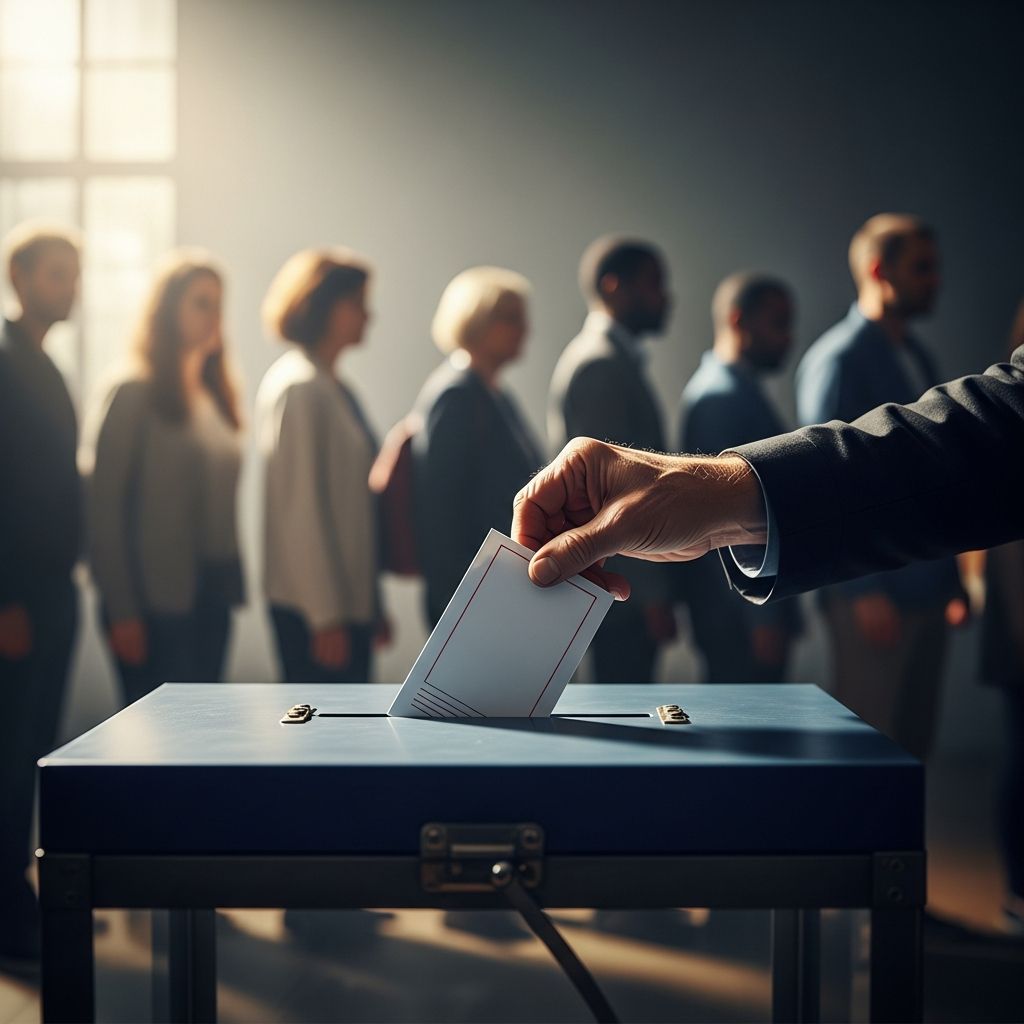
The right to vote is a core feature of democracy in the United States, and multiple constitutional amendments and federal laws work together to protect access to the ballot. Yet, many voters are unsure exactly what their rights are or what to do when those rights are threatened. This guide explains how voting rights are protected, common problems voters might encounter, and practical steps to take if your ability to vote is challenged.
1. Foundations of Voting Rights in the United States
Although the original U.S. Constitution did not explicitly grant a general right to vote, it has been amended over time to expand and protect access to the ballot. These amendments prohibit discrimination in voting on specific grounds and set basic limits on how states can regulate elections.
| Amendment | Who It Protects | Key Protection |
|---|---|---|
| 15th Amendment (1870) | Voters of all races | Bars denial of the vote on account of race, color, or previous condition of servitude. |
| 19th Amendment (1920) | Women voters | Prohibits denial of the vote on account of sex. |
| 24th Amendment (1964) | Voters in federal elections | Bans poll taxes in federal elections. |
| 26th Amendment (1971) | Voters aged 18 and older | Guarantees voting rights for citizens 18 or older; age cannot be used to deny the vote above that minimum. |
Federal law also plays a crucial role. For example, the Voting Rights Act of 1965 (VRA) was enacted to enforce the 15th Amendment and combat racial discrimination in voting, including literacy tests and other tactics that had suppressed minority voters.
2. Core Rights Every Eligible Voter Should Know
Specific rules vary by state, but certain basic protections apply nationwide under federal law and the Constitution.
2.1 The Right to Register and Vote Without Discrimination
If you meet your state’s eligibility requirements—such as age, citizenship, and residency—you have a right to register and vote without discrimination based on race, color, language minority status, sex, or age (if over 18).
- Your race or ethnicity cannot be used as a reason to deny registration or a ballot.
- Sex-based discrimination in voting is prohibited.
- Voters 18 and older may not be denied the vote solely on account of age.
2.2 The Right to Language Assistance in Certain Areas
In places with sizable groups of voters who speak certain minority languages, federal law requires election officials to provide language assistance and translated materials. This can include:
- Ballots translated into specific minority languages.
- Bilingual poll workers to help voters understand instructions.
- Voter information and notices in multiple languages.
2.3 The Right to Accessible Voting for Voters with Disabilities
Federal laws, including provisions of the Voting Rights Act and later statutes like the Americans with Disabilities Act (ADA) and Help America Vote Act (HAVA), require accessible voting systems.
- Polling places must be physically accessible, or reasonable accommodations must be offered.
- At least one voting system in each polling place must allow voters with disabilities to vote privately and independently in federal elections.
- Many states allow assistance by a person of the voter’s choice (with limits, such as excluding an employer or union representative) for voters who need help reading or marking the ballot.
2.4 The Right to Receive a Provisional Ballot
Under federal law, voters who believe they are eligible but whose names do not appear on the voter list, or whose eligibility is questioned, often have the right to cast a provisional ballot in federal elections.
- A provisional ballot is set aside until officials confirm your eligibility after Election Day.
- If you are indeed eligible and complied with any follow-up requirements (such as presenting ID within a set timeframe, if required), your ballot must be counted.
2.5 The Right to Be Free from Intimidation or Coercion
Federal law makes it illegal to threaten, intimidate, or coerce someone for voting or attempting to vote.
- No one may threaten you with harm, job loss, or legal trouble to influence your vote.
- Attempts to block access to the polls, harass voters, or spread false information about who can vote can violate federal law.
3. How Federal Laws Guard Against Discrimination and Suppression
Several major federal laws work together to protect voting rights and limit discriminatory practices.
3.1 The Voting Rights Act of 1965
The Voting Rights Act (VRA) is widely viewed as one of the most important civil rights laws in American history. It was enacted to enforce the 15th Amendment and eliminate pervasive racial discrimination in voting.
Key features of the VRA include:
- Ban on tests and devices: Literacy tests and similar mechanisms that were used to block minority voters are prohibited.
- Section 2 protections: Section 2 allows voters or the U.S. Department of Justice to challenge voting practices that result in the denial or abridgment of the right to vote on account of race or color.
- Language minority protections: Certain jurisdictions must provide bilingual election materials when they meet statutory thresholds for language minority populations.
Some parts of the VRA that once required pre-approval of voting changes in certain states (known as preclearance under Section 5) have been significantly limited by Supreme Court decisions, but Section 2 and other protections remain important tools.
3.2 Other Federal Protections
Beyond the VRA, other federal laws help safeguard the voting process:
- National Voter Registration Act (“Motor Voter” law): Facilitates voter registration through motor vehicle agencies and other public offices (not discussed in detail here but relevant to many voters).
- Help America Vote Act (HAVA): Sets minimum standards for election administration in federal elections, including provisional voting and accessible voting equipment.
- Federal criminal statutes: Prohibit intimidation, coercion, and fraud related to voting.
4. Common Problems Voters May Encounter at the Polls
Even with strong legal protections, problems can arise on Election Day or during early voting. Recognizing common issues can help you react quickly and effectively.
4.1 Questions About Your Eligibility or Registration
You might be told you are not on the voter list, that your registration is incomplete, or that you are in the wrong location.
- Ask poll workers to check alternative spellings, prior addresses in the same precinct, or supplemental lists.
- If you are at the wrong polling place, request information about where you should go.
- If eligibility is still questioned in a federal election, request a provisional ballot if available in your jurisdiction.
4.2 Identification (ID) Requirements
States differ on voter ID requirements. Some require a photo ID, others accept non-photo identification, and some do not require ID for most voters.
- If you do not have the requested ID, ask whether you may still vote a regular ballot by signing an affidavit or providing alternative documentation, if your state allows it.
- If not, ask for a provisional ballot and find out what follow-up steps (such as showing ID at a designated office) are necessary for your vote to count.
4.3 Long Lines, Equipment Problems, or Polling Place Changes
Administrative issues can make voting difficult, but they do not cancel your right to vote.
- If machines malfunction, ask about paper ballots or alternative options.
- If your polling place has moved, local election officials must provide the updated location; check official websites or hotlines for confirmation.
- As long as you are in line before the polling place’s official closing time, you generally have the right to vote even if you wait past closing time (subject to state rules).
4.4 Harassment, Misleading Information, or Intimidation
Intimidation can be overt or subtle. It may include aggressive questioning, following voters, photographing or videotaping them excessively, spreading false information about voter eligibility, or displaying weapons near polling places.
- Document what is happening as safely as possible, including time, location, and a description of individuals involved.
- Report the behavior to a poll worker or local election official immediately.
- Contact election protection hotlines or relevant authorities if the problem is not resolved quickly.
5. What to Do If Your Right to Vote Is Challenged
If someone attempts to stop you from voting or to force you to vote in a particular way, you have options. Taking practical steps at the moment can preserve your vote and help address broader problems.
5.1 Stay Calm and Ask for Clarification
If a poll worker or observer says you cannot vote, ask:
- Why you are being turned away or challenged.
- What rule, law, or policy they are relying on.
- Whether you can vote using a provisional ballot in a federal election.
Request that their explanation be documented in the polling place log, if one is used.
5.2 Request a Provisional Ballot When Appropriate
In most federal elections, a provisional ballot should be offered when there is uncertainty about a voter’s eligibility but the voter believes they are qualified.
- Confirm what you must do after Election Day (for example, bring ID to an election office) to ensure your provisional ballot is counted.
- Keep any receipts or written information given to you about your provisional ballot.
5.3 Contact Election Officials or Hotlines
If problems persist, consider taking these steps:
- Call your local or state election office using the phone numbers typically listed on official government election websites.
- Use nonpartisan election protection hotlines, which are often staffed by trained volunteers and attorneys who can advise you on next steps.
5.4 Document and Report Serious Violations
For serious incidents—such as voter intimidation, discriminatory treatment, or deliberate misinformation—documentation is essential.
- Write down what happened as soon as possible, including dates, times, and names if known.
- Save any written or online material that appears to be misleading voters or targeting particular groups.
- Reports may be made to local election officials, state authorities, civil rights organizations, or federal authorities such as the U.S. Department of Justice’s Civil Rights Division.
6. Practical Tips to Safeguard Your Vote Before Election Day
Preparing in advance is one of the best ways to avoid problems when you go to vote.
- Confirm your registration status: Check your registration through your state’s official election website or voter registration portal well before the deadline.
- Know your polling place: Verify the location and hours for your assigned polling place shortly before voting, as locations can change.
- Review ID requirements: Consult your state’s election authority to see what identification, if any, you must bring.
- Understand early voting and mail voting options: Many states offer early in-person voting or mail/absentee ballots, which can reduce the risk of long lines or last-minute issues.
- Bring necessary documentation: If you have moved, changed your name, or have other circumstances that might raise questions, consider bringing documents that confirm your identity and residence.
7. Why Protecting Voting Rights Matters for Democracy
Courts and legal scholars have repeatedly emphasized that voting is not just one right among many; it is central to the functioning of a representative democracy. The ability to cast a ballot and have it counted fairly is often described as preservative of other civil and political rights because elected officials shape laws, policies, and enforcement priorities that affect nearly every aspect of daily life.
Expanding the electorate through constitutional amendments and legislation has transformed the political system over time—from an early framework limited largely to white male property owners to a far broader and more inclusive electorate. Ongoing debates about election rules, redistricting, and access to the ballot reflect how important voting rights remain to questions of equality, representation, and accountability.
8. Frequently Asked Questions About Voter Rights
Q1: Do I have a constitutional “right to vote”?
While the Constitution does not contain a single, general clause declaring a broad right to vote, multiple amendments forbid the government from denying or abridging voting rights for specific reasons such as race, sex, failure to pay a poll tax in federal elections, or age (for citizens 18 and older). Courts and many scholars regard voting as a fundamental political right because it underpins other rights and democratic participation.
Q2: Can my state impose rules that make voting harder?
States have authority to set procedures and qualifications for voting, but they must comply with the Constitution and federal laws like the Voting Rights Act. Rules that discriminate based on race, sex, or age (for adults 18 and older), or that unjustifiably burden fundamental rights, can be challenged in court.
Q3: What should I do if I am not on the voter list when I show up?
Ask poll workers to search for your name carefully and to check for errors or alternate spellings. If you are in the wrong polling place, request directions to the right one. In federal elections, if your eligibility remains in doubt, you often have the right to cast a provisional ballot, which will be counted if you are later confirmed to be eligible according to state law.
Q4: Is it legal for people to “watch” voters at polling places?
States may permit poll watchers or observers under specific rules, but they are not allowed to intimidate, harass, or interfere with voters. Federal law makes it illegal to threaten or coerce voters in connection with voting. If observers are aggressively questioning voters, blocking access, or engaging in threatening behavior, report this to election officials immediately.
Q5: Who can help me if I believe my voting rights have been violated?
You can contact your local or state election office, civil rights or voting rights organizations, and, in serious cases involving discrimination or intimidation, federal authorities such as the U.S. Department of Justice’s Civil Rights Division. Nonpartisan election protection hotlines are also available in many elections to offer real-time assistance.
References
- Voting rights laws and constitutional amendments — USAGov. 2024-02-29. https://www.usa.gov/voting-rights
- Voting Rights Act (1965) — National Archives. 2016-11-07. https://www.archives.gov/milestone-documents/voting-rights-act
- The Voting Rights Act, Explained — Brennan Center for Justice. 2023-06-08. https://www.brennancenter.org/our-work/research-reports/voting-rights-act-explained
- Voting rights in the United States — Background overview citing post-Civil War amendments. Wikipedia summary, drawing on primary constitutional sources. Accessed 2025-12-08. https://en.wikipedia.org/wiki/Voting_rights_in_the_United_States
- The Equal Protection Clause and the Right to Vote — University of Missouri–Kansas City School of Law. 2019-01-01. http://law2.umkc.edu/faculty/projects/ftrials/conlaw/righttovote.html
- Voting Rights: A Short History — Carnegie Corporation of New York. 2020-08-17. https://www.carnegie.org/our-work/article/voting-rights-timeline/
- Voting Rights and Democracy — Constitutional Accountability Center. 2022-10-01. https://www.theusconstitution.org/issues/voting-rights-democracy/
Similar Articles








Read full bio of medha deb


