
Understanding Alabama’s Criminal Littering Law
A practical guide to Alabama’s criminal littering statute, definitions, penalties, and defenses for residents and property owners.
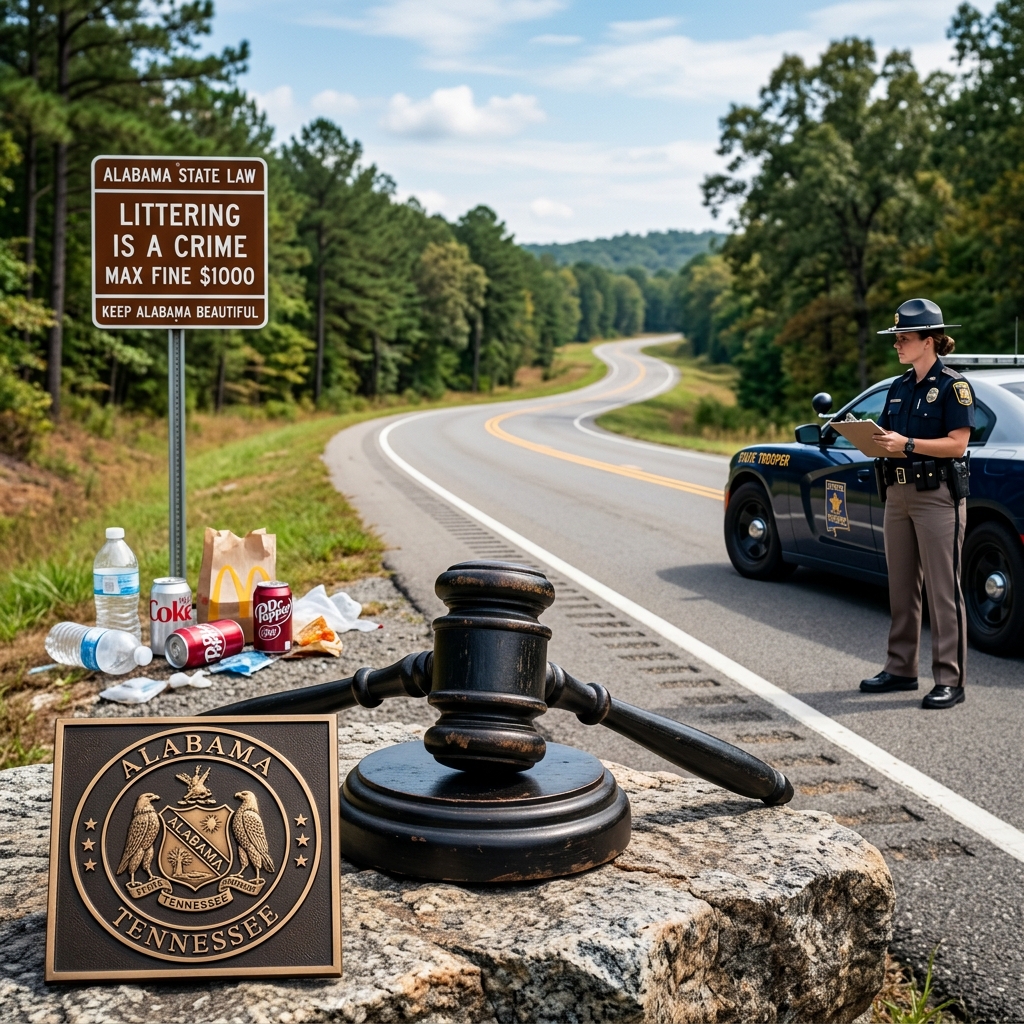
Alabama treats littering as more than a minor annoyance. Under state law, criminal littering is a formal offense that can lead to fines of up to several thousand dollars and court-ordered community service. This guide explains how Alabama defines criminal littering, what kinds of behavior are covered, the penalties you may face, and practical tips for staying on the right side of the law.
Why Littering Is a Crime in Alabama
Litter is not just unsightly; it can damage property, pollute waterways, and increase cleanup costs for local governments. Recognizing these harms, Alabama includes criminal littering in its Criminal Code, within the chapter that deals with offenses involving damage to property. That placement reflects the state’s view that unlawful disposal of trash is a form of harm to both public and private interests.
- Environmental impact: Trash in streams, rivers, and lakes can harm wildlife and degrade drinking water sources.
- Public safety: Debris on roads or sidewalks can cause accidents or injuries.
- Economic costs: Cities and counties spend significant resources on cleanup, which can influence tax burdens and community budgets.
Where Criminal Littering Fits in Alabama’s Criminal Code
The state’s criminal littering statute appears in Alabama Code § 13A-7-29, part of Title 13A (Criminal Code), Chapter 7 (Offenses Involving Damage to and Intrusion Upon Property), Article 2 (Criminal Damage to Property). In other words, criminal littering is treated similarly to other property-related crimes, such as criminal mischief, because it involves improper use or damage of land and water.
| Title | Chapter | Article | Section |
|---|---|---|---|
| Title 13A – Criminal Code | Chapter 7 – Offenses Involving Damage to and Intrusion Upon Property | Article 2 – Criminal Damage to Property | § 13A-7-29 – Criminal Littering |
What Counts as “Litter” Under Alabama Law
Alabama’s statute uses the term litter broadly. It covers garbage and trash, but also other materials that people commonly discard, including items that can pose special health risks. While the statute provides more detailed wording, the overall idea is that litter includes discarded material that has no lawful place on the land or in the water where it is found.
Examples that can qualify as litter under Alabama’s criminal littering law include:
- Household garbage such as bags of mixed waste dumped in a vacant lot.
- Loose paper, packaging, and food containers thrown from a vehicle.
- Sewage, oil products, or similar waste discharged into rivers, lakes, or streams.
- Cigarette butts and cigar ends discarded on roads or sidewalks.
- Containers of urine, such as bottles thrown from vehicles or left on roadside shoulders.
Not everything that ends up in the road is considered litter. For instance, Alabama law specifically notes that certain agricultural products deposited unintentionally on a highway or public right-of-way are not treated as litter for purposes of criminal prosecution. This distinction helps protect farmers and transporters from criminal liability when unavoidable spillage occurs in the course of normal work.
Core Elements of the Crime of Criminal Littering
To secure a conviction, the state must show that the person engaged in conduct that falls within the statute’s definition of criminal littering. Alabama law identifies several key ways someone can commit this offense.
Unlawful Deposition of Litter on Property or Waters
A person commits criminal littering by knowingly depositing litter on public or private property or in public or private waters without permission. This includes dumping trash on someone else’s land, leaving bags of garbage in public parks, or disposing of waste in streams or lakes without authorization.
Important points about this part of the law:
- The statute covers both public and private property, so littering on your neighbor’s land can be just as illegal as littering in a city park.
- “Waters” includes rivers, inland lakes, streams, and territorial waters, reflecting the state’s concern about water pollution.
Littering on Highways and Public Rights-of-Way
Another common scenario involves litter on roadways. Alabama law prohibits throwing, dropping, or allowing litter to be thrown or dropped on or alongside any highway, road, street, or public right-of-way, and then failing to immediately remove it or arrange for its removal.
This means that simply tossing trash out the window of a car, or allowing unsecured loads to spill debris onto the road without taking immediate steps to clean up, can meet the definition of criminal littering.
Discharge of Sewage, Oil, or Similar Waste
The statute also covers discharges of sewage and oil products into the state’s waters. Discharging these substances into rivers, lakes, streams, or territorial waters can constitute criminal littering in addition to any other environmental violations that may apply.
Evidence and the Rebuttable Presumption of Littering
One distinctive feature of Alabama’s criminal littering law is how it treats trash that clearly bears a person’s name. When a series of items in discarded material clearly show a person’s name—such as utility bills, bank statements, or other financial documents—the law creates a rebuttable presumption that the named individual knowingly deposited the litter.
In practice, this works as follows:
- If investigators find a pile of trash containing numerous documents with a specific name and address, the law allows them to presume that the person identified in those documents is responsible for the dumping.
- The presumption is “rebuttable,” meaning the accused can present evidence to show they did not deposit the litter, such as proof that the trash was stolen, moved by someone else, or improperly handled by a third party.
- If the accused cannot effectively rebut this presumption, it becomes much easier for the state to prove the case and obtain a conviction.
This mechanism encourages people to handle documents and household waste responsibly, because identifiable information in discarded material can be used as evidence of criminal littering.
Penalties for Criminal Littering in Alabama
Criminal littering in Alabama is classified as a Class B misdemeanor. While this is not a felony, the consequences can still be serious, especially for repeat offenders.
First Conviction
For a first conviction, the statute authorizes a fine of up to $500. The exact amount within that range depends on the court’s judgment, the facts of the case, and any relevant local policies.
Second and Subsequent Convictions
Penalties increase significantly for second and subsequent convictions. The law provides for two general options:
- A fine of up to $1,000 and up to 100 hours of community service in the form of picking up litter along highways, roads, streets, public rights-of-way, public sidewalks, public walkways, or public waterways.
- Alternatively, a fine of not less than $2,000 and not more than $3,000, without the community service option.
| Conviction | Fine Range | Community Service |
|---|---|---|
| First | Up to $500 | Not required by statute |
| Second or subsequent (Option 1) | Up to $1,000 | Up to 100 hours, primarily picking up litter |
| Second or subsequent (Option 2) | $2,000–$3,000 | Not specified |
In addition to these penalties, Alabama law imposes extra fines when certain types of litter are involved. For example, littering cigarettes or cigars, containers of urine, or food containers can result in an additional fine of up to $500 per violation on top of the main penalties. These items are singled out because they are particularly common in roadside litter and can pose broader health and sanitation risks.
Money collected through criminal littering fines is directed to the State General Fund and shared with the county or city where the littering occurred, helping offset cleanup and enforcement costs.
Who Can Enforce Alabama’s Littering Law?
Enforcement of criminal littering is primarily a law enforcement responsibility. Alabama law does not authorize county license inspectors or solid waste officers to take a person into custody for criminal littering unless they are sworn law enforcement officers employed by a law enforcement agency. This ensures that arrests and custodial actions are handled by properly trained personnel.
However, non-police officials may still play a role by investigating complaints, documenting violations, and working with law enforcement to pursue charges, especially in counties and municipalities with active anti-litter campaigns.
Defenses and Practical Considerations
While Alabama’s law is designed to be strict, people accused of criminal littering are not without options. In practice, several factors can influence whether charges are filed and how a case is resolved.
Challenging the Rebuttable Presumption
If the state relies on documents bearing a person’s name to support the case, the accused may attempt to rebut the presumption by showing:
- The trash was removed from their property by someone else without their knowledge or consent.
- The documents were stolen, lost, or misdelivered before being found at the dump site.
- Another person had access to the trash and disposed of it improperly.
Successfully rebutting the presumption does not automatically end the case, but it requires the state to produce additional evidence to show who actually committed the littering.
Intent and Awareness
Although the statute refers to “knowingly” depositing litter, it also makes clear that it is not a defense that the person did not intend or was unaware of the act in certain contexts. For example, allowing an unsecured load to spill debris across a highway and then failing to immediately clean it up can still lead to liability, even if the driver did not consciously throw trash out of the vehicle.
Local Initiatives and Education
Many Alabama communities pair enforcement with public education, adding more trash and recycling bins, promoting proper waste disposal, and organizing cleanup days to discourage illegal dumping. These efforts supplement the criminal code and give residents practical alternatives to improper disposal.
Practical Tips to Avoid Criminal Littering Charges
While the legal details can be complex, avoiding criminal littering charges often comes down to basic common sense and good housekeeping. Consider these steps:
- Secure your trash: Use durable bags and containers, and ensure that lids are closed before putting garbage out for collection.
- Use approved disposal sites: Dispose of household waste and bulky items through municipal or authorized private services rather than leaving them on vacant land.
- Protect your documents: Shred or securely dispose of bills, bank statements, and other documents bearing your name, so they cannot easily be traced back to you if found in a dump site.
- Check your vehicle loads: If carrying materials, ensure they are properly tied down or covered to prevent spillage on roads.
- Clean up spills promptly: If you notice your trash or cargo has fallen onto a street or right-of-way, remove it as soon as possible to avoid violating the statute.
Frequently Asked Questions (FAQs)
1. Is throwing a single cigarette butt out of my car window a crime in Alabama?
Yes. Throwing cigarette butts out of a vehicle onto a road or roadside can be treated as criminal littering, and Alabama law specifically authorizes additional fines for littering cigarettes or cigars.
2. Can I be arrested for criminal littering?
Criminal littering is a Class B misdemeanor, and law enforcement officers have the authority to enforce the statute. However, non-sworn officials, such as certain inspectors, generally cannot take someone into custody for this offense unless they are also law enforcement officers.
3. If trash with my name on it is found at a dump site, am I automatically guilty?
Not automatically, but the law does create a rebuttable presumption that you deposited the litter if multiple items in the trash clearly show your name. You may present evidence to show that someone else was responsible for the dumping.
4. What happens to the money from littering fines?
Fines imposed for criminal littering are directed to the State General Fund and shared with the county or city where the violation occurred, helping support state and local budgets and cleanup activities.
5. Are there non-criminal ways Alabama deals with litter?
Yes. In addition to criminal enforcement, Alabama and its local governments promote public education, organize cleanup programs, and provide official disposal sites, all aimed at reducing litter and illegal dumping.
References
- Alabama Criminal Littering Law — FindLaw. 2024-01-15. https://www.findlaw.com/state/alabama-law/alabama-criminal-littering-law.html
- Alabama Code § 13A-7-29 – Criminal Littering — Alabama Legislature (via Justia). 2023-01-01. https://law.justia.com/codes/alabama/title-13a/chapter-7/article-2/section-13a-7-29/
- States with Littering Penalties — National Conference of State Legislatures (NCSL). 2020-11-20. https://www.ncsl.org/environment-and-natural-resources/states-with-littering-penalties
- Littering Law – Shelby County, Alabama — Shelby County, AL Official Website. 2022-06-01. https://www.shelbyal.com/415/Littering-Law
- STATE OF ALABAMA LAW CRIMINAL LITTER — Greene County Democrat. 2022-08-15. https://greenecodemocrat.com/tag/state-of-alabama-law-criminal-litter/
Similar Articles








Read full bio of medha deb




