
Alabama Adoption Laws: Essential Guide For Prospective Parents
A clear, practical guide to eligibility, consent, procedures, and protections under Alabama’s adoption laws for prospective parents and families.
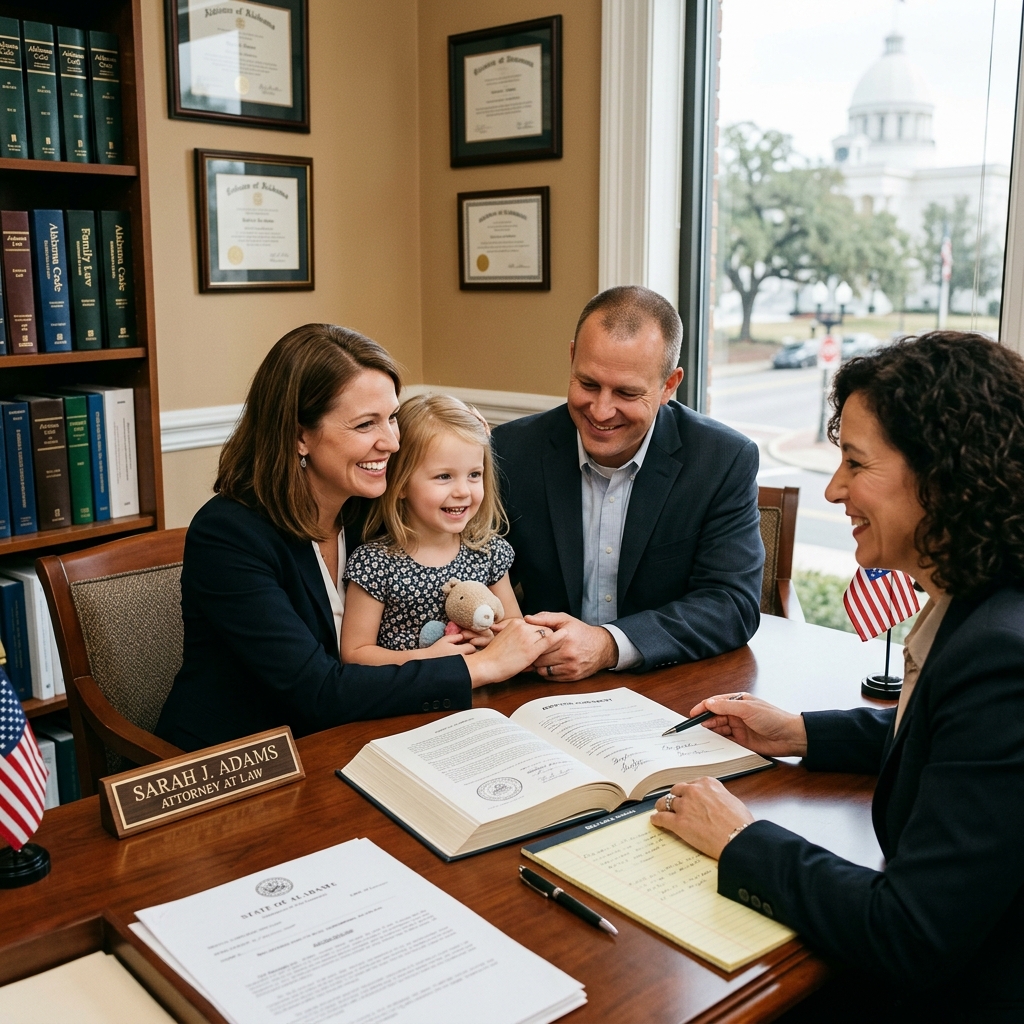
Adoption in Alabama is governed by a detailed legal framework designed to protect children while providing clear rules for prospective parents. This guide explains who can adopt, who may be adopted, how consent works, what the court process looks like, and the limits on payments and advertising under Alabama law.
Who Can Adopt in Alabama?
Alabama law sets baseline eligibility rules for adults who wish to adopt. These rules focus on age, household stability, and basic suitability to care for a child.
- Minimum age: Any person who is at least 19 years old may adopt a minor child in Alabama.
- Marital status: Single adults and married couples are allowed to adopt. There is no statutory bar based solely on being unmarried.
- Same-sex couples: Alabama’s adoption code does not contain an explicit restriction on adoptions by same-sex couples, and the statute prohibits discrimination in granting adoptions on certain bases.
- Basic state requirements: For children placed through the Alabama Department of Human Resources (DHR), prospective parents must meet additional criteria, such as being over 19, having adequate housing, being healthy enough to meet a child’s needs, and passing background checks.
In practice, private agencies and DHR may impose further screening requirements, such as pre-service training or home studies, but the statutory minimums start with age and general capacity to care for a child.
Who May Be Adopted?
Alabama’s adoption laws address both children and certain adults who may be legally adopted.
| Category | Who May Be Adopted | Key Conditions |
|---|---|---|
| Minor children | Any child under age 19 | Parental rights must be terminated or valid consents and relinquishments must be obtained. |
| Disabled adults | Adults who are permanently disabled or of diminished mental capacity | Adoption must comply with statutory provisions governing adult adoptions. |
Alabama defines a minor as someone under age 19, and the state permits adoption of minors as well as certain adults whose disabilities or limitations make adoption appropriate.
Consent Requirements in Alabama Adoptions
Consent is one of the most important elements of any adoption. Alabama law identifies who must consent and when consent can be withdrawn.
Child’s Consent
Alabama requires the consent of older children in most adoptions:
- Age of consent: A child who is 14 years of age or older must consent to the adoption.
- Mental capacity: If the child does not have the mental capacity to consent, the statute allows the adoption to proceed without the child’s consent.
Birth Parents’ Consent
Birth parents play a central role in the consent process. Under Alabama law:
- Timing: Birth parents may consent to adoption at any time before or after the child’s birth.
- Formality: Consent must be provided in writing, signed, and either witnessed by a probate judge, clerk, notary public, or an authorized representative of a licensed agency, in a form substantially similar to that in the adoption code.
- Mother’s consent: The birth mother must consent for a voluntary adoption to proceed.
- Presumed father: A presumed father (for example, one married to the mother or who attempted to marry her around the time of birth) must consent if the child was born during the marriage or within 300 days after its termination.
- Putative father: A putative father who receives notice of adoption proceedings must consent if he responds within the statutory timeframe, often 30 days.
Withdrawing Consent
Alabama allows a brief window for withdrawing consent:
- Consent may be withdrawn within five days after the child’s birth or within five days of signing the consent, whichever is later.
Once this period passes, challenging an adoption becomes significantly more difficult, and the adoption code imposes tight deadlines to promote stability for the child.
Where and How to File an Adoption in Alabama
Most adoption cases in Alabama go through the probate courts, which have primary jurisdiction over adoption matters.
Proper Court and Location
- Court of jurisdiction: Adoption petitions are typically filed in the probate court, which has original jurisdiction over adoption proceedings.
- County options: A petition may be filed in the county where the minor resides, where the petitioner resides or is in military service, or where the agency with custody of the child is located.
Typical Petition Contents
While each case is unique, Alabama probate courts and the adoption code commonly require petitions to include:
- Information about the adoptive parent (name, date of birth, marital status, county of residence).
- Information about the child (birth name, proposed new name, date of birth, current residence).
- Details about how long the child has lived with the petitioner.
- Statements about consent from the mother, father, and the child if applicable.
- Attachments, such as the child’s original birth certificate and, in stepparent cases, the marriage license.
The petition must be signed and notarized, and notice of the petition is served on biological parents and the Department of Human Resources.
Home Residency and Placement Requirements
Alabama law emphasizes stability by requiring certain residency periods before an adoption can be finalized.
- General adoptions: Prospective adoptive parents typically must have the child living in their home for at least 60 days before finalization.
- Stepparent and relative adoptions: If the adopter is a stepparent or close relative, the child must usually reside with the petitioner for one year before finalization, although a court can consider specific circumstances.
- Filing deadlines: In many cases, the adoption petition should be filed within 30 days after the child is placed with the prospective adoptive parents.
These requirements aim to ensure that the placement is appropriate and that the court has enough information to determine whether adoption serves the child’s best interests.
Financial Rules: Payments and Prohibited Practices
Alabama strictly regulates compensation related to adoption to prevent trafficking or improper inducements.
Prohibition on Buying or Selling Adoptions
- It is a crime to pay or offer to pay money or anything of value to a birth parent for their consent or cooperation in an adoption or for placing a child.
- Individuals and organizations are prohibited from being compensated for placing children for adoption or arranging placements, other than allowed professional fees.
Permissible Expenses
Adoptive parents can typically pay reasonable, documented expenses related to the adoption, such as:
- Maternity-related medical and hospital costs.
- Counseling for the birth mother or adoptive family.
- Attorney’s fees and court costs.
- Agency fees charged by licensed child-placing agencies.
- Limited living expenses for the birth mother, if permitted by law and approved by the court.
Before finalization, adoptive parents must typically file a full disclosure of all payments and expenses related to the adoption so the court can review them for compliance.
The Role of Home Studies and Investigations
In many Alabama adoptions, home studies and investigations help the court evaluate whether the adoptive placement is in the child’s best interests.
- Pre-placement investigation: May be conducted through DHR or a licensed child-placement agency and examines the prospective home environment, financial stability, and parenting capacity.
- Post-placement investigation: Often ordered after the child is placed, to confirm that the placement remains suitable and that the child is adjusting well.
- Background checks: All household members age 19 or older must undergo criminal background checks for foster care and most adoptions through DHR.
Recent updates and practical guidance emphasize that home studies are standard for adoptive parents, including stepparents in many cases, as part of modern best practices.
Stepparent and Relative Adoptions
Stepparent and relative adoptions are common in Alabama and follow many of the same rules as other adoptions, with some notable specifics.
- Jurisdiction: Stepparent adoptions are filed in probate court, like other adoptions.
- Consent: The same consent rules apply—both parents must consent unless their rights have been terminated, and adoptees 14 or older must consent.
- Residency: The child typically must live with the stepparent or relative for about a year prior to finalization.
- Effect of adoption: Once finalized, the child is treated as the natural child of the adopting parent, with corresponding rights and responsibilities, including support obligations until the age of majority.
Legal Finalization and Effect of Adoption
When an Alabama court issues a final decree of adoption, it creates a new, legally recognized parent-child relationship.
- Parental rights of the former legal parents are terminated, except in limited scenarios involving stepparent adoptions where one biological parent remains.
- The adoptive parent acquires full parental rights and responsibilities, including support, decision-making, and inheritance obligations.
- The child’s birth certificate is amended to reflect the adoptive parent or parents, consistent with the court’s order.
After finalization, Alabama imposes a short statute of limitations for challenging the adoption. This helps secure long-term stability for the child and the adoptive family.
Key Practical Tips for Prospective Adoptive Parents
Families considering adoption in Alabama should be prepared for both legal and practical steps. The following points can help guide early planning:
- Confirm eligibility: Make sure you meet the age and basic suitability requirements, and discuss any special circumstances with an attorney or agency.
- Understand consent: Talk through how birth parent and child consent will be obtained or addressed, especially if any party is likely to contest.
- Prepare for investigations: Expect home studies, background checks, and post-placement visits, particularly when adopting through DHR or a licensed agency.
- Track expenses: Keep detailed records of any costs relating to medical care, counseling, legal services, and living expenses so they can be disclosed to the court.
- Seek legal advice: Given the complexity of statutes and administrative rules, consulting an attorney experienced in Alabama adoption law is often advisable.
Frequently Asked Questions About Alabama Adoption Laws
1. What is the minimum age to adopt in Alabama?
Any person who is 19 years or older may adopt a minor child in Alabama, subject to other suitability requirements such as background checks and housing standards.
2. Does a child have to agree to be adopted?
Yes, Alabama law requires consent from any adoptee who is 14 or older, unless the child lacks the mental capacity to consent.
3. Can single adults adopt in Alabama?
Single adults may adopt, and there is no statutory rule that denies adoption solely because a person is unmarried or works outside the home.
4. Are there special rules for stepparent adoptions?
Stepparent adoptions follow the general adoption rules but often require the child to live with the stepparent for at least one year before finalization. The same consent and court procedures apply.
5. Is it legal to pay birth parents to place a child?
No. Alabama makes it a crime to pay or offer anything of value to birth parents in exchange for their cooperation or for placing a child. Only reasonable, court-reviewed expenses such as medical care and legal fees are allowed.
References
- Alabama Adoption Laws – FindLaw — FindLaw. 2023-05-10. https://www.findlaw.com/state/alabama-law/alabama-adoption-laws.html
- What You Need to Know About Alabama Adoption Laws — American Adoptions. 2022-08-01. https://www.americanadoptions.com/alabama-adoption/alabama-adoption-laws
- Adoption | Probate Court of Jefferson County, Alabama — Jefferson County Probate Court. 2021-11-15. https://jeffcoprobatecourt.com/judicial/adoption/
- Adoption Checklist — Alabama Department of Human Resources. 2023-02-20. https://dhr.alabama.gov/adoption/adoption-checklist/
- Alabama foster care and adoption guidelines — AdoptUSKids. 2022-09-10. https://adoptuskids.org/adoption-and-foster-care/how-to-adopt-and-foster/state-information/alabama
- Chapter 10A — Alabama Adoption Code — Alabama Legislature / Justia. 2009-01-01. https://law.justia.com/codes/alabama/2009/title26/chap10a/
- Alabama Administrative Code 660-5-22-.04 – Adoption Legal Process — Alabama Legislature. 2019-06-01. https://admincode.legislature.state.al.us/administrative-code/660-5-22-.04
Similar Articles








Read full bio of Sneha Tete


