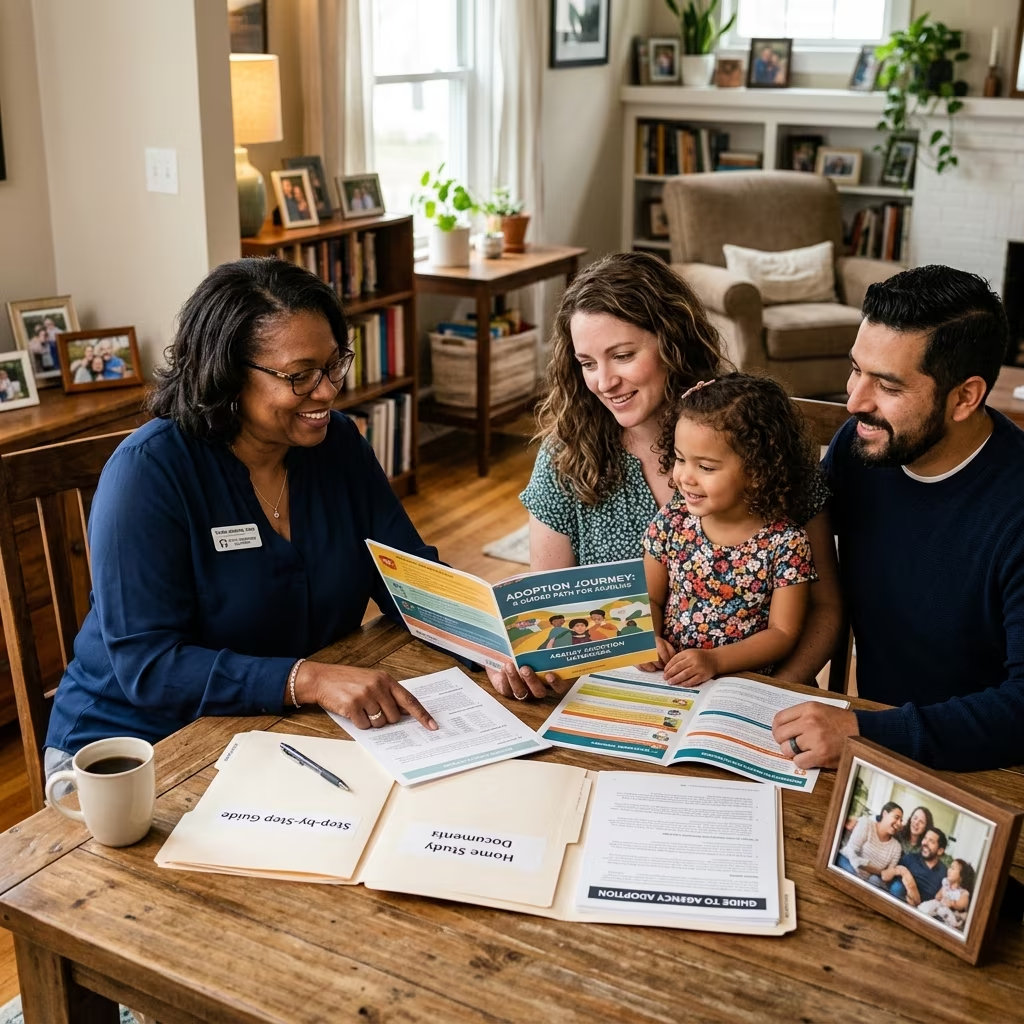
Agency adoption is one of the most common ways families grow through adoption. In this approach, a licensed public or private agency helps match children with prospective parents, prepares everyone involved, and guides the case through legal finalization in court. This article explains what agency adoption is, what to expect at each stage, and how to decide whether it is the right path for your family.
What Is Agency Adoption?
Agency adoption involves working with a licensed organization that is authorized by the state to place children with adoptive families. These agencies may be:
- Public agencies, operated by state or county child welfare departments, often placing children from foster care.
- Private agencies, nonprofit or faith-based organizations licensed to provide adoption services and often working with expectant parents or foster care systems.
Agencies serve as intermediaries. They evaluate prospective parents, identify children who need permanent homes, ensure legal requirements are satisfied, and provide post-placement support. Their work is regulated by state law and child welfare standards to protect the interests of the child.
Types of Agency Adoption
Several adoption pathways can involve agencies. Understanding the differences can help you choose the best option for your family situation and preferences.
| Type of Agency Adoption | Primary Source of Children | Key Characteristics |
|---|---|---|
| Public Agency Adoption | Children in foster care under state or county custody | Often lower or reimbursable costs; children may have experienced trauma or multiple placements; strong focus on permanency and stability. |
| Private Domestic Agency Adoption | Infants or young children whose birth parents work with a private agency | Structured counseling and consent process; may involve openness with birth family; fees vary by agency. |
| Special Needs / Foster Care Agency Adoption | Children with special medical, developmental, or emotional needs; sibling groups; older children | May include additional training for parents, ongoing services, and possible subsidies. |
Agency Adoption Step-by-Step
While specific procedures differ by state, most agency adoptions follow a recognizable sequence. Public agencies and many private agencies outline similar steps in their official guidance.
1. Learning About Adoption and Contacting Agencies
Your first task is to become informed and decide whether adoption fits your family’s goals and circumstances. State and nonprofit resources recommend that prospective parents:
- Read introductory materials provided by state child welfare departments and reputable organizations.
- Attend information sessions or orientation meetings offered by agencies to learn about children in need of families and basic requirements.
- Talk with families who have adopted and ask questions about challenges and rewards.
After this initial learning phase, most families contact one or more agencies to ask about available programs, timelines, fee structures, and the types of children they serve. Choosing an agency that aligns with your values and provides clear communication is essential.
2. Orientation and Preservice Training
Agencies typically invite interested families to an orientation session, which introduces the agency’s role, the children they serve, and the adoption process. In many states, prospective adoptive parents then complete formal preservice training before they can be approved.
Training programs commonly cover topics such as:
- Child development and the impact of trauma or neglect.
- Loss and grief in adoption for children and birth families.
- Behavioral and emotional challenges that may arise after placement.
- Working with birth parents and maintaining appropriate levels of openness.
- Support services and resources available post-adoption.
For example, the New Jersey Department of Children and Families requires 27 hours of training for prospective adoptive parents as part of the home study process. These educational requirements aim to help families realistically prepare for adoption and understand both its joys and complexities.
3. Application and Home Study
To move forward, you will complete a formal application and undergo a home study. The home study is a structured evaluation of your family’s readiness to adopt, guided by state regulations.
Typical home study components include:
- In-depth interviews with all household members by a social worker or agency staff.
- Review of your background, relationships, parenting philosophy, and motivations for adoption.
- Home safety inspection to ensure the environment is suitable for a child.
- Verification of income, employment, and financial stability through tax returns or pay stubs.
- References from non-family members who know you well.
State law also mandates background checks. Adults in the household typically undergo criminal history and child abuse registry checks to protect children’s safety. In New York, for instance, agencies review national and state criminal records and consult the Statewide Central Register of Child Abuse and Maltreatment.
Once the home study is complete and approved, you are considered an eligible adoptive resource and may begin actively pursuing a match.
4. Matching With a Child
After approval, agencies work with you to identify a child whose needs and characteristics align with your family’s capacities and preferences. This matching process may involve:
- Reviewing profiles of children needing permanent homes through state or regional registries.
- Consultation with your caseworker about age range, sibling groups, and special needs you feel prepared to support.
- Exchanging detailed information between your agency and the child’s agency if they are different organizations.
When an agency tentatively selects your family for a child, staff typically provide comprehensive information about the child’s history, health, and current functioning, so you can make an informed decision. This may include medical records, school reports, and information about previous placements.
5. Pre-Placement Visits and Placement
Before a child moves into your home, agencies usually arrange pre-placement visits. These initial meetings allow you and the child to get to know each other and assess whether the match is likely to succeed.
Pre-placement often involves:
- Initial meeting in a neutral or familiar setting for the child.
- Several follow-up visits over weeks or months, with increasing time together.
- Ongoing communication with caseworkers to address questions or concerns.
Once everyone agrees to move forward, the agency organizes the placement date—the day the child begins living in your home. Some states require that agencies supervise placements for at least six months before the adoption can be legally finalized, during which caseworkers visit regularly to support the family and monitor the adjustment.
6. Court Finalization
The legal adoption occurs at the finalization hearing. At this stage, the agency verifies that the child is legally free for adoption, provides formal consent, and submits a report to the court describing the placement, the child’s progress, and the home study results.
In many jurisdictions:
- An attorney files a petition for adoption on behalf of the prospective parents, including basic information about the child and the family.
- An agency or caseworker submits a written report and may appear at the hearing.
- A judge reviews all documentation and, if satisfied, issues a final order making the adoptive parents the child’s legal parents.
After finalization, families usually receive an amended birth certificate listing the adoptive parents and a certificate or decree of adoption. At this point, the child has the same legal status as a biological child in the family.
Requirements for Prospective Adoptive Parents
Requirements differ by state and by type of agency, but some elements are widely shared across the United States.
- Age and residency: States set minimum age requirements and may require that you reside in the jurisdiction for a certain period.
- Home study approval: Every adopting parent must complete and pass a home study for agency adoption.
- Background checks: Criminal and child abuse registry checks are standard to ensure child safety.
- Financial stability: Agencies review whether you can reliably meet a child’s basic needs, not whether you are wealthy.
- Health and emotional readiness: Some agencies request medical records or letters from health providers to confirm that parents can care for a child long term.
Prospective parents come from varied backgrounds: single adults, married couples, and partners in long-term relationships may all be eligible, subject to state law and agency policies. What matters most is the ability to provide a safe, nurturing, and permanent home.
Costs and Financial Considerations
Costs in agency adoption vary widely based on whether you work with a public or private agency and the type of adoption. Public agency services, especially for children from foster care, are often low-cost or free and may be reimbursable. Private agencies may charge fees for services such as home studies, counseling, and matching.
Families adopting children from foster care may also qualify for subsidies or assistance to help cover the costs of caring for children with special needs. It is important to ask each agency for a transparent fee schedule and information about available financial supports.
Benefits and Challenges of Agency Adoption
Agency adoption offers structured support but also involves thorough scrutiny and patience. Considering both advantages and challenges can help families prepare realistically.
- Benefits
- Professional guidance through complex legal and regulatory requirements.
- Access to training and preparation for parenting children who may have experienced trauma.
- Ongoing caseworker support during placement and after finalization.
- Often lower costs when adopting through public agencies.
- Challenges
- Lengthy timelines to complete training, home study, matching, and supervision periods.
- Extensive documentation and home evaluation that can feel intrusive but are required to protect children.
- Need to manage uncertainty during matching and waiting stages.
- Potential emotional and behavioral complexities when parenting children with prior trauma or multiple placements.
How to Choose an Adoption Agency
Selecting the right agency is a key decision. While specific selection criteria in the original article are not reproduced here, widely recommended considerations from public and nonprofit sources include:
- Licensing and accreditation: Verify that the agency is licensed by your state to provide adoption services.
- Experience with your preferred type of adoption: Ask how long the agency has worked with foster care, infant placements, or special needs adoptions.
- Training and support: Confirm that preservice training, ongoing education, and post-adoption services are available.
- Transparency: Review written policies on fees, timelines, communication, and complaint procedures.
- Reputation: Speak with other adoptive families who have worked with the agency and ask about their experiences.
Request written materials and take time to compare agencies before signing any agreements. A good fit can make the long adoption journey more manageable and supportive.
Frequently Asked Questions About Agency Adoption
How long does agency adoption usually take?
Time frames depend on your state, the type of adoption, and the child you hope to adopt. Government guidance suggests it can take six to twelve months to complete the steps necessary to be licensed and approved (application, training, home study), and additional time to match with a child and complete the required supervision before finalization.
Do I have to be wealthy to adopt through an agency?
No. Agencies look for financial stability and the ability to meet a child’s basic needs, not high income. Public agency adoptions often involve minimal fees, and some families qualify for subsidies or reimbursements.
What is the difference between public and private agency adoption?
Public agency adoption involves working with state or county child welfare departments that primarily place children from foster care. Private agencies may work with expectant parents planning infant adoption or collaborate with public systems to place children. Costs, timelines, and the typical profiles of children served can differ between public and private agencies.
Can single adults adopt through an agency?
Many agencies and states permit single adults to adopt, provided they meet the same requirements for safety, stability, and readiness. Specific policies vary, so it is important to confirm eligibility with your local agencies.
What support is available after the adoption is finalized?
Agencies and state programs often offer post-adoption services such as counseling, support groups, crisis intervention, and referrals to specialized therapists or medical providers. Some support continues long after finalization to help families navigate developmental changes and new challenges.
References
- About the Adoption Process — Pennsylvania Department of Human Services. 2024-01-15. https://www.pa.gov/agencies/dhs/resources/adopt-pa-kids/adoption-process
- Path to Adoption — New Jersey Department of Children and Families. 2023-06-10. https://www.nj.gov/njfosteradopt/adoption/path/
- The Adoption Process in New York — Duke Law Firm, P.C. 2024-08-01. https://dukelawfirm.net/blog/2024/august/the-adoption-process-in-new-york/
- 10 Steps to Adoption — Adopt.org. 2022-09-20. https://www.adopt.org/adoption-resources/10-steps-to-adoption
- Getting Started: How to Adopt and Foster — AdoptUSKids (U.S. Department of Health and Human Services partner). 2023-02-14. https://adoptuskids.org/adoption-and-foster-care/how-to-adopt-and-foster/getting-started
- The Adoption Process — Northwest Adoption Exchange. 2023-07-01. https://www.nwae.org/considering-adoption-start-here/the-adoption-process
- Requirements to Adopt a Child in New York — Adoptive and Foster Family Coalition of New York. 2022-11-05. https://affcny.org/requirements-to-adopt-a-child-in-new-york/