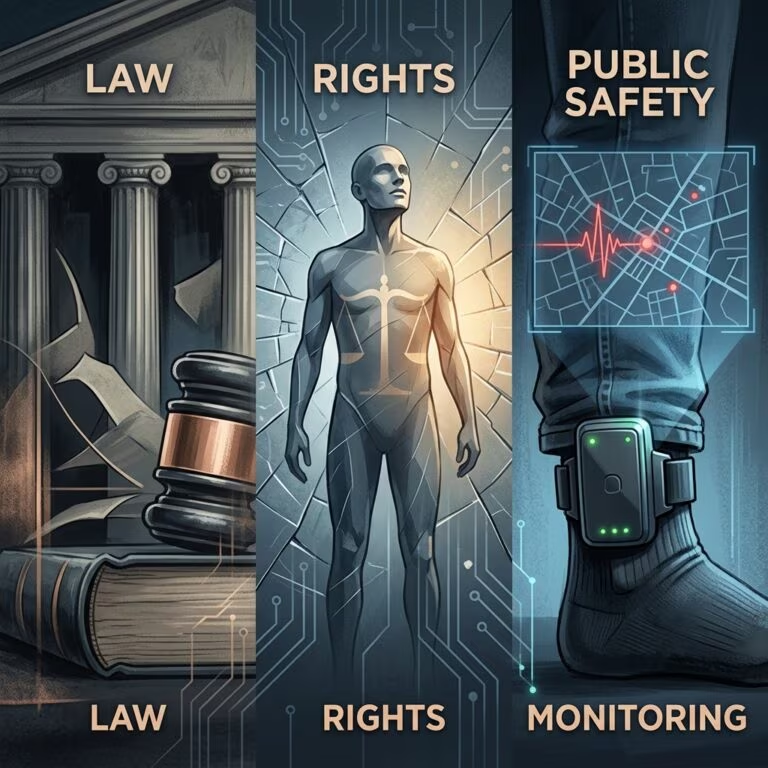
Undercover sex stings are a common law enforcement tactic in investigations involving prostitution, solicitation, and online sexual offenses. They are lawful in many situations, but they are not unlimited. The key questions are whether police merely created an opportunity to commit a crime or whether they went so far that the conduct became unlawful entrapment or violated other constitutional protections.
How undercover sex sting investigations work
In a typical sting, an officer or undercover investigator poses as someone who appears willing to engage in illegal sexual conduct. The target may be contacted through a website, app, chat platform, or other digital channel, and the conversation is used to test whether the person will move toward criminal conduct. In cases involving minors, officers may pose as a child or as an adult arranging access to a child.
These investigations are designed to gather evidence of intent. Prosecutors often focus on the messages, the speed of escalation, the defendant’s willingness to continue the exchange, and any steps taken to arrange a meeting. In many jurisdictions, a completed physical meeting is not required if the messages and conduct already satisfy the elements of the offense.
The central legal boundary: opportunity versus inducement
The most important distinction in sting law is between giving someone a chance to commit a crime and pressuring them into doing so. Police are generally allowed to provide the opportunity. They are not allowed to manufacture a crime by using repeated pressure, manipulation, or coercive tactics that would cause an otherwise unwilling person to offend.
This distinction matters because criminal law is supposed to punish voluntary wrongdoing, not behavior created by the government. If the suspect was already willing and simply accepted the opportunity, the case is usually stronger for the prosecution. If the government had to overcome clear reluctance through persistent persuasion, the defense may argue entrapment.
What entrapment means in practice
Entrapment is a defense that focuses on the conduct of law enforcement and the defendant’s predisposition. Courts commonly ask whether the government induced the offense and whether the accused was already ready and willing to commit it. Mere deception by police is not enough by itself; undercover work often relies on deception.
What strengthens an entrapment claim is evidence that the officer pushed the conversation beyond simply presenting an opportunity. That can include repeated invitations after refusal, emotional pressure, appeals to sympathy, or aggressive tactics intended to wear down hesitation. By contrast, quick agreement, active planning, and eager participation often weaken the defense.
Signs that a sting may have crossed the line
Not every undercover operation is treated the same way. Several facts may suggest that a case deserves closer legal scrutiny:
- Officers repeatedly encouraged the suspect after clear refusals.
- The government introduced sexual content and kept pushing it forward.
- Investigators exaggerated facts in a way that created undue pressure.
- The suspect appeared hesitant but was urged on until they complied.
- The operation relied on threats, harassment, or unusually aggressive tactics.
These facts do not automatically defeat a prosecution, but they may support motions to suppress evidence, a challenge to the charge, or an entrapment defense depending on local law.
Why intent matters so much
Most sting cases turn on intent. Prosecutors do not need to prove that the accused actually harmed a real victim in every case; they often need to show that the defendant believed they were engaging in illegal conduct and took substantial steps toward it. That is why text messages, photos, travel plans, payment discussions, and meeting arrangements are often central evidence.
Defense lawyers, on the other hand, often look for signs that the messages were ambiguous, joking, incomplete, or taken out of context. They may also argue that the government rushed the exchange toward criminal language and then treated ordinary conversation as proof of intent.
Common charges that can arise from one operation
A single sting investigation can lead to multiple charges, especially when the alleged conduct involves minors, online solicitation, or commercial sex offenses. The exact charges depend on state law, but they may include attempts, solicitation, travel-related offenses, communication offenses, or crimes involving exploitation.
| Possible issue | Why it matters |
|---|---|
| Online messages | May be used to prove intent, planning, or agreement |
| Meeting arrangements | Can show a substantial step toward committing an offense |
| Age-related statements | Often central in cases involving fictitious minors |
| Money or gifts | May support prostitution or solicitation allegations |
Because prosecutors sometimes file multiple counts based on the same conversation, a person facing one sting case may be exposed to several penalties at once.
Can there be a crime if no real minor existed?
In many jurisdictions, yes. The law in some states allows prosecution when the defendant believed they were communicating with a minor, even if the “minor” was actually an officer or a fictitious online profile. The absence of a real child does not necessarily end the case if the statute covers belief, attempt, or solicitation.
That said, the lack of an actual victim can still matter. It may affect the defense strategy, the charging theory, sentencing arguments, and the way a jury views the evidence. A good defense often examines whether the government proved the required mental state rather than assuming the case is open and shut because of the online messages.
How defense attorneys analyze these cases
A criminal defense lawyer will usually look at the entire exchange, not just the final incriminating message. Important questions often include whether the suspect initiated sexual talk, how quickly the conversation escalated, whether the officer steered the discussion, and whether the accused ever tried to disengage. Lawyers also examine timestamps, screenshots, metadata, and the exact wording used by both sides.
Other common defenses include mistaken identity, lack of sufficient evidence, unlawful search or seizure, incomplete preservation of digital records, and overbroad charging decisions. In some cases, the strongest argument is not that the client never communicated, but that the government cannot prove beyond a reasonable doubt that the communication met every legal element of the offense.
Why police stings are controversial
Supporters of sting operations argue that they help prevent exploitation before a real victim is harmed. They see the tactic as a proactive tool that targets people who are already searching for illegal sexual contact. Critics, however, worry that aggressive stings can blur the line between detection and creation of crime.
The controversy is especially strong when officers use fake personas, scripted chats, or emotionally manipulative tactics. Those methods can make it difficult to tell whether law enforcement uncovered criminal intent or helped produce it. Courts generally try to preserve legitimate undercover work while blocking conduct that becomes fundamentally unfair.
Practical consequences of a conviction
The consequences of a sting-related conviction can be severe. Depending on the offense, a defendant may face jail or prison time, probation, mandatory counseling, fines, and long-term registration requirements. In some cases, the collateral effects are even broader than the sentence itself, affecting employment, housing, family relationships, and digital access.
That is why immediate legal review is important. Early intervention can matter when it comes to bond conditions, evidence preservation, and plea negotiations. Once digital evidence is lost or charges are filed broadly, the defense often has fewer options.
Questions people often ask
FAQ
Is it illegal for police to pose as someone online?
Yes, undercover posing is generally allowed. The legal issue is whether the officer stayed within the bounds of lawful investigation and avoided entrapment.
Does entrapment mean the charges disappear automatically?
No. Entrapment is a defense that must usually be raised and supported with evidence. It does not apply just because police were involved.
Can messages alone support a sex sting charge?
In many cases, yes. Electronic communications can be enough if they show intent, planning, or an attempt to complete the offense.
What if I never met the person in real life?
That fact may help in some cases, but it does not automatically defeat a charge if the statute criminalizes the attempted or solicited conduct.
Should I talk to police before getting a lawyer?
No. In a sting case, digital statements can be interpreted in ways that make the case worse, so legal advice should come first.
Why early legal review matters
Because sting cases depend heavily on digital records, timing is important. Screenshots, device data, account logs, and chat history can disappear or become harder to challenge if the case is not reviewed quickly. A defense lawyer may be able to identify weak links in the government’s evidence before the case moves too far.
Early review also helps determine whether the government overcharged the case, whether a motion should be filed, and whether there is room to negotiate a more favorable resolution. In some situations, the best outcome comes from attacking the evidence before trial rather than waiting to argue credibility before a jury.
What to keep in mind if you are facing charges
If you are accused in an undercover sting, the details matter. A single conversation may look incriminating in isolation, but context can change how the law applies. The exact words used, who initiated the exchange, whether there was pressure, and what steps were actually taken can all affect the outcome.
The legal system treats undercover investigations as legitimate tools, but legitimacy depends on boundaries. When officers stay within those boundaries, sting evidence can be powerful. When they cross them, the defense may have a meaningful challenge that goes directly to fairness, intent, and due process.
References
- Undercover Sex Stings: Are There Legal Limits? — FindLaw. 2026-07-10. https://www.findlaw.com/legalblogs/criminal-defense/undercover-sex-stings-are-there-legal-limits/
- Internet Sex Sting Operations in Columbus, Ohio — LHA. 2026-07-10. https://www.columbuscriminalattorney.com/sex-offenses/internet-sex-sting-operations/
- Sex Crime Police Sting Operations In Houston, Texas — Scheiner Law. 2026-07-10. https://scheinerlaw.com/sex-crime-police-stings-houston-texas/
- Tampa Bay Online Sex Sting Defense — Brancato Law Firm, P.A. 2026-07-10. https://www.brancatolawfirm.com/blog/tampa-sex-sting/
- The Legality of Sex Sting Operations — DeGuerin & Dickson Law Firm. 2026-07-10. https://www.deguerin.com/the-legality-of-sex-sting-operations-understanding-the-law-and-protecting-your-rights/