
Uncontested Divorce in North Carolina: A Practical Guide
Learn how uncontested divorce works in North Carolina, including eligibility rules, required forms, timelines, and common pitfalls to avoid.
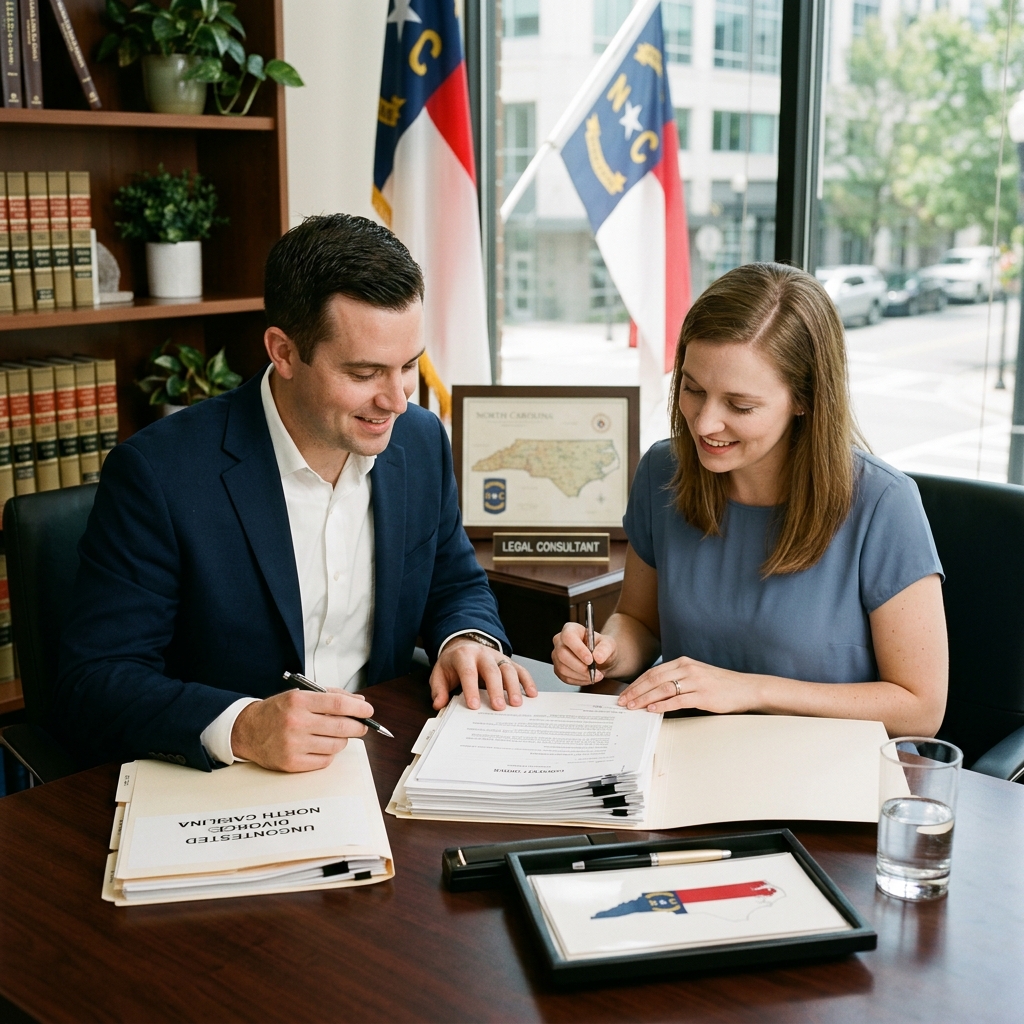
An uncontested divorce in North Carolina can provide a relatively straightforward and affordable way to end a marriage when both spouses agree on the basics. This guide explains the eligibility rules, paperwork, and court steps involved, and highlights important issues you should resolve before the divorce is final.
Understanding Uncontested Divorce in North Carolina
North Carolina uses the term absolute divorce for the court order that legally ends a marriage. An uncontested divorce generally means that:
- the parties are not disputing the basic facts needed for absolute divorce, and
- no one is fighting the divorce itself in court.
However, the word “uncontested” can be confusing. Some people use it to mean they have also settled related issues such as property division, alimony, child custody, and child support. In North Carolina, those issues can be handled separately through agreements or separate court cases.
| Topic | Uncontested in Practice |
|---|---|
| Absolute divorce | No dispute about separation period, residency, or marital status; no one opposes entry of the divorce judgment. |
| Property, alimony, custody, support | Often resolved by written agreement or separate court proceedings; not required to be decided in the divorce itself. |
| Court process | Usually no trial in the traditional sense; the judge or clerk reviews documents and may hear brief testimony. |
Core Legal Requirements for Absolute Divorce
Before you can file for an uncontested absolute divorce in North Carolina, you must meet specific legal requirements. These come from state statutes and court rules, and clerks’ offices around the state provide self-help guidance based on them.
Mandatory Separation Period
- Spouses must live separate and apart for at least one year before filing for absolute divorce.
- Separate and apart generally means living in different residences, not just different rooms in the same home.
- The separation must last at least one year and one day before the complaint is filed in some county instructions, ensuring the full year has passed.
During the separation period, couples often negotiate or sign agreements addressing property, support, and parenting arrangements, but a written separation agreement is not legally required to obtain the divorce.
Residency Requirement
- At least one spouse must have been a resident of North Carolina for at least six months immediately before filing for divorce.
- Residency is typically shown by living in the state with the intent to remain, not just visiting.
Grounds for Absolute Divorce
Most uncontested divorces in North Carolina are based on one year’s separation, which is a no-fault ground. Fault grounds (such as marital misconduct) are more relevant to alimony or other issues, not to obtaining the divorce itself.
Preparing for an Uncontested Divorce
Even when spouses agree that the marriage should end, careful preparation is essential. A “simple” divorce can still have long-term effects on property and support rights.
Issues to Address Before Filing
North Carolina law places strict limits on when you can ask a court to divide property or award alimony. If you allow the absolute divorce to be entered first, you may permanently lose the right to ask the court for those things later.
Before finalizing an uncontested divorce, try to resolve:
- Equitable distribution (division of marital property and debts)
- Alimony or post-separation support
- Child custody (legal decision-making and physical schedule)
- Child support and payment of health insurance and other expenses
These issues can be resolved by:
- a written separation agreement signed and notarized by both spouses, or
- separate court actions filed before the absolute divorce is granted.
When Uncontested Divorce Is a Good Fit
An uncontested approach is usually most appropriate when:
- both spouses accept that the marriage is over
- the one-year separation requirement is clearly satisfied
- both can communicate well enough to exchange information and sign paperwork
- major financial and parenting issues are already resolved or limited in scope
- there is no ongoing domestic violence or severe power imbalance
Step-by-Step Process for an Uncontested Divorce
Procedures vary slightly by county, but most uncontested absolute divorces follow a similar sequence.
1. Drafting and Filing the Divorce Complaint
The divorce begins when one spouse (the plaintiff) files a written Complaint for Absolute Divorce with the clerk of superior court. Self-help packets from Legal Aid of North Carolina and some clerk’s offices provide standard form complaints.
A typical complaint will include:
- names and addresses of both spouses
- date and place of the marriage
- confirmation that at least one spouse has lived in North Carolina for six months
- the date of separation and statement that the parties have lived separate and apart for at least one year
- identification of any minor children of the marriage
- a request that the court grant an absolute divorce
The plaintiff signs the complaint, usually before a notary public. Filing requires payment of a court filing fee, although some people may qualify for a fee waiver based on indigency.
2. Issuing and Serving the Civil Summons
When the complaint is filed, the clerk issues a Civil Summons (AOC‑CV‑100), which formally notifies the other spouse (the defendant) of the lawsuit.
The plaintiff must ensure that the defendant receives the complaint and summons through an approved method, such as:
- service by the sheriff at the defendant’s home or workplace
- certified mail, return receipt requested
- the defendant’s signed and notarized acceptance of service
The court file must contain proof of service (for example, an affidavit of service or the sheriff’s return), or the case cannot move forward.
3. Waiting Period After Service
Once the defendant has been properly served, North Carolina rules require a waiting period of at least 30 days before the court may enter a judgment of absolute divorce.
During these 30 days, the defendant has the right to file:
- an answer admitting or denying the allegations
- counterclaims (for example, for equitable distribution or alimony)
In an uncontested case, the defendant may choose not to file anything or may file a response that admits the key facts. Some counties also allow the defendant to sign a waiver of the right to respond, which may help move the case forward more quickly.
4. Obtaining a Court Date or Clerk Review
After the 30‑day response period ends, the plaintiff may request a court date or submit the case to the clerk for review, depending on county practice.
In many counties:
- a brief hearing is scheduled before a judge, or
- a clerk of court reviews the paperwork and signs the judgment in uncontested cases.
The plaintiff is usually required to appear in person at any scheduled hearing, and must provide additional forms such as a proposed Judgment for Absolute Divorce and a Certificate of Absolute Divorce used for state vital records.
5. The Hearing and Final Judgment
At an uncontested divorce hearing, the process is typically brief. The judge (or clerk) confirms:
- jurisdiction and residency requirements
- the one‑year separation period
- the existence of any minor children
- that the marriage is irretrievably broken
The plaintiff may be asked to testify under oath to these facts. If everything is in order, the court signs the Judgment of Absolute Divorce. Once signed and filed, the divorce is final and both parties are legally single again.
Self-Representation vs. Hiring a Lawyer
Many people complete uncontested divorces without hiring a private attorney, especially when there are no unresolved property or support issues and both spouses are cooperative. Legal Aid of North Carolina and some county clerks provide do‑it‑yourself materials for eligible individuals.
Situations Where Legal Advice Is Strongly Recommended
- significant marital assets (real estate, retirement accounts, business interests)
- disputes over custody, visitation, or relocation with children
- desired alimony or support from a higher‑earning spouse
- concerns about domestic violence or safety
- questions about whether to file for equitable distribution or alimony before divorce
Even in an otherwise uncontested divorce, a brief consultation with a family law attorney can clarify rights that may be lost if the judgment is entered too quickly. The North Carolina State Bar and Legal Aid organizations emphasize the importance of understanding these consequences before you proceed.
Special Considerations for Military Spouses
North Carolina courts must also comply with the Servicemembers Civil Relief Act (SCRA)
If your spouse is in the military, the court may delay proceedings or require additional steps to ensure that the service member’s rights are protected, particularly if they are deployed or unable to appear.
Time, Cost, and Common Pitfalls
Typical Timeline
Although every case is unique, a basic uncontested divorce often follows this approximate timeline:
- 1+ year: separation period before filing
- Filing: complaint and summons filed with the clerk
- 1–3 weeks: service on the defendant, depending on method
- 30 days: minimum waiting period after service
- 1–6 weeks: scheduling and holding the hearing or clerk review, depending on local court calendars
Costs to Expect
Costs vary by county and individual choices but may include:
- court filing fee for the divorce complaint
- service fees (sheriff or certified mail)
- notary fees for sworn documents
- copying and mailing costs
- optional attorney’s fees for advice or document preparation
Common Mistakes in Uncontested Divorces
To protect your rights, be cautious about:
- Delaying property or support claims until after the divorce is granted, which can permanently bar them in many cases.
- Incorrect separation dates that do not satisfy the one‑year requirement.
- Improper service of the complaint and summons, leading to delays or dismissal.
- Incomplete forms or missing signatures and notarizations.
- Not updating beneficiaries on life insurance, retirement plans, or other accounts after the divorce.
Practical Tips for a Smoother Process
- Gather important documents early, including marriage certificate, addresses, and information about any children.
- Check your county clerk’s website or office for local instructions, required forms, and specific procedures.
- Use official state forms whenever possible and follow the instructions carefully.
- Keep copies of everything you file or receive from the court.
- Arrive early for any hearing, dress appropriately, and bring your paperwork organized in a folder.
Frequently Asked Questions About Uncontested Divorce in North Carolina
Can we file for divorce before we’ve been separated for a full year?
No. North Carolina law requires at least one year of living separate and apart before you can file for absolute divorce based on separation. Filing too early can result in dismissal and additional filing fees.
Do we need a written separation agreement to get an uncontested divorce?
A written separation agreement is not required to obtain an absolute divorce, but many couples choose to sign one to address property division, support, and parenting arrangements. If you do not resolve these issues before the divorce is granted, you may lose important rights, especially regarding property and alimony.
Can we use the same lawyer for an uncontested divorce?
In North Carolina, one lawyer ethically cannot represent both spouses in a divorce because their legal interests may conflict. A lawyer may represent one spouse and the other can proceed without representation, or each spouse can hire separate counsel.
Do I have to go to court if my divorce is uncontested?
Many counties still require the filing spouse to appear briefly, even in an uncontested case, to provide testimony about residency and separation. Some divorces are handled by clerks based on written affidavits, but practices differ by county, so you should check local procedures.
What happens if my spouse doesn’t respond after being served?
If the defendant does not file an answer or appear within the required time, the court may still grant an absolute divorce after the 30‑day waiting period, as long as service was proper and the plaintiff proves the necessary facts. Additional protections may apply if the defendant is on active military duty.
Will the divorce automatically divide our property or decide custody?
No. An absolute divorce order usually only ends the marriage. Property division, alimony, custody, and child support are separate issues that must be resolved by agreement or separate court orders, often before the divorce judgment is entered if you want the court to have authority over them.
References
- Uncontested Divorce — Dare County Clerk of Superior Court. 2024-01-01. https://www.darenc.gov/departments/clerk-of-court/civil/family-law/uncontested-divorce
- File-It-Yourself Divorce Packet — Legal Aid of North Carolina. 2024-08-01. https://legalaidnc.org/wp-content/uploads/2024/08/File-It-Yourself-Divorce-Packet.pdf
- Divorce Process in North Carolina — Caulder & Valentine, PLLC. 2023-05-01. https://www.cauldervalentine.com/divorce/divorce-process/
- What is an Uncontested Divorce? — Smith Debnam Narron Drake Saintsing & Myers, LLP. 2022-11-15. https://www.smithdebnamlaw.com/article/what-is-an-uncontested-divorce/
- Your Divorce: An Overview of the Process — North Carolina State Bar. 2021-06-01. https://www.ncbar.gov/for-the-public/legal-assistance-for-military-personnel/general-military-law-articles-legal-eagle/your-divorce-an-overview-of-the-process/
- NC Divorce Self Help Clinic (Video) — Legal Aid of North Carolina. 2021-05-21. https://legalaidnc.org/video/nc-divorce-self-help-clinic-5-21/
Similar Articles








Read full bio of medha deb


