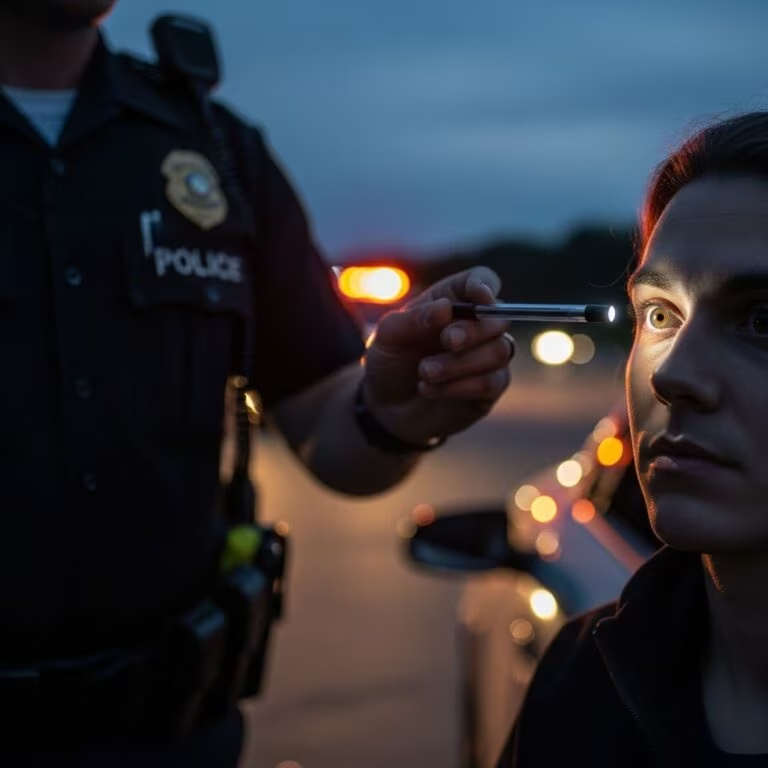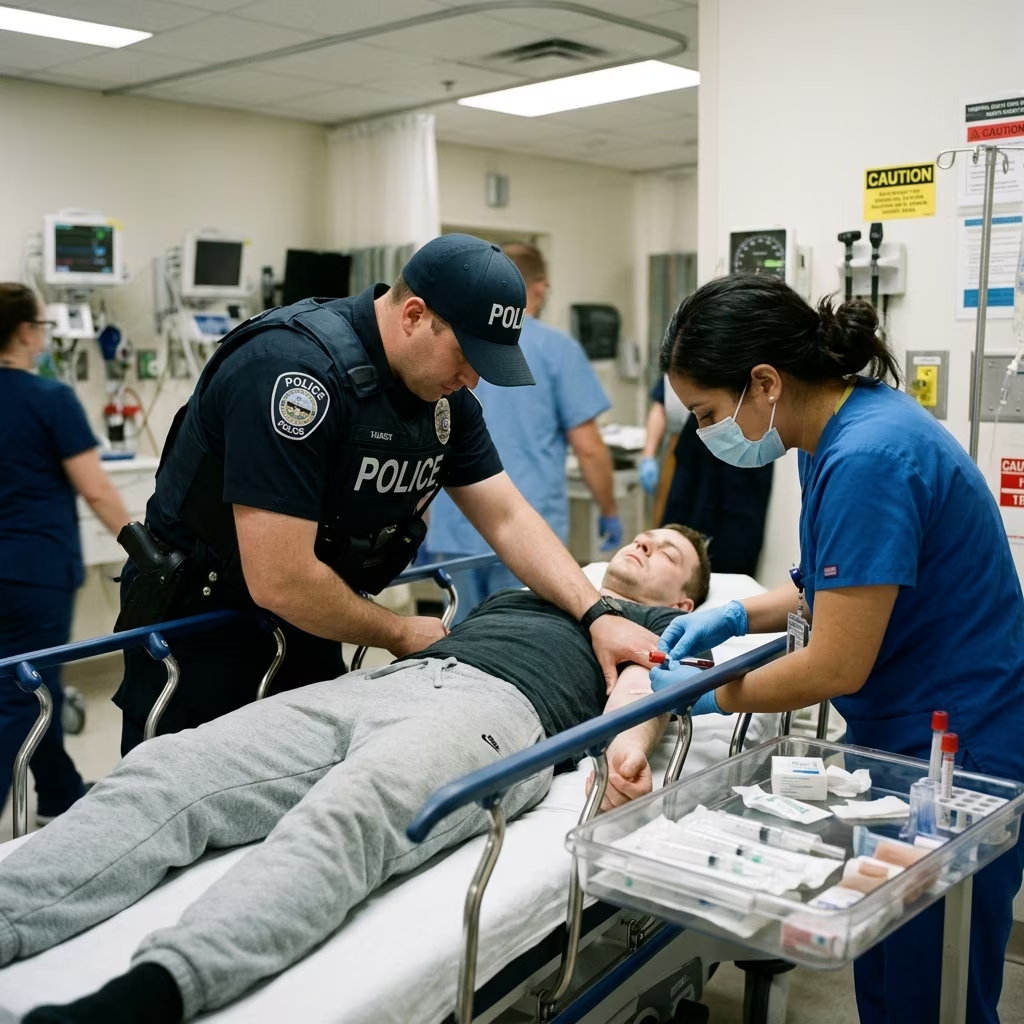
Police investigating suspected drunk or drug-impaired driving frequently rely on blood alcohol concentration (BAC) testing, but the legal rules change dramatically when a driver is unconscious and unable to consent. Recent United States Supreme Court precedent holds that officers may almost always order a warrantless blood draw from an unconscious DUI suspect, yet that authority is not unlimited and remains governed by the Fourth Amendment and the doctrine of exigent circumstances.
This article explains the key principles behind warrantless blood tests on unconscious drivers, focusing on the impact of Mitchell v. Wisconsin, how implied consent statutes interact with constitutional protections, and what factors courts consider when deciding whether such a search is lawful.
Background: Blood Tests as Fourth Amendment Searches
Under the Fourth Amendment, taking a person’s blood for evidence is considered a search, and searches generally require a warrant supported by probable cause. The Supreme Court has emphasized that blood draws are a significant bodily intrusion that implicates strong privacy interests, especially because blood contains extensive personal information beyond just alcohol content.
Over time, the Court has balanced two competing interests:
- The government’s interest in obtaining BAC evidence before it dissipates.
- Individuals’ interest in bodily integrity and privacy from invasive searches.
Earlier cases such as Schmerber v. California and Missouri v. McNeely recognized that alcohol in the bloodstream naturally diminishes over time, but rejected a blanket rule that this fact alone always justifies warrantless blood tests. Instead, officers must show a genuine emergency—known as an exigent circumstance—for bypassing the warrant process.
Key Case: Mitchell v. Wisconsin
The turning point for unconscious DUI suspects came in Mitchell v. Wisconsin, a 2019 U.S. Supreme Court decision involving a driver who was arrested for operating while intoxicated, became increasingly lethargic, and was ultimately unconscious by the time officers reached the hospital.
Wisconsin, like many states, had an implied consent law stating that anyone who drives on public roads is deemed to have consented to chemical testing of their blood, breath, or urine for alcohol or drugs. The question in Mitchell was whether police could rely on that implied consent to order a blood draw without a warrant once the driver became unconscious.
The Supreme Court’s plurality opinion did not completely resolve the implied consent question, but instead focused on exigent circumstances. The Court held that when a driver is unconscious and cannot take a breath test, the exigent-circumstances rule almost always permits a warrantless blood draw, assuming officers have probable cause to suspect drunk driving.
Why Unconsciousness Changes the Analysis
The Court reasoned that two conditions usually coexist in these cases:
- Dissipating evidence: Alcohol in the bloodstream steadily declines as the body metabolizes it, so delay reduces the evidentiary value of a test.
- Pressing demands: An unconscious driver typically needs urgent medical care, and officers may need to handle accident scenes, attend to victims, and perform other time-sensitive tasks.
Because officers must often prioritize safety and medical needs over drafting and obtaining a warrant, the Court concluded that the combination of dissipating BAC and competing emergencies will ordinarily create an exigency sufficient to justify a warrantless blood test.
Exigent Circumstances: The Core Justification
Exigent circumstances allow police to conduct a search without a warrant when waiting to obtain one would significantly undermine law enforcement or public safety interests. In the context of an unconscious DUI suspect, officers must be able to articulate specific facts showing that immediate action was necessary.
According to subsequent guidance and court decisions applying Mitchell, the following questions often matter:
- Was the driver transported promptly to a hospital for emergency treatment?
- Could officers realistically have obtained a warrant without interfering with urgent medical care or accident response?
- How much time had passed between the incident and the blood draw?
- Were there technological tools (e-warrants, on-call judges) available to speed up the warrant process?
- Would medical staff have drawn blood anyway for treatment, regardless of the investigation?
Law enforcement agencies often instruct officers to document these facts in detail to show that a true exigency existed, rather than merely relying on the general claim that evidence dissipates over time.
How Implied Consent Statutes Fit In
Every state has some form of implied consent law, which typically says that by driving on public roads, motorists are deemed to have consented to chemical testing if lawfully arrested for DUI. These statutes often include specific language addressing drivers who are unconscious or otherwise incapable of refusal.
For example, some states provide that an unconscious driver is deemed not to have withdrawn consent, so police may rely on statutory implied consent to obtain a blood sample. In Florida, courts have held that under the state’s implied consent statute, officers may seize blood from an unconscious DUI suspect without a warrant if certain conditions are met.
However, implied consent laws cannot override the Constitution. The Supreme Court has made clear that statutory consent does not automatically eliminate the need for a warrant in every case; courts still examine whether the search was reasonable under the Fourth Amendment and whether the driver’s rights were protected.
Limits on Police Power: When a Warrant Is Still Required
Although Mitchell gave officers broad authority in cases involving unconscious DUI suspects, it did not create an absolute rule. The Court left open the possibility that a defendant could show that, under the specific facts of their case, there was no true exigency and a warrant should have been obtained.
Lower courts and training bulletins have emphasized that each incident must be evaluated individually. A warrant may still be required when, for example:
- The driver is already stabilized and receiving care, and officers have clear time to seek a warrant.
- The accident scene is under control and no longer demands officers’ immediate attention.
- Electronic warrant procedures allow a judge’s approval in minutes without disrupting medical treatment.
- There is a significant delay (such as 90 minutes or more) between the incident and the blood draw, suggesting that urgency no longer justifies skipping a warrant.
Some appellate decisions have found no exigent circumstances where officers waited a substantial time before ordering a blood draw from an unconscious suspect and could not show that obtaining a warrant would have interfered with other pressing duties.
Factors Courts Consider in Challenging a Blood Draw
When defendants challenge a warrantless blood test, courts often conduct a fact-intensive analysis. Important considerations include:
| Factor | Questions Courts Ask | Why It Matters |
|---|---|---|
| Probable cause | Did officers have specific facts indicating DUI (odor of alcohol, slurred speech, witness statements, crash details)? | Without probable cause, any search—including a blood draw—is unconstitutional. |
| Medical urgency | Was the suspect’s condition serious enough to demand immediate transport and treatment? | Urgent care can justify prioritizing health and safety over securing a warrant. |
| Time constraints | How much time elapsed between encountering the suspect and the blood draw? | Long delays undercut the claim that there was no time to obtain a warrant. |
| Availability of warrants | Could officers have used e-warrants, phone warrants, or on-call judges? | Modern warrant procedures can reduce the necessity of warrantless searches. |
| Independent medical blood draws | Would hospital staff have drawn blood for treatment even without police involvement? | If so, that fact may affect whether police action is seen as truly exigent or merely convenient. |
State-Level Developments After Mitchell
Following the Supreme Court’s ruling, state courts and legislatures have been refining how Mitchell applies in practice.
- Some state supreme courts, such as Florida’s in McGraw v. State, have explicitly adopted Mitchell’s reasoning, emphasizing that warrantless blood draws from unconscious suspects are permissible if the defendant cannot show that blood would not have been drawn absent the BAC investigation and that officers reasonably believed a warrant would interfere with other urgent duties.
- Law enforcement bulletins in states like California advise officers that they must still assess exigency case-by-case and document the specific reasons a warrant was not obtained, especially now that many jurisdictions have rapid warrant procedures.
- Other courts have emphasized that there is no categorical rule authorizing warrantless blood draws in all unconscious-driver cases, and that officers should obtain a warrant whenever practicable.
As these decisions accumulate, the contours of what counts as a legitimate exigent circumstance are becoming clearer, and officers face increasing expectations to justify their decisions with detailed, contemporaneous reasoning.
Practical Implications for Drivers and Defendants
For drivers, especially those involved in serious accidents, it is important to understand that losing consciousness can significantly affect the legal analysis of a blood test. Though you cannot control whether you are unconscious, the law assumes different risks and balances when you cannot make choices in real time.
From a defense perspective, attorneys examining a warrantless blood draw from an unconscious client will often:
- Scrutinize the timeline for gaps that suggest a warrant could have been obtained.
- Review police reports for clear articulation of exigent circumstances.
- Compare officers’ stated reasons with available warrant procedures in that jurisdiction.
- Investigate whether medical staff would have drawn blood for treatment regardless of law enforcement involvement.
If a court finds that the exigency claimed by officers did not actually exist—or that the search was otherwise unreasonable under the Fourth Amendment—the resulting BAC evidence may be suppressed, which can substantially weaken the prosecution’s case.
Guidelines Commonly Given to Law Enforcement
Law enforcement training materials responding to Mitchell typically offer officers a checklist for deciding whether they may proceed without a warrant. While the details vary by jurisdiction, common themes include:
- Confirm that the driver is truly unconscious or incapable of meaningful consent.
- Document clear probable cause for DUI before ordering any blood test.
- Assess whether the suspect’s medical condition and accident-scene demands leave adequate time to secure a warrant.
- Use fast warrant tools (such as telephonic or electronic warrants) whenever reasonably available.
- Explain in reports why a warrant was not obtained, including reference to specific timing, medical, and safety concerns.
In some agencies, supervisors review these decisions to ensure they comply with both state law and constitutional standards, recognizing that improperly obtained blood evidence can jeopardize prosecutions and expose the agency to civil liability.
Frequently Asked Questions
Can police always draw blood from an unconscious DUI suspect without a warrant?
No. The Supreme Court’s Mitchell decision states that the exigent-circumstances rule almost always permits a warrantless blood draw in these cases, but leaves room for exceptions. If the driver can show that no true exigency existed and officers had a reasonable opportunity to obtain a warrant, the blood draw may be ruled unconstitutional.
Does implied consent mean I have no rights if I am unconscious?
Implied consent laws say that drivers are deemed to have consented to testing as a condition of using public roads, and many statutes provide that an unconscious person is treated as not having withdrawn that consent. However, implied consent cannot override the U.S. Constitution; courts still review whether any search was reasonable under the Fourth Amendment.
What if the hospital was going to draw my blood anyway?
If medical staff would have drawn blood regardless of the DUI investigation, courts may treat that fact as part of the exigency analysis, especially if police simply obtained a sample of blood drawn for treatment purposes. Nonetheless, officers generally must still comply with applicable privacy rules, state statutes, and constitutional standards.
Can officers rely solely on the fact that alcohol dissipates as an exigency?
No. The Supreme Court has rejected the idea that the natural dissipation of alcohol by itself always creates an exigency. Instead, there must be additional factors—such as an unconscious suspect needing urgent treatment or complex accident-scene responsibilities—that make obtaining a warrant impracticable.
What should I do if I believe my blood was taken illegally?
If you suspect your blood was drawn in violation of your rights, you should consult an experienced criminal defense attorney. Counsel can review police reports, medical records, and available video to determine whether officers had probable cause and genuine exigent circumstances, and may seek to suppress the BAC evidence if the search appears unconstitutional.
References
- DUI Blood Testing the Unconscious Driver: No Warrant Needed (Usually) — Full Focus Law. 2023-01-10. https://fullfocuslaw.com/dui/dui-blood-testing-the-unconscious-driver-no-warrant-needed-usually/
- No Exigent Circumstances for Warrantless Blood Draw from Unconscious Driver Suspected of DUI 90 Minutes After Accident — Uthman Law Office (San Francisco Criminal Lawyer Blog). 2021-03-18. https://www.sanfranciscocriminallawyerblog.com/no-exigent-circumstances-for-warrantless-blood-draw-from-unconscious-driver-suspected-of-dui-90-minutes-after-accident/
- Constitutional Policing Update: Warrantless Blood Draw of an Unconscious Driver — Orange County Sheriff’s Department. 2024-11-01. https://www.ocsheriff.gov/sites/ocsd/files/2024-11/Bulletin%2024-09%20Constitutional%20Policing%20Update%20-%20Warrantless%20Blood%20Draw%20of%20an%20Unconscious%20Driver_1.pdf
- Without Warrant, Police May Take Blood From Unconscious DUI Suspect — Annenberg Classroom. 2019-06-27. https://www.annenbergclassroom.org/timeline_event/without-warrant-police-may-take-blood-from-unconscious-dui-suspect/
- Can Police Seize Blood from an Unconscious DUI Suspect? — Sammis Law Firm. 2020-05-05. https://www.tampaflduilawyer.com/defenses/blood-test/unconscious/
- Mitchell v. Wisconsin, Supreme Court Bulletin — Legal Information Institute, Cornell Law School. 2019-06-27. https://www.law.cornell.edu/supct/cert/18-6210