Why repair choice does not automatically erase warranty protection
Many consumers assume that using an independent mechanic, a local repair shop, or even doing basic maintenance at home will cancel a product or vehicle warranty. Federal warranty law does not work that way. Under the Magnuson-Moss Warranty Act, manufacturers generally cannot condition warranty coverage on a consumer using a specific brand of parts or a dealer-only service center, unless the repair or part is supplied free of charge under the warranty or the consumer has agreed to a lawful waiver. The Federal Trade Commission enforces this rule, and it is designed to stop companies from using warranty language to lock consumers into a single repair network.
That protection matters because it preserves choice. Consumers can compare prices, seek specialized service, and maintain products in a way that works for their budget. A warranty may still be denied in some situations, but the denial must be tied to a real connection between the repair or part and the failure being claimed, not just the fact that an unauthorized shop touched the product.
What the federal warranty rule actually says
The Magnuson-Moss Warranty Act is a federal consumer protection law passed in 1975 that governs written warranties on many consumer products. It requires warranty information to be disclosed clearly and limits deceptive or unfair warranty terms. For products covered by the Act, a company generally may not tell consumers that warranty coverage disappears merely because they used an aftermarket part or a third-party service provider.
FTC guidance also makes clear that it is deceptive to create the impression that warranty coverage is automatically lost when a consumer uses unauthorized parts or service. In practical terms, a manufacturer may only deny a claim if it can show that the particular non-original part or repair caused the failure at issue.
| Issue | General rule |
|---|---|
| Independent mechanic performs routine maintenance | Warranty is not automatically voided |
| Aftermarket part is installed | Coverage may still remain unless the part caused the defect |
| Dealer demands dealer-only service for all repairs | Usually not allowed for covered warranty claims |
| Free warranty repair requires a designated facility | May be allowed under the law |
When a repair can affect coverage
The law does not give consumers a blanket right to ignore maintenance or use any part without consequence. A manufacturer can still deny a warranty claim if it proves that a non-approved part, an improper repair, or neglected maintenance caused the problem. For example, if an engine failure is traced to oil starvation after the owner ignored basic service requirements, the company may have a legitimate basis to reject that specific claim.
The key distinction is causal proof. The company has the burden to connect the failure to the disputed service or part. It is not enough to point to the mere existence of an independent repair invoice, a non-OEM part, or a broken seal on a product case. That distinction is one reason warranty disputes often turn on documentation, technical reports, and maintenance records.
How to protect yourself before and after repairs
Good recordkeeping is one of the strongest consumer protections in a warranty dispute. Keep every receipt, work order, and service note that describes the date, mileage or usage, parts installed, and work performed. If you perform your own maintenance, write down what you did, when you did it, and what products or parts you used. These records can help show that you did not neglect the product and can also help rebut an unsupported denial.
It is also wise to read the warranty itself before authorizing work. Some warranties place special rules on maintenance schedules, fluid specifications, or inspection intervals. Those rules may be enforceable if they relate to the functioning of the product and are not used to force a consumer into a paid dealer-only arrangement. If the warranty says one thing and a salesperson or service writer says another, ask for the company’s position in writing.
- Save every invoice, estimate, and repair order.
- Record the dates and mileage or serial information for each service.
- Keep packaging and labels for replacement parts when practical.
- Ask the shop to explain any warranty-related comments in writing.
- Do not rely only on verbal promises from sales staff or service advisers.
What to do if a repair shop oversteps or a claim is denied
If a shop performs work without your consent, the issue may involve repair authorization rules rather than warranty law. In many states, repair facilities must obtain approval before going beyond the original work order or before exceeding a certain dollar threshold, often around $50 to $100. If they do additional work without permission, they may have trouble collecting payment for the unauthorized portion, and the consumer may have grounds to dispute the bill.
If a manufacturer or dealer denies a warranty claim because you used an independent shop or aftermarket part, ask for the denial and the reason in writing. Then compare that explanation against your records and the warranty terms. If the company claims the repair caused the issue, ask what evidence it has. A vague statement that the service was “unauthorized” is not the same as proof of causation.
When a dispute cannot be resolved informally, consumers can consider a complaint to the appropriate state agency, the FTC, or a consumer protection office. Depending on the amount at stake, small claims court or a civil lawsuit may also be available. Some consumers can recover attorney’s fees and costs in warranty litigation, depending on the governing law and the terms of the claim.
Common myths about warranty loss
One of the most persistent myths is that any non-dealer maintenance instantly voids a warranty. That is not what federal law says. Another myth is that a manufacturer may demand only branded parts for all routine service. Under the Magnuson-Moss framework, that kind of tying arrangement is generally prohibited unless the part or service is provided free under the warranty or the consumer has granted a valid waiver.
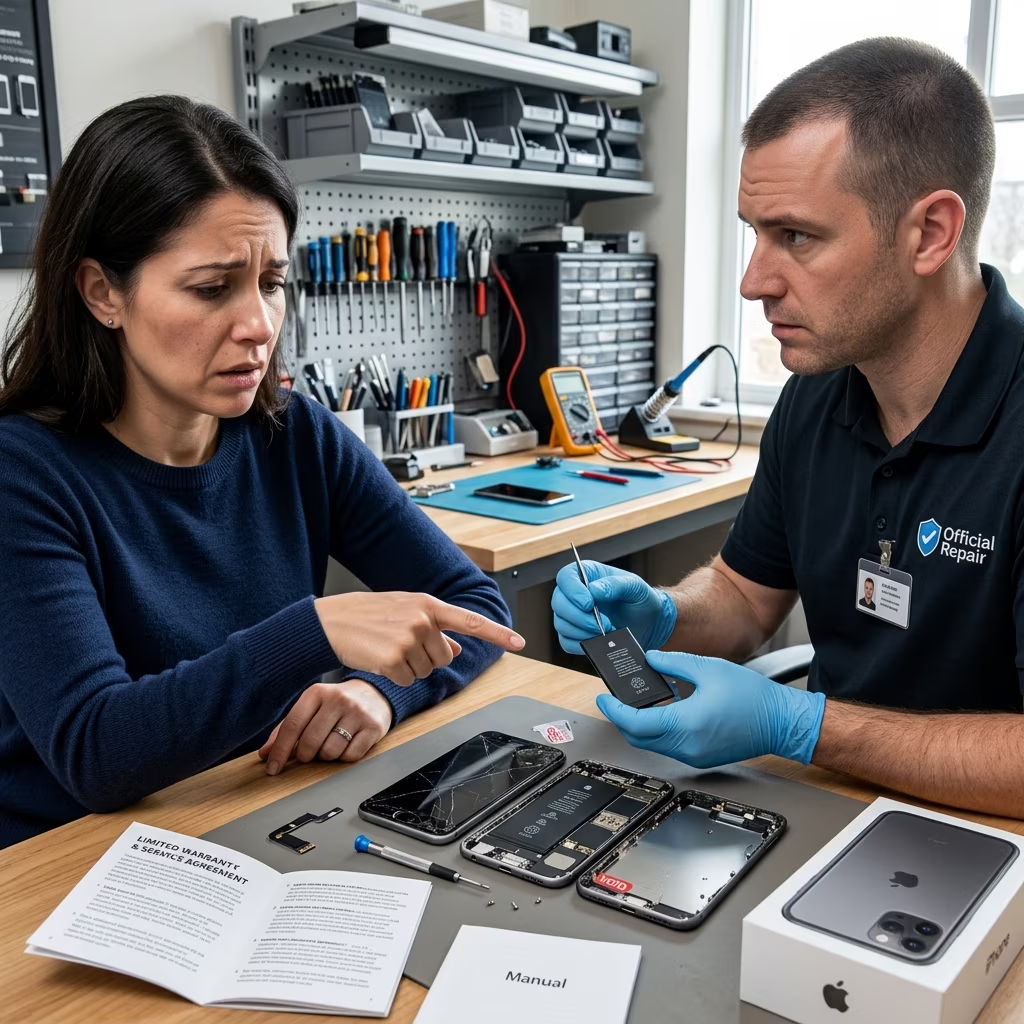
A third misconception is that opening a device or using a third-party repair provider automatically destroys all warranty protection. While specific circumstances can matter, the law does not support blanket claims that a warranty vanishes simply because a consumer chose a different repair path. The stronger legal question is whether the product failed because of that choice.
Practical steps for consumers in a dispute
When a warranty claim turns into a fight, structure your response around facts. Start with the product purchase date, the warranty terms, the repair history, and the specific defect. Then note whether the disputed repair involved the same component that failed. This timeline can reveal whether the manufacturer’s denial is well founded or whether it rests on assumptions.
If you are communicating with the seller or manufacturer, stay precise and avoid emotional back-and-forth. Ask for the legal and technical basis for the denial. Request copies of inspection reports, diagnostic notes, and any internal findings supporting the decision. If the company refuses, that refusal itself may be useful evidence later. Many disputes are settled when the consumer has a well-organized file and a clear understanding of the applicable rule.
How businesses should think about warranty language
For manufacturers and sellers, the lesson is that warranty language must be accurate and not misleading. FTC enforcement has targeted companies whose notices suggested that consumers would lose coverage by using non-authorized parts or service. Businesses should review written warranties, consumer-facing disclaimers, and service scripts to ensure they do not imply more restriction than federal law allows.
Businesses also benefit from training service teams to distinguish between a lawful denial and an automatic assumption. A fair denial should identify the defect, the evidence, and the causal link. That approach reduces regulatory risk, improves transparency, and makes customer communications more defensible if a complaint is later filed.
Frequently asked questions
Can I use an independent mechanic without losing my warranty?
Yes, in general you can use an independent mechanic for routine maintenance or repairs without automatically voiding your warranty. The manufacturer must still honor coverage unless it can show that the outside repair caused the specific failure being claimed.
Can a company require dealer-only service for all maintenance?
Usually not for covered warranty claims. Federal warranty law generally prohibits conditioning coverage on the use of a named shop, brand, or service provider, except in limited situations such as free warranty service or a valid waiver.
What if I used an aftermarket part?
Using an aftermarket part does not automatically end warranty rights. The key issue is whether the part caused the defect. If the company cannot make that connection, it should not deny the claim on that basis alone.
What records should I keep?
Keep receipts, service orders, dates, mileage or usage logs, part descriptions, and any written communication with the seller or manufacturer. These documents can be decisive if a warranty dispute arises.
Where can I complain if a claim is wrongly denied?
You can raise the issue with the manufacturer, then escalate to a state consumer agency, attorney general, the FTC, or a court if needed. The best route depends on the size of the dispute and the available evidence.
Why this area of law still matters
Warranty disputes are about more than one repair bill. They affect whether consumers can choose affordable maintenance, whether small repair businesses can compete, and whether companies can use fine print to steer customers toward a single channel. Federal law tries to balance those interests by allowing legitimate warranty limits while preventing unfair restrictions on ordinary repair choices.
For consumers, the practical takeaway is simple: do not assume a warranty is gone just because you did not use the dealer. For businesses, the practical takeaway is equally clear: if a claim is denied, the explanation must rest on evidence, not on a blanket rule that the law does not permit.
References
- Magnuson-Moss Warranty Act — Auto Care Association. 2026-07-10. https://www.autocare.org/government-relations/current-issues/Magnuson-Moss-Warranty-Act
- Consumers’ Rights When They Visit a New Jersey Auto Mechanic — Super Lawyers. 2026-07-10. https://www.superlawyers.com/resources/consumer-law/consumers-rights-when-they-visit-an-auto-mechanic/
- Federal Warranty Law FAQs — New Jersey Lemon Law. 2026-07-10. https://www.newjerseylemons.com/federal-warranty-law-frequently-asked-questions/
- FTC Sends Warning Letters Over Warranty Practices — Kelley Drye. 2026-07-10. https://www.kelleydrye.com/viewpoints/blogs/ad-law-access/ftc-sends-warning-letters-over-warranty-practices
- How can warranty be void if ‘warranty void’ sticker is broken? — EEVblog Forum. 2026-07-10. https://www.eevblog.com/forum/testgear/have-you-ever-been-refused-warranty-because-_warranty-void_-sticker-was-broken/
- New York Car Warranties & Lemon Laws — New York City Bar Association. 2026-07-10. https://www.nycbar.org/get-legal-help/article/consumer-law/automobiles/warranties-lemon-laws/
- Businessperson’s Guide to Federal Warranty Law — Federal Trade Commission. 2026-07-10. https://www.ftc.gov/business-guidance/resources/businesspersons-guide-federal-warranty-law