
Uber Drivers, Employees, and California Law
A clear look at how California treated Uber driver status and why the issue mattered.
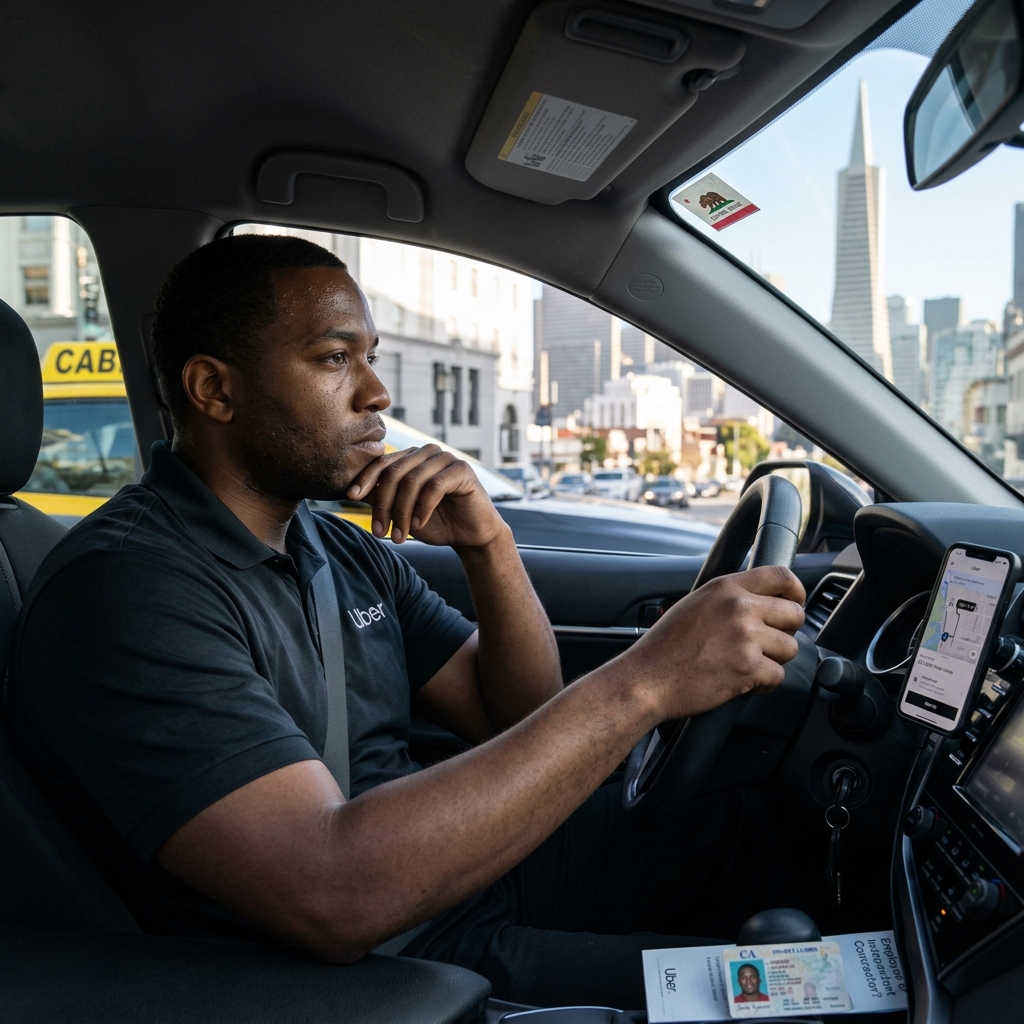
California’s dispute over whether Uber drivers should be treated as employees became one of the most closely watched labor issues in the gig economy. At stake were basic workplace rights, reimbursement rules, and the broader question of how app-based transportation companies should fit into traditional employment law.
Why the classification question mattered
The difference between being an employee and being an independent contractor is not just a label. Employees generally have access to protections such as minimum wage, overtime, expense reimbursement, and workers’ compensation, while contractors usually do not.
For Uber drivers, that distinction affected real money. The California Labor Commissioner’s office pursued wage-related claims that included unpaid expenses and other losses tied to work performed for the platform.
The labor dispute that brought the issue into focus
The early Uber driver cases in California raised a basic legal question: when a company sets the terms of a worker’s access to customers and the means of performing the work, how much control is enough to create an employment relationship?
In one widely discussed administrative ruling, the state labor agency found in favor of a driver who sought reimbursement for tolls and mileage, concluding that the company was responsible for work-related expenses because the driver should be treated as an employee.
That result drew attention because it suggested that app-based transportation might be governed by the same employment principles that apply in more traditional workplaces.
What an employee finding would have changed
If drivers were classified as employees, the company could be required to cover a broader set of costs and comply with workplace rules that are normally unavailable to contractors. These obligations could include mileage reimbursement, contributions tied to job-related insurance, and compliance with wage-and-hour standards.
An employee classification also affects scheduling and supervision. In a standard employment model, the company has more legal authority to control hours, shifts, and performance expectations than it would with a contractor relationship.
Why the ruling was important but limited
Although the ruling was significant, it did not automatically rewrite California law for every Uber driver. Administrative decisions are not the same thing as binding statewide court precedent, and the labor agency’s decision was later complicated by other rulings and policy developments.
Uber also challenged the decision, and the broader legal debate continued through later lawsuits and legislative changes.
The competing legal theories
California employment law has long depended on whether a worker is economically independent or instead functionally integrated into the business. In gig-economy cases, courts and agencies have examined the level of control the company exercises, the driver’s ability to work for others, and whether the work is central to the company’s business model.
Supporters of employee status argued that Uber drivers were doing the company’s core work and using a system built and controlled by the platform.
Uber’s position was that its drivers operated more like independent businesses, choosing when to log in and providing their own vehicles and related costs.
How California law later shifted
The legal landscape changed after California voters approved Proposition 22 in 2020, which created a special framework for app-based ride-hailing and delivery workers and preserved independent-contractor treatment for covered platforms.
As described in later legal summaries, that measure carved out a different regime for Uber, Lyft, and similar companies, even as litigation and appeals continued over parts of the law’s validity.
By 2025, California guidance reflected that Uber drivers were generally treated as independent contractors under Proposition 22, not employees.
What drivers still pursue through the legal system
Even with contractor status in place for many current drivers, workers and public agencies have continued to pursue claims for past wages, expenses, and penalties for periods before Proposition 22 took effect.
State enforcement actions have also focused on whether companies failed to pay for waiting time, mileage, minimum wage shortfalls, or other costs associated with the work performed during earlier years.
These claims matter because they reach back to times when drivers say the classification rules denied them compensation they should have received under labor law.
Key practical consequences for drivers
For individual drivers, classification affects the everyday realities of working for a platform. The most important consequences include pay, expense recovery, benefits, and whether the company can treat the driver as part of its workforce or as a separate business partner.
- Pay structure: Employees may be entitled to wage protections that contractors are not.
- Expense reimbursement: Employees can seek reimbursement for work-related costs such as mileage and tolls.
- Scheduling control: Employee status can give the employer more authority over working time and assignment rules.
- Legal remedies: Misclassification claims can lead to back pay, penalties, and other forms of recovery.
How this issue fits into the gig-economy debate
The Uber driver dispute became a reference point for the broader gig-economy debate because it forced regulators and courts to confront a new style of labor arrangement. Digital platforms often argue that flexibility is the defining feature of the model, while workers and advocates emphasize the lack of guaranteed wages and benefits.
That tension has made rideshare classification a policy issue as much as a legal one. Governments must decide how to balance consumer convenience, platform innovation, and worker protection in industries built around app-based labor.
What to watch in similar cases
Future disputes over worker status usually turn on the same core questions: who controls the work, who bears the business costs, and whether the worker is truly operating an independent enterprise.
In California, those questions will continue to be shaped by a mix of legislation, agency enforcement, and court decisions, especially where older claims overlap with newer ballot measures and special statutory rules.
Frequently asked questions
Were Uber drivers ever ruled employees in California?
Yes. An early California labor ruling found that a driver in a wage claim should be treated as an employee for purposes of reimbursement and related workplace rights.
Did that ruling make all Uber drivers employees?
No. The decision was administrative, not a universal court ruling, so it did not automatically establish statewide precedent for every driver.
Why did the issue become less clear after 2020?
California voters approved Proposition 22, which created a special classification system for app-based ride-hailing and delivery workers and generally preserved contractor status for covered companies.
Can drivers still seek compensation for past work?
Yes. State and local enforcement actions have continued to seek back pay, reimbursements, and penalties for periods before the new framework took effect.
What is the main legal question in these disputes?
The central issue is whether the platform exercises enough control over the work relationship to make the driver an employee rather than an independent contractor.
Bottom-line significance
The California Uber driver cases showed how quickly labor law can be tested by new technology and business models. They also revealed that a single classification dispute can influence reimbursement, wage rights, and the future design of an entire industry.
References
- California Labor Commission Rules Uber Driver Is Employee, Not Independent Contractor — FindLaw Archive. 2015-06-17. https://archive.findlaw.com/blog/cal-labor-commission-says-uber-drivers-are-employees/
- Are Uber Drivers in California Employees or Independent Contractors? — Nolo. 2025. https://www.nolo.com/legal-encyclopedia/california-labor-commissioner-rules-uber-driver-employee-not-independent-contractor.html
- What Two California Unemployment Claims Mean for Contractors — California Labor Law Attorney. 2024. https://www.californialaborlawattorney.com/blog/what-two-california-unemployment-claims-could-me/
- Uber Lyft Misclassification California Litigation Overview — LBAT Law. 2026. https://lbatlaw.com/california-uber-lyft-misclassification-litigation-2026/
- Employment Status of Uber and Lyft Drivers: Unsettlingly Settled — University of California, College of the Law, San Francisco. 2021. https://repository.uclawsf.edu/hwlj/vol29/iss1/4/
- California negotiating with Lyft, Uber in massive wage-theft case — CalMatters. 2025-03. https://calmatters.org/economy/2025/03/uber-lyft-could-owe-california-gig-workers-billions-of-dollars-in-california-wage-theft-case/
- FAQs on Lawsuits Against Uber and Lyft — California Department of Industrial Relations, Division of Labor Standards Enforcement. 2020-08. https://www.dir.ca.gov/dlse/FAQ-Lawsuits-Uber-Lyft.html
Similar Articles








Read full bio of Sneha Tete




