
Workplace Death Lawsuits: Expert Guide To Employer Liability
A closer look at how wrongful death claims, workplace safety, and workers’ compensation rules intersect in meatpacking litigation.
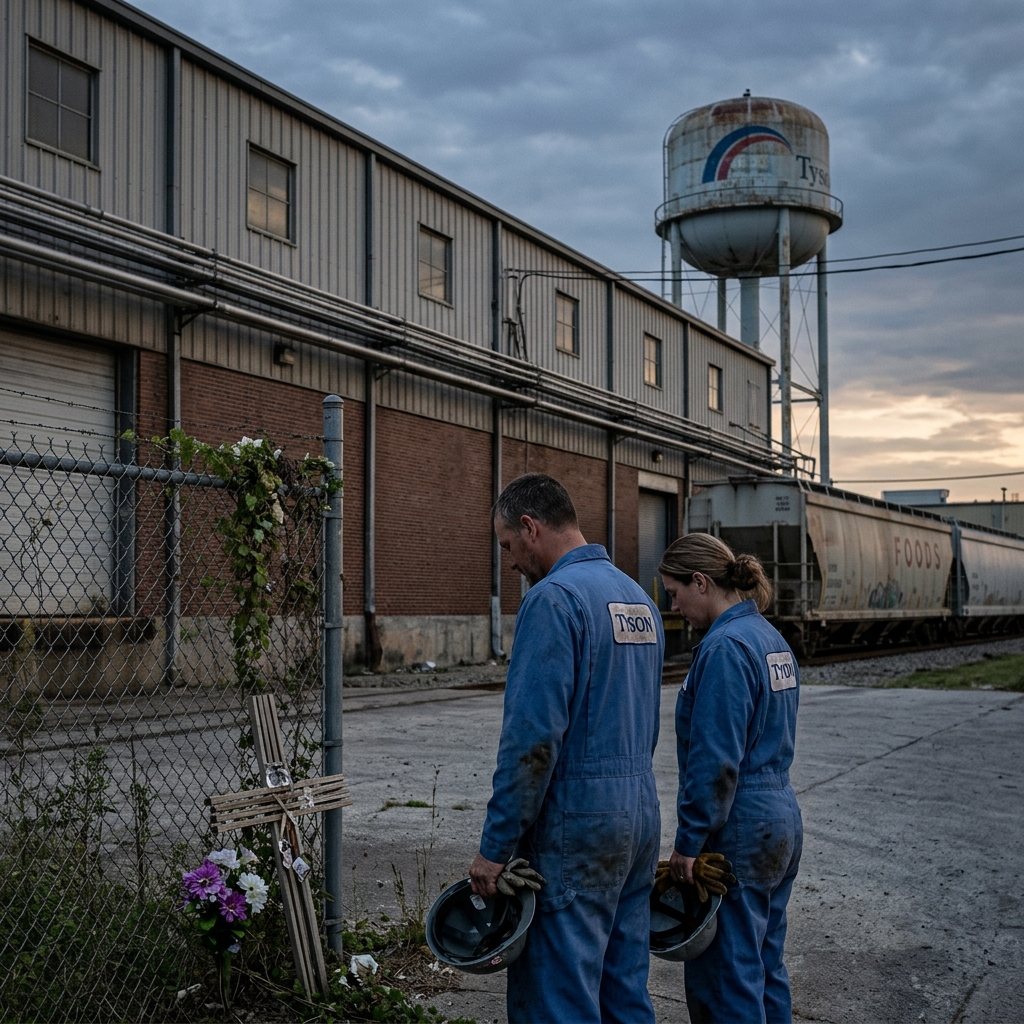
When a Workplace Death Becomes a Legal Dispute
When an employee dies after an incident connected to work, the legal issues can move quickly from tragedy to litigation. In cases involving large industrial employers, families often seek to understand whether the company ignored safety risks, whether state law allows a negligence claim, and whether workers’ compensation is the only available remedy. Tyson Foods has been involved in several disputes that show how complicated those questions can become when a death is linked to a meatpacking plant or a disease outbreak at work.
This article uses that broader legal context to explain the main issues that arise in worker death cases: negligence, wrongful death, workplace safety duties, federal preemption arguments, and the limits of workers’ compensation. It also explores why courts sometimes reach different results depending on the facts, the forum, and the legal theory the plaintiff chooses.
Why Tyson Foods Cases Draw So Much Attention
Tyson Foods is one of the largest meat processors in the United States, which means lawsuits involving its plants often raise questions that go beyond a single employee’s injury. A case against a major employer can involve dozens or hundreds of workers, layered corporate structures, federal labor standards, and public scrutiny over working conditions. That makes these disputes important not only for the parties involved, but also for other employers watching how courts interpret safety obligations.
In past Tyson litigation, workers alleged that the company failed to pay for all compensable work time, including time spent putting on protective gear and walking between work areas. In another line of litigation, the company faced claims tied to worker deaths and alleged exposure to COVID-19 in plant settings. These matters are different, but they share a common theme: disputes about how much legal responsibility an employer has for conditions inside the workplace.
The Basic Legal Questions Families Often Ask
When a worker dies in a plant setting, surviving family members often ask three immediate questions. First, did the employer act negligently? Second, does workers’ compensation block a separate lawsuit? Third, if the death involved illness or disease, can the family still argue that the company caused or worsened the danger?
Those questions matter because wrongful death law usually depends on the existence of a legally recognized duty and a breach of that duty. In employment cases, however, the workers’ compensation system often operates as an exclusive remedy, meaning an injured worker or family may be barred from filing a traditional tort claim against the employer. The result is that the family may have a claim, but not always the kind of claim it hoped to bring.
| Issue | Why it matters |
|---|---|
| Negligence | Determines whether the employer failed to take reasonable steps to protect workers. |
| Workers’ compensation | May limit recovery to the statutory system instead of a civil lawsuit. |
| Wrongful death | Allows certain relatives or estates to seek damages after a fatal incident. |
| Federal preemption | Can block state-law claims if federal law is found to govern the dispute. |
How Workers’ Compensation Can Limit a Lawsuit
Workers’ compensation laws are designed to provide a faster, no-fault remedy for workplace injuries and deaths. In exchange for that streamlined system, employees generally give up the right to sue their employer in tort for most job-related harms. That tradeoff is why many workplace death cases never reach a jury as classic negligence actions.
Courts sometimes extend this protection not only to the direct employer, but also to affiliated companies if the facts show that those entities functioned as employers. In litigation discussed in industry and legal reports, a court treated a parent company as entitled to exclusive-remedy protection because the complaint suggested it controlled work conditions at the plant. That kind of ruling can dramatically narrow a family’s options, even where the allegations describe serious safety failures.
When Negligence Claims Can Still Move Forward
Even with workers’ compensation rules in place, plaintiffs may still try to show that a claim falls outside the exclusive-remedy bar. That can happen when the lawsuit is directed at a different entity, when the alleged harm is tied to conduct outside the ordinary employer-employee relationship, or when state law recognizes exceptions for certain kinds of misconduct.
In a Tyson-related COVID-19 death case, an appeals panel reportedly revived state-law negligence claims after concluding that federal law did not displace them. That kind of decision matters because it shows that a claim dismissed at an early stage may later be reinstated if an appellate court interprets the legal framework differently. For families, that can mean the difference between a closed file and a live case.
The Role of Workplace Safety in Meatpacking Plants
Meatpacking plants present distinctive safety challenges. Workers often labor in close quarters, on fast-moving production lines, and in cold, humid, or noisy environments. Safety concerns may include machine guarding, personal protective equipment, ergonomic strain, and airborne hazards during disease outbreaks. Because the work is physically demanding and tightly organized, even a small lapse in protection can have serious consequences.
That context helps explain why allegations about unsafe conditions attract attention. If a plant operator fails to enforce distancing, provide adequate ventilation, maintain protective protocols, or respond to known hazards, plaintiffs may argue that the company acted unreasonably. The legal test is not whether the workplace was risk-free, because few industrial workplaces ever are. The question is whether the employer took reasonable steps in light of what it knew or should have known.
COVID-19 Litigation Added a New Layer of Complexity
The pandemic introduced a difficult legal problem for employers and courts alike. Workers in essential industries kept reporting to job sites where distancing could be difficult, and some families later claimed that employers did not do enough to protect employees from infection. When an illness leads to death, causation becomes harder to prove than in a single accident, because plaintiffs must connect workplace exposure to the fatal outcome.
In Tyson-related litigation, courts and reporters described disputes over whether state negligence claims could proceed after a worker allegedly died from COVID-19 contracted at a plant. Those cases highlight a major feature of pandemic-era employment litigation: plaintiffs often had to show both unsafe conditions and a sufficiently direct causal link between those conditions and the death. Employers, in turn, often argued that broader public health conditions made workplace causation too speculative.
What Plaintiffs Usually Need to Show
A successful wrongful death or negligence claim generally needs evidence of duty, breach, causation, and damages. In the workplace setting, that can include internal safety records, witness statements, training logs, incident reports, and proof of what the employer knew before the death. If a company had repeated warnings, a long record of hazards, or failed inspections, that evidence can strengthen the family’s position.
Still, the legal burden can be substantial. Families often must prove not only that the employer was careless, but that the carelessness was a legally significant cause of death. In a disease-related case, that proof may require medical records, exposure timelines, and expert testimony. In an injury case, it may depend on surveillance footage, equipment records, or testimony from co-workers.
- Evidence of unsafe conditions can include incident reports and inspection findings.
- Medical proof is often necessary when the death involves illness or delayed injury.
- Corporate control matters when multiple related entities operate the facility.
- Timing can be critical, especially when statutes of limitation are short.
Why Corporate Structure Matters So Much
Large manufacturers often use multiple affiliated entities to own facilities, manage operations, or employ labor. That structure can complicate litigation because the plaintiff must identify the correct defendant and prove that the defendant had the relevant legal duty. A parent company may argue that it is separate from the plant operator, while the plaintiff may argue that the parent controlled safety decisions or staffing.
Courts do not automatically treat every affiliated company as the employer. Instead, they examine control, supervision, payroll arrangements, and the practical realities of the workplace. If a parent company had real authority over working conditions, a court may find that it shares employer status. If not, the family may be limited to claims against the specific operating entity.
How Courts Balance Public Safety and Legal Finality
Cases involving fatal workplace incidents require courts to balance two competing values. On one side is the goal of giving injured workers and families a meaningful remedy when an employer allegedly ignored safety risks. On the other side is the principle that workers’ compensation and federal labor law should provide predictable boundaries for employer liability.
That balance helps explain why some Tyson-related matters have focused on unpaid wages, while others have centered on deaths and disease exposure. Wage cases often turn on whether certain activities count as work time under federal law. Death cases usually involve more difficult factual and legal issues, including state-law limits, exclusivity defenses, and causation disputes. The underlying employer may be the same, but the legal roadmaps are very different.
Practical Takeaways for Workers and Families
For workers and families facing a fatal workplace event, the first step is usually to identify the legal theory that best fits the facts. A workers’ compensation claim may provide immediate benefits, but a civil lawsuit may only be available in a narrower set of circumstances. Time limits also matter, because delays can weaken evidence and bar recovery.
Families should also preserve documents as early as possible. Pay records, medical records, witness names, shift schedules, and employer communications can all become important later. If the death involved a plant environment, it may also help to document the layout of the facility, the equipment involved, and the safety practices in place at the time.
Frequently Asked Questions
Can a family sue an employer after a worker dies on the job?
Sometimes, but not always. In many states, workers’ compensation is the exclusive remedy for a workplace death, which can prevent a separate negligence lawsuit against the employer.
Does a company’s size affect the legal analysis?
The company’s size does not change the legal standard, but large employers often have complex corporate structures and more extensive safety obligations, which can make the evidence and defendant analysis more complicated.
What if more than one company controlled the worksite?
If multiple entities controlled the worksite or the employee’s duties, a court may examine whether one or more of them qualified as an employer for exclusive-remedy purposes.
Can state-law claims survive if federal law is involved?
Yes, in some cases. Courts may allow state-law negligence claims to proceed if they are not preempted by federal law and if the complaint fits within recognized exceptions.
Why are COVID-19 workplace death claims difficult?
They are difficult because plaintiffs must connect workplace exposure to the illness and death, and employers often argue that community transmission or other non-workplace sources could have caused the infection.
What These Cases Mean Beyond One Company
Litigation involving a major employer like Tyson Foods can influence how other companies think about safety planning, recordkeeping, and legal risk. Even when a company prevails on a workers’ compensation defense, the litigation may still prompt closer attention to plant safety, outbreak protocols, and corporate oversight. In that sense, the legal impact extends beyond the individual case.
For legal observers, these cases also show that workplace death disputes are rarely simple. They sit at the intersection of employment law, tort law, public health, and corporate structure. That is why the outcome can depend as much on procedure and statutory interpretation as on the underlying human tragedy.
References
- Tyson Loses as High Court Upholds $5.8 Million Worker Award — Cornell University Library. 2016-05-16. https://catherwood.library.cornell.edu/wit/tyson-loses-as-high-court-upholds-5-8-million-worker-award/
- Tyson Foods Loses Appeal in Worker’s Covid-19 Death Lawsuit — Bloomberg Law. 2025-08-26. https://news.bloomberglaw.com/daily-labor-report/tyson-foods-loses-appeal-in-workers-covid-19-death-lawsuit
- Court Case Update, Pennsylvania – December 2021 — NCCI. 2021-12-06. https://www.ncci.com/Articles/Pages/Insights_CourtCase-Update-Dec2021.aspx
- Tyson Foods, Inc. v. Bouaphakeo — Justia Supreme Court Center. 2016-03-22. https://supreme.justia.com/cases/federal/us/577/442/
- Tyson Foods Pays Workers $4 Million for Ammonia Exposure — Pintas & Mullins Law Firm. 2014-10-22. https://www.pintas.com/blog/tyson-foods-pays-workers-4-million-for-ammonia-exposure/
Similar Articles








Read full bio of Sneha Tete




