Reverse mortgages let older homeowners turn part of their home equity into cash without making monthly mortgage payments, as long as they keep living in the home and meet ongoing obligations like taxes and insurance. To use this tool wisely, it is essential to understand the different types of reverse mortgages available and how they compare.
What Is a Reverse Mortgage?
A reverse mortgage is a loan that allows qualifying homeowners, typically age 62 or older, to borrow against the equity in their primary residence. Instead of you paying the lender each month, the lender pays you in one or more of the following ways:
- Lump-sum payment at closing
- Monthly advances (a regular “tenure” or “term” payment)
- A line of credit you can draw on when needed
- A combination of these options, depending on the loan program
The loan usually becomes due when the last borrower dies, sells the home, or no longer lives there as a principal residence. At that point, the loan is typically repaid from the sale of the home.
The Three Core Types of Reverse Mortgages
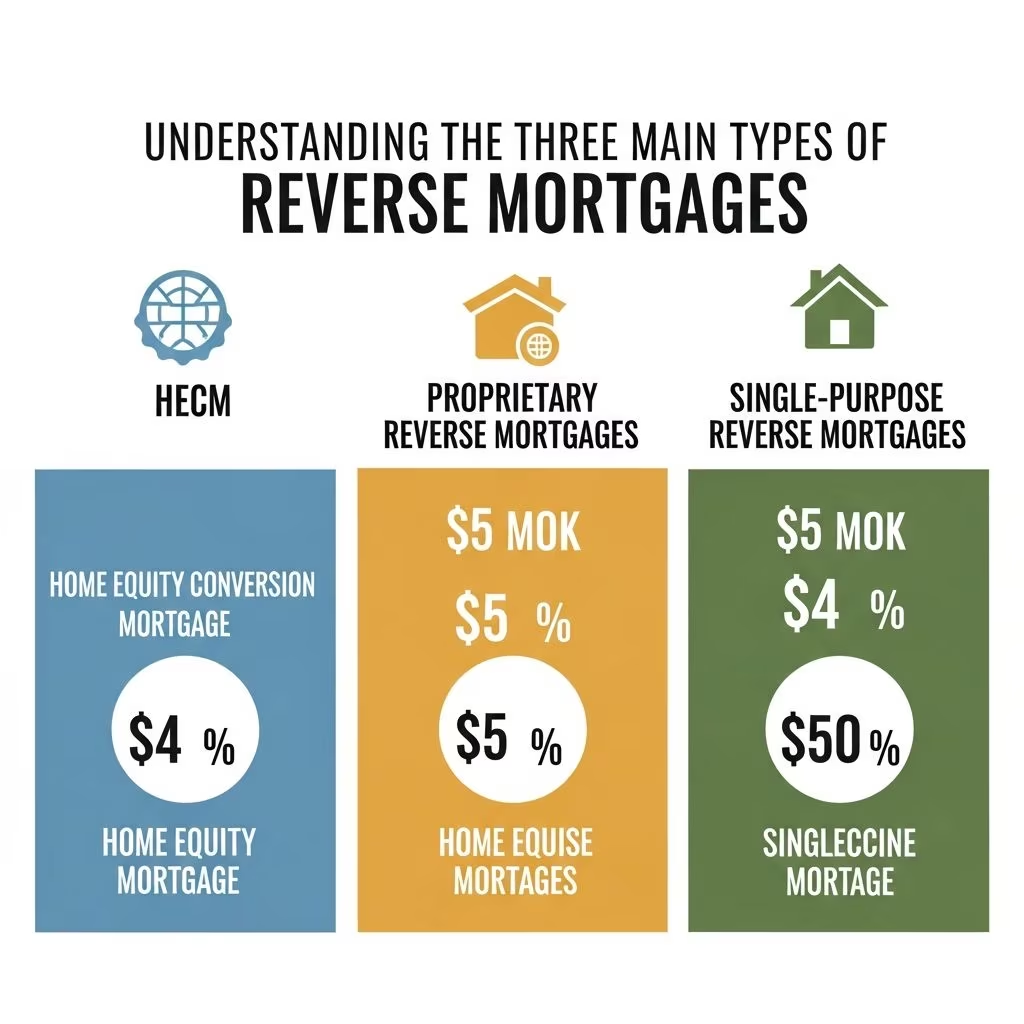
In the United States, reverse mortgages fall into three broad categories. While they share the same basic idea—turning home equity into cash—the rules, protections, and costs can differ significantly.
| Type of Reverse Mortgage | Who Offers It? | Government Insurance? | Common Use Cases |
|---|---|---|---|
| Home Equity Conversion Mortgage (HECM) | FHA-approved private lenders | Yes – insured by FHA/HUD | General retirement cash flow, debt payoff, home improvements |
| Proprietary Reverse Mortgage | Private lenders (no federal insurance) | No | High-value homes, borrowers needing larger loan amounts |
| Single-Purpose Reverse Mortgage | State/local governments or nonprofits | No federal insurance | Specific expenses like property taxes or critical repairs |
1. Home Equity Conversion Mortgages (HECMs)
Home Equity Conversion Mortgages (HECMs) are the most common type of reverse mortgage in the U.S. These loans are:
- Insured by the Federal Housing Administration (FHA)
- Regulated by the U.S. Department of Housing and Urban Development (HUD)
- Available only through FHA-approved lenders
Key Features of HECMs
- Age requirement: Borrowers must be at least 62 years old.
- Primary residence only: The property must be your main home, and you must live there most of the year.
- Non-recourse protection: Because of FHA insurance, you or your heirs never owe more than the home’s value when the loan is repaid, even if the loan balance is higher.
- Mandatory counseling: HUD requires borrowers to complete a session with an independent, HUD-approved counselor before taking a HECM.
- Flexible payout options: Lump sum, monthly payments, line of credit, or combinations of these (subject to program rules).
What Can HECM Funds Be Used For?
HECMs are designed to be flexible. Funds can generally be used for almost any purpose, such as:
- Covering everyday living expenses in retirement
- Paying off an existing traditional mortgage
- Financing home repairs, accessibility improvements, or renovations
- Building an emergency cash reserve
- Paying medical or long-term care costs
However, borrowers must continue to pay property taxes, homeowners insurance, and maintenance costs, or they risk default and potential foreclosure.
Pros and Cons of HECMs
| Advantages | Potential Drawbacks |
|---|---|
|
|
2. Proprietary (“Jumbo”) Reverse Mortgages
Proprietary reverse mortgages are private loans offered by lenders without FHA insurance or direct federal oversight. These products are often marketed to homeowners with higher-value properties.
Who Might Consider a Proprietary Reverse Mortgage?
Proprietary products can appeal to:
- Owners of homes worth more than the FHA lending limits for HECMs
- Borrowers who want or need to access a larger share of their home equity than a HECM would allow
- People whose property type might not meet specific FHA criteria
Typical Characteristics
- No FHA insurance: These loans do not carry federal insurance or standardized federal protections, though some may still be non-recourse by contract.
- Customized terms: Lenders can set their own age requirements, loan limits, and underwriting criteria.
- Higher maximum loan amounts: Especially common for high-value homes, which is why they are often called “jumbo” reverse mortgages.
- Interest rates and fees: Rates may be higher compared with HECMs because the lender bears more risk without government backing.
Benefits and Risks of Proprietary Loans
| Benefits | Risks/Limitations |
|---|---|
|
|
3. Single-Purpose Reverse Mortgages
Single-purpose reverse mortgages are limited-use loans typically offered by state or local government agencies or nonprofit organizations. They are designed to help homeowners with a targeted financial need.
How Single-Purpose Loans Work
With a single-purpose reverse mortgage, the lender restricts how you can use the funds. Common approved uses include:
- Paying overdue or future property taxes
- Financing essential home repairs or energy-efficiency upgrades
- Addressing health and safety improvements, such as accessibility modifications
The loan becomes due under similar conditions as other reverse mortgages—when the homeowner moves out permanently, sells the home, or dies. These loans are not federally insured, and availability can be limited to certain geographic areas or income ranges.
Who Qualifies for a Single-Purpose Reverse Mortgage?
- Income limits: Many programs focus on low- to moderate-income homeowners.
- Age: Some programs mirror the common 62+ requirement, though specific rules vary.
- Location: Programs are often limited by city, county, or state boundaries.
Pros and Cons of Single-Purpose Programs
| Advantages | Drawbacks |
|---|---|
|
|
Comparing the Three Reverse Mortgage Types
The right type of reverse mortgage depends on your financial goals, property value, and eligibility. The following comparison can help you see the differences at a glance.
| Feature | HECM | Proprietary | Single-Purpose |
|---|---|---|---|
| Primary Target Borrower | Homeowners 62+ with typical home values | Owners of higher-value homes, or those needing more equity | Homeowners (often low- to moderate-income) with a specific need |
| Loan Insurance | FHA-insured | Not federally insured | Not federally insured |
| Allowed Uses of Funds | Generally unrestricted | Generally unrestricted | Restricted to lender-approved purpose |
| Availability | Nationwide through FHA-approved lenders | Varies by lender and state | Limited to certain regions and programs |
| Typical Loan Size | Subject to FHA limits and formulas | Can exceed FHA limits for high-value homes | Often smaller, just enough for specified expenses |
| Counseling Requirement | Yes – HUD-approved counseling required | Often encouraged; may be required by some lenders | Depends on program; some require counseling or advice sessions |
Key Questions to Ask Before Choosing a Reverse Mortgage
Because a reverse mortgage can significantly affect both your current cash flow and the value of your estate, it is important to evaluate your options carefully. Consider asking yourself and any prospective lender these questions:
- Do I primarily need ongoing income, an emergency reserve, or funds for a specific project?
- Is my home value high enough that a proprietary loan might offer more funds than a HECM?
- Would a single-purpose program from a local agency meet my needs at lower cost?
- How will the fees, closing costs, and interest charges of each option affect my remaining home equity over time?
- What protections are available for my spouse or other co-owners if I move to a care facility or die?
- Have I compared reverse mortgages with alternatives like downsizing, home equity lines of credit, or public benefit programs?
Practical Tips for Evaluating Reverse Mortgage Offers
To make a sound decision, use these practical steps:
- Schedule HUD-approved counseling: For HECMs, this is required; for others it is strongly recommended. Counseling can help you weigh costs, benefits, and alternatives.
- Request itemized cost estimates: Ask for a breakdown of origination fees, mortgage insurance premiums (if any), closing costs, and ongoing servicing fees.
- Compare offers: Get quotes from more than one lender, particularly if you are considering proprietary products where terms vary.
- Review all conditions for repayment: Make sure you understand when the loan comes due, what counts as moving out, and what happens if you fall behind on taxes or insurance.
- Include family or trusted advisors: Consider having a family member, attorney, or financial planner review the documents with you.
Frequently Asked Questions (FAQs)
Q1: Which type of reverse mortgage is most common?
Most reverse mortgages in the U.S. are Home Equity Conversion Mortgages (HECMs), which are federally insured and offered by FHA-approved lenders.
Q2: Do all reverse mortgages require that I be at least 62?
HECMs and many single-purpose reverse mortgages are limited to borrowers aged 62 or older, but proprietary reverse mortgage lenders may set different age requirements, which can sometimes be lower.
Q3: Are reverse mortgage payments taxable income?
Reverse mortgage proceeds are generally considered loan advances, not taxable income, under U.S. federal tax rules. However, tax situations vary, so consulting a tax professional is recommended.
Q4: Can I lose my home with a reverse mortgage?
You can remain in the home as long as you meet loan obligations, which usually include living in the property as your primary residence, paying property taxes and homeowners insurance, and keeping the home in good repair. Failure to meet these obligations could lead to foreclosure.
Q5: How do my heirs repay a reverse mortgage?
When the loan becomes due, heirs typically can repay the balance and keep the home, or sell the property and use the proceeds to pay off the loan. For HECMs, if the balance is higher than the home’s value, FHA insurance covers the difference so heirs are not personally responsible for the shortfall.
References
- Are there different types of reverse mortgages? — Consumer Financial Protection Bureau. 2023-06-15. https://www.consumerfinance.gov/ask-cfpb/are-there-different-types-of-reverse-mortgages-en-226/
- Home Equity Conversion Mortgages for Seniors — U.S. Department of Housing and Urban Development (HUD). 2024-02-01. https://www.hud.gov/hud-partners/single-family-hecmhome
- Reverse Mortgages — Federal Trade Commission (FTC) Consumer Advice. 2022-10-11. https://consumer.ftc.gov/articles/reverse-mortgages
- Get the Facts on Reverse Mortgages — National Council on Aging. 2023-05-30. https://www.ncoa.org/article/get-the-facts-on-reverse-mortgages/
- How Reverse Mortgages Work — Washington State Department of Financial Institutions. 2022-06-21. https://dfi.wa.gov/section-main-pages/how-reverse-mortgages-work