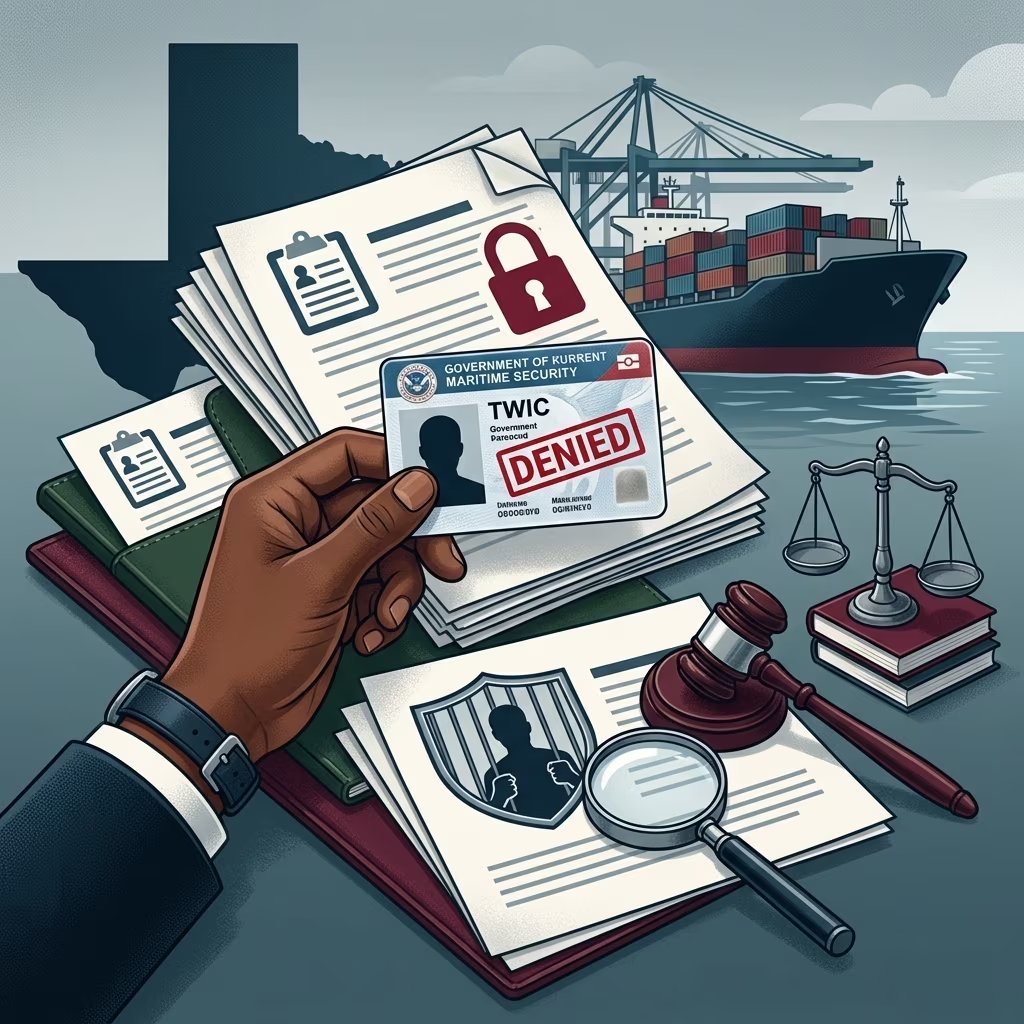
A Transportation Worker Identification Credential, or TWIC, is a federal security credential that allows certain workers to access secure maritime locations. In Texas, where ports and coastal shipping activity are a major part of the economy, TWIC approval can be essential for people who work around ships, cargo, terminals, and other restricted areas.
Criminal history matters because the Transportation Security Administration reviews applicants for security risk before issuing the card. Some convictions create a temporary or permanent barrier, while others may be reviewed through a waiver or appeal process. Understanding those rules can help applicants avoid delays, prepare better documentation, and know what options exist after a denial.
What a TWIC Does and Why It Matters
The TWIC program was created to strengthen security in maritime transportation. Workers who need unescorted access to secure port areas or regulated vessel spaces typically need the credential before they can do the job.
For many Texas workers, a TWIC is not just an identification card. It can be a hiring requirement for jobs tied to trucking, shipping, terminal operations, longshore work, inspection services, and other maritime support roles. Without a valid credential, a worker may be unable to enter restricted parts of a port or vessel facility.
- It is a federal credential issued through the TSA.
- It is used for access to secure maritime facilities and vessels.
- It is commonly required in port-related jobs and supply-chain roles.
Who Generally Qualifies for a TWIC
Applicants must show identity and immigration or citizenship status that meets federal standards. The TSA also requires biometric enrollment, including fingerprints and a photograph. In practical terms, the applicant must be able to complete identity verification and pass the security screening.
Although the exact documentation requirements can vary depending on an applicant’s status, common qualifying categories include U.S. citizens, lawful permanent residents, and certain other lawful immigration statuses. Workers should also be prepared to show the documents requested at enrollment and to pay the applicable fee.
| General Requirement | What It Means |
|---|---|
| Identity verification | Applicants must present acceptable identity documents. |
| Biometric enrollment | Fingerprints and a photo are collected during the application process. |
| Security review | The TSA checks whether the applicant has a disqualifying history. |
| Payment and application completion | The applicant must finish the enrollment and pay the required fee. |
How Criminal History Affects Approval
The central issue for many applicants is whether a past offense appears on the TSA’s list of disqualifying crimes. Not every arrest or conviction causes automatic denial. The type of offense, the date of conviction or release, and whether the applicant has completed all sentencing terms can all matter.
Some crimes are treated as especially serious because they suggest a risk to transportation security. Others may create a temporary bar that can later be reconsidered after a waiting period. In other words, a past case does not always end the process, but it can make approval slower and more difficult.
Applicants should also understand that pending charges, incomplete probation, or unresolved legal obligations can complicate the screening process. A history of fraud, violent conduct, weapons offenses, or security-related crimes is often examined closely.
Types of Offenses That Can Create Problems
Federal screening rules focus on crimes that raise safety or trust concerns. While the exact list is controlled by federal standards, several categories commonly create problems for TWIC applicants.
- Felony offenses involving violence or threats.
- Crimes involving explosives, terrorism, or transportation security.
- Serious theft, fraud, or dishonesty offenses.
- Drug-related crimes, especially where distribution or trafficking is involved.
- Weapons-related offenses in certain circumstances.
- Other serious criminal conduct that suggests a security risk.
The key point is that the TSA looks at whether the applicant’s history suggests they may pose a risk when given access to secure maritime areas. A single conviction does not automatically mean a permanent denial in every case, but it can trigger closer review.
Texas Applicants and the Importance of Timing
Timing matters because the TSA’s review does not always move quickly. Applicants who wait until they urgently need the card may find themselves unable to start work while the application is pending. This is especially important in Texas ports, where employers may need workers to have current credentials before assigning them to secure locations.
If an applicant has a criminal record, it is wise to begin the process early. That gives time to gather records, respond to TSA requests, and prepare for the possibility of a waiver or appeal. If the applicant is already employed, delays can affect shifts, job eligibility, and workplace access.
- Start early if a job offer depends on TWIC clearance.
- Keep copies of court records, release records, and completion documents.
- Do not assume a conviction means automatic rejection without review.
What Happens If the TSA Flags a Disqualifying Record
If the TSA finds a potentially disqualifying offense, the agency may issue a preliminary determination or otherwise notify the applicant that the record needs review. The applicant may then have an opportunity to respond, explain the facts, or seek relief through the TSA’s procedures.
In some cases, the TSA may want additional records to verify the offense, confirm the sentence, or determine whether the applicant has completed all requirements. In other cases, the agency may move directly toward a denial if the offense is clearly disqualifying and no exception applies.
A denial is not always the end of the road. Applicants may be able to appeal the decision or request a waiver, depending on the type of offense and the circumstances of the case.
Waivers and Appeals: Possible Paths After a Denial
Applicants with criminal histories may sometimes ask the TSA to reconsider the denial. A waiver is different from an appeal. An appeal generally argues that the decision was incorrect, while a waiver asks the agency to allow the applicant to hold the credential despite the disqualifying history.
Whether a waiver is available depends on the offense and the applicant’s overall history. The agency may consider rehabilitation, the time that has passed since the offense, the completion of sentence terms, and other evidence of reliability.
People seeking relief should provide clear and organized documentation. Helpful materials can include court documents, proof of sentence completion, letters showing work history, and records demonstrating rehabilitation.
| Option | Purpose | Typical Use |
|---|---|---|
| Appeal | Challenges the denial decision | Used when the applicant believes the TSA made an error |
| Waiver | Requests permission despite a disqualifying record | Used when the record is serious but relief may still be allowed |
Documents That Can Strengthen a Request for Review
When criminal history is involved, the quality of the paper trail often matters as much as the explanation. The TSA may need enough detail to understand the offense and see that the applicant has resolved the issue responsibly.
- Certified court records showing the exact charge and outcome.
- Proof that probation, parole, or supervision has ended.
- Release or completion records from correctional authorities.
- Employment records showing stable work history.
- Character letters that support rehabilitation and reliability.
Applicants should keep their explanations factual and consistent. Missing records or vague statements can slow review or weaken a waiver request.
Renewal and Ongoing Compliance
A TWIC does not last forever, so holders must renew it on schedule if they still need access to secure maritime facilities. Renewal is also important because a card can become invalid if the holder fails to maintain required status or if updated information changes the screening outcome.
For workers with a criminal history, renewal can raise the same kinds of questions as the original application. A new conviction, a change in immigration status, or an unresolved legal problem could affect continued eligibility. Workers should avoid assuming that approval once means approval forever.
- Renew before the card expires if the job still requires it.
- Report changes that could affect eligibility.
- Keep legal records accessible in case the TSA asks for updated information.
Practical Steps for Applicants in Texas
Texas applicants can reduce problems by preparing before the enrollment appointment. That means collecting identification, reviewing criminal records, and deciding whether they need legal guidance before applying. People with older convictions, multiple cases, or uncertain paperwork are often better off getting organized first.
It is also smart to speak with an employer about timing. If a job depends on a TWIC, a worker should know whether onboarding can wait until the credential is approved. In some cases, the employer may also know whether the worker will need a card immediately or only after training.
Applicants with prior convictions should think carefully about whether they have completed everything required by the court. Outstanding fines, unfinished supervision, or missing release documents can create unnecessary delays even if the offense itself might not be permanently disqualifying.
When Legal Help May Be Useful
Many people can complete a TWIC application without a lawyer. However, legal help can be useful when the applicant has an arrest record, a conviction that may be disqualifying, or a denial that seems difficult to challenge. A lawyer can help identify which documents matter most and whether an appeal or waiver makes more sense.
Legal guidance may also be helpful if the applicant is unsure how an old case is classified, whether records are accurate, or whether the person has truly met every sentence condition. In a process that relies heavily on accurate history, small mistakes can cause larger delays.
Frequently Asked Questions
Can someone with a criminal record still get a TWIC in Texas?
Yes, sometimes. It depends on the type of offense, when it happened, whether the sentence is complete, and whether the TSA treats the offense as disqualifying. Some applicants may also have access to a waiver or appeal.
Does every felony lead to automatic denial?
No. The TSA looks at the specific conviction and the surrounding circumstances. Some felonies are more serious for security screening than others, and the agency may consider whether the applicant has completed all court requirements.
What should I do if I am denied?
Read the denial notice carefully, gather all supporting records, and check whether the TSA allows an appeal or waiver in your situation. Acting quickly is important because deadlines may apply.
Will an old conviction still matter?
It can. Older convictions may still appear in the screening process, although the amount of time since the offense may help the applicant in a waiver review. The specific offense remains important.
Do I need a TWIC for every job in Texas?
No. The card is generally required only for jobs that involve unescorted access to secure maritime facilities or vessels. Many non-maritime jobs do not require it.
References
- Transportation Worker Identification Credential (TWIC) — Transportation Security Administration. 2026. https://tsaenrollmentbyidemia.tsa.dhs.gov/programs/twic
- TWIC® — Transportation Security Administration. 2026. https://www.tsa.gov/twic
- TWIC® Frequently Asked Questions — Transportation Security Administration. 2026. https://www.tsa.gov/for-industry/twic_faq
- Required Documentation for TWIC Enrollment — U.S. Court of Appeals for the Armed Forces / government-hosted documentation. 2026. https://www.casp.uscourts.gov/sites/casp/files/Required%20Documentation%20%20for%20TWIC%20Enrollment.pdf
- TWIC Card Requirements — Linbis Logistics. 2026. https://www.linbis.com/twic-card/
- What is a TWIC card and how to get one — Schneider Jobs. 2026. https://schneiderjobs.com/blog/what-is-twic-card