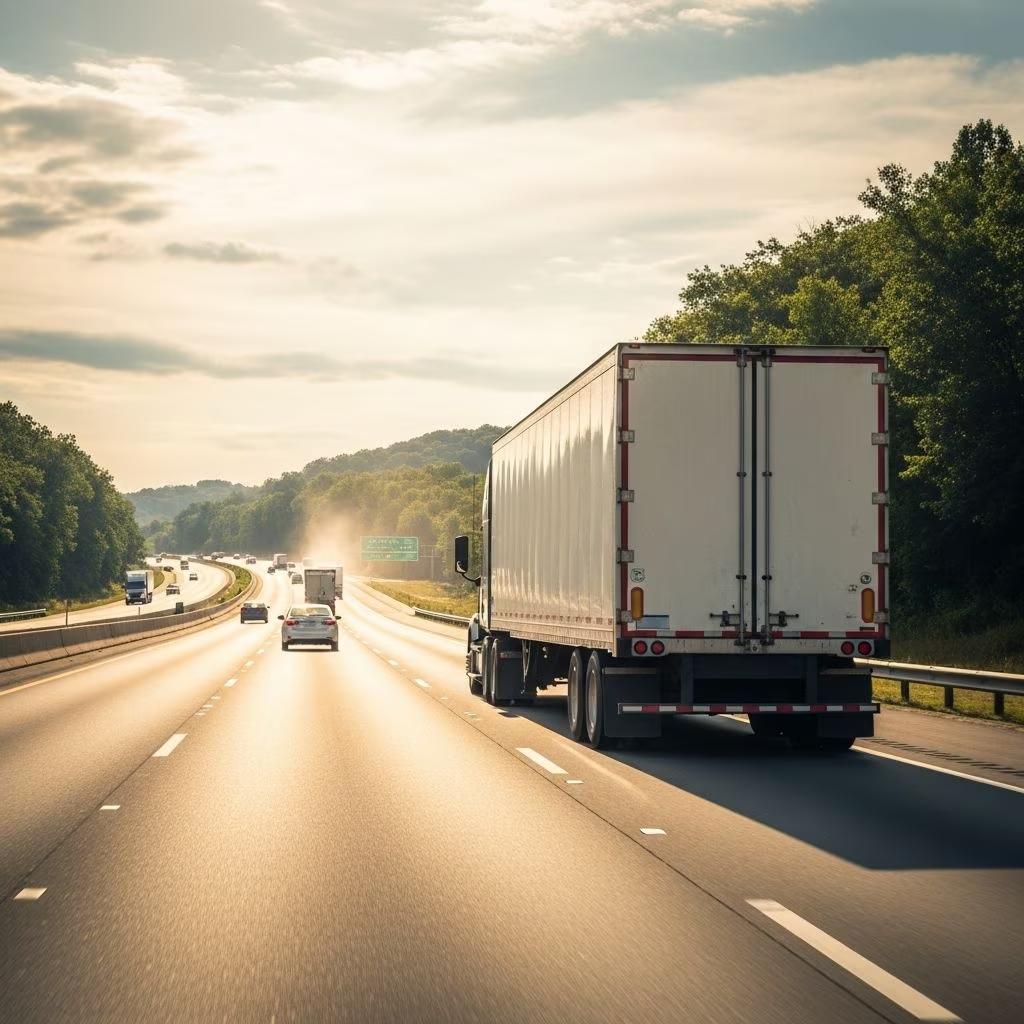
Across the United States, many states limit when large trucks and other heavy commercial vehicles may drive in the far-left or “passing” lane of multi-lane highways. These rules are designed to keep traffic flowing smoothly and to reduce the severity of crashes involving large trucks, which tend to be more dangerous because of their size and weight.
This guide explains why truck left-lane rules exist, how they differ from general “keep right” laws, and how various states approach lane restrictions for heavy vehicles. It also offers practical tips for both truck drivers and passenger-vehicle motorists who share the road with them.
Why States Limit Trucks in the Left Lane
Left-lane limitations for trucks build on a broader principle that slower or heavier vehicles should stay to the right so faster traffic can pass safely.
Key reasons for truck lane restrictions
- Crash severity: Collisions involving heavy trucks are more likely to result in serious injury or death, especially at highway speeds and during lane-change or rear-end crashes.
- Stopping distance: Loaded trucks require significantly more distance to stop than passenger cars, making abrupt lane changes and sudden speed changes in the left lane particularly risky.
- Traffic flow: Slow or speed-limited trucks in the left lane can cause “rolling roadblocks” that back up traffic and encourage unsafe passing on the right.
- Visibility: Trucks can block sight lines in the left lane, reducing drivers’ ability to anticipate hazards ahead.
- Enforcement clarity: Specific truck-only lane rules give law enforcement clearer grounds to stop vehicles that impede traffic flow or drive aggressively in passing lanes.
Truck Rules vs. General Keep-Right and Left-Lane Laws
To understand truck-specific rules, it helps to distinguish them from general lane-usage laws that apply to all vehicles.
General lane usage principles
- All states allow use of the left lane for passing when more than one lane travels in the same direction.
- Many states require slower vehicles to keep right if they are moving under the normal speed of traffic, regardless of the speed limit.
- A growing number of states explicitly reserve the far-left lane on some roads as a passing-only lane, especially where speed limits are 65 mph or higher.
How truck-specific restrictions add another layer
Truck left-lane rules usually do one or more of the following:
- Ban large trucks from the far-left lane on highways with three or more lanes in each direction.
- Limit trucks to specific lanes (for example, right two lanes only) except to turn or avoid an obstruction.
- Prohibit trucks from using the left lane on certain segments of interstate highways or in specific corridors marked by signs.
- Apply only above certain speed limits (such as where the posted limit is 55 mph, 60 mph, or 65 mph and above).
Common Types of State Truck Left-Lane Rules
Although the details vary widely, most states fall into several broad categories in how they treat trucks in the left lane.
| Rule Type | Typical Features | Impact on Trucks |
|---|---|---|
| Full left-lane ban (3+ lanes) | Trucks prohibited from far-left lane on multi-lane freeways | Must stay in right or middle lanes; can’t cruise in left lane |
| Conditional restrictions | Applies only above certain speed limits or on designated segments | Trucks must watch for signs and changing rules along the route |
| Passing-only exceptions | Trucks may briefly use left lane only to pass or avoid hazards | Short, purposeful left-lane use allowed; no extended cruising |
| General keep-right, no truck-specific rule | All vehicles follow same lane-use laws; trucks only restricted by weight or speed-limit rules | Trucks may use left lane when lawful, but still must not impede traffic |
How States Differ: Illustrative Approaches
States use a mix of statutory rules and posted signage to regulate truck lane use. The following examples show how approaches can differ, even where the underlying goal—keeping traffic safe and moving—is the same. These examples are illustrative, not exhaustive. Always check the most current state code and posted signs before driving.
States with strong keep-right and left-lane enforcement
Research on state “keep right” laws shows that some jurisdictions take left-lane discipline particularly seriously, often tying enforcement to higher-speed roads.
- Colorado: On highways with speed limits of 65 mph or more, it is illegal to cruise in the left lane unless passing or when traffic is too heavy to move right. Large trucks on these corridors may be further restricted by signage directing them to stay out of the far-left lane.
- States with passing-only left lanes: In several states, including some in the Northeast and Pacific Northwest, the left-most lane on three-lane highways is dedicated to passing only. Trucks may be ordered by sign to stay in the right two lanes, especially near major urban centers.
States that rely heavily on signage
Even where statutes allow trucks in all lanes, states often post corridor-specific signs to manage risk:
- Urban and suburban interstates: Near major cities, you may see signs such as “No Trucks Left Lane” or “Trucks 2 Right Lanes Only.” These often appear where on-ramps, exits, and heavy commuter traffic increase lane-change conflicts.
- Mountain passes and grades: Steep grades may combine truck speed limits and lane-use rules (for example, slower trucks required to use a designated right-hand lane).
- Toll roads and managed lanes: Some tolled express lanes prohibit heavy trucks in the left-most lane to preserve speed and reduce crash risk for paying users.
States with broader, vehicle-neutral left-lane rules
Some states do not single out trucks, but effectively restrict them through general left-lane laws applied to all vehicles:
- Slower-traffic-keep-right states: In roughly half of U.S. states, any vehicle that is moving slower than surrounding traffic must keep right, even if it is traveling at or above the posted speed limit. Because trucks often travel at lower speeds due to speed limiters or company policies, these laws practically limit them to right lanes.
- Passing-only left-lane rules: Where the left lane is reserved strictly for passing, any truck remaining there after completing a pass risks a citation, the same as a passenger car.
Penalties and Liability for Violations
Penalties for violating left-lane restrictions can range from modest fines to more serious consequences when a crash occurs.
Typical penalties
- Fines: Many states impose monetary penalties for improper left-lane use, with amounts varying widely by jurisdiction.
- Points on a driving record: Some states add points for lane-use violations, which can affect commercial drivers’ licenses (CDLs) and insurance premiums.
- Commercial compliance: Trucking companies may face internal discipline or policy consequences if drivers violate company rules that mirror or exceed state lane-use restrictions.
Impact on accident claims
Improper lane use can play a significant role in determining fault after a crash:
- If a truck is in a lane where it is legally prohibited, that violation may be used as evidence of negligence in personal injury or wrongful death cases.
- Even when trucks are legally allowed in the left lane, staying there while impeding traffic may still be viewed as unsafe driving, especially if it contributes to a rear-end or sideswipe collision.
- States that follow comparative fault rules may reduce or increase damages based on how much each driver’s lane choices contributed to the crash.
Practical Guidance for Truck Drivers
Professional drivers must stay up to date on varying state rules while also meeting company safety policies and delivery schedules. The following practices can help minimize legal risk and improve safety.
Best practices behind the wheel
- Know your route: Before crossing state lines, review any known truck lane restrictions on major interstates you will use.
- Watch for signs: State statutes are important, but real-time lane-use rules are often defined by posted signs that vary by corridor.
- Use the left lane sparingly: Even where allowed, treat the far-left lane as a tool for passing or avoiding hazards—not a cruising lane.
- Maintain predictable speeds: Sudden accelerations into or out of the left lane can surprise nearby motorists and increase crash risk.
- Leave space for merging traffic: In high-traffic areas, using a middle lane rather than the far-left (where permitted) can balance safety and efficiency.
Compliance and documentation
- Record training: Carriers should document training on state lane rules and keep policies current with legal changes.
- Use in-cab aids: Some navigation systems highlight truck restrictions, including restricted lanes; when available, these tools help drivers avoid violations.
- Incident reports: If a citation or crash occurs, detailed trip logs and dashcam footage can be critical in evaluating whether lane use actually violated a restriction or was a reasonable safety choice.
What Passenger-Vehicle Drivers Should Know
Regular motorists benefit from understanding why trucks may be limited to certain lanes and how to interact safely around them.
Safe interaction with restricted-lane trucks
- Expect trucks on the right: On many highways, you will see most trucks using the right or middle lanes. Do not assume a truck can simply move into the left lane to accommodate you.
- Pass decisively, not aggressively: Use the left lane to pass a truck at a safe, legal speed, then return to the right when clear. Lingering next to a truck’s blind spots increases risk.
- Avoid cutting in: Cutting sharply in front of a truck in the left lane is especially dangerous because of its longer stopping distance.
- Respect speed differences: In some states trucks have lower maximum speed limits than cars on the same highway, making their right-lane presence even more likely.
How lane restrictions affect congestion
Research and policy discussions highlight that improper use of left lanes—by trucks or cars—can significantly slow traffic and increase frustration. Clear truck restrictions, when properly enforced, can:
- Reduce weaving and lane changes that often lead to sideswipe crashes.
- Encourage smoother speed patterns across lanes.
- Limit the temptation to pass on the right when a slow vehicle blocks the left lane.
When to Talk to a Lawyer After a Truck Left-Lane Crash
If you are involved in a collision where a truck was using the left lane, lane-use laws may play a central role in any legal claim.
- If the truck was in a lane where it was legally prohibited, that fact may support a negligence claim.
- If both drivers may have violated lane-use rules (for example, a car aggressively passing on the right while a truck lingered in the left lane), comparative fault issues can become complex.
- An attorney familiar with traffic and trucking laws in the specific state where the crash occurred can help interpret statutes, regulations, and posted restrictions in light of the evidence.
Frequently Asked Questions (FAQs)
Are trucks always banned from the left lane?
No. In some states trucks are completely banned from the far-left lane on certain multi-lane highways, while in others they may use the left lane to pass or where no truck-specific restriction exists. The exact rules depend on the state and the particular road segment.
How can I tell if a truck is allowed in the left lane where I am driving?
Look for posted signs such as “No Trucks Left Lane” or “Trucks Right 2 Lanes Only.” Where no signs appear, general state lane-use laws still apply, including slower-traffic-keep-right or passing-only rules.
Is it illegal for me to stay in the left lane if I am driving the speed limit?
In many states, yes. Numerous jurisdictions require drivers to move right if they are blocking faster traffic, even when they are driving at the posted speed limit. These rules apply to both passenger vehicles and trucks.
Do lane restrictions for trucks really improve safety?
Research and policy analysis suggest that keeping heavier, slower vehicles out of the far-left lane can reduce speed differentials and lane-change conflicts, both of which contribute to crashes. While no rule eliminates risk entirely, left-lane restrictions are one tool among many used to manage highway safety.
Where can I find the exact law for my state?
Each state publishes its motor vehicle code through its legislature, department of transportation, or highway safety office. For a full understanding of the truck left-lane rules that apply to you, consult your state’s official statutes or an attorney familiar with traffic law.
References
- A Summary of “Keep Right” Traffic Laws in All 50 States — Matthiesen, Wickert & Lehrer, S.C. 2018-05-01. https://www.mwl-law.com/wp-content/uploads/2018/05/SLOWER-TRAFFIC-KEEP-RIGHT.pdf
- Driving in the Left Lane: A State-By-State Guide to When It’s Legal, When It’s Not — USA Today Network. 2019-10-25. https://www.goupstate.com/story/news/nation-world/2019/10/25/driving-in-left-lane-state-by-state-guide-to-when-its-legal-when-its-not/2447573007/
- Left Lane Driving Laws by State — Safe2Drive Driver Education. 2023-07-01 (accessed). https://www.safe2drive.com/blog/Left-Lane-Driving-Laws-By-State
- Is It Illegal to Drive in the Left Lane? — AAA / Via Magazine. 2022-06-15. https://mwg.aaa.com/via/car/illegal-drive-left-lane
- State “Keep Right” Laws — Massachusetts Institute of Technology. 2017-03-10. https://www.mit.edu/~jfc/right.html
- Slow Left Lane Driving: The Law and Why It’s So Dangerous — FirstTimeDriver.com. 2021-05-20. https://www.firsttimedriver.com/blog/slow-left-lane-driving-laws-and-dangers/