
Transferring Jointly Owned Property After Death
Understand how joint ownership, survivorship rights, and probate rules affect what happens to shared property when someone dies.
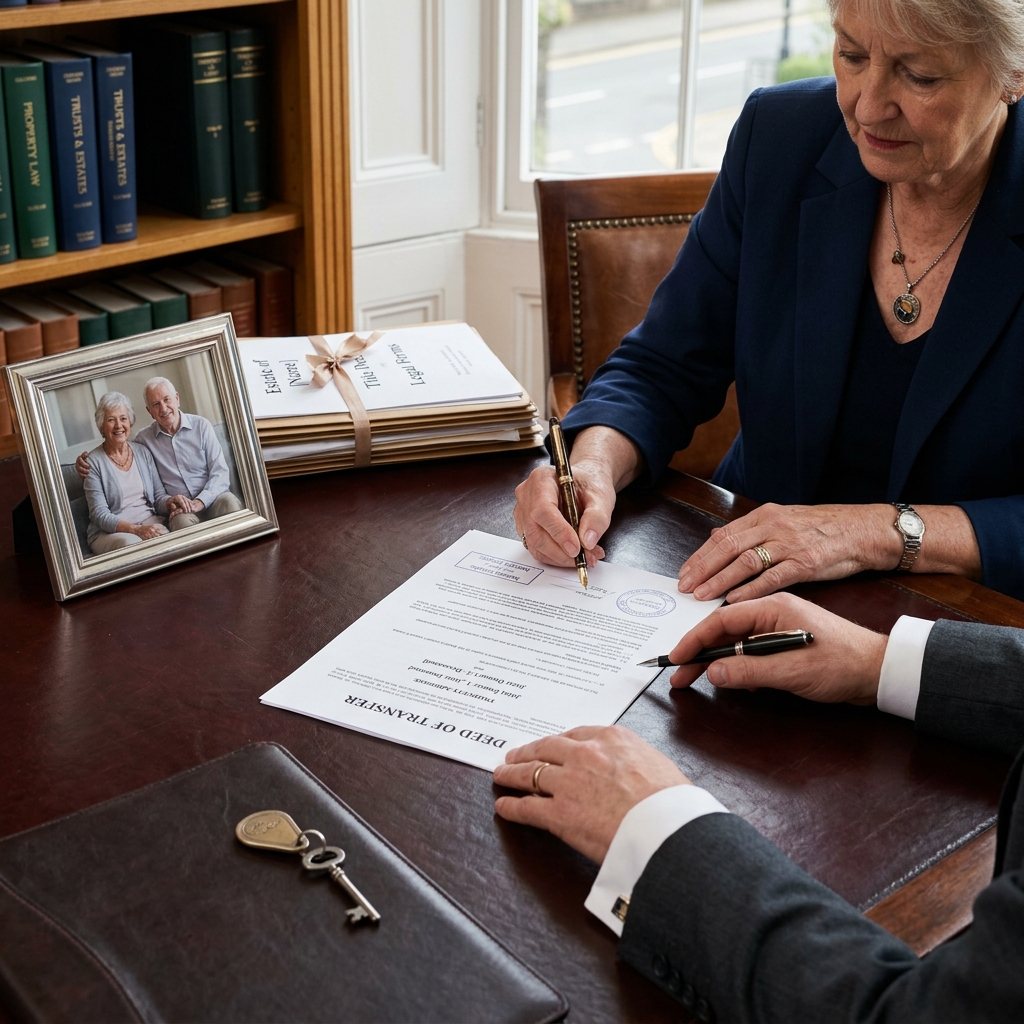
When a co-owner of real estate or other property dies, the way ownership passes to survivors depends heavily on how the property was titled. Understanding joint ownership, the right of survivorship, and the role of probate helps families transfer property efficiently and avoid unnecessary legal complications.
This guide explains what happens to jointly owned property at death, the typical legal steps involved, and key documents you may need. It is informational only and not a substitute for legal advice; specific rules vary by state, so consulting a local attorney or official guidance is critical.
1. Why Title Form Matters When a Co-Owner Dies
The single most important factor in determining what happens to property after a co-owner’s death is how the title is held. Different forms of co-ownership carry different rights and transfer mechanisms.
- Joint tenancy with right of survivorship (JTWROS): Each co-owner holds an equal share, and the surviving owners automatically inherit the deceased owner’s interest.
- Tenancy in common: Co-owners can hold unequal shares; the deceased owner’s share passes through a will or intestate succession and usually requires probate.
- Community property (in certain states): Spouses may own property as community property; some states allow a community property form with survivorship rights that avoids probate for that asset.
- Trust ownership: Property titled in a revocable living trust passes under the trust terms, generally outside formal probate, via the successor trustee.
Before you take any action, it is essential to confirm the exact wording on the deed or ownership document and, if necessary, get a title search to clarify how the property is legally held.
2. Joint Tenancy and the Right of Survivorship
In many cases, jointly owned property is set up as joint tenancy with right of survivorship. This arrangement is designed to make transfers after death straightforward and avoid probate for that particular asset.
2.1. How Survivorship Works
With the right of survivorship, the deceased owner’s share of the property does not pass under a will or through intestate laws. Instead, it transfers automatically to the surviving co-owner(s) at the moment of death.
Key characteristics include:
- Automatic transfer: The surviving co-owner becomes the sole owner (if only two owners) or the remaining co-owners collectively become owners of the entire property.
- No probate for that asset: The property interest bypasses the probate estate, simplifying administration and often speeding up the process.
- Equal interests: Joint tenants typically have equal rights and interests in the property.
2.2. Evidence and Documentation
Although the transfer is automatic, public records must be updated to reflect the change in ownership. This usually requires proving the co-owner’s death and establishing the surviving owner’s rights.
- Obtain certified copies of the death certificate.
- Record an appropriate affidavit (often called an Affidavit of Death of Joint Tenant or similar) with the county recorder or land registry.
- Ensure the property description and title reference are correctly included in the affidavit.
After these documents are recorded, the official title records should show the surviving owner(s) as the current property holders without the deceased owner’s name.
3. Community Property and Spousal Survivorship
In community property states, married couples may own property jointly as part of the marital community. Some jurisdictions recognize community property with right of survivorship, which functions similarly to joint tenancy but is specific to spouses or domestic partners.
3.1. Community Property Basics
Generally, community property is composed of assets acquired during the marriage (except certain separate property). On the death of one spouse, the disposition of community property depends on state law, how title is written, and whether any survivorship agreement exists.
3.2. Community Property with Survivorship Rights
When a deed states community property with right of survivorship, the surviving spouse typically receives full ownership of that asset without probate.
- Survivorship rights are built into the title form.
- The surviving spouse usually records an Affidavit of Surviving Spouse (or similar) plus a certified death certificate.
- Some practitioners recommend recording a grant deed afterward to further clarify the chain of title.
This mechanism can simplify the transfer of the marital home and other major assets, provided the deed was properly drafted when the property was acquired.
4. Transfers from Joint Ownership Without Survivorship
If co-owners hold property as tenants in common or in another form without survivorship rights, the deceased owner’s share does not automatically pass to the other owner. Instead, it usually becomes part of the probate estate.
4.1. When Probate Is Needed
Probate is a court-supervised process that oversees payment of debts and distribution of a deceased person’s property. Real estate not held in joint tenancy, community property with survivorship, or a trust generally must go through probate if its value exceeds certain thresholds.
| Ownership Type | Probate Required? | Who Inherits? |
|---|---|---|
| Joint tenancy with right of survivorship | No (for that asset) | Surviving joint owner(s) |
| Community property with survivorship | Usually no (for that asset) | Surviving spouse or partner |
| Tenancy in common | Generally yes | Heirs under will or state intestacy law |
| Property in living trust | Often no formal probate | Beneficiaries named in the trust |
4.2. Typical Probate Steps for Real Estate
Although procedures differ by jurisdiction, common probate steps for real property include:
- Filing a petition in probate court to open the estate.
- Appointment of a personal representative (executor or administrator).
- Inventory and appraisal of the estate, including the real property.
- Payment of valid debts, taxes, and administration costs from estate assets.
- Court approval of the final distribution of property to heirs or beneficiaries.
- Recording a new deed or court order with the land records to update title.
Because probate can be time-consuming and sometimes costly, many people use survivorship titles or trusts to minimize or avoid the need for court involvement.
5. Property Held in a Trust
Another common way to plan for property transfer at death is to place real estate in a revocable living trust. In this arrangement, the trust, not the individual, is the legal owner of the property.
5.1. Role of the Successor Trustee
When the original trustee dies or becomes incapable of serving, a named successor trustee takes over management of the trust property.
- The successor trustee typically records an Affidavit of Death of Trustee with a certified death certificate to show that they now have authority over the trust assets.
- They may then execute and record a grant deed transferring the property to the beneficiaries specified in the trust document.
This process often occurs outside formal probate, which can speed up transfers and maintain more privacy than a court-supervised proceeding.
6. Practical Steps for Surviving Co-Owners
Whether you are a surviving spouse, child, or co-investor, certain practical steps are useful when handling jointly owned property after death. The exact sequence can vary, but the following list offers a general roadmap.
6.1. Immediate Actions
- Secure documentation: Obtain multiple certified copies of the death certificate.
- Review the deed or title: Confirm whether the property is in joint tenancy, community property with survivorship, tenancy in common, or a trust.
- Locate estate planning documents: Find any will, trust agreements, or separate property agreements that might affect the transfer.
6.2. Recording Title Changes
- Prepare and file the appropriate affidavit of death or similar document with the county recorder or land registry, including the legal description of the property.
- Submit a certified death certificate alongside the affidavit.
- Review whether an additional deed (such as a grant deed) is recommended to clarify ownership going forward.
6.3. Dealing With Mortgages and Liens
Surviving owners often remain responsible for mortgage payments or other liens on the property.
- Notify the mortgage lender of the death and clarify who will continue payments.
- Check whether the estate or a life insurance policy might pay off part or all of the loan.
- Confirm that property tax bills and insurance coverage reflect the new ownership.
7. Common Pitfalls and How to Avoid Them
Transferring joint property after death can become complicated if records are incomplete or if title forms do not match the owners’ intentions. Awareness of common pitfalls can help families avoid disputes and delays.
- Unclear or outdated deeds: Old deeds may not reflect current ownership structures. Regularly updating titles and keeping copies accessible can simplify later transfers.
- No survivorship language: Failing to include the right of survivorship when intended can force property into probate even if the co-owners assumed it would pass automatically.
- Conflicts between will and title: When a will attempts to dispose of property already subject to survivorship rights, the title form usually controls that specific asset. Coordinating legal documents and title choices is crucial.
- Ignoring state-specific rules: Community property states and common law states treat marital property differently. Relying on general assumptions instead of state law can create serious errors.
8. Planning Ahead to Simplify Future Transfers
Effective estate planning can make future transfers of jointly owned property much smoother. Legal practitioners often recommend aligning ownership forms with broader plans for heirs and beneficiaries.
8.1. Aligning Titles With Estate Plans
- Use joint tenancy with survivorship when you want property to pass directly to the surviving co-owner.
- Consider living trusts for complex estates or when you want more control over how and when beneficiaries receive assets.
- Where available, explore transfer-on-death instruments for certain properties to allow direct transfer to named beneficiaries.
8.2. Keeping Records Organized
- Maintain a list of all real estate and major assets, including how each is titled.
- Store deeds, trust documents, and wills in a safe but accessible location known to your executor or successor trustee.
- Review and update documents periodically, particularly after major life events such as marriage, divorce, or the purchase of new property.
9. Frequently Asked Questions
9.1. Does jointly owned property always avoid probate?
No. Only property held in forms that include survivorship rights, such as joint tenancy with right of survivorship or community property with survivorship, typically bypass probate for that asset. Property owned as tenants in common generally must be handled through probate.
9.2. What documents do I need to remove the deceased owner’s name from the title?
In many jurisdictions, you will need a certified death certificate and an affidavit of death of joint tenant or similar document, filed with the county recorder or land registry. Requirements vary, so checking local rules or consulting an attorney is important.
9.3. What happens to the mortgage when a joint owner dies?
Typically, the surviving owner becomes responsible for continuing mortgage payments. The lender may require notification of the death and documentation of the change in ownership. In some cases, the estate or insurance may help pay down the loan.
9.4. Can a will override the right of survivorship?
Generally, no. When property is properly titled with survivorship rights, those rights usually control who receives the asset upon death, even if the will states something different. The will may still govern other property not subject to survivorship.
9.5. How long does it take to transfer property after death?
Transfers that avoid probate, such as those under survivorship titles or trusts, may be completed in weeks once paperwork is filed. Probate transfers, by contrast, often take several months and can extend beyond a year depending on court schedules, disputes, and tax issues.
References
- Affidavits of Death: Transferring Property without Probate after an Owner Dies — Sacramento County Public Law Library. 2023-05-01. https://saclaw.org/resource_library/affidavits-of-death-transferring-property-without-probate-after-an-owner-dies/
- 4 Steps: Transfer of Property in California after Death — The Grossman Law Firm. 2022-09-15. https://www.grossmanlaw.net/transfer-property-after-death-california/
- Transfer Property After Death: How Long Will Probate Take? — LegalShield. 2023-02-10. https://www.legalshield.com/blog/how-long-to-transfer-property-after-death
- Right of Survivorship for Joint Tenants — LawDepot. 2022-06-01. https://www.lawdepot.com/us/right-of-survivorship/
- Two Names on Deed & Joint Mortgage: What Happens if One Dies? — Gokal Law Group. 2023-04-20. https://gokallaw.com/what-happens-to-a-jointly-owned-house-when-someone-dies/
- 4 Ways to Transfer Property at Death — Mitchiner & Small PLLC. 2021-08-12. https://mitchinersmall.com/4-ways-to-transfer-property/
- How to Change Property Ownership After Death in Arizona and New Mexico — Walk-In Wills. 2023-09-05. https://walkinwills.com/blog/change-property-ownership-after-death-arizona-new-mexico/
Similar Articles








Read full bio of Sneha Tete


