Receiving a traffic ticket can be stressful, especially when you notice the officer wrote something down incorrectly. Many drivers immediately ask: “If there’s a mistake on my ticket, is it automatically dismissed?” In most cases, the answer is no, but some errors can become powerful tools in your defense.
This guide explains how courts typically treat errors on traffic citations, which types of mistakes may justify dismissal, and how to use those errors strategically if you choose to fight your ticket. Traffic laws vary by state, so always check your local rules or speak with a qualified attorney if you need advice on a specific situation.
1. Why Traffic Ticket Accuracy Matters
A traffic ticket is more than a piece of paper. Legally, it serves two key functions:
- Notice of the charge: It informs you what law you are accused of violating and the basic facts of the incident.
- Starting the case: It initiates a legal process that can result in fines, points on your license, higher insurance premiums, or even license suspension depending on the offense.
Because the citation is the foundation of the case, courts require enough accurate information so that:
- you can clearly understand the accusation, and
- the court can confirm it has authority over the person and place involved.
However, that does not mean every small typo or formatting issue will invalidate the ticket. Many minor mistakes can be corrected by the court or prosecutor without harming your rights.
2. Minor Typos vs. Serious Errors: Understanding the Difference
Courts and attorneys often divide traffic ticket errors into two broad categories:
| Type of Error | Typical Court View | Impact on Your Case |
|---|---|---|
| Clerical / minor typos (e.g., small spelling errors) | Usually considered harmless and easily corrected. | Rarely leads to dismissal by itself; may still support a broader defense. |
| Substantive / fatal defects (e.g., wrong driver, wrong law) | Can violate your right to proper notice or jurisdiction. | May justify dismissal because the ticket fails to properly charge you. |
In many jurisdictions, judges have authority to “amend” a citation, meaning they can correct clerical mistakes as long as doing so does not prejudice your ability to defend yourself. By contrast, errors that misidentify you, misstate the law, or place the incident outside the court’s authority are more serious and may not be fixable.
3. Examples of Minor Errors That Usually Don’t Kill a Ticket
While laws differ, the following issues are commonly treated as minor or “amendable” errors in many courts:
- Small spelling mistakes in your name (for example, “Jon” instead of “John”).
- Abbreviations or minor mistakes in your address (e.g., “Ave” instead of “Street”).
- Slightly incorrect vehicle color when the plate and other details are accurate.
- Misplaced information written in the wrong field on the form.
- Typos in the narrative that do not change the core allegation.
Courts often see these as “scrivener’s errors” — essentially typos — that do not change what you are being accused of or prevent you from preparing a defense. A judge can allow the officer or prosecutor to correct the record at or before trial, and the case moves forward.
Even though these mistakes may not lead to automatic dismissal, they are still worth noting. They can:
- show the officer was not paying close attention, which may support challenges to their observations;
- help undermine the reliability of the evidence when combined with other issues; and
- raise reasonable doubt if the entire citation appears sloppy or inconsistent.
4. Serious Mistakes That May Support Dismissal
Some kinds of errors go beyond minor typos and may significantly weaken the prosecution’s case. Attorneys sometimes refer to these as “fatal defects” because they can render the ticket legally insufficient.
4.1 Identity and Vehicle Mismatch
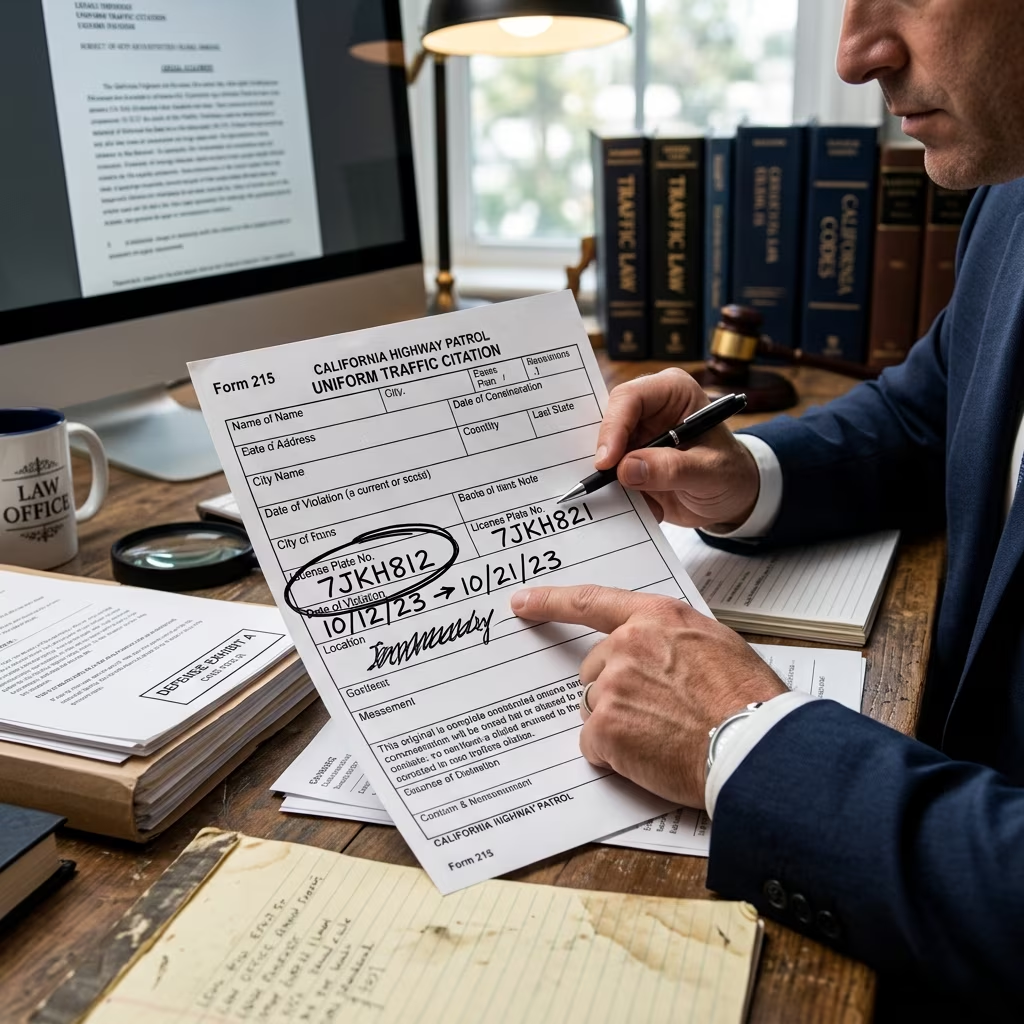
- Completely wrong license plate number, especially if the plate belongs to a different vehicle.
- Entirely different name, not just spelling, so that the ticket appears to describe another person.
- Drastically incorrect vehicle description, such as listing a motorcycle when you drive a sedan.
In these situations, the ticket may fail to correctly identify who allegedly committed the violation. If the court cannot reliably link the citation to you, dismissal can become more likely.
4.2 Jurisdiction and Location Problems
- Wrong court listed for the place where the violation supposedly happened.
- Location outside the officer’s authority (for example, a small-town officer issuing a citation for an incident clearly located in a different county).
Courts must have proper jurisdiction over both the subject matter and the geographical location of the alleged offense. If the citation places the incident outside the court’s or the officer’s legal reach, a judge may dismiss the case or require a separate filing in the proper venue.
4.3 Impossible Dates or Times
- A violation date that is clearly impossible, such as a future date or one before your car existed.
- A date that conflicts with verifiable facts (for example, records proving your car was in the repair shop that day).
When the date on the citation makes the incident logically impossible, it can raise serious questions about the accuracy of the officer’s account and whether the citation provides adequate notice of the charge.
4.4 Legal Defects in the Charge Itself
- Citing the wrong statute or a non-existent law for the described conduct.
- Missing officer signature or necessary identifying information, if required by state law.
Because the citation serves as the formal accusation, it must reference an actual, applicable law in effect at the time of the alleged violation. If it does not, or if mandatory elements such as signatures are missing, some courts treat the ticket as invalid and subject to dismissal.
5. How Lawyers Use Citation Errors Strategically
Experienced traffic attorneys rarely assume a ticket will “automatically” disappear due to a mistake. Instead, they analyze every detail and integrate any errors into a broader defense strategy.
Common tactics include:
- Reviewing the citation for fatal defects: Lawyers look for identity problems, wrong statutes, missing signatures, and jurisdictional issues that may justify a motion to dismiss.
- Challenging evidence reliability: They may request radar or LIDAR calibration records, officer training records, and dash or body camera footage to test whether the officer’s evidence meets legal standards.
- Using errors to undermine credibility: Sloppy documentation can be used to cast doubt on the officer’s observations and recollection.
- Negotiating reductions: Even if the ticket is not dismissed outright, pointing out weaknesses may lead prosecutors to reduce fines or downgrade charges.
- Filing motions: Where procedural rules are violated (such as failure to provide requested evidence), attorneys may file motions to compel or requests for dismissal based on due process concerns.
The overall goal is not simply to find a typo, but to demonstrate that the government’s case is unreliable, incomplete, or legally deficient.
6. Practical Steps When You Spot an Error on Your Ticket
If you notice that your traffic citation contains mistakes, you can take several practical steps to protect your rights and maximize your options.
6.1 Carefully Review the Entire Citation
Do not limit yourself to one obvious error. Go line by line and check:
- your name, address, and driver’s license number;
- vehicle make, model, year, and license plate;
- date, time, and location of the alleged violation;
- the statute or code section listed; and
- the officer’s name, badge number, and signature, if required.
6.2 Document Everything Immediately
Soon after receiving the ticket:
- Take clear photos of the citation, front and back.
- Write down what you remember about the stop, including weather, traffic, and any conversation with the officer.
- Collect supporting records, such as repair invoices, GPS logs, or receipts showing where you were at the time.
Memories fade, but written notes and photos can help you or your lawyer later.
6.3 Research Your State’s Rules
States differ on how strictly they treat citation errors and what elements are required. You can usually:
- look up your specific violation in your state’s traffic code;
- review local court or state judicial websites for guidance on contesting tickets; and
- check deadlines to request a hearing or submit a written challenge.
In some jurisdictions, you can contest certain citations by mail or online, but missing a deadline can severely limit your options.
6.4 Consider Consulting a Traffic Attorney
If the ticket is expensive, carries significant points, or could affect your job, it may be worth speaking with a traffic law attorney. Lawyers can:
- evaluate whether the error is likely to be seen as minor or serious;
- advise you on plea options, diversion programs, or defensive driving courses where available; and
- represent you in court, which may be especially helpful if you cannot appear in person.
7. Common Mistakes Drivers Make When Contesting Tickets
Many drivers hurt their own cases in court by focusing on the wrong arguments or ignoring basic procedure. According to legal guidance for motorists, frequent missteps include:
- Relying only on “it’s unfair” arguments: Courts generally do not dismiss tickets just because other drivers were speeding too or you feel singled out.
- Claiming ignorance of the law: Saying you did not know the speed limit or traffic rule rarely helps; “I didn’t know” is not a legal defense.
- Accusing the officer of lying without evidence: Judges often find officers more credible unless there is concrete proof to the contrary.
- Missing deadlines or court dates: Failing to respond or appear on time can lead to default judgments and extra penalties.
- Being unprepared: Showing up without documents, photos, or witnesses that support your version of events undermines your defense.
Errors on the ticket should be presented calmly and clearly, as part of a structured legal argument, not as an emotional complaint.
8. Using Ticket Errors as Part of a Broader Defense
Even when a mistake is not serious enough to invalidate the citation by itself, it can still play a role in a larger defense strategy. For example, you might combine:
- a minor discrepancy in the vehicle description,
- inconsistent notes regarding distance or speed, and
- a challenge to the reliability of the radar device or officer’s vantage point.
Together, these details can help cast doubt on whether the prosecution has proved its case beyond the applicable standard, which in traffic court is often “preponderance of the evidence” or “beyond a reasonable doubt,” depending on your jurisdiction.
In other words, instead of asking the judge to dismiss your ticket solely because of a typo, you can argue that the combined inaccuracies show the evidence is not strong enough to support a conviction.
9. Frequently Asked Questions (FAQs)
Does any error on my ticket mean the case will be thrown out?
No. Most small mistakes, such as spelling errors or minor vehicle detail discrepancies, are treated as clerical and can be corrected. They rarely lead to automatic dismissal.
What kinds of mistakes are most likely to justify dismissal?
Errors that misidentify you or your vehicle, place the violation outside the court’s jurisdiction, use an incorrect or non-existent statute, or list impossible dates are more likely to be considered serious and may support dismissal.
Should I still fight a ticket if the only issue is a minor typo?
Maybe. A minor typo alone probably will not win your case, but it can be part of a larger strategy that includes challenging the officer’s observations, equipment calibration, or other procedural problems.
Can I fix an error on the ticket myself?
No. Do not alter or write on the original citation. Instead, keep it intact, make copies for your records, and raise the error formally when you contest the ticket or discuss it with an attorney.
Is it worth hiring a lawyer for a traffic ticket?
It depends on the potential consequences. If the ticket could result in high fines, significant points, license suspension, or impact on employment, consulting a traffic attorney can be worthwhile. They can identify legal issues you might overlook and represent you in court.
References
- Common Mistakes To Avoid When Contesting a Traffic Ticket — Super Lawyers / Thomson Reuters. 2022-04-15. https://www.superlawyers.com/resources/traffic-violations/common-mistakes-to-avoid-when-contesting-a-traffic-ticket/
- Proven Ways to Dismiss Your Traffic Ticket — Cummings & Kennedy Law Firm. 2023-06-01. https://www.encattorneys.com/post/proven-ways-to-dismiss-your-traffic-ticket/
- Traffic Ticket Mistakes in New York — New York Traffic Ticket Lawyers (TicketHelp). 2023-09-10. https://www.tickethelp.com/traffic-ticket-blog/mistakes-on-your-ny-traffic-ticket/
- A Traffic Ticket Won’t Be Thrown Out Because the Cop Made a Typo — Road & Track. 2016-03-21. https://www.roadandtrack.com/car-culture/a29514/traffic-ticket-mistake-advice/
- How Do Lawyers Dismiss Traffic Tickets: The Attorney’s Strategic Playbook — Scheuerman Law LLC. 2024-02-05. https://www.scheuermanlaw.com/blog/how-do-lawyers-dismiss-traffic-tickets/