Tax Refund Status: 3 Ways To Track Federal Refunds Fast
Master the process of monitoring your federal and state tax refunds with official tools and expert tips for timely updates.
Tracking Your Tax Refund Status
Millions of taxpayers eagerly await their refunds each year after filing returns. Understanding how to monitor progress ensures you stay informed without unnecessary worry. The IRS provides reliable online tools for real-time updates, typically showing status within days of submission.
Essential Tools for Federal Refund Monitoring
The primary resource for federal refunds is the IRS Where’s My Refund? tool, accessible anytime via IRS.gov or the IRS2Go mobile app. This service delivers precise updates on your return’s journey from receipt to issuance.
To access it, prepare your Social Security Number (SSN) or Individual Taxpayer Identification Number (ITIN), filing status, and the exact whole-dollar refund amount from your return. Updates occur daily, usually overnight, eliminating the need for frequent checks.
Timeline for Visibility
- E-filed current-year returns: Status appears in 24 hours.
- Prior-year e-filed returns: 3-4 days.
- Paper returns: Up to 4 weeks.
These timelines allow the IRS to acknowledge receipt and begin processing. For amended returns, use the dedicated Where’s My Amended Return? tool, which may take up to 3 weeks to appear and 16 weeks to process.
Understanding the Three-Stage Refund Process
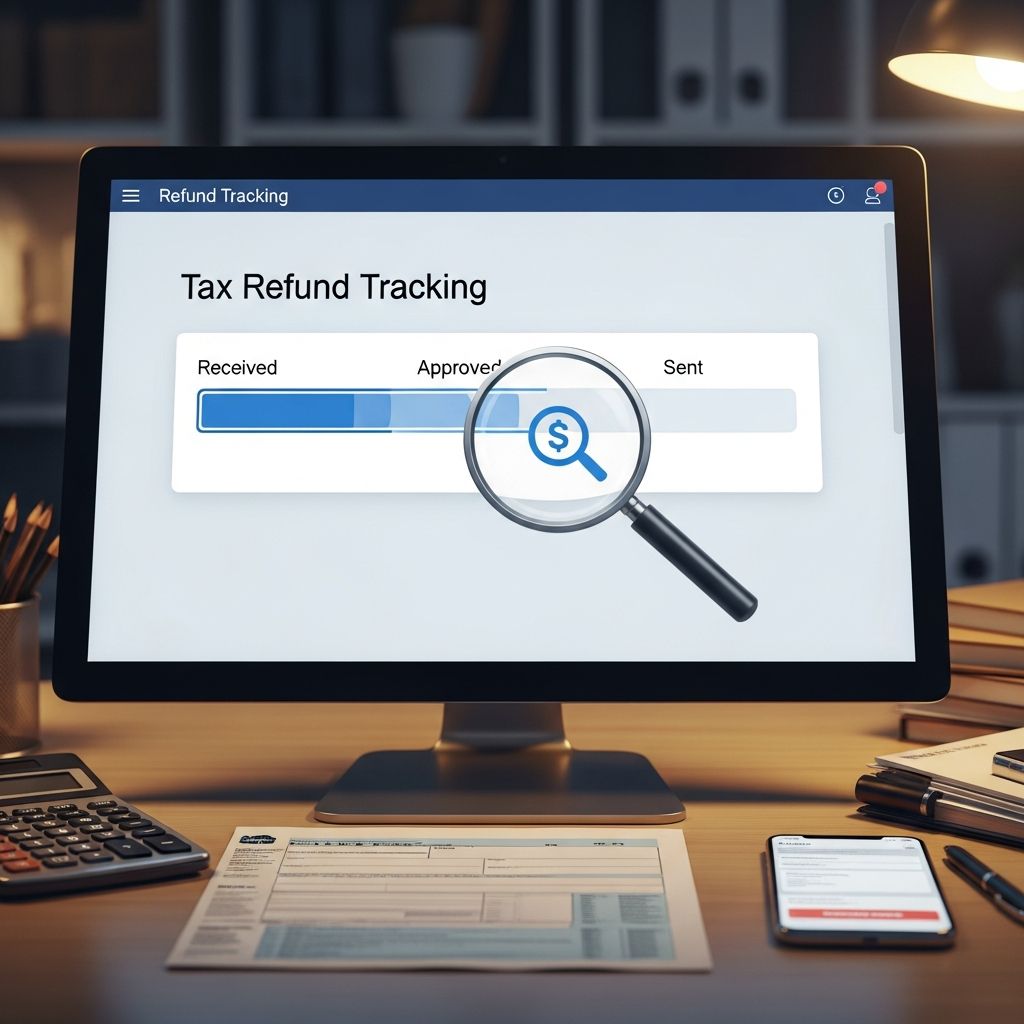
The Where’s My Refund? tracker visualizes progress in clear phases, offering transparency at each step.
| Stage | Description | Typical Duration |
|---|---|---|
| Return Received | IRS has your return and is processing it. | Immediate upon acknowledgment |
| Refund Approved | Refund authorized; shows issuance date. | Within 21 days for most e-files |
| Refund Sent | Issued to bank or mail; bank processing adds 5 days for direct deposit, weeks for checks. | Post-approval |
Most refunds arrive within 21 days of e-filing acceptance, but paper filings extend to 4-8 weeks or more.
Factors That Delay Your Refund
While standard processing is swift, certain issues can extend timelines. Recognizing these helps set realistic expectations.
- Errors or Incomplete Returns: Math mistakes, missing forms, or unsigned documents trigger reviews.
- Identity Theft or Fraud: Suspected issues prompt additional verification.
- Bank Holidays/Weekends: Financial institutions skip processing non-business days.
- Credit Claims: Earned Income Tax Credit (EITC) or Additional Child Tax Credit (ACTC) refunds hold until mid-February (e.g., after 2/17 for processing, early March issuance if e-filed with direct deposit).
- Extra Review: Complex returns may require manual checks; IRS mails notices if needed.
If delays occur, avoid calling immediately—phone info matches the online tool, and wait times are long. Contact only if the tool advises.
Step-by-Step Guide to Checking Federal Status
- Visit IRS.gov and select Where’s My Refund? or download IRS2Go app.
- Enter SSN/ITIN, filing status (e.g., Single, Married Filing Jointly), and exact refund amount.
- View status bar with personalized estimated date once processed.
- Check daily if needed, but note morning outages (4-5 a.m. ET) for updates.
- Create an IRS online account for transcripts and broader tax records.
For non-internet users, dial the automated hotline at 800-829-1954.
State Tax Refund Tracking
State refunds follow similar processes but use individual department portals. Processing mirrors federal: 3 weeks for e-files, 4 for paper.
Common requirements include SSN, address details, ZIP code, and expected refund amount. Examples:
- California: Use FTB’s tool at webapp.ftb.ca.gov/refund; phone 1-800-338-0505; chat via MyFTB.
- Other states: Access via state tax sites or aggregators like TaxAct’s list.
Always verify your state’s official site for accurate links and requirements.
Pro Tips for Faster Refunds and Fewer Issues
Optimize your filing to minimize delays:
- E-File and Direct Deposit: Speeds processing significantly over paper and checks.
- Double-Check Accuracy: Verify math, signatures, and credits before submitting.
- Monitor Early: Start checking 24 hours post-e-file.
- Handle EITC/ACTC Properly: Expect March 1 earliest for compliant direct deposit e-files.
- Amended Returns: Patience required—up to 16 weeks.
Tax software like TurboTax or TaxAct integrates IRS tools for seamless tracking post-filing.
Resolving Persistent Delays
If 21 days pass without update, review the tool first. Persistent issues may stem from offsets (debts like child support) or errors. IRS letters provide next steps; respond promptly.
Phone support: Use automated systems to bypass lines. For states, leverage chat or dedicated lines during business hours.
Frequently Asked Questions
Why hasn’t my refund arrived after 21 days?
Delays often arise from reviews, credits like EITC, or bank processing. Check Where’s My Refund? for specifics.
Does ‘accepted’ mean approved?
No—acceptance confirms receipt; approval follows processing.
Can I track multiple refunds?
Yes, for current and prior two years via the tool; amended separately.
How long for state refunds?
Typically 3 weeks e-file, 4 weeks paper; check state portals.
What if I owe back taxes?
Refunds may offset debts; tool or notices will indicate.
References
- Check the status of a refund in just a few clicks using the Where’s My Refund tool — Internal Revenue Service. 2022-03-07. https://www.irs.gov/newsroom/check-the-status-of-a-refund-in-just-a-few-clicks-using-the-wheres-my-refund-tool
- TaxAct E-File Status & Refund Tracker — TaxAct. N/A. https://www.taxact.com/post-filing/efile-refund-status
- Check your federal or state tax refund status — USAGov. 2026-01-05. https://www.usa.gov/check-tax-status
- Where’s My Refund? – Track Your Tax Refund with TurboTax — TurboTax/Intuit. N/A. https://turbotax.intuit.com/tax-tools/wheres-my-refund/
- Where’s My Refund? — Internal Revenue Service. N/A. https://www.irs.gov/wheres-my-refund
- Refunds — Internal Revenue Service. N/A. https://www.irs.gov/refunds
Similar Articles








Read full bio of medha deb