
Toxic Mold at Home: Health, Cleanup, and Legal Basics
Learn how mold affects health, when cleanup becomes a legal issue, and what steps protect your home.
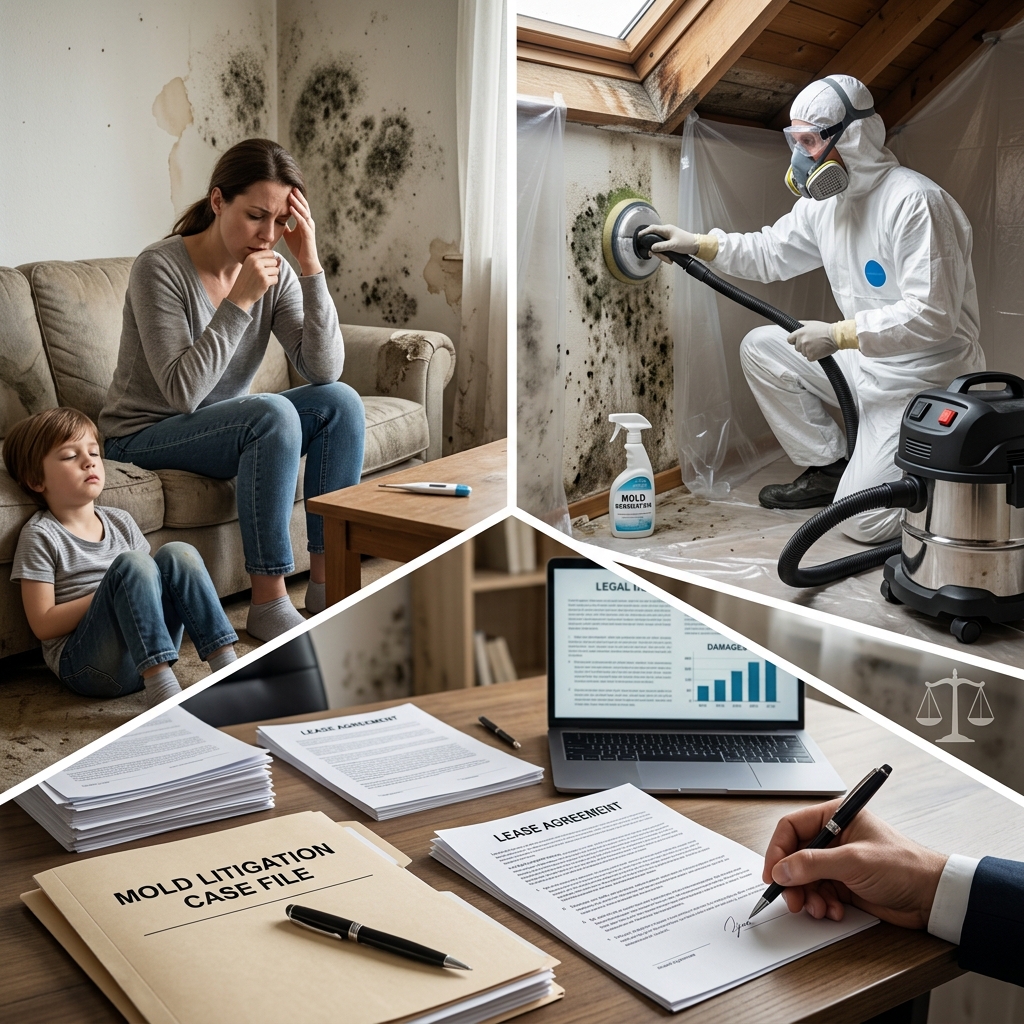
Mold is a common indoor problem, but it becomes a serious concern when moisture allows it to spread inside walls, carpets, ceilings, or ventilation systems. In many homes, the issue starts with a leak, poor ventilation, or flooding and then grows into a dispute over repairs, habitability, or responsibility. Understanding the health risks, the cleanup process, and the legal questions that may follow can help homeowners and tenants respond before the problem gets worse.
Why indoor mold develops
Mold spores are present in nearly every environment, but they only become a major indoor problem when they land on damp material and start multiplying. Moisture is the key ingredient. A slow plumbing leak, roof damage, condensation around windows, or water left behind after a flood can create the conditions mold needs to spread. Once growth starts, it can move into hidden places such as behind drywall, under carpet, or beneath cabinets.
The presence of mold does not always mean a building is unsafe, but it does signal that a moisture problem exists. If the underlying leak or dampness is not corrected, cleaning the visible mold will only provide temporary relief. The building itself must be dried, repaired, and monitored so the growth does not return.
How mold can affect health
Health effects vary widely from person to person. Some people experience no symptoms, while others develop irritation or respiratory problems. According to the U.S. Environmental Protection Agency, molds can produce allergens and irritants, and some species can also produce potentially toxic substances known as mycotoxins. Common complaints linked to indoor mold exposure include sneezing, coughing, nasal congestion, wheezing, sore throat, watery eyes, and worsening asthma symptoms.
People with asthma, allergies, chronic lung disease, or weakened immune systems may be more sensitive to mold exposure. Harvard Health notes that mold exposure can inflame the respiratory tract, and that mold may be noticed by a musty smell even when the growth is hidden behind surfaces. Cleveland Clinic likewise lists congestion, coughing, and red eyes among the most common symptoms of black mold exposure.
At the same time, medical research has not established that inhaled mold toxins in ordinary home, school, or office settings cause the severe systemic illnesses sometimes claimed in public debate. A review in PubMed concluded that current scientific evidence does not support the claim that inhaled mycotoxins in indoor environments have adversely affected human health in the way often alleged. That does not mean mold should be ignored; it means the main health concern in typical homes is usually allergy, irritation, and asthma aggravation rather than exotic toxicity.
Signs that mold may be hidden in the building
Visible discoloration is the most obvious clue, but many indoor mold problems are first detected by smell or by evidence of water damage. A musty odor often points to growth in a concealed area. Mold may appear as fuzzy, slimy, or spotted patches on walls, ceilings, baseboards, window trim, refrigerator seals, bathroom grout, or around air-conditioning components.
It is also worth inspecting places that are not immediately visible. Water can seep under flooring, behind wallpaper, into insulation, or beneath cabinets. If a room feels damp, if paint is bubbling, or if materials are warping, there may be an underlying moisture source. Condensation on windows can also indicate that humidity is too high.
What to do first when you find mold
The first task is to stop the moisture. If the leak continues, mold will keep returning even after cleanup. That may mean calling a plumber, roofer, contractor, or property manager to locate the source of the water intrusion. If the problem comes from a recent flood, the affected area should be dried as quickly as possible to reduce further spread.
For small areas, mild soap and water may be enough to remove surface growth from nonporous materials, provided the surface can be dried completely afterward. For larger problems, or if the water event involved sewage or contaminated water, professional remediation is usually safer.
Many health sources recommend protective gear during cleanup, including gloves, an N95 mask, and eye protection. Bleach is sometimes discussed as a mold cleaner, but public health guidance generally emphasizes eliminating moisture and removing damaged materials rather than relying on bleach alone. Porous items such as drywall, ceiling tiles, carpeting, and paper products may need to be discarded if growth is extensive.
When professional remediation makes sense
Professional help is commonly recommended when the area is larger than about 10 square feet, when mold is recurring, or when the source of moisture is difficult to find. Large-scale cleanup can involve containment, air filtration, removal of damaged materials, and post-remediation drying. This matters because mold often survives in hidden cavities even after the surface looks clean.
Professional remediation is also important when someone in the home has asthma, severe allergies, or immune suppression. In those situations, trying to clean the area without proper containment can stir up spores and worsen symptoms. Harvard Health notes that certified remediation professionals may be appropriate for major water damage, especially after floods.
How to reduce the risk of mold returning
Long-term prevention depends on moisture control. The simplest rule is to keep the home dry, ventilated, and well maintained. Public health agencies consistently recommend fixing leaks promptly, improving airflow, and keeping humidity below 50 to 60 percent. If condensation repeatedly appears on windows or pipes, the indoor air may be too humid.
- Repair roof, plumbing, and appliance leaks as soon as possible.
- Use bathroom and kitchen exhaust fans during and after moisture-producing activities.
- Keep gutters and downspouts clear so water drains away from the structure.
- Vent clothes dryers to the outdoors.
- Use dehumidifiers in damp areas when humidity stays high.
- Dry wet carpets, furniture, and drywall quickly after spills or flooding.
Routine cleaning also helps. Bathrooms, laundry rooms, basements, and kitchens deserve extra attention because they produce or trap moisture. If a space tends to stay damp, the problem is usually structural or mechanical rather than cosmetic, which means repairs matter more than repeated surface cleaning.
Why mold becomes a legal issue in housing
Mold problems often turn legal when a landlord, seller, builder, or contractor fails to address the water source or makes repairs improperly. In rental housing, persistent mold may support claims that the property is not being maintained in a livable condition. In a home purchase or construction dispute, mold can raise questions about disclosure, workmanship, building code compliance, and hidden defects.
The legal significance of mold usually depends on three facts: whether a water problem existed, whether the responsible party knew or should have known about it, and whether the problem was fixed within a reasonable time. Documentation is essential. Photos, inspection reports, repair requests, medical records, and written communications can all matter later.
| Situation | Typical concern | Helpful evidence |
|---|---|---|
| Rental apartment | Landlord failed to fix leak or maintain habitability | Repair notices, photos, tenant complaints, inspection reports |
| Home purchase | Seller may have hidden prior water damage or mold | Disclosure forms, inspection findings, repair history |
| New construction or renovation | Poor workmanship, bad waterproofing, or building defects | Contracts, warranties, expert inspections, construction records |
| After flooding | Delayed cleanup or failure to dry materials properly | Weather reports, insurance correspondence, remediation records |
Tenants, owners, and the importance of notice
Tenants are generally expected to keep their living space reasonably clean and to report leaks or recurring dampness promptly. New York State’s housing guidance, for example, explains that tenants should clean small amounts of mold and notify the landlord or superintendent when mold persists or when leaks and water damage appear. If the landlord does not act, local building or code enforcement authorities may be able to inspect the property.
Homeowners should follow a similar approach by documenting the issue and arranging repairs quickly. Delay can worsen the damage, expand the remediation cost, and complicate insurance or legal claims. A homeowner who waits too long may also have a harder time proving that the mold was caused by a specific incident rather than by long-term neglect.
Common mistakes that make mold problems worse
One of the biggest mistakes is cleaning the mold while ignoring the moisture source. Another is painting over damage without drying the wall cavity first. A third is throwing away only the visibly affected items while leaving saturated materials in place. Mold can keep growing in materials that appear dry on the outside but remain damp inside.
- Do not assume a surface cleaner solves a hidden leak.
- Do not keep using porous materials that stayed wet for too long.
- Do not ignore musty odors just because the growth is not visible.
- Do not rely on cosmetic repairs if the building still feels damp.
Frequently asked questions
Is black mold always more dangerous than other mold?
No. The term “black mold” is often used broadly, but the color alone does not determine risk. Different molds can cause allergy-like symptoms, and the bigger issue is usually the extent of exposure and the moisture conditions that allow growth.
Can mold make asthma worse?
Yes. Mold is a recognized trigger for some people with asthma, and indoor exposure may worsen coughing, wheezing, and breathing difficulty.
Should I test for mold before taking action?
Not always. If you can see or smell mold, the priority is usually to find and fix the moisture source and then clean or remove affected materials. Testing may be useful in some disputes, but it should not delay necessary repairs.
What size mold problem is too large for DIY cleanup?
Public health guidance commonly uses about 10 square feet as a rough threshold beyond which professional help is recommended.
Will mold go away if the room dries out?
Drying helps stop further growth, but existing contamination may remain on surfaces or in materials. Damaged porous materials often need removal, and the moisture source must still be fixed to prevent recurrence.
What evidence is most useful in a dispute
If mold becomes part of a legal claim, the most persuasive evidence is usually practical and chronological. Keep records of when the problem started, how it looked, what repairs were requested, how the other side responded, and whether symptoms or damage worsened over time. Photos taken before cleanup are especially valuable, as are invoices from plumbers, contractors, or remediation firms.
Medical records may also matter if someone in the home experienced respiratory or allergy symptoms. While health effects do not by themselves prove legal liability, they can support the seriousness of the problem and the need for prompt remediation.
References
- Mold in the home: Identifying and treating the issue to prevent health problems — Harvard Health Publishing. 2024-10-01. https://www.health.harvard.edu/healthy-aging-and-longevity/mold-in-the-home-identifying-and-treating-the-issue-to-prevent-health-problems
- Adverse human health effects associated with molds in the indoor environment — PubMed / National Library of Medicine. 2003-05-15. https://pubmed.ncbi.nlm.nih.gov/12762072/
- Can mold cause health problems? — U.S. Environmental Protection Agency. 2025-01-15. https://www.epa.gov/mold/can-mold-cause-health-problems
- Mold — American Lung Association. 2025-02-10. https://www.lung.org/clean-air/indoor-air/indoor-air-pollutants/mold
- Black Mold Exposure: Symptoms, Risks & Treatment — Cleveland Clinic. 2025-03-20. https://my.clevelandclinic.org/health/diseases/24862-black-mold
- Mold and Your Home: What You Need to Know — New York State Department of Health. 2024-08-01. https://www.health.ny.gov/publications/7287/
Similar Articles








Read full bio of Sneha Tete


