
Thinking About Pleading Guilty to a Criminal Charge
Understand what a guilty plea means, how the process works, and the lasting consequences before you decide how to respond to a criminal charge.
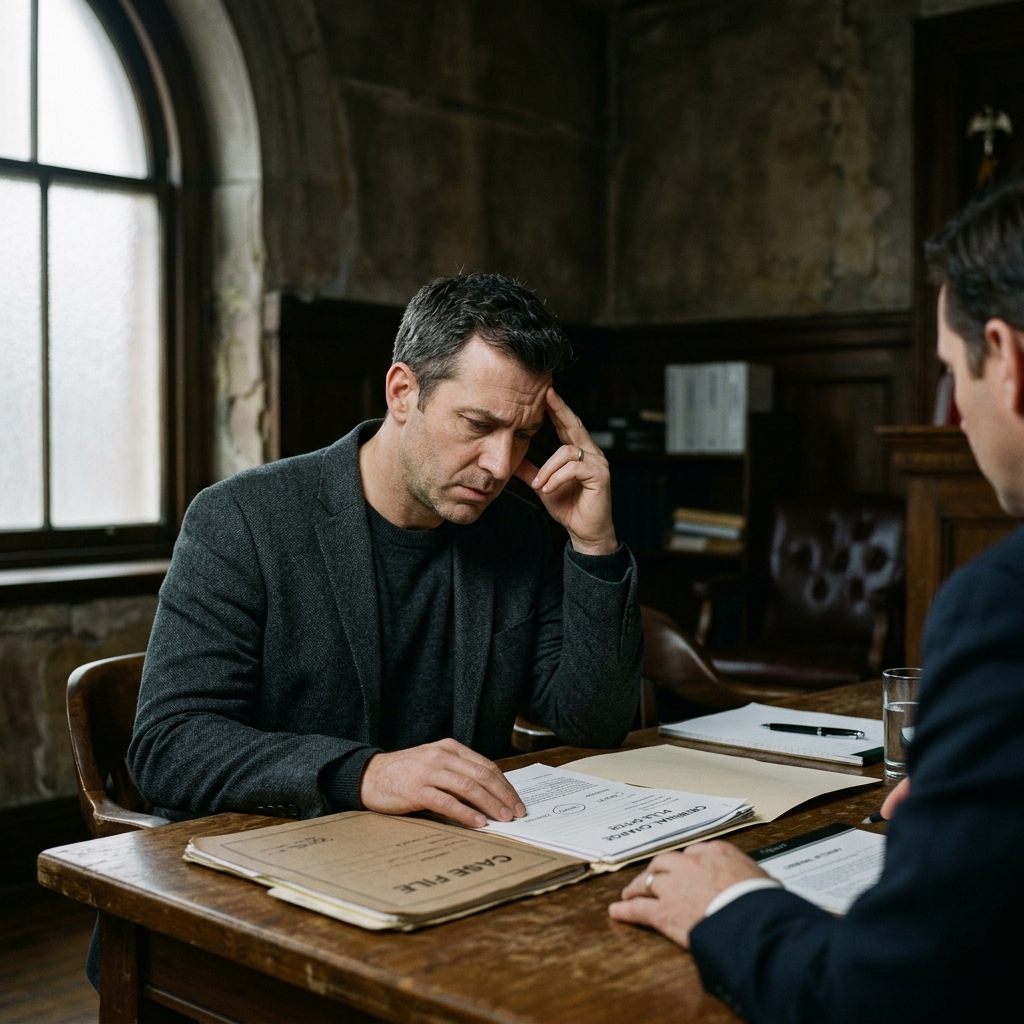
Pleading guilty to a criminal charge is one of the most important decisions you can make in your case. It ends the question of whether you committed the offence and moves the court directly into sentencing. Before you decide to admit guilt, it is critical to understand the legal meaning of a guilty plea, how the process works, and what the short‑ and long‑term consequences may be.
1. What It Means to Plead Guilty
In Canadian criminal law, a plea is the formal answer you give when the court asks if you are guilty or not guilty of the offence that has been charged. A guilty plea is more than simply saying “I did it.” It is a binding admission that you committed the essential elements of the offence and that you accept a conviction without a trial.
Under the Criminal Code of Canada, when you are called on to plead, you may plead guilty or not guilty, or use certain special pleas allowed by law. If you plead guilty, you are telling the court you do not contest the charge and you agree that the Crown has enough evidence to convict you.
- Conviction without trial: A valid guilty plea allows the court to enter a conviction immediately, without hearing witnesses or reviewing evidence at a full trial.
- End of the dispute: A guilty plea generally marks the end of the challenge to the criminal charge; you are no longer arguing that you are innocent of that offence.
- Waiver of rights: By pleading guilty you effectively give up your right to a trial, to challenge the Crown’s evidence, and to require the Crown to prove the case beyond a reasonable doubt.
Because the consequences are serious and often permanent, a court can only accept a guilty plea if certain safeguards are met.
2. When a Court Can Accept Your Guilty Plea
Canadian courts must be satisfied that a guilty plea is legally valid before accepting it. Case law and the Criminal Code emphasize that a plea must be voluntary, informed, and unequivocal, and the accused must understand the nature of the charge and the consequences of admitting guilt.
In practice, this means the judge needs to be sure that:
- You are making the plea freely, without improper pressure or threats.
- You understand that the plea is an admission of the essential elements of the offence.
- You grasp the possible outcomes, including sentence and collateral consequences (like a criminal record).
- You know the court is not strictly bound by any agreement between you and the prosecutor.
The Criminal Code specifically states that the court may accept a guilty plea only if it is satisfied of these points. Even plea agreements negotiated with the Crown are subject to judicial oversight: the judge must be satisfied that the plea is voluntary, informed, and appropriate in the circumstances.
3. Alternatives to Pleading Guilty
Pleading guilty is not your only option. The other principal plea is not guilty, which maintains your right to a trial where the Crown must prove the charge beyond a reasonable doubt. It is important to review all available paths before deciding how to respond.
- Pleading not guilty: You require the Crown to prove the case at trial using admissible evidence and legal procedures. If the Crown cannot meet the burden of proof, you may be acquitted.
- Negotiating changes to the charge: In some situations, a court may accept a plea of guilty to a different offence arising from the same incident, provided the prosecutor consents. If that happens, the court finds you not guilty of the original charge and guilty of the new offence.
- Seeking legal advice: Consulting a criminal lawyer or duty counsel early can help you understand whether a guilty plea is in your best interests, given the evidence and the potential penalty.
Because more than 90% of criminal cases in Canada are resolved through guilty pleas rather than trials, there can be strong pressure to plead guilty. That pressure may arise from court delays, the stress of custody, economic concerns, or plea offers. However, statistics do not determine what is best in your particular case.
4. The Guilty Plea Process Step by Step
Although details can vary by province and court level, the general steps for entering a guilty plea in Canada are similar. Understanding the process can help you prepare and reduce uncertainty.
4.1 Before You Enter a Plea
Before deciding how to plead, you should obtain and review disclosure—the evidence the Crown intends to rely on. This typically includes police reports, witness statements, and any relevant documents or recordings.
- Ask the prosecutor for disclosure and any initial position on sentencing.
- Request time (an adjournment) if needed to read the material, seek legal advice, and decide how to proceed.
- Discuss possible resolutions, including plea deals, with a lawyer if you have one.
4.2 In Court When You Plead Guilty
When your case is called and you decide to plead guilty, the hearing usually includes these elements:
- Identity confirmed: The judge or justice of the peace confirms your name and the charge.
- Plea asked: You are asked how you plead to the specific charge or charges.
- Guilty plea entered: You say that you plead guilty. The court records the plea.
- Facts placed on the record: The prosecutor outlines the facts of the alleged offence to show that the evidence would support a conviction.
- Opportunity to respond: You or your lawyer may confirm the facts, correct any inaccuracies, or explain any disagreements about the circumstances.
- Conviction: If the judge is satisfied that your plea is voluntary, informed, and supported by the facts, the court accepts the plea and enters a conviction.
In some cases, the sentencing hearing happens immediately after the plea is accepted. In other cases, it is scheduled for a later date so that reports and supporting documents can be prepared.
4.3 Preparing for Sentencing
Once a guilty plea has been accepted, the focus shifts to sentencing. You may be able to influence the outcome by gathering information that shows your circumstances and efforts to address the issues that led to the offence.
- Personal documents: Reference letters, employment or school records, and proof of counselling or treatment can demonstrate positive steps and support requests for a lighter sentence.
- Remorse and insight: If you feel genuine regret about what happened, expressing that remorse to the judge can be relevant to sentencing.
- Duty counsel assistance: If you do not have a private lawyer, duty counsel may be available to speak on your behalf at sentencing.
5. Possible Sentences After a Guilty Plea
The sentence you receive after pleading guilty depends on many factors: the offence, your personal history, the harm caused, and any applicable sentencing principles. A conviction can lead to a range of penalties.
| Type of Outcome | What It Means | Typical Consequences |
|---|---|---|
| Fine | You pay an amount of money set by the court. | Debt to the court; may still result in a criminal record depending on the offence. |
| Probation | You remain in the community subject to conditions ordered by the judge. | Must follow rules such as reporting to a probation officer or attending treatment; violation can lead to further charges. |
| Conditional or absolute discharge | You are found guilty but may avoid a criminal record if conditions are met (conditional) or immediately (absolute). | Less impact on long‑term record, but the finding of guilt still occurs. |
| Custodial sentence (jail) | You serve time in custody, either provincially or federally depending on sentence length. | Loss of liberty, potential impact on employment, housing, and family. |
The court considers the circumstances of the offence, any victim impact, your criminal history, and mitigating factors like early guilty pleas and demonstrated rehabilitation. In some cases, a guilty plea can help you obtain a reduced sentence compared to what might be imposed after a trial, especially if you accept responsibility at an early stage.
6. Plea Bargaining and Negotiated Guilty Pleas
Many guilty pleas arise out of plea bargaining, also known as plea deals. This is a negotiation between the defence and the Crown to resolve charges without a full trial.
Common forms of plea bargaining include:
- Charge bargaining: The Crown agrees to reduce or withdraw certain charges if the accused pleads guilty to others, often less serious offences.
- Sentence bargaining: The accused pleads guilty with the understanding that the Crown will recommend a particular sentence, such as probation instead of jail or a shorter period of incarceration.
- Fact bargaining: The parties agree on which facts will be presented to the judge to support the plea, sometimes narrowing disputed details.
The typical process for negotiating a plea involves reviewing disclosure, discussing resolution options with the Crown, presenting mitigating information, and seeking the client’s approval before taking any agreement to the court. Ultimately, the accused has the final say on whether to accept a plea deal.
Importantly, judges are not automatically bound by joint sentencing recommendations. They generally give significant weight to agreements crafted by experienced counsel, but they retain discretion to reject a proposal that would be contrary to the public interest or inconsistent with sentencing principles.
7. Risks and Pressures Around Guilty Pleas
Although a guilty plea can be a strategic choice, it also carries risks. Research and experience show that people sometimes plead guilty for reasons that have little to do with actual guilt.
- Pre‑trial detention: Accused persons held in remand are significantly more likely to plead guilty than those released on bail, often to escape difficult conditions and uncertainty.
- Economic pressures: The cost and time required to go to trial can push some people toward guilty pleas even when they have viable defences.
- Fear of the “trial penalty”: Concerns about receiving a harsher sentence after trial may lead to acceptance of plea offers.
- Inadequate legal advice: Limited access to legal representation can result in poorly informed decisions, including false guilty pleas.
The Public Prosecution Service of Canada has recognized that some factually innocent persons have pleaded guilty to offences they did not commit. This reality underscores why courts insist that guilty pleas be voluntary and informed, and why you should seek legal advice before admitting guilt.
8. Long‑Term Consequences of a Guilty Plea
Once you are convicted of a crime—whether by pleading guilty or being found guilty after trial—the conviction can have lasting effects.
- Criminal record: Many convictions result in a criminal record, which can affect employment, travel, professional licensing, and immigration status.
- Community impacts: Your reputation, relationships, and ability to participate in certain activities may be affected.
- Future court appearances: Prior convictions can influence bail decisions, sentencing on future offences, and eligibility for certain diversion programs.
Because these consequences can extend long after your sentence is completed, it is essential to factor them into your decision about whether to plead guilty.
9. Withdrawing or Challenging a Guilty Plea
In limited circumstances, a guilty plea can be withdrawn or challenged. Courts may allow a plea to be set aside if it was not entered voluntarily, if the accused did not understand what they were admitting, or if there was a serious procedural error.
However, withdrawing a guilty plea is not simple. Once a conviction has been entered, the legal system treats the plea as final unless there are compelling reasons to revisit it. This is another reason to take great care before pleading guilty.
10. Practical Tips Before You Decide to Plead Guilty
The decision to plead guilty should be strategic and informed, not rushed or based solely on fear or convenience. Consider the following practical steps:
- Get disclosure: Review the evidence the Crown intends to use. Understanding the strength or weakness of that evidence is crucial.
- Consult a lawyer or duty counsel: Professional legal advice can help you assess your options, including possible defences and plea offers.
- Ask questions: Make sure you understand the charge, the potential sentence, and collateral consequences like a criminal record.
- Consider your personal future: Think about employment, travel, immigration, and family responsibilities.
- Take time if needed: Request an adjournment to avoid making a decision under pressure.
Ultimately, any guilty plea should serve your interests in light of the law, the evidence, and your long‑term goals. If you are unsure, it is usually better to seek more information and advice before deciding.
11. Frequently Asked Questions (FAQs)
Does pleading guilty always mean I will get a criminal record?
Not always. Some offences and circumstances allow for discharges, which may let you avoid a permanent criminal record. However, many guilty pleas do result in a record, so it is important to discuss this with a lawyer before pleading.
Can the judge refuse a plea deal I have made with the Crown?
Yes. Judges generally respect joint sentencing submissions, but they are not strictly bound by them. If a proposed sentence is clearly inappropriate or contrary to sentencing principles, the court may refuse to accept it.
What if I disagree with some of the facts the prosecutor reads out?
You can tell the judge if you disagree with parts of the prosecutor’s version of events. In some cases, the facts can be adjusted or clarified. However, to accept your guilty plea, the court still needs a factual basis that supports the essential elements of the offence.
Is it ever smart to plead guilty even if I think I might win at trial?
In some situations, pleading guilty can be a strategic choice—for example, if the Crown offers a significant reduction in charges or a sentence that avoids jail or a criminal record. The key is to weigh the risks and benefits carefully with legal advice.
Can I change my mind after pleading guilty?
It may be possible to apply to withdraw a guilty plea before sentencing if the plea was not voluntary, informed, or properly entered. Once sentencing has occurred, challenging the plea becomes more difficult and usually requires an appeal or extraordinary remedies.
References
- Criminal Code, RSC 1985, c C‑46, s. 606 — Government of Canada, Justice Laws Website. 2022-01-01. https://laws-lois.justice.gc.ca/eng/acts/C-46/section-606.html
- Guilty Plea — Criminal Law Notebook. 2023-05-01. https://criminalnotebook.ca/index.php/Guilty_Plea
- Pleading Guilty to a Criminal Charge — People’s Law School (Dial‑A‑Law). 2024-03-15. https://dialalaw.peopleslawschool.ca/pleading-guilty-to-a-criminal-charge/
- Convicted of a Crime — Province of British Columbia. 2023-02-10. https://www2.gov.bc.ca/gov/content/justice/criminal-justice/bcs-criminal-justice-system/if-you-are-convicted-of-a-crime/convicted-of-a-crime
- Pleading Guilty or Not Guilty — Supreme Court of British Columbia. 2022-09-01. https://supremecourtbc.ca/criminal-law/before-trial/pleading-guilty-or-not-guilty
- False Guilty Pleas — Public Prosecution Service of Canada. 2021-06-01. https://www.ppsc-sppc.gc.ca/eng/pub/is-ip/ch8.html
- Plea Deals in Canada: Understanding Plea Bargaining — Lichtman Law. 2023-11-15. https://lichtmanlaw.ca/plea-deals-in-canada/
Similar Articles








Read full bio of Sneha Tete




